
If you're staring at a dashboard full of clicks and still not seeing enough calls, you're not alone. A lot of Fort Myers owners hit the same wall, organic traffic slows, competitors get louder, and the next agency pitch sounds like it's selling hope instead of booked jobs.
PPC Advertising Management Services are the disciplined answer when you need paid search to produce qualified leads, not just traffic. The right setup turns ad spend into a controlled system for calls, forms, and appointments, while the wrong one burns money on broad keywords, sloppy tracking, and reports nobody can use.
When PPC Advertising Management Becomes a Smart Investment
The need for help usually shows up in a practical way. Leads taper off, a seasonal slowdown hits, or a new service line needs attention fast, and the DIY campaign that looked manageable at the start starts acting like a second job. PPC advertising management services make sense in that moment because the work is bigger than buying clicks, it is managing budget, intent, and timing so the phone rings with the right kind of prospects.
For local businesses in Fort Myers, Cape Coral, Estero, Bonita Springs, or Naples, the trigger is often competition. If nearby competitors keep showing up above you, or your team is expanding into a new service area, trial and error gets expensive fast. The core question is whether you can afford to manage campaigns without structure, especially when competitors are already outbidding you.
Practical rule: If you can't explain which search terms create calls, which ones waste spend, and which jobs actually close, the account needs professional management.
The reason this service category became so common is simple. Google Ads helped turn paid search into a mainstream performance channel, and by 2024 agencies were reporting monthly PPC ad spend around $3 million, compared with about $950,000 for in-house teams and $575,000 for freelancers, which shows how account complexity scales with spend and specialization (Global State of PPC 2024). That same report also points to a global search-ad market measured in the hundreds of billions of dollars, with a 2026 estimate of $391.4 billion for total search ad spend.
If you are choosing between a freelancer, an in-house hire, or an agency, the right answer usually comes down to the size of the budget, the number of services being promoted, and how tightly the campaign has to connect to booked work. A small, focused account can be handled differently from a larger one with multiple service lines, tighter reporting needs, and a lot more room for wasted spend. The next question is whether the management you are paying for helps bring in qualified calls at a sustainable cost.
What PPC Advertising Management Services Actually Mean
PPC starts with an auction, but management is what keeps the auction from turning into wasted spend. Every search is a competition, and every click is priced in real time against other advertisers trying to reach the same intent. The machine can automate parts of bidding, but it can't decide which service line matters most, which offer needs its own landing page, or which search terms are attracting the wrong kind of leads.
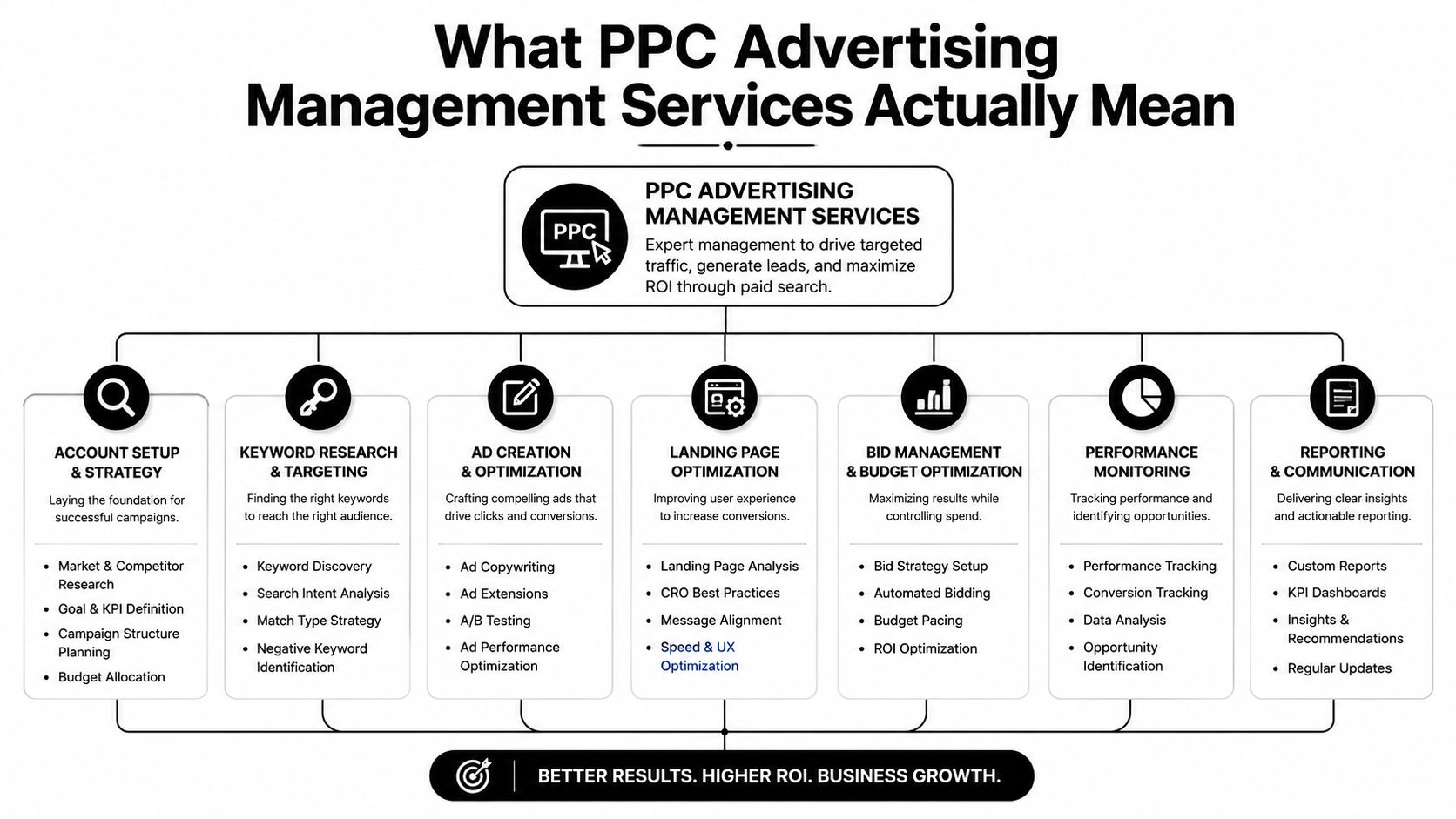
A legitimate service usually includes account structure, keyword and audience research, bid strategy, ad creative, landing-page alignment, and reporting. The reason that matters is plain, cleaner structure and better measurement make platform automation more useful because the system has real conversion signals to optimize against instead of noisy click data (SkyRam Technologies guide). That's the difference between managing a campaign and just keeping it live.
A useful analogy is a storefront on a busy street. The manager chooses the window display, decides what hours to keep open, and sets how much to spend on each traffic source. PPC management works the same way, only the “street” is the search results page, and the “window” is your ad copy and landing page.
The practical line between self-serve ads and managed services is ownership of the details. Self-serve means you can launch campaigns. Management means someone is actively refining search terms, negative keywords, conversion tracking, and landing-page messaging so the account becomes more efficient over time.
The strongest services also cover the small decisions that protect budget, such as excluding irrelevant searches and matching ad copy to the actual offer. If those parts are missing, you're paying for activity, not performance.
The Full Lifecycle of a Managed PPC Campaign
A managed campaign should start with discovery, not with a pile of keywords. The first conversation should identify what counts as a lead, how calls are handled, what geography matters, and which services deserve the most budget. Without that, the rest of the build is guesswork dressed up as strategy.
What should happen before launch
The build phase should include campaign structure, ad groups, keyword lists, negative keywords, audiences, creative assets, and conversion tracking. That tracking needs to cover the actions that matter, including form submissions, calls, and offline conversions when the lead doesn't close on the website. A proper setup usually also checks GA4, call tracking, and conversion events so the account can see more than just clicks.
A campaign that launches without usable conversion data usually spends the first stretch learning the wrong lessons.
Launch week is about collecting signal, not celebrating early traffic. The first job is to make sure ads, landing pages, and tracking all work together. If the page loads slowly, the call button isn't clear, or the wrong service area is open, the campaign starts leaking money before optimization even begins.
After launch, the ongoing work begins. That includes bid adjustments, search-term pruning, ad copy rotation, and landing-page testing. The difference between a launch task and an ongoing task matters because some agencies sell setup, then stop doing the work that improves outcomes.
What you should expect in reporting
Monthly reporting should show more than impressions and clicks. It should connect spend to qualified leads, calls, booked jobs, and whatever downstream action your business uses to measure real value. If the report can't explain what changed, what was tested, and what happens next, it's too thin.
For deeper keyword strategy work, a useful companion resource is this internal guide on keyword research for PPC, because keyword selection shapes everything that follows.
A solid reporting rhythm usually includes a monthly summary, a short readout on what was paused or expanded, and a clear list of next actions. That cadence keeps the account from drifting into autopilot, which is where a lot of local campaigns lose efficiency.
Pricing Models, Budgets, and the Math Behind the Fee
A lot of PPC pricing confusion starts when ad spend and management cost get lumped together. They are separate line items, and when a proposal blurs them, it becomes hard to tell what you are paying for. The usual structures are a flat monthly retainer, a percentage of ad spend, or a hybrid that combines both.
A flat fee is easier to forecast, which is why it often works better for smaller local accounts. The management work does not change every time spend moves up or down, so the billing stays stable. A percentage model can fit larger budgets, but it can also push the incentive toward spending more instead of spending better. Hybrid pricing is common when an agency wants a predictable base and some room to scale with the account.
The question is simpler than the pricing sheets make it look. Will the fee bring in more qualified calls and booked jobs than you would get from an account run without discipline? Professional management pays for itself when it increases booked work and cuts wasted spend at the same time.
A practical way to test the math in a spreadsheet is to track:
- Monthly ad spend
- Management fee
- Cost per lead
- Lead-to-booked-job rate
- Average job value
- Gross margin on the job
That gives you the basic acquisition picture before you approve a contract. If you want a cleaner framework for evaluating what you are paying to acquire each customer, this guide on lower your acquisition costs is a useful reference.
Hidden fees are where a lot of local businesses get burned. Some providers stack software charges, onboarding fees, or rigid minimum contracts on top of ad spend and still bill a management retainer. Another trap is a minimum spend requirement that pushes you to scale before the account is ready.
For local service businesses in Southwest Florida, the right budget is the one that creates enough data to make useful decisions without overcommitting to a weak setup. If tracking is thin, landing pages are not converting, or follow-up is inconsistent, more spend just speeds up the mistake.
You can also compare your numbers against our internal guide on how to measure marketing ROI, especially if you need to include both fees and downstream revenue in the calculation.
Real-World Examples From Local Service Businesses
A Cape Coral roofing company came in with a familiar problem, plenty of Google Ads activity and almost no clarity. The only conversion they tracked was a form fill, which meant calls were getting lost in the gaps and the team couldn't tell which searches were producing estimates. The management team rebuilt the campaign around call tracking, geo-fenced service areas, and dedicated landing pages, then tightened the keyword list so the account stopped chasing irrelevant traffic.
The result was not magic, it was subtraction. Once the account was structured around qualified calls instead of raw clicks, wasted spend dropped because the ads stopped showing for searches that didn't match the service area or the urgency of a roofing job. If you want to see how different paid search setups are used in practice, our internal page on pay-per-click advertising examples shows the range of campaign types businesses can use.
A Fort Myers med-spa needed a different fix. The old campaign leaned on broad beauty terms that attracted browsers, not appointment seekers. The management team layered Local Services Ads on top of a tighter search campaign and rebuilt the keyword list around treatment-specific intent, which changed the quality of incoming leads fast.
For local lead generation strategy, Stamina's local lead generation guide is a good reference point because it reinforces the same principle, tight targeting beats broad visibility when the goal is booked work.
Practical rule: If the business needs calls, the campaign should be built to reward calls first, not just clicks.
In both cases, the point wasn't to increase activity for its own sake. It was to align the campaign with the buying behavior of local prospects, then let reporting show which part of the account was doing the heavy lifting. That's the difference between a media buy and a lead-generation system.
KPIs and ROI Calculations That Matter
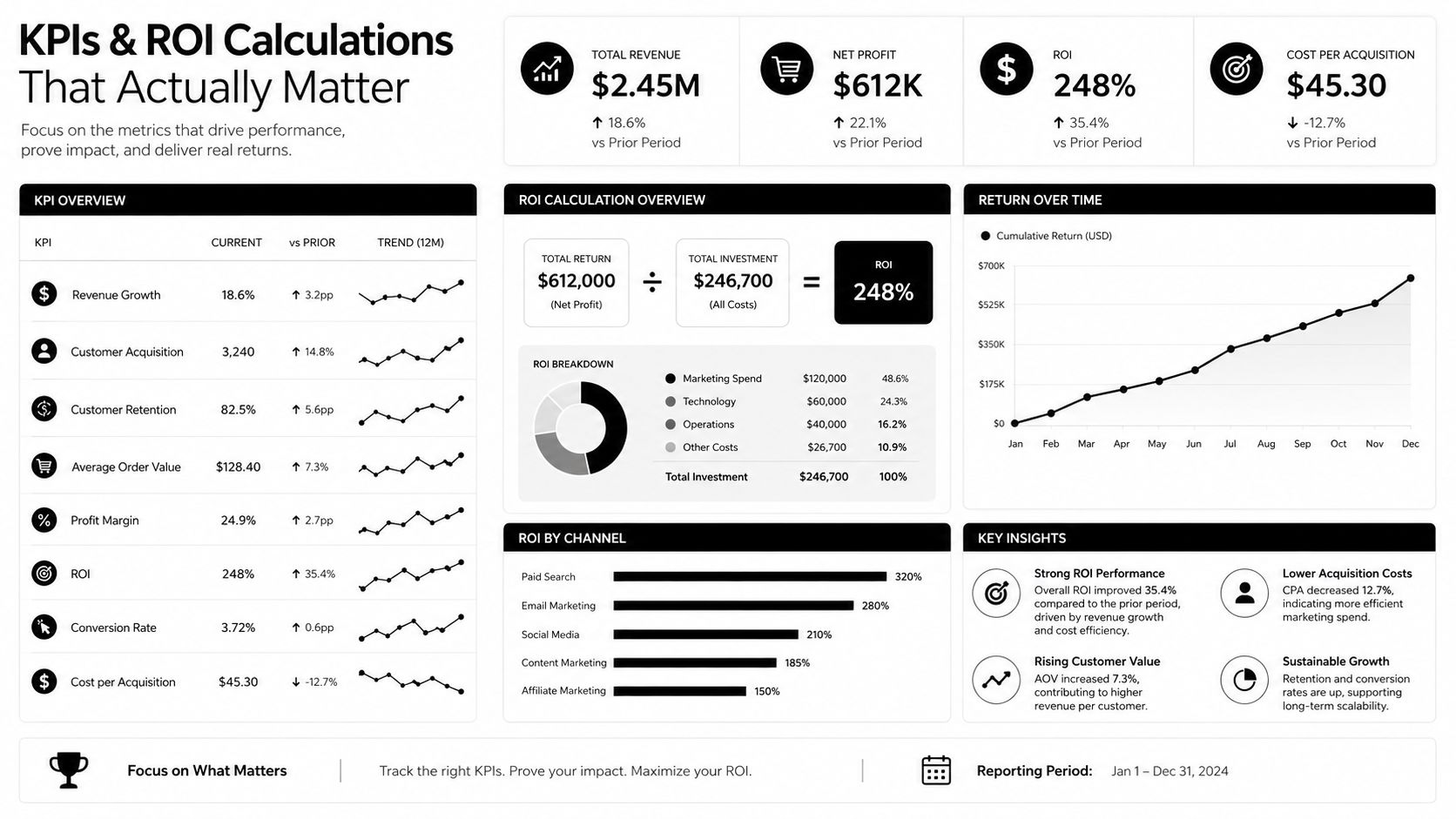
A dashboard can look healthy and still hide a weak campaign. Clicks, impressions, and raw traffic do not say much unless they turn into qualified leads and booked work. The numbers worth watching are tied to revenue, especially cost per lead, conversion rate, ROAS, impression share, and quality score.
The right KPI depends on where the account is in its life cycle. Early on, the focus should be on click cost and search-term quality, because bad targeting shows up fast in those two places. Once the account has enough volume, the conversation should shift to lead quality, booked appointments, and the share of leads that become customers.
ROI should include more than ad spend. Add the management fee, landing-page work, and the lead-to-customer conversion rate your business sees. If you leave those pieces out, the account can look profitable on paper while draining cash in practice. For a clearer framework, the guide to measuring marketing ROI is a useful companion to this math.
A simple spreadsheet formula looks like this:
- Revenue from PPC leads
- minus ad spend
- minus management fee
- minus landing-page costs
- equals net return
Then divide that by total PPC cost to see whether the channel is doing its job.
For a broader look at acquisition efficiency, the earlier resource on lower your acquisition costs pairs well with this math because it keeps the fee discussion tied to business outcomes.
Industry roundups from WebFX PPC statistics show that businesses can earn about $2 for every $1 spent on PPC. That does not guarantee the same result for a local service company, but it does explain why disciplined management can justify the fee when the account structure and follow-up process are sound.
The warning signs usually show up in the report before they show up in the bank account. If leads are rising but booked jobs are not, the targeting is off. If clicks are cheap but irrelevant, the keyword mix is too broad. If the report is packed with vanity metrics and light on lead quality, the account is probably leaking money.
Hiring Checklist and Red Flags to Avoid
The best way to vet a provider is to treat the first call like an interview, not a sales pitch. You're not buying airtime, you're hiring someone to manage budget, judgment, and follow-through. That means the questions should be narrow, practical, and tied to how your business gets work.
What to ask before you sign
- Proof and fit: Ask for case studies, references in your industry, and any certifications or platform credentials they use.
- Operational ownership: Ask who builds the account, who writes the ads, and who answers when something breaks.
- Transparency: Ask whether you keep access to the ad account, how fees are disclosed, and what happens if you leave.
- Local understanding: Ask how they would approach Fort Myers, North Fort Myers, Cape Coral, Estero, Bonita Springs, and Naples differently.
A strong answer sounds specific. It includes the person who will do the work, the reporting cadence, and how they handle offline conversions like calls or booked appointments. A polished dodge sounds vague, leans on buzzwords, and never explains who is accountable.
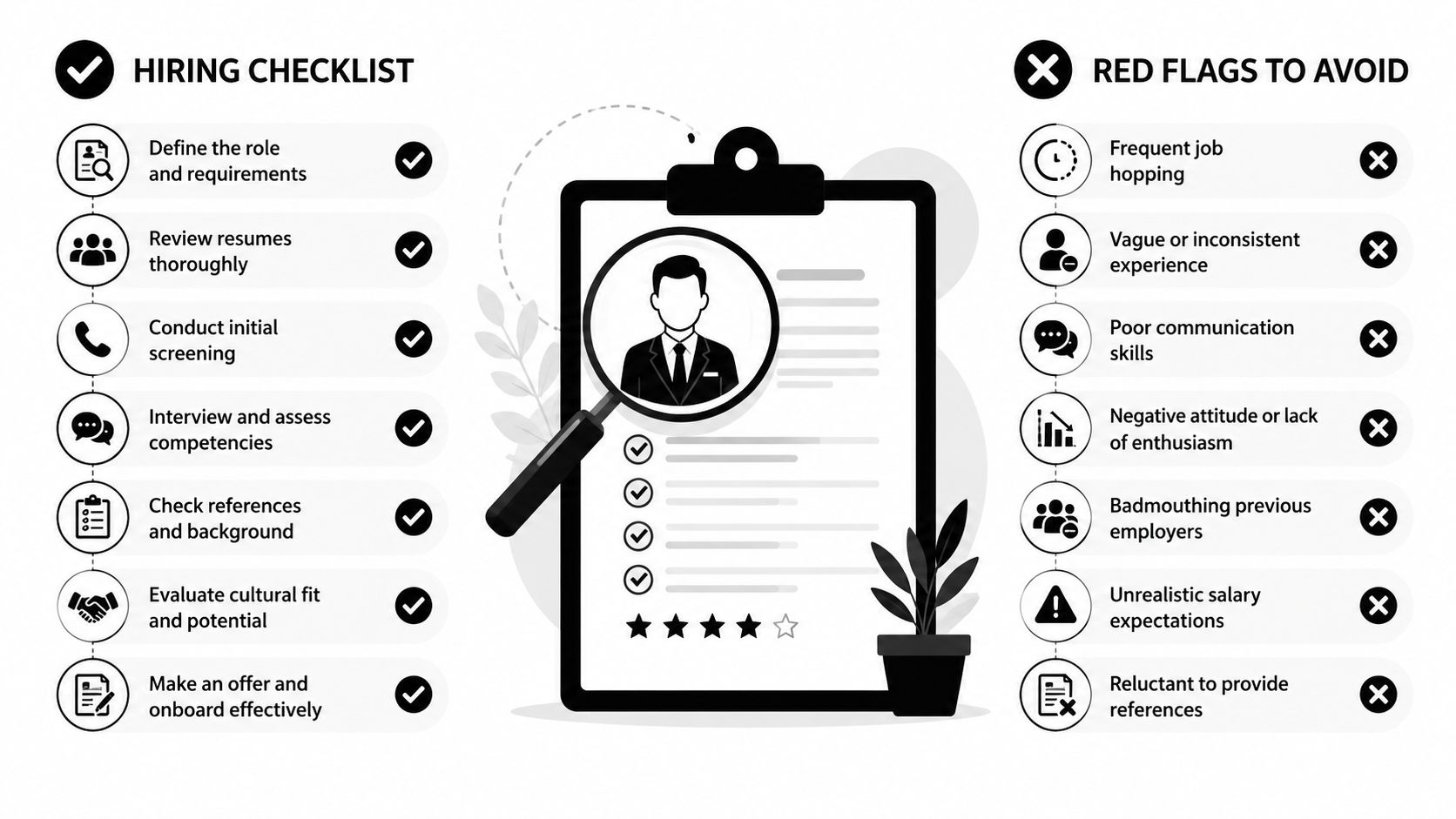
The biggest red flags are easy to spot once you slow down. If the agency owns the ad account, if the reporting never reaches beyond clicks, or if nobody can explain how they track calls and revenue, keep looking. If they won't name the person who'll run your campaigns, that's a problem.
The most common assumption buyers bring in is that a bigger agency automatically means better management. For local lead gen, that's often backwards. You want the team that understands your geography, your service area, and the way your customers contact you.
Common Pitfalls and Smarter Defaults for Local Lead Gen
The first pitfall is thinking more keywords equals more leads. In local service accounts, that usually means more waste, because the campaign starts attracting people who are researching, comparing, or outside the service area. A smarter default is a tight keyword list built around high-intent searches, then trimmed with negatives whenever the search terms drift.
The second pitfall is broad targeting. It feels expansive, but it often reaches the wrong audience and makes the budget less efficient. For a Fort Myers plumber, roofer, lawyer, or healthcare provider, tight geo-targeting around serviceable zip codes is usually the better move because it keeps the campaign focused on jobs you can fulfill.
The third pitfall is assuming a bigger budget fixes a weak conversion rate. It doesn't. It just makes the account spend faster, which can hide the fact that the landing page, offer, or call handling process needs work before more money goes in.
The fourth pitfall is pausing campaigns every time performance softens. That can be a costly reflex because it interrupts learning and often forces the account to rebuild momentum later. A steadier approach is to adjust the campaign methodically, then give it enough time and data to settle.
For urgent home services, call-only campaigns and business-hour scheduling can outperform generic traffic campaigns because they match the way people request help. For trust-heavy categories, pairing search campaigns with Local Services Ads can add credibility and improve the quality of the lead flow.
A simple decision matrix helps keep the account honest.
- Small budget and tight geography: Specialist-led management usually makes more sense.
- Mid-market spend with multiple services: A full-service agency can be a fit if the reporting is transparent.
- In-house team only: That starts making sense when volume and internal expertise are high enough to justify the overhead.
If you want a practical next step, ask for a complimentary audit or competitor snapshot before you commit. That gives you a baseline, shows where the waste lives, and makes the next decision about PPC advertising management services much easier to make.
Polaris Marketing Solutions builds PPC campaigns for Fort Myers and Southwest Florida businesses that need calls, booked jobs, and clearer ROI, not vague traffic reports. If you want a local team to review your account, spot wasted spend, and outline a more accountable path forward, visit Polaris Marketing Solutions and ask for a complimentary analysis.