
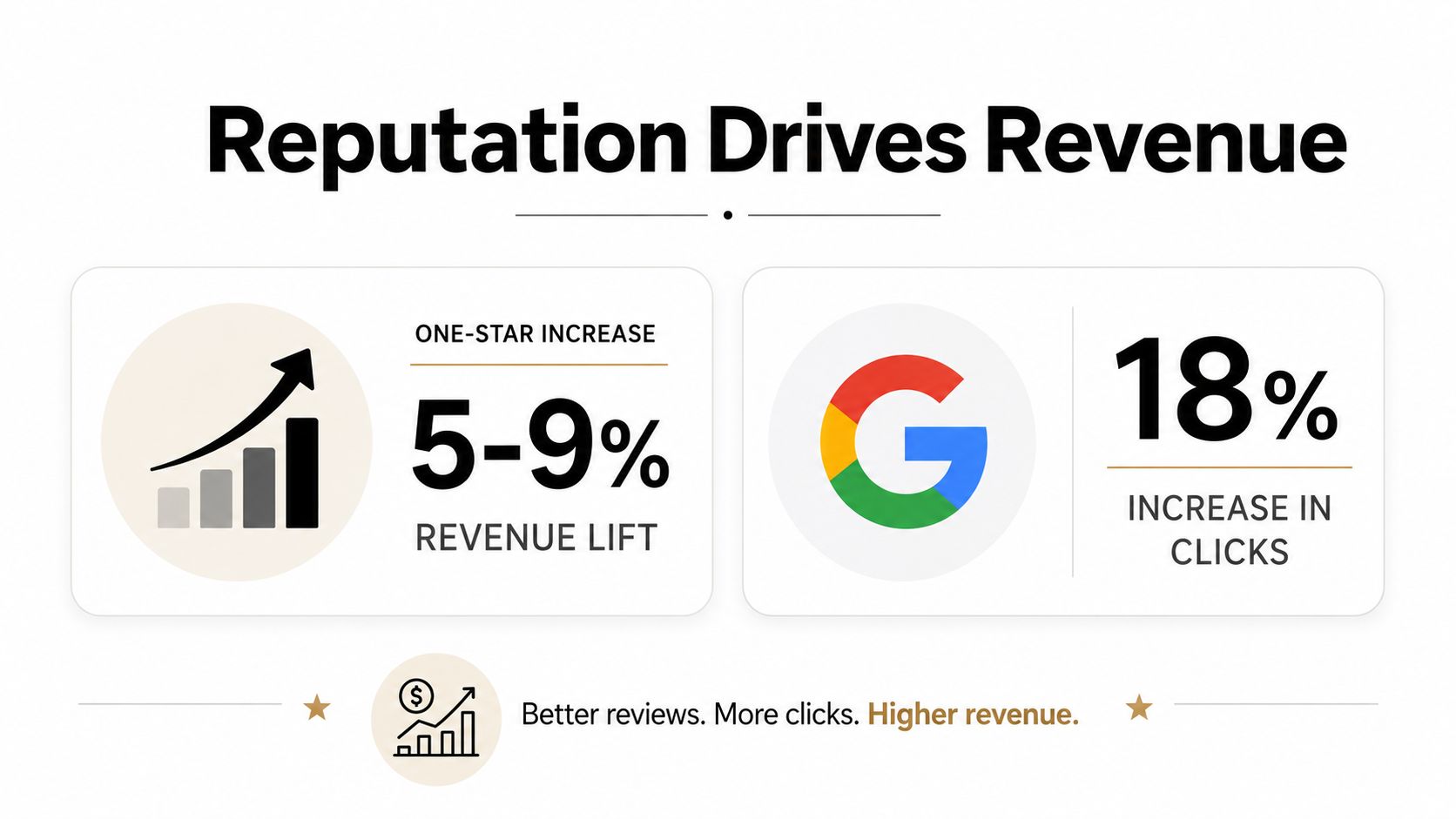
A one-star increase in a restaurant's rating is associated with a 5% to 9% increase in revenue for independent operators, and that's the reason reputation work belongs on the P&L, not in a side folder for marketing. In local search, diners compare options fast, trust visible feedback, and often pick the place that looks better managed before they ever see the dining room. That makes online reputation management for restaurants a revenue system, not a vanity project.
The hard part isn't knowing reviews matter. It's building a workflow a short-staffed team can run on a Friday night without dropping tickets, ignoring guests, or pretending feedback will fix itself.
Why Restaurant Reputation Directly Drives Revenue
A restaurant's review profile is tied directly to cash flow. Harvard Business School research on Yelp found that a one-star increase is associated with a 5% to 9% increase in revenue for restaurants, and the effect shows up mainly for independent restaurants, not chains (Harvard Business School research). For an independent operator, that difference is real. A national brand can absorb a weak review mix with familiarity and ad spend, while a neighborhood restaurant usually depends on what diners see on Google and the major review sites before they ever walk in.
The same research base also found that doubling review activity can increase revenue by 5% to 19% for a high-quality independent restaurant, while it can cut revenue by a similar amount for a low-quality one, and review platforms increased total restaurant revenue by 3.0% from 2011 to 2015 by directing diners toward higher-quality venues. The point is not just that reviews shape opinion. They shape demand, because guests sort restaurants by visible reputation before they make the drive or place the order.
Why independents feel the impact first
Independent restaurants do not have the cushion of a famous banner or a large media budget. A weak profile can remove them from consideration before a guest checks hours, menu items, or location. In day-to-day terms, review visibility works like local demand capture, especially when diners are comparing a few nearby options in a small radius.
Practical rule: if a guest is choosing between three close-by restaurants, reputation is part of the product they are buying before they order.
That is why this work has to be operational. Ratings, review volume, and response habits affect conversion, but only if the team treats feedback like a live business input instead of a passive scorecard. On the ground, that means building a repeatable workflow, not just checking comments when someone has spare time. A useful starting point is to organize your tracking and response process around a clear Google Business Profile optimization checklist so the team knows what gets reviewed, who owns it, and how fast it gets handled. If your team is also trying to monitor brand mentions across platforms, the founder's guide to AI monitoring is a practical reference point for setting up that side of the process without burying staff in extra manual work.
Auditing and Monitoring Your Review Ecosystem
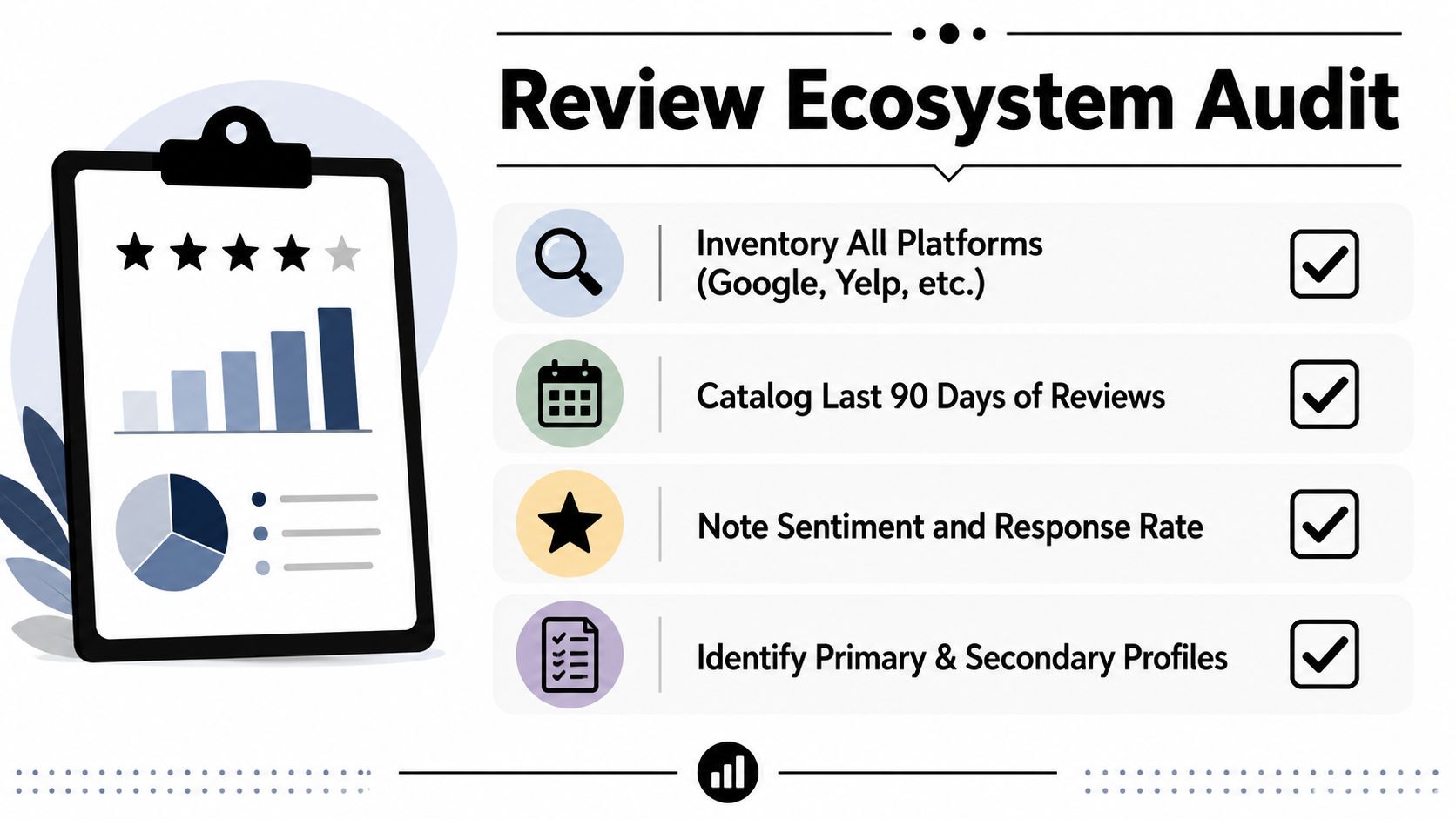
Before you reply to a single review, claim the full footprint. Most restaurants watch Google and maybe Yelp, but guests leave feedback wherever they can, and the operator who tracks only one channel misses what diners see. Start by inventorying every major listing for each location, then verify that every profile is accurate and assigned to someone who has time to act.
Google Business Profile usually comes first because that is where many diners check ratings before they decide where to eat. One source says 73% of local restaurant searches happen on Google Business Profile (Hello Akira statistics roundup). The same Hello Akira roundup also says Google is where 46% of users check restaurant ratings first, ahead of Yelp at 23%, TripAdvisor at 9%, and OpenTable at 6%. If Google visibility is weak, fix that channel first. If Yelp is thin but Google is active, do not burn the first month chasing the quieter platform.
Build the monitoring queue
The cleanest setup is boring, which is exactly why it works. Claim and verify each major listing for each location, then route every alert into a shared inbox that one owner checks every day. From there, log each review with rating, theme tag, owner, due date, and status so feedback becomes a queue instead of a pile.
A workable monitoring system usually has three layers:
- Platform inventory: List Google, Yelp, TripAdvisor, OpenTable, and Facebook for every location.
- Alert routing: Send notifications to a shared email or inbox instead of a manager's personal phone.
- Review logging: Tag each review by issue type, assign it, and track whether it is open or closed.
If you want a parallel process for brand mentions and AI search visibility, the founder's guide to AI monitoring is a useful complement because it reinforces the same discipline, watch the signals, assign ownership, and act quickly.
Prioritize by guest behavior, not by habit
A lot of operators spend time on the platform they personally prefer, not the one guests use. That is backwards. The practical benchmark is where your diners already look, then where your location receives meaningful volume. For many operators, that means Google first, then the next most visible platform for that customer base.
If a location has weak Yelp volume and strong Google visibility, start with Google Business Profile. Mirror the workflow later, do not split attention before the main channel is under control.
For a more structured local listing workflow, the Google Business Profile optimization checklist is a helpful reference point for the basics that often get skipped, like completeness, consistency, and maintenance. The point is not perfection on every platform at once. The point is making sure every new review lands in a system someone can run.
Crafting Responses That Win Back Diners
Guests read reply speed as part of the meal. A restaurant that answers reviews quickly looks attentive, while one that leaves criticism sitting there looks understaffed or indifferent. The operational standard should reflect that reality, because the response itself is public service recovery.
Response timing by rating
| Star Rating | Response SLA | Key Approach | Common Mistake |
|---|---|---|---|
| 1 to 3 stars | 24 hours | Acknowledge the issue, take ownership, move it offline | Defending the team publicly |
| 4 to 5 stars | 48 hours | Thank the guest, reference a specific detail, invite them back | Copy-pasting a generic thank-you |
A workable operating model for restaurant review management sets the faster window for negative reviews and gives positive reviews a little more breathing room, especially during slammed shifts (Spindl operating model). The point is not to make replies a perfect marketing exercise. The point is to keep the profile active and human, even when the line is stretched thin.
What a good response does
A strong reply does four jobs. It names the specific issue so the guest knows someone read the review. It avoids arguing, because public back-and-forth usually makes the restaurant look defensive. It states the next step or the fix. It gives the guest a clear path to reconnect.
A weak response sounds like, “Sorry you felt that way, we try hard every day.” That protects the restaurant's ego, not the guest relationship. A better response sounds like, “We missed the mark on your visit and I'm sorry for that. We reviewed the service issue with the team and would appreciate a chance to make it right if you're open to reaching out.” If your staff needs a tighter template for difficult posts, the guide to responding to negative reviews is a practical reference.
Positive and negative reviews need different tone
Positive reviews call for specificity and warmth. Mention the dish, server, or detail the guest called out, then close with a simple invitation to return. Negative reviews call for calm, short public language and an offline follow-up path. The public audience wants to see accountability, not a restaurant debating every sentence.
For setup details on how to keep the review profile clean and current, the TopFoodApp guide to adding a restaurant to Google Business Profile is useful, because response work is easier when the listing itself is complete and easy to monitor.
Practical rule: the goal of a public reply isn't to win the argument. It's to show future guests how you handle friction.
One more operational point gets missed often. Reply habits affect hiring as well as dining room traffic. Candidates read reviews the same way guests do, and a steady pattern of ignored complaints can make a restaurant look chaotic before anyone walks through the door. That spillover matters in small operations where one bad week can shape both labor quality and guest confidence.
Generating More Reviews Without Breaking Platform Rules
Restaurants usually miss reviews for operational reasons. Guests leave satisfied, but nobody makes the ask at the right moment, the request sounds forced, or the team assumes people will remember later. As noted earlier, ReviewTrackers found that a typical location receives only a modest stream of new reviews, which is thin volume for a restaurant trying to build visible credibility. The fix is a compliant ask at natural touchpoints, not pressure.
Ask where the guest already has context
The strongest review requests fit into moments the guest already understands. The check presenter, reservation follow-up email, table tent with a QR code, and post-catering thank-you message all work because they attach the ask to an experience that just happened. The guest does not need to shift attention, and the staff does not need to improvise a sales pitch on a busy shift.
A few practical rules keep this clean:
- Keep the ask short: Ask for honest feedback, not praise.
- Use one link or QR code: Do not send guests to multiple places and expect them to choose.
- Train servers on wording: A simple goodbye like, “If you enjoyed tonight, we'd appreciate an honest review,” is enough.
- Follow platform policies: Asking for reviews is allowed in principle, but incentives usually are not.
That last point matters. Discounts, freebies, and rewards tied to reviews create compliance risk and weaken the quality of the feedback you collect. The goal is real sentiment, not transactional padding.
Make the ask part of service
Front-of-house staff do not need a speech. They need one repeatable line that sounds natural during checkout or farewell. “Thanks for coming in tonight, if you'd like to share your experience online, the QR code is on the receipt” works because it is direct and low-pressure. The best version is the one the team can say on a packed night without sounding scripted.
A practical model is a restaurant that moved from 8 reviews to 25 per month by adding a QR code to the receipt and training servers to mention it during the goodbye. That is the right shape for a small team. No expensive campaign, just a tighter handoff between service and reputation.
Scale the ask without annoying people
Volume only helps if it stays honest and policy-compliant. Rotate the ask across touchpoints instead of leaning on one channel, and use the moments that already create goodwill, like after a catering order or a high-touch reservation. The target is steady lift, not a burst that looks manipulated.
For teams that want a clearer workflow, the guide on how to get more online reviews is a useful companion. It is easier to ask when staff know exactly what they are saying, where the link lives, and which moments are appropriate.
The Hidden Reputation Problem in Employee Reviews
Most restaurant reputation work stops at guest reviews, but that leaves out a channel that affects hiring, morale, and service quality. Food service remains one of the largest occupational groups, and the verified data points to persistently high turnover in the sector from the U.S. Bureau of Labor Statistics. That means employer reputation isn't separate from guest reputation. It feeds it.
Why staff reviews matter to guest service
If candidates read negative feedback about scheduling chaos, poor management, or burnout, some of them won't apply. That reduces the hiring pool, which makes staffing tighter, which makes service weaker, which shows up in guest reviews. The chain is ugly but familiar to anyone who's run a restaurant through a labor squeeze.
This is the spillover most ORM guides miss. They tell you to monitor Google, Yelp, and TripAdvisor, but they rarely connect those ratings to the employee experience behind the line. In practice, a location with a shaky hiring reputation often struggles to hold service standards long before guests start writing about it.
A restaurant can't separate back-of-house morale from front-of-house ratings for long. The labor problem eventually becomes a guest problem.
What to do with employer feedback
Monitoring Glassdoor and Indeed doesn't need to be complicated. Read the recurring themes, flag the complaints that affect recruiting, and respond professionally when appropriate. The goal isn't public spin. It's to show that management sees the issue and is willing to fix it.
A simple workflow helps:
- Track themes: Scheduling, training, management style, workload, and advancement.
- Look for overlap: If employee complaints echo guest complaints, treat that as an operations signal.
- Escalate root causes: Don't just reply to the review, fix the underlying staffing issue.
- Share the pattern internally: Owners, GMs, and shift leads should all know what's repeating.
A common scenario looks like this. Guest ratings start slipping on Google, and the surface-level reaction is to blame the marketing, the menu, or the weather. Then the employer review trail shows repeated complaints about understaffing and poor onboarding. Once management addresses scheduling, training, and shift support, both the employee feedback and guest satisfaction improve because the same operational bottleneck was hurting both sides.
That's why reputation management for restaurants is partly a workforce-retention problem, not just a branding task. Guest reviews tell you what customers felt. Employee reviews often tell you why the experience degraded in the first place.
Your 90-Day Implementation Roadmap and KPI Dashboard
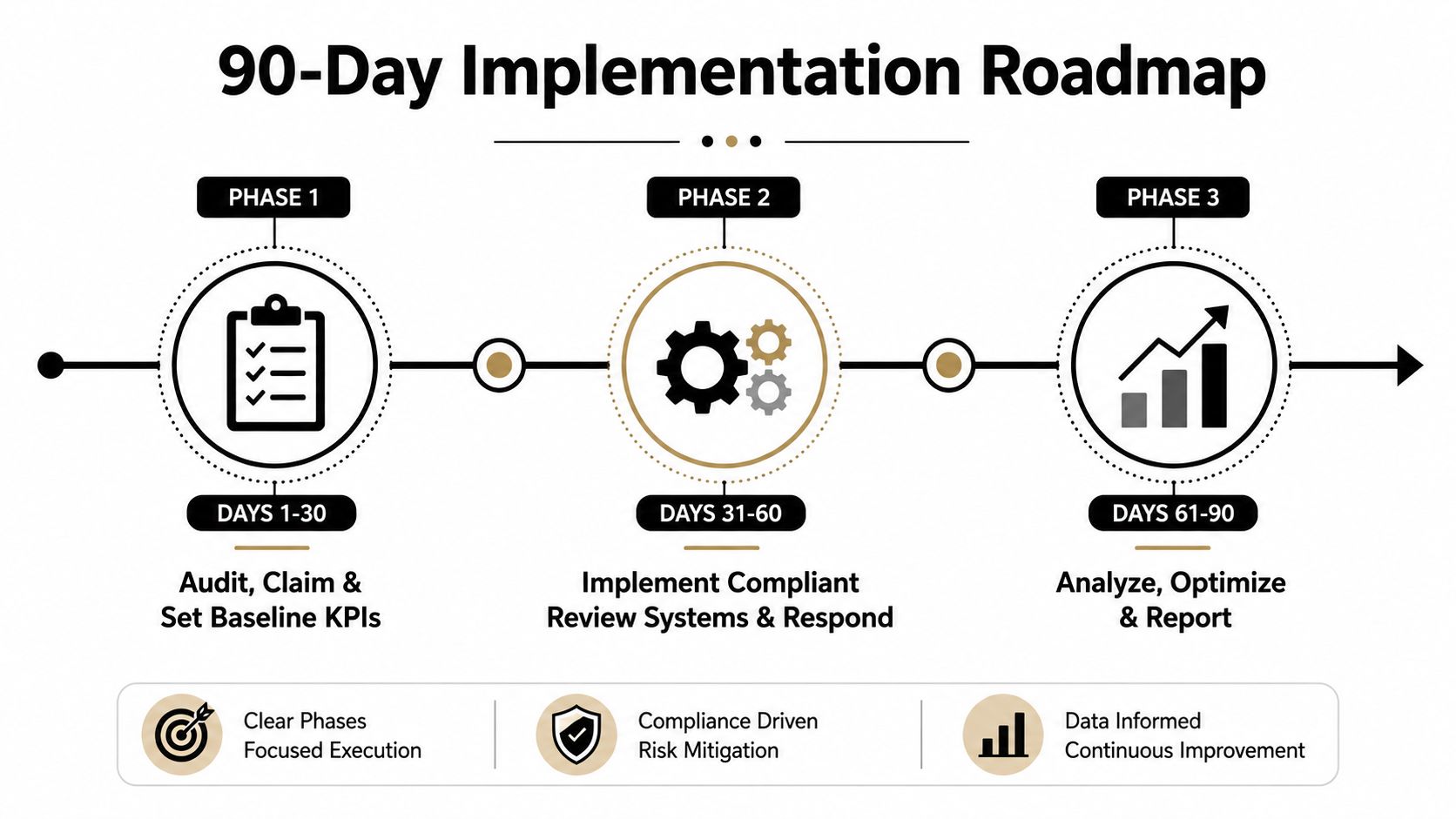
The cleanest way to run reputation work in a small restaurant is as a 90-day performance project. Days 1 to 30 cover audit, alerting, response protocol, and tagging the last 100 reviews. Days 31 to 60 focus on review generation at every major guest touchpoint and fixing the two most frequent root causes. Days 61 to 90 are for measuring rating change and cross-checking weekly sales, as outlined in the Contenidorestaurante 2026 guide.
The weekly dashboard that gets used
The dashboard does not need to be fancy. It needs to answer one question, whether the restaurant is getting better. Track average rating, review volume in the last 90 days, owner-response percentage, average response time, top complaint themes, and unresolved items at baseline, then review them weekly, as noted earlier in the same 2026 guide. That gives the team a real operating rhythm instead of a one-off cleanup project.
A good weekly review meeting usually looks like this:
| Metric | What to look for | Action if it slips |
|---|---|---|
| Average rating | Direction, not just the number | Check complaint themes |
| Review volume | Whether requests are working | Tighten asks at guest touchpoints |
| Response rate | Whether every review got a reply | Assign clear ownership |
| Response time | How quickly the team replies | Adjust inbox routing |
| Top complaint themes | Repeating service or product issues | Hand to ops, not marketing |
| Unresolved items | Anything still open | Set a due date and follow up |
How this connects to local SEO
Reputation management also feeds local search because reviews are part of how Google interprets relevance and trust. The practical takeaway is straightforward, stronger review signals help the business look more credible in local discovery, and better visibility can improve the chance that the right diners see the listing first. Reputation work and local SEO need to be treated as one plan for a restaurant.
The point of the 90-day window is discipline. If you tag complaints, reply quickly, ask consistently, and fix recurring issues, the profile usually stops looking reactive and starts looking managed. If you do not, the guest sees a pattern, and the pattern becomes the brand.