
A Fort Myers shop owner launches a clean-looking site, adds products, runs a few ads, and waits for sales from search. Instead, Amazon owns the broad terms, stronger local competitors take the map pack, and the site gets a trickle of traffic that does not convert. That is the reality for a lot of small and mid-sized businesses in Southwest Florida.
Ecommerce SEO works best when it is treated as a revenue channel, not a side task for your web developer. The goal is simple. Show up for searches tied to buying intent, make the right pages easy to find, and remove the friction that keeps mobile shoppers from converting. For businesses in Cape Coral, Naples, and Fort Myers, that often means fixing basics before chasing big ambitions.
I see the same pattern over and over with local companies. Category pages are thin. Product pages target terms that are too broad. Internal links are inconsistent. Mobile speed is poor. Google Business Profile is either half-finished or disconnected from the ecommerce strategy. None of those problems are glamorous, but they affect sales.
That is also the opportunity.
A smaller Southwest Florida business does not need to outrank national retailers on every high-volume keyword. It needs a site structure that matches how local buyers search, including product modifiers, service intent, and geographic terms that reflect real demand in this market. A Naples skincare brand, a Cape Coral marine supply store, and a Fort Myers home services company should not run the same SEO playbook, even if all three sell online.
This guide focuses on the checklist that produces measurable return. It covers what to fix on product and category pages, how to build internal links that support rankings, where local pages fit into ecommerce growth, and which technical issues deserve attention first. The point is not more SEO activity. The point is more qualified traffic, more calls, and more sales from search.
1. Optimize Product Pages with Long-Tail Keywords and Intent-Based Search Terms
Most small businesses lose because they chase broad keywords that national brands already own. “Roof repair,” “air filters,” or “cleaning products” sounds attractive, but those terms are crowded and often vague. A better play is targeting longer, intent-heavy searches that sound closer to what a real buyer types when they're ready to act.
Ahrefs recommends focusing ecommerce pages on long-tail variations and synonym coverage, especially on product pages, because those searches tend to show stronger purchase intent and lower competition. Their guidance also points to competitor keyword analysis in Site Explorer and the Organic keywords report to find the top ranking terms on competing product or category pages, then work those phrases into your own titles and copy through Ahrefs' ecommerce SEO guide.

What this looks like in Southwest Florida
A Naples skincare retailer shouldn't build a page around “face serum” and hope for the best. A better page angle is “vitamin c face serum for humid weather” or “fragrance-free anti-aging serum for sensitive skin.” That's closer to how buyers search and easier to match with a product page that converts.
The same applies to service-driven ecommerce. A Cape Coral HVAC company selling maintenance plans online will do better with a page aligned to “annual AC maintenance plan Cape Coral” than a catch-all page for “HVAC services.”
Practical rule: If the keyword could describe a thousand businesses, it's probably too broad for your product page.
How to apply it without overcomplicating things
Start with your category pages and top revenue products. Pull the terms people already use in Google Search Console, then compare them against competitor pages in Ahrefs or a similar tool.
Use this page structure:
- Lead with the benefit: Open with what the buyer gets, not a block of specs.
- Add decision-stage language: Include words like size, use case, compatibility, location, material, or service type where relevant.
- Work in variants naturally: Use synonyms in subheads, bullets, image alt text, and short descriptive paragraphs.
A Fort Myers cleaning supplier could write a product page that leads with “streak-free glass cleaning for commercial buildings,” then follow with microfiber type, surface compatibility, wash instructions, and related products. That's stronger than pasting in a manufacturer description and calling it optimized.
2. Implement Strategic Internal Linking Architecture with Contextual Anchor Text
Internal linking is one of the cheapest SEO wins on most ecommerce sites. It doesn't require ad spend, new software, or a massive redesign. It requires intention.
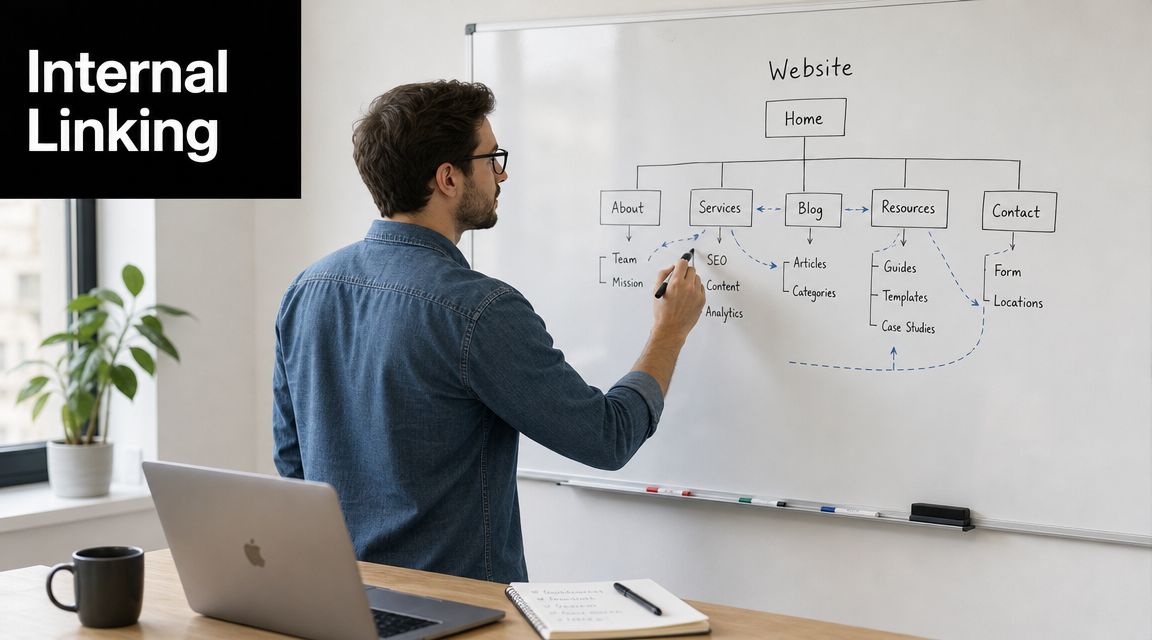
The stores that perform better usually make it easy for Google and real visitors to move from broad topics to commercial pages. Blog posts point to category pages. Category pages point to subcategories and featured products. Product pages link back to parent collections and sideways to related options.
Where small businesses usually get this wrong
A lot of local businesses publish content in isolation. They'll write a blog post on tile roof maintenance, or a page about hypoallergenic bedding, and then never connect it to a money page. That leaves rankings and conversions on the table.
For example, a carpet cleaning company in Fort Myers might publish a useful article on removing pet stains, but if that article doesn't link to its commercial carpet cleaning or upholstery cleaning pages with natural anchor text, the page may attract traffic without producing many leads.
A simple linking model that works
Use a three-layer structure:
- Top pages: Homepage, core category pages, major service pages
- Support pages: Buying guides, comparison pages, seasonal content, FAQs
- Bottom pages: Product pages, individual service packages, location pages
Then build links with context.
- Use descriptive anchors: “commercial floor cleaning packages” is more useful than “click here.”
- Link from strong pages to weak pages: If one blog post ranks well, use it to support underperforming categories.
- Add breadcrumbs: Home > Category > Subcategory > Product helps both search engines and customers.
A Naples medical supply store might link from a blog on post-surgery home recovery to product collections for shower chairs, blood pressure monitors, and mobility aids. That turns educational traffic into commercial traffic.
If you sell on Amazon too, this same long-tail and intent mindset also shows up in marketplace optimization. This guide for Amazon brand owners is useful for thinking through keyword specificity across platforms.
Internal links should move people toward a decision, not just keep them browsing.
3. Create Location-Specific Product and Service Pages for Geographic Expansion
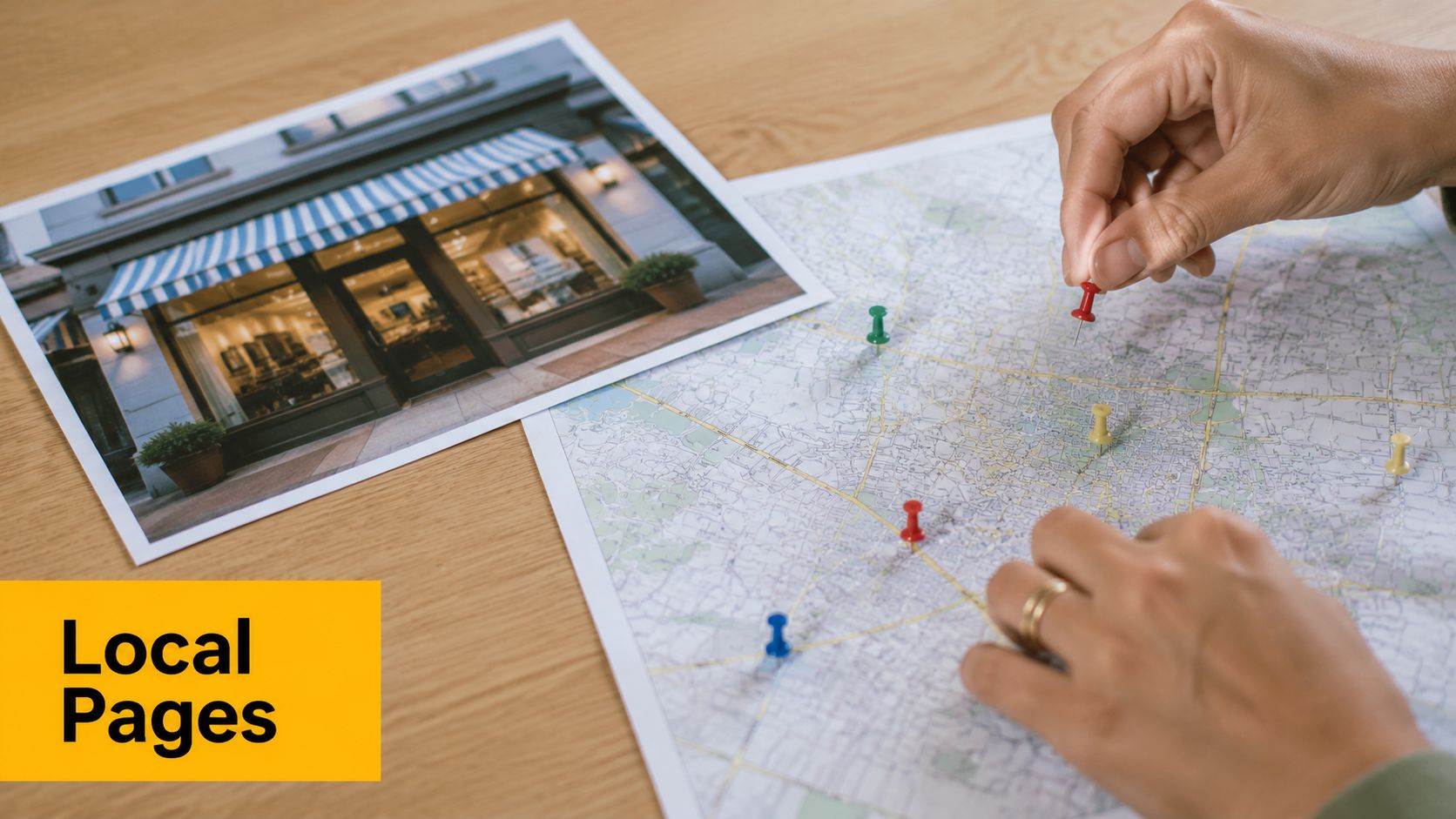
A store in Fort Myers can rank well for its main category page and still miss revenue from buyers in Cape Coral or Naples who want confirmation that delivery, pickup, or service is available where they live. I see this a lot with Southwest Florida businesses. They cover a wide area, but the site treats every city the same, so search visibility stays shallow and conversion rates stay weaker than they should.
Location pages work when they answer a real local question.
For an ecommerce business, that usually means more than dropping a city name into the title tag. A useful page explains what customers in that market can expect: delivery zones, turnaround times, pickup options, installation coverage, local inventory realities, seasonal demand, or product fit for the area. In Naples, that might mean higher demand for upscale outdoor furnishings or hurricane prep products. In Cape Coral, it may be canal-front home needs, boat accessories, or service logistics tied to bridge traffic and route planning.
What makes a location page worth publishing
Each page needs its own business case. If the page would not help a buyer in Bonita Springs make a decision, skip it.
Strong location pages usually include:
- A city-specific headline and intro: Match the product or service to the local need.
- Operational details: Delivery windows, pickup instructions, service radius, or appointment availability for that city.
- Local trust signals: Reviews from nearby customers, project photos, service examples, or neighborhood references that are true and useful.
- Relevant page connections: Links to the core category, related products, and nearby city pages where it helps the shopper.
- A direct next step: Call, quote request, book-now button, or add-to-cart path.
The trade-off is maintenance. Ten thin city pages create more problems than three strong ones. I usually tell clients to start with the markets that already produce orders or service calls, then build out only where demand and margins justify the work.
A Bonita Springs HVAC supplier, for example, might publish separate pages for AC replacement parts, smart thermostats, and same-day delivery coverage in each priority service area. Each page should explain something specific about that city, such as condo access constraints, older housing stock, or local delivery cutoffs. Reused copy with swapped city names does not hold up.
Page design matters here too. If your local pages bury availability, contact options, or service-area details under generic layout blocks, shoppers leave. This breakdown of ecommerce website design best practices is a good reference for structuring pages so people can find the details that affect the sale.
One more point. Location expansion is not a volume play. For small and mid-sized businesses in Southwest Florida, a smaller set of accurate, well-supported city pages usually produces better ROI than trying to cover every town between Fort Myers and Naples with templated content.
4. Optimize for Core Web Vitals and Mobile-First Indexing
A customer in Fort Myers taps your product page from Google on a phone. If the page stalls, jumps around, or takes too long to show the buy button, that visit is often gone before your offer even loads. For Southwest Florida ecommerce businesses, site speed is not just a technical score. It affects calls, carts, and revenue.
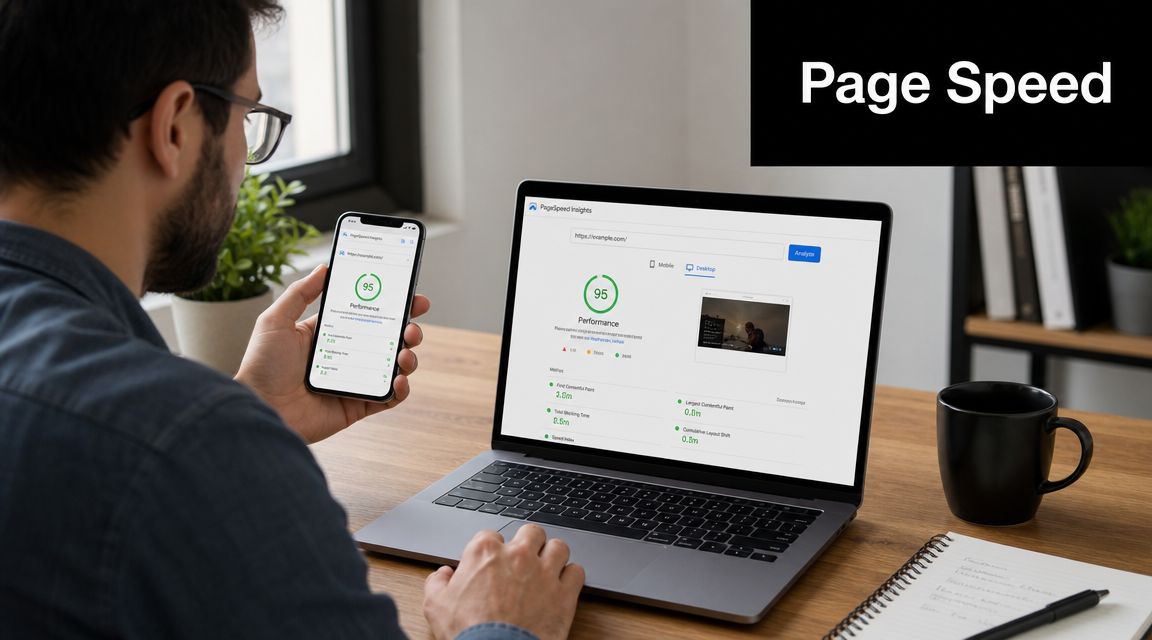
Core Web Vitals and mobile-first indexing matter because Google evaluates the mobile version of your site first, and shoppers do the same in real life. I see this problem a lot with small and mid-sized stores in Cape Coral, Naples, and Fort Myers. The desktop site looks fine in the office. The mobile experience is cluttered, heavy, and slower than the owner realizes.
To see how layout decisions affect usability and performance together, review these ecommerce website design best practices.
What to fix first
Start with the issues that directly affect mobile shoppers and crawl efficiency.
- Shrink heavy images: Product galleries, homepage banners, and lifestyle photos are common slowdowns.
- Keep the mobile layout stable: Buttons, price blocks, and product photos should not shift while the page loads.
- Trim third-party scripts: Chat tools, popups, review widgets, and tracking tags often add more weight than owners expect.
- Control index bloat: Filter combinations, search-result pages, and sort parameters can create duplicate or low-value URLs.
- Keep key pages close to the homepage: Category pages, top products, and high-margin collections should not be buried.
Technical SEO guidance for ecommerce also points to the same fundamentals. Clean URL structure, shallow click depth, canonical tags, XML sitemaps, and careful handling of duplicate faceted pages help search engines reach the pages that deserve to rank.
Mobile problems show up in revenue fast
This is usually where the money leaks first. A shopper in Naples comparing two stores on a phone will not wait while oversized images load. A contractor in Cape Coral trying to reorder parts between jobs will not hunt for a hidden add-to-cart button. If the page fights the user, the sale often goes to the faster site.
That trade-off matters. Features that look useful, like sticky promos, autoplay video, aggressive popups, and multiple app integrations, can hurt the exact pages that need to convert. More functionality is not always better if it slows down product and category pages.
A practical standard for local ecommerce teams
For most Southwest Florida businesses, the goal is simple. Make your important pages load fast on mobile, keep the layout steady, and remove anything that gets between the shopper and the next action.
Check these pages first:
- Top category pages
- Best-selling product pages
- Local landing pages that attract organic traffic
- Cart and checkout pages
- Any page that ranks well but converts poorly
If one of those pages is slow, fix that before spending time on lower-value templates. I usually tell owners to start with revenue pages, not site-wide perfection.
For a visual walkthrough of performance thinking, this video is a helpful primer.
5. Build High-Quality Backlinks Through Local Partnerships and Industry Authority
Backlinks still matter, but most small businesses approach them the wrong way. They buy junk placements, submit to worthless directories, or chase random guest posts with no local or industry relevance.
For a business in Fort Myers or Naples, the better strategy is usually simpler. Earn links from organizations, businesses, and publications that already make sense in your market.
Good local links are usually obvious
If you sponsor a youth sports team, join a local chamber, partner with a builder, support a nonprofit event, or contribute expertise to a local guide, those are all potential link opportunities. They're relevant, believable, and connected to the actual market where you want visibility.
A Cape Coral HVAC company could earn useful links from local associations, property management partners, builders, or community event pages. A medical practice in Naples might earn mentions from local health resources, referral partners, and regional organizations.
Field note: Five relevant links from real local organizations usually beat a pile of links from low-quality directories nobody visits.
What to pursue and what to avoid
Go after assets that reinforce trust:
- Chamber and association listings: These are often solid foundational links.
- Partner features: Vendors, suppliers, contractors, and complementary businesses can be strong sources.
- Local resource content: Create a guide that another local site would reference.
- Community visibility: Sponsorship pages, event recaps, and local expert commentary can produce natural mentions.
Skip anything that feels manufactured. If the page exists only to sell links, or the site has no connection to your industry or geography, it's probably not worth it.
A Fort Myers cleaning company might publish a detailed office cleaning preparation guide and share it with commercial real estate contacts, office managers, or local business groups. That's a practical asset with link potential. It also helps sales, which matters more than collecting vanity SEO wins.
6. Implement Schema Markup and Structured Data for Rich Snippets and Knowledge Panels
A Fort Myers store can have solid products, fair pricing, and decent page copy, then still lose clicks because Google shows a competitor with price, stock status, ratings, and return details right in search results. Schema helps fix that. It gives search engines cleaner context about what you sell and how your business operates.
For Southwest Florida ecommerce brands, this matters most on pages close to revenue. Product pages, store detail pages, and review content usually deserve attention first. If you sell patio furniture in Naples, boat accessories in Cape Coral, or uniforms in Fort Myers, structured data can help your listings show more useful details before the click. That improves qualified traffic, not just raw impressions.
Start with the markup that supports buying decisions:
- Product schema: name, description, SKU, brand, images, price, availability, condition
- Offer details: shipping, returns, currency, sale pricing where applicable
- Review and rating markup: only when the reviews are real and visible on the page
- Local business schema: business name, address, phone, hours, service area
- Breadcrumb schema: clearer site structure for search engines and users
Use JSON-LD. It is easier to manage, easier to audit, and less likely to break when a developer changes the page template.
The catch is accuracy. If your schema says a product is in stock at $49, but the page shows out of stock at $59, Google has no reason to trust you. I see this a lot on Shopify and WooCommerce builds where an app adds markup on top of a theme that already outputs its own version. Before adding anything new, check what your platform already generates. Then test a few priority pages and clean up duplicates.
A practical setup for a Naples supplement retailer might look like this: product schema on each item page, review markup tied to actual customer reviews, breadcrumb markup across the catalog, and local business markup on the contact or store page. This addresses the basics without turning the site into a plugin pile.
If you operate in a visual category like apparel, schema also supports better product understanding across search surfaces. Teams using AI for catalog enrichment and merchandising can borrow ideas from WearView's insights on AI in fashion, especially when product attributes, variants, and imagery need to stay consistent across large inventories.
One warning. Schema does not rescue a weak page. It supports clear pages with accurate product data. Handle your feed, on-page copy, pricing, and availability first. Then add structured data to reinforce what is already true.
7. Create Comprehensive, Unique Product Descriptions That Balance SEO and Conversions
Manufacturer copy is one of the biggest weak spots I see on ecommerce sites. It's usually thin, generic, and interchangeable. It doesn't help you rank, and it rarely helps someone buy.
The better approach is to write descriptions that answer two questions at once. What is this item, and why should I choose it?
What strong product copy actually includes
Start with benefits. Then move into specifications. Then handle friction points.
If you sell commercial cleaning supplies in Fort Myers, don't open with “blue microfiber cloth, 16×16, 200 GSM.” Open with what the product solves: streak-free cleaning, less lint, safer for glass, reusable for busy crews. Then move into size, material, care instructions, and use cases.
A healthcare retailer selling blood pressure monitors in Naples should explain who the device is for, how easy it is to use, what the cuff fits, and what's included. Technical details matter, but they usually shouldn't lead.
Which pages deserve custom copy
A lot of business owners overspend. Not every SKU deserves a hand-written essay.
One of the more useful nuances in ecommerce SEO is the tradeoff between scaling product-page optimization and avoiding thin, repetitive content across large catalogs. The verified guidance notes that many SEO guides push unique titles, meta descriptions, and longer descriptions, but the smarter question is which pages deserve editorial depth and when consolidation is better than more content, as discussed in Grumspot's overview of ecommerce SEO best practices.
Use custom copy on:
- Top sellers
- High-margin items
- High-competition categories
- Pages with clear local or niche intent
Use templated but useful copy on low-priority variants where the differences are minor. Consolidate near-duplicates when separate pages create clutter.
A local apparel retailer can give full editorial treatment to its best-selling seasonal collections while keeping color variants under a cleaner parent structure. That's usually a better use of time.
If you're exploring how merchandising and content are changing in fashion ecommerce, these WearView insights on AI in fashion add some helpful perspective.
8. Develop a Content Marketing Strategy with Topic Clusters and Pillar Pages
A Fort Myers business owner publishes blog posts for six months, gets a little traffic, and still sees no lift in sales. The problem usually is not effort. It is structure.
Topic clusters fix that by tying educational content to pages that make money. You build one main page around a revenue-driving topic, then support it with smaller pages that answer related questions and link back to the main page. For Southwest Florida ecommerce brands, that approach helps you rank for broader searches while still capturing local buying intent from Fort Myers, Cape Coral, and Naples.
If you need a practical framework, this guide to content marketing strategies for small business lays out how to connect SEO content to actual revenue goals.
A cluster model for Southwest Florida businesses
Say you run an HVAC company in Cape Coral and sell maintenance plans online. A strong pillar page could target "AC maintenance plans in Southwest Florida." Supporting pages can cover hurricane-season system prep, signs an AC unit needs service, indoor humidity problems, filter selection, and plan comparison questions. That setup gives Google a clearer picture of the topic and gives shoppers more reasons to trust the offer before they buy.
The same model works for a Naples med spa that sells treatment packages online. The pillar page might focus on skin rejuvenation options. Supporting content can answer questions about downtime, skin types, treatment timing, and pre-treatment care. Each page should point readers back to the package or service page that fits the search intent.
What makes a cluster produce revenue
Volume is not the goal. Relevance is.
- Start with a topic tied to sales: Build clusters around products, services, or categories that already matter to your margin.
- Create one clear pillar page: Make it the best page on your site for that subject, not a thin summary.
- Publish support content that answers real objections: Shipping, installation, sizing, maintenance, local conditions, and use cases are often better topics than generic trend posts.
- Use internal links with intent: Link informational pages to collection, service, or product pages where a shopper can take the next step.
- Adjust for local demand: A water filtration company in Fort Myers should talk about local water concerns. A beach apparel retailer in Naples should cover seasonal buying patterns and fabric choices for heat and humidity.
As noted earlier, current ecommerce SEO guidance has shifted toward stronger category and collection page targeting, not just individual product pages. That is one reason cluster strategy works so well. It strengthens the pages that sit closer to revenue while still bringing in top-of-funnel traffic.
One trade-off matters here. Small businesses do not need a giant content library. They need a focused one. Ten tightly connected pages built around a profitable category will usually outperform fifty disconnected blog posts that never support a transaction.
A Fort Myers company selling water filtration systems can turn that into a clean cluster. Build the main page around whole-home and under-sink filtration options, then support it with articles on local water quality concerns, filter replacement schedules, installation choices, and product comparisons. That traffic has a clear path to convert because the content was planned to support the sale from the start.
9. Optimize Google Business Profile and Local Search Presence
If you're a Southwest Florida business with any local service area, showroom, clinic, office, or pickup component, your Google Business Profile matters more than most owners realize. It influences how you appear in maps, branded search, and local intent searches, and it often shapes first impressions before someone even clicks your website.
This isn't separate from ecommerce SEO. It supports it. A buyer might discover you in local search, click through to a product collection, and convert there.
What to optimize first
A weak profile usually has the same issues every time: missing categories, poor images, thin descriptions, unanswered reviews, and no clear service areas.
Fix those first.
- Choose accurate categories: Don't stuff every possible one in.
- Add strong images: Storefront, team, products, jobs, and real service photos.
- Write a complete business description: Use natural language that matches what you sell.
- Manage reviews actively: Respond to both positive and negative feedback.
A Naples retailer that offers in-store pickup should make that obvious. A Fort Myers clinic should list hours accurately and keep service information current. A Cape Coral contractor should define service areas clearly and post useful updates instead of leaving the profile dormant.
Connect your profile to your site
Your GBP shouldn't live in a silo. The services, products, and locations listed there should match the site structure.
If your profile highlights emergency AC repair in Cape Coral, your site should have a strong matching page. If your GBP shows a primary retail category, your website should reflect that with category pages and clear on-page language. Alignment helps both visibility and conversions.
I'd rather see a fully completed, actively managed profile tied to a clean local landing page than a fancy site with no local search presence behind it.
10. Build and Optimize Citation Authority Across Relevant Directories and Platforms
Citations are mentions of your business information across third-party platforms. For local and hybrid ecommerce businesses, they help reinforce trust, consistency, and location signals.
They're not exciting, but they matter. And when they're wrong, they create avoidable confusion.
What citation work actually means
You're checking that your business name, address, phone number, and core details match across the web. That includes major platforms, local listings, industry directories, maps apps, and association pages.
If your Fort Myers business uses “Suite 204” on the website, but “Ste 204” on one directory, and no suite on another, that's not a disaster by itself. But when inconsistencies pile up across many platforms, the overall trust signal gets messier.
For businesses that want a starting point, this resource on how to submit to local directories outlines where to begin.
Where to focus first
Don't chase every directory on the internet. Prioritize the ones that carry real weight or actual referral value.
- Core platforms: Google Business Profile, Apple Maps, Facebook, Yelp
- Industry directories: Medical, legal, home services, real estate, or trade-specific listings
- Local organizations: Chambers, business associations, city or regional listings
- Data cleanup: Remove duplicates and update outdated information
A Naples attorney, Cape Coral roofer, or Fort Myers med spa each needs a different citation mix. That's why blind bulk submission services often do more cluttering than helping.
The best citation work is accurate, selective, and maintained. Set it up once, audit it periodically, and make updates whenever your hours, services, phone number, or address changes.
Top 10 Ecommerce SEO Practices Comparison
| Strategy | 🔄 Implementation Complexity | ⚡ Resource Requirements | 📊 Expected Outcomes | 💡 Ideal Use Cases | ⭐ Key Advantages |
|---|---|---|---|---|---|
| Optimize Product Pages with Long-Tail Keywords and Intent-Based Search Terms | 🔄 Medium, research + page edits (4–8 weeks) | ⚡ Moderate, SEO tools, copywriting, ongoing updates | 📊 25–40% increase in qualified organic traffic (3–6 months) | 💡 SMBs competing with big retailers; location/service-specific product pages | ⭐ Higher conversion intent, lower CPC, improved CTR |
| Implement Strategic Internal Linking Architecture with Contextual Anchor Text | 🔄 Low–Medium, planning + link implementation (2–4 weeks) | ⚡ Low, content audit, editorial time, site map | 📊 15–25% improvement in rankings for linked pages | 💡 Sites with existing content needing authority consolidation | ⭐ Better crawlability, reduced bounce, no external cost |
| Create Location-Specific Product/Service Pages for Geographic Expansion | 🔄 High, many unique pages required (4–12 weeks) | ⚡ High, content per location, schema, local assets | 📊 40–60% increase in location-specific visibility and leads | 💡 SMBs serving multiple cities/regions seeking local dominance | ⭐ Dominates local SERPs, higher local conversion rates |
| Optimize for Core Web Vitals and Mobile-First Indexing | 🔄 High, technical dev work and monitoring (4–16 weeks) | ⚡ High, developers, hosting, CDN, monitoring tools | 📊 10–25% ranking gain + 15–30% conversion uplift | 💡 Mobile-heavy ecommerce or slow sites prioritizing UX | ⭐ Direct Google ranking factor; improved engagement and conversions |
| Build High-Quality Backlinks Through Local Partnerships and Industry Authority | 🔄 Medium, relationship building, ongoing (3–6+ months) | ⚡ Moderate, outreach time, event/sponsorship costs, tools | 📊 20–40% local ranking improvement + referral traffic | 💡 Local SMBs seeking credibility via community/industry links | ⭐ Strong local ranking signal; builds trust and referral sources |
| Implement Schema Markup and Structured Data for Rich Snippets and Knowledge Panels | 🔄 Medium, technical markup and validation (2–6 weeks) | ⚡ Low–Moderate, developer or plugin effort, testing tools | 📊 20–35% increase in CTR from SERPs | 💡 Ecommerce product pages, service businesses and local listings | ⭐ Enables rich results, improves CTR and voice-search eligibility |
| Create Comprehensive, Unique Product Descriptions That Balance SEO and Conversions | 🔄 Medium, content creation per SKU (4–12 weeks) | ⚡ Moderate, copywriters, product experts (30–45 min/desc) | 📊 15–25% conversion gain + 20–30% organic visibility lift | 💡 Ecommerce SMBs with many SKUs needing differentiation | ⭐ Reduces returns, increases AOV and trust |
| Develop a Content Marketing Strategy with Topic Clusters and Pillar Pages | 🔄 High, strategic planning and large content investment (3–6 months) | ⚡ High, long-form writers, SEO tools, editorial workflow | 📊 40–80% organic traffic growth to target topics over 6–12 months | 💡 Businesses aiming to establish topical authority and leads | ⭐ Sustainable topical authority and E‑E‑A‑T signals |
| Optimize Google Business Profile and Local Search Presence | 🔄 Low, setup and ongoing maintenance (1–2 weeks initial) | ⚡ Low, profile management, photos, review responses | 📊 30–100% increase in local visibility + 20–40% more calls/leads | 💡 Brick-and-mortar or service-area SMBs targeting local customers | ⭐ Highest ROI local tactic; free, drives direct calls and directions |
| Build and Optimize Citation Authority Across Relevant Directories and Platforms | 🔄 Medium, audit and submission, ongoing maintenance | ⚡ Moderate, time for audits, directory submissions, some fees | 📊 Improved local pack rankings and referral traffic from directories | 💡 SMBs needing consistent NAP and stronger local signals | ⭐ Strengthens local ranking signals and business legitimacy |
Turn Your Checklist Into Conversions
Ecommerce SEO works best when you treat it like an operating system, not a one-time task. That means building the right page structure, tightening your technical setup, improving local signals, and making every important page easier for both Google and buyers to understand. When those pieces line up, your site becomes more than an online brochure. It becomes a real sales asset.
For most small and mid-sized businesses in Southwest Florida, the mistake isn't doing too little SEO. It's doing disconnected SEO. You might have a decent homepage, a few product pages, maybe some blog posts, maybe a claimed Google Business Profile, but none of it is working together. That's why the checklist matters. Each piece supports the others.
If you're trying to prioritize, start with the items that affect visibility and revenue fastest. Tighten up your Google Business Profile. Fix mobile speed issues. Clean up product and category pages so they match real buyer intent. Add internal links from informational content to the pages that make you money. Then work outward into schema, backlinks, location pages, and content clusters.
The local angle matters more than many business owners think. A company in Fort Myers doesn't need to outrank every national retailer for broad head terms. It needs to show up for the searches that lead to calls, bookings, online purchases, and pickup orders in its service area. That's why local relevance, geographic page targeting, and citation consistency keep showing up in strong campaigns. They help smaller businesses compete where they can win.
There's also a budget reality here. Not every page needs custom long-form content. Not every SKU deserves a manual rewrite. Not every backlink opportunity is worth chasing. Good ecommerce SEO is partly about focus. Pick the pages with the highest commercial value, build a structure that supports them, and stop wasting energy on tactics that look impressive but don't move revenue.
If you've read this far, you probably already know your site has a few weak points. Maybe product descriptions are thin. Maybe your category pages are underbuilt. Maybe your location coverage is vague, or your mobile performance is getting in the way. That's normal. Most local businesses don't need a total rebuild. They need a smarter plan and consistent execution.
For businesses in Fort Myers, Cape Coral, Estero, Bonita Springs, and Naples, Polaris Marketing Solutions is one relevant option if you want help turning these ecommerce SEO best practices into an actual strategy. The agency offers SEO and related digital marketing support for small and mid-sized businesses, including local search and ecommerce-focused work.
Start with the highest-impact fixes, measure what changes, and keep refining. That's how ecommerce SEO becomes profitable instead of theoretical.
If you're ready to see where your website stands, Polaris Marketing Solutions offers a complimentary online analysis and competitor report for Southwest Florida businesses that want clearer direction on SEO, local visibility, and ecommerce growth.