

You spent years learning how to serve people well. You learned diagnosis, treatment, case strategy, ethics, documentation, client care, and all the invisible work that keeps a professional practice strong. Then you opened the doors and ran into a different problem.
The phone stayed quieter than expected.
That gap hits therapists, attorneys, physicians, physical therapists, and other private practice owners the same way. Being qualified doesn’t guarantee being found. That’s why learning how to market a private practice matters so much. Marketing isn’t hype. It’s the system that helps the right people understand what you do, trust you, and take the next step.
Your Practice Thrives on Expertise, Growth Thrives on Marketing
A strong practice usually starts with a simple frustration. You’re good at the work, clients get results, referrals say nice things, but new inquiries come in unevenly. Some months feel solid. Others feel random.
That randomness usually has a cause. Most private practice owners were never trained to build demand. They were trained to deliver care, counsel, representation, or treatment. Marketing got treated like an optional extra when it’s really part of access.
That matters because 77% of patients now begin their healthcare journey with an online search, according to Medfluence Advisors. If your practice is hard to find, hard to understand, or hard to contact, many potential clients never make it to the first conversation.
Practical rule: Marketing should make your practice easier to find, easier to trust, and easier to contact.
A lot of owners overcorrect and try to do everything at once. They post on every platform, buy directory listings, boost random social posts, and rewrite their homepage every few weeks. That approach burns time and rarely creates momentum.
A better approach is simpler. Build the local foundation first. Make the website convert. Add one steady lead channel. Then measure what’s working. If you need a few extra ideas for lean execution, these budget-friendly marketing strategies are useful for small businesses that need traction without wasting cash.
The practices that grow most predictably don’t always have the flashiest brand. They usually have clear positioning, a reliable intake process, and a short list of marketing activities they execute consistently.
Build Your Unmissable Local Foundation
Before you run ads, write blogs, or hire anyone, fix the first thing most local prospects see. Your Google Business Profile.
For many practices, local search is the front door. A therapist in Fort Myers, a family lawyer in Naples, or a pediatric clinic in Cape Coral doesn’t need broad visibility first. They need the right local visibility.

Start with the profile that shows up on Maps
Your Google Business Profile should answer the practical questions fast.
Use a real business category. Add your services. Write a plain-English business description that includes what you do and where you do it. A better version sounds like this:
Couples counselor in Fort Myers helping working professionals with communication, conflict, and relationship repair.
That’s stronger than vague copy like “supporting healing and growth.”
Here’s the baseline checklist:
- Business name: Use your actual practice name consistently.
- Primary category: Choose the closest fit to your service.
- Address and service area: List them accurately and match them everywhere else.
- Hours: Keep them current, especially around holidays or schedule changes.
- Photos: Upload office, exterior, staff, lobby, and branded images.
- Services: Add each service separately instead of bundling everything into one generic line.
- Q&A: Seed common questions and answer them clearly.
- Appointment path: Link directly to your contact or booking page, not just the homepage.
Keep your business details identical everywhere
Google looks for consistency. If your practice name, address, or phone number appears one way on your website and another way in directories, trust drops.
Many small practices lose ground in this area without realizing it. One directory says “Suite 200.” Another says “Ste 200.” A third has an old phone number. None of that feels dramatic, but together it weakens local authority.
For a more detailed local search framework in healthcare, this guide on local SEO for medical practices is a useful reference.
Put real budget behind the basics
Local visibility doesn’t have to mean reckless spending, but it does require committed spending. Successful private practices should plan on allocating 5-10% of annual revenue to marketing, according to Taxfyle. In practice, that budget supports the boring work that drives results: profile optimization, citation cleanup, review management, local landing pages, and selective advertising.
You don’t need a huge marketing machine at the start. You need a clean digital footprint.
One smart habit is checking how your practice appears for core searches in your area. If you’ve never tracked that before, this walkthrough on how to check site ranking in Google gives a practical way to monitor visibility without overcomplicating things.
A simple local example
If you’re a physical therapist in Cape Coral, don’t optimize for “physical therapy services” alone. Build around what people search when they need help now. That usually means a city plus service combination, a condition-specific service page, and a fully built-out Google profile.
A local foundation isn’t glamorous. It is profitable. It’s your storefront, your sign on the road, and your receptionist rolled into one.
Turn Your Website Into a Client Conversion Engine
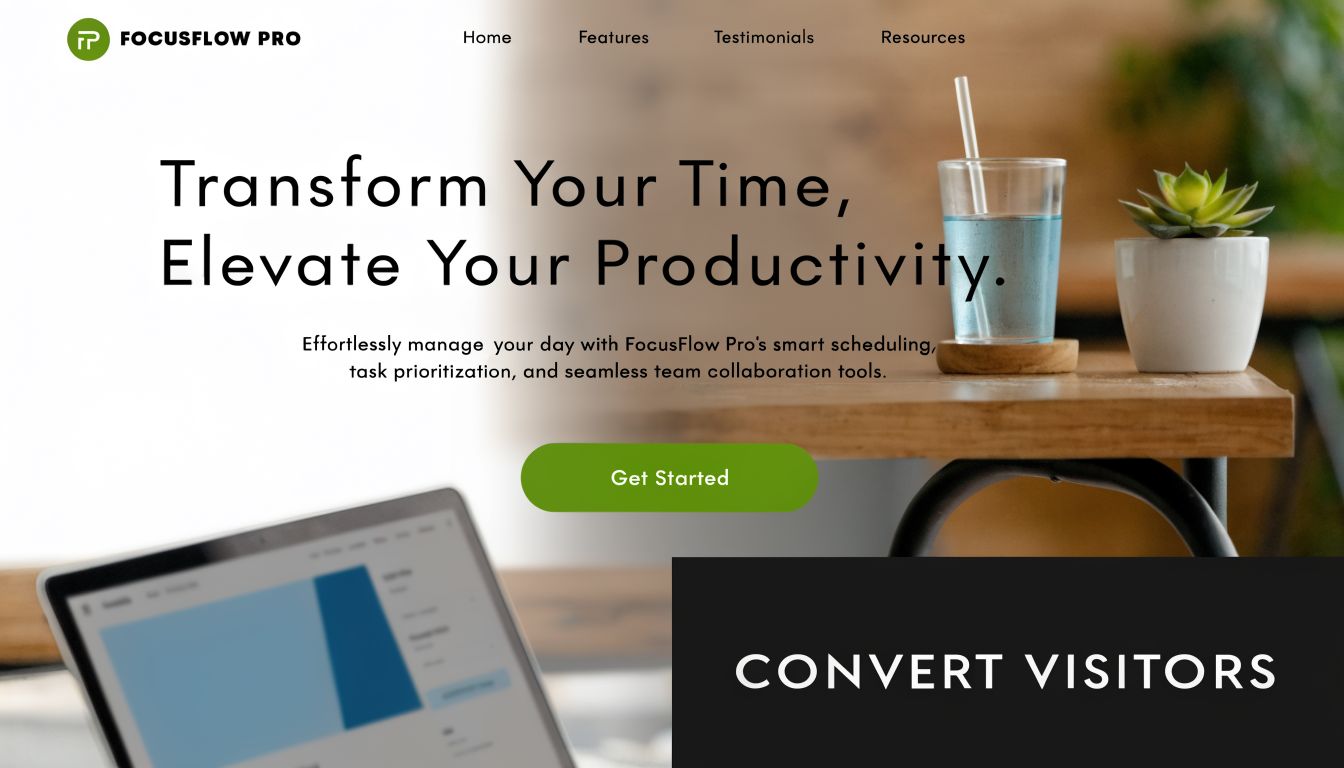
A website shouldn’t act like an online brochure. It should act like a staff member who answers questions, reduces hesitation, and gets the prospect to book.
That starts with clarity.
Stop writing for everyone
The fastest way to weaken a site is to make it broad. “We help everyone with a range of needs” sounds safe, but it usually lowers response quality. A better site makes a specific person feel understood.
Compare these two therapist headlines:
- Weak: Anxiety therapy for individuals, couples, teens, and families
- Strong: Anxiety therapy for high-achieving professionals who are burned out, overwhelmed, and tired of holding it together alone
The second version does two jobs. It filters out poor-fit leads and pulls in the right ones. Legal and medical practices benefit from the same approach. “Estate planning for growing families in Naples” is better than “general legal services.” “Sports injury rehab for active adults in Fort Myers” is better than “quality physical therapy care.”
Your homepage has one job
When someone lands on your homepage, they should understand three things in seconds:
- What you do
- Who you help
- How to get started
If they have to dig for that, many of them leave.
Use a homepage structure like this:
| Page element | What to say |
|---|---|
| Headline | Service + audience |
| Subheadline | Problem you solve + location if relevant |
| Primary button | Book consultation, call now, request appointment |
| Proof section | Credentials, approach, reviews, FAQs |
| Next step | Short form or scheduler |
The copy should sound like a helpful professional, not a mission statement generator.
Friction costs you clients
The intake process is where many practices leak opportunity. Most practices lose potential clients due to operational bottlenecks, not poor service. Optimizing the intake funnel can increase inquiry-to-booking conversion from a typical 5-10% to over 25-35%, according to Pabau.
That one fact should change how you look at your website.
If a prospect wants to contact you and the process feels annoying, they often won’t complain. They’ll just move on.
Check these friction points today:
- Mobile contact path: Make sure the phone number is clickable on phones.
- Contact form length: Ask only for what your team needs to respond.
- Booking options: Offer a clear request form, scheduler, or both.
- Response expectations: Tell people when they’ll hear back.
- Dead-end pages: Every service page should end with a next step.
A strong explanation of website messaging and conversion strategy often lands better in video than text alone. This walkthrough is worth watching before you rewrite your pages.
What this looks like in real practice
If I were reviewing a solo attorney’s site, I’d cut the stock phrases first. “Dedicated to excellence” doesn’t help a stressed prospect. “Helping small business owners handle contracts, disputes, and day-to-day legal risk” does.
If I were reviewing a counseling site, I’d simplify the choices. Too many practices make every visitor choose between ten modalities before they’ve even decided whether they trust the provider. Start with the client’s problem. Explain your process later.
The best websites convert because they reduce uncertainty. They don’t show off. They guide.
Create a Flow of Leads with Content and Paid Ads
Once the local base is in place and the website can convert, you need a steady way to drive attention. For most private practices, that comes from two channels working together: content for trust and paid ads for speed.
Relying on one without the other creates problems. Content alone can be slow. Ads alone can get expensive if the message and landing page aren’t tight.
Content earns trust before the first call
The easiest content plan is also the most useful. Write down the questions prospects ask every week, then answer them publicly.
A family lawyer might publish:
- What to bring to your first divorce consultation
- How custody conversations usually start
- What changes when a business is part of the divorce
A therapist might publish:
- How to know whether burnout is becoming anxiety
- What couples counseling is like in the first session
- How therapy works when you travel often for work
A medical practice might publish:
- When knee pain needs physical therapy
- What to expect from a first pelvic floor appointment
- How long post-surgical rehab usually takes
Those topics do more than help SEO. They reduce fear. They answer objections before your front desk has to.
Build one simple content rhythm
Don’t create a giant editorial calendar you’ll abandon in two weeks. Use a practical rhythm:
- Choose one core service
- Write a useful page for that service
- Publish supporting articles around common questions
- Turn each article into an email
- Reuse the ideas in short social posts
That gives you one message across several touchpoints without creating extra work.
If you want a broader framework for channel selection and execution, these actionable healthcare digital marketing strategies show how to build an integrated approach instead of chasing random tactics.
Helpful content works best when it addresses the prospect’s confusion, not when it tries to impress peers.
Paid ads work when intent is high
Google Ads is usually the cleanest starting point for a private practice because search intent is direct. Someone typing “pediatric physical therapy Cape Coral” or “therapist for anxiety near me” is already looking for help.
The mistake is launching ads before the landing page is ready. If the ad promises one thing and the page delivers a vague overview, you pay for clicks that go nowhere.
Use a simple structure:
| Campaign part | Example |
|---|---|
| Keyword theme | Couples counselor Fort Myers |
| Ad headline | Couples Counseling in Fort Myers |
| Ad copy angle | Communication help for working couples |
| Landing page | Service-specific page with booking CTA |
| Conversion action | Call, form fill, or appointment request |
Keep targeting tight. Match the ad to the service. Send traffic to a page built for that need.
What works and what usually doesn’t
Works
- Search-focused ads tied to real service demand
- Blog topics based on actual intake questions
- Email follow-up with useful guidance
- Service pages built around one clear audience
Usually doesn’t
- General awareness ads with no local targeting
- Blog posts written for algorithms instead of clients
- Boosted social posts with no offer or next step
- Sending all ad traffic to the homepage
Good lead generation is less about volume and more about fit. A smaller flow of the right inquiries beats a big pile of weak ones every time.
Build Unshakeable Trust with Referrals and Reviews
Trust compounds differently than traffic. A prospect might find you through Google, but many of them decide based on what other people say about you.
That’s why referrals and reviews deserve a separate system. Not a vague hope. A system.

Referrals start with relevance
The best referral relationships usually come from adjacent professionals who serve the same person at a different point in their journey.
Examples:
- Postpartum therapist: OB-GYNs, doulas, lactation consultants, pediatricians
- Estate planning attorney: financial advisors, CPAs, real estate professionals
- Physical therapist: orthopedic practices, primary care providers, gyms, coaches
A good outreach email is short and grounded in client care.
Hi Dr. Lopez, I run a counseling practice that supports working mothers dealing with postpartum anxiety and overwhelm. I often look for trusted local providers to refer clients to, and I wanted to introduce myself in case it’s useful to connect. If it makes sense, I’d be happy to share more about who I help and learn more about your work.
That works better than a long pitch deck nobody asked for.
If physician partnerships are part of your growth plan, this guide on strategies for doctor referrals is a practical companion.
Reviews need a repeatable process
Many practice owners wait passively for reviews. That almost always means they get too few, too slowly.
A better approach is to ask at the right moment, with clean wording and a direct link. Keep it simple.
Review request email template
Subject: Quick favor
Hi [First Name],
I’m glad we were able to help. If you’re comfortable sharing your experience, would you consider leaving a Google review? It helps other people who are looking for the right practice feel more confident reaching out.
Here’s the review link: [insert link]
Thank you,
[Name]
No pressure. No incentives. Just a clear ask.
Responding matters as much as collecting
A good response to a positive review shows appreciation. A good response to a negative review shows professionalism. In regulated industries, you also need to protect privacy. Never confirm sensitive details publicly.
Use a response style like this:
- Positive review: Thank you for your kind words. We appreciate you taking the time to share your experience.
- Negative review: Thank you for the feedback. We take concerns seriously and want to learn more. Please contact our office directly so we can address this appropriately.
For practices in healthcare, a structured approach to reputation management for doctors can help standardize requests, monitoring, and responses without sounding robotic.
A review profile doesn’t have to be perfect. It has to look active, credible, and cared for.
Referral trust grows through follow-through
Many owners often miss an easy win. They meet referral partners once, then disappear.
Instead:
- thank people who send good-fit referrals
- send occasional check-ins
- share useful resources they can pass along
- refer back when appropriate
- stay visible without constantly asking for something
That’s how trust gets durable. Not through networking theater. Through steady professional usefulness.
Measure What Matters to Maximize Your ROI
Marketing gets expensive when you can’t tell what’s working. That problem is common. A 2025 APA survey found that 68% of therapists struggle to attribute new clients to specific marketing channels, according to Gottman.
That number should sound familiar even outside therapy. Plenty of practice owners know leads are coming in, but they don’t know which efforts deserve more money and which ones should be cut.
Track only a few numbers first
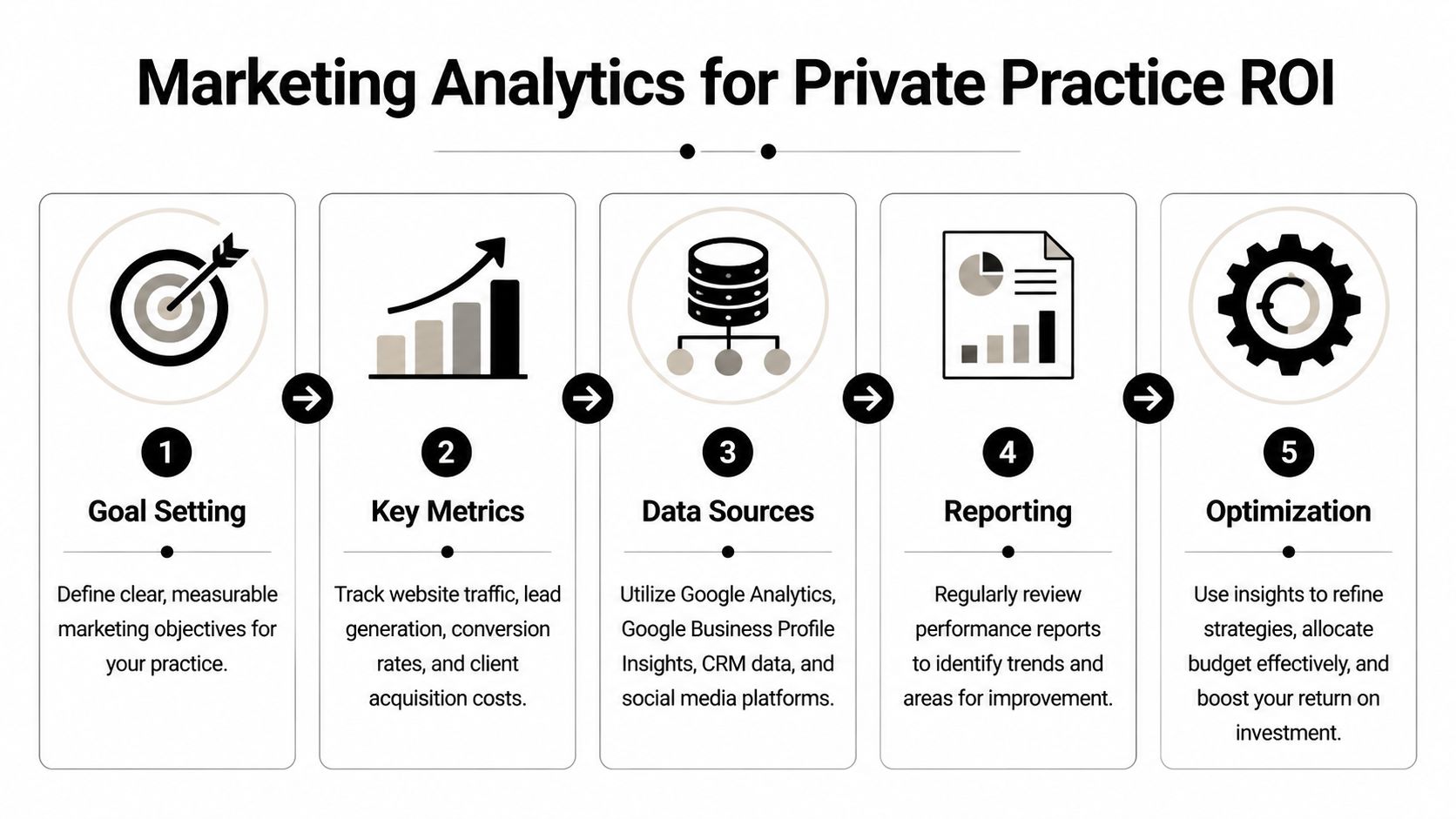
You do not need a giant analytics dashboard to make better decisions. Start with a short scorecard.
| KPI | What it tells you | Where to find it |
|---|---|---|
| Google Business Profile actions | Whether local searchers are calling, clicking, or asking for directions | GBP Insights |
| Website conversion rate | Whether the site turns visits into inquiries | Google Analytics plus form or call data |
| Cost per acquisition | How much you spent to get one new client | Ad platform plus intake tracking |
If you track only those three consistently, you’ll already be ahead of many small practices.
Ask better questions at intake
One of the most useful habits is adding source tracking to your intake process. Your form or receptionist should ask, “How did you hear about us?” Give practical options such as Google search, referral, doctor referral, directory, social media, or ad.
That doesn’t make attribution perfect, but it makes it much better.
Use data to make budget decisions
If local SEO keeps generating calls and your ad campaign keeps producing weak-fit inquiries, that tells you something. If blog content drives traffic but nobody contacts you, the problem may be the page design or call to action rather than the topic itself.
The point of tracking isn’t to collect reports. It’s to make the next decision with less guesswork.
Most practice owners don’t need more tactics. They need the discipline to review results monthly and adjust. Keep what produces qualified inquiries. Improve what has promise. Cut what drains attention without moving the business.
Your 90-Day Marketing Launch Plan
Good intentions don’t fill a schedule. A calendar does.
The best short-term framework I’ve seen for new and growing practices is the 3 P’s: Planning, Persistence, and Patience. According to Practice of the Practice, a structured 90-day plan helps new practices avoid common failure points, and persistent execution leads to caseloads filling in 6-12 months for 65% of adherents.
That matters because most owners quit too early or scatter their effort too widely.
Month one needs focus, not ambition
Your first month is about setup and cleanup.
- Define your ideal client: Narrow your audience enough that your messaging becomes clear.
- Fix local visibility: Fully complete your Google Business Profile and clean up inconsistent listings.
- Clarify your homepage: State what you do, who you help, and how to get started.
- Simplify intake: Make the contact path obvious on mobile and desktop.
- Set your baseline metrics: Start tracking calls, form submissions, and source data.
Month two should create proof of activity
Now your practice needs visible signs of expertise and trust.
- Publish core service pages: One page per major service.
- Write useful content: Answer common client questions in plain language.
- Ask for reviews consistently: Build a routine after positive client interactions.
- Reach out to referral partners: Start with a short list of relevant professionals.
- Review lead quality: Note which inquiries are strong fits and which are not.
Month three should add acceleration
You then layer in active lead generation.
- Launch a small paid campaign: Focus on one service and one location.
- Create follow-up emails: Send helpful messages to inquiries and prospects.
- Refine pages based on behavior: Improve the pages people visit most.
- Double down on what produced real inquiries: Don’t reward vanity metrics.
- Schedule a monthly review: Decide what to continue, fix, or stop.
90-Day Marketing Implementation Checklist
| Phase | Focus | Key Action Items |
|---|---|---|
| Days 1-30 | Foundation | Define ideal client, optimize Google Business Profile, fix NAP consistency, rewrite homepage message, simplify contact flow, set baseline KPI tracking |
| Days 31-60 | Trust building | Publish service pages, create client-focused blog content, request reviews, respond to reviews, contact referral partners, improve intake follow-up |
| Days 61-90 | Lead generation | Launch targeted ads, build email follow-up, review traffic and inquiry sources, refine top pages, shift budget toward best-performing channels |
Patience matters here. Marketing rarely rewards one burst of effort. It rewards repeated execution. If you stay consistent, the system starts doing what it’s supposed to do. It attracts the right people, filters out weak fits, and gives you a clearer picture of where growth is coming from.
If you want help building that system without wasting time on trial and error, Polaris Marketing Solutions helps small and mid-sized practices strengthen local visibility, improve conversions, and track ROI with practical digital marketing support. A complimentary online analysis and competitor report is a good place to see where your practice stands now and what to fix first.