
Your phone rings, but not enough. The estimate requests are inconsistent. One week your crew is slammed in Fort Myers, the next week you're wondering why the pipeline feels thin in Cape Coral or Naples. Most owners I talk to in Southwest Florida know their best jobs often come from word of mouth, but they still treat referrals like luck instead of a system.
That's the gap. A good referral program takes the praise your customers already give you and turns it into a repeatable lead source. It doesn't need to be complicated, but it does need structure, timing, and a reward people value. That matters even more now, because referred customers convert 4 times better and retain 37% longer than leads from other channels, according to referral marketing data compiled by Extole citing Nielsen and the American Marketing Association in its 2026 referral statistics roundup.
For home service contractors and small businesses in Southwest Florida, every lead counts. Word-of-mouth is powerful, but what if you could supercharge it? A well-designed referral program isn't just about offering a gift card. It's a strategic system for generating high-quality, low-cost leads from your most trusted source: your existing customers. This guide breaks down 10 practical, high-ROI referral program ideas you can implement to drive growth from Naples to Cape Coral.
1. Tiered Reward Structure with Escalating Incentives
If you run HVAC, roofing, cleaning, paving, plumbing, or electrical services, a flat reward usually gets a short burst of action and then dies. A tiered model works better because it gives customers a reason to keep referring after the first win.
Think in simple milestones. One referral earns something easy to fulfill, like a maintenance credit, filter replacement, priority scheduling, or a small gift card. A higher tier can provide a free inspection, annual service add-on, or premium support perks. The top tier should feel earned, not automatic.

What works in SWFL
Seasonality matters here. In Southwest Florida, referral energy often follows major service windows like storm prep, post-storm repairs, summer HVAC strain, and snowbird occupancy changes. I like tier resets tied to seasons because they give customers a fresh reason to participate without making the program feel endless.
A local HVAC company might structure it like this:
- First referral: Customer gets a tune-up credit or priority scheduling note on their account.
- Third referral: Customer gets a discounted maintenance plan renewal.
- Fifth referral: Customer gets a free indoor air quality inspection or a larger account credit.
- Top annual tier: Customer gets VIP scheduling during peak season.
Practical rule: Keep the first milestone close enough that an ordinary happy customer can reach it. Save the bigger perks for repeat advocates.
Dropbox is still one of the clearest examples of why this format works. Its early program offered extra storage per referral, which turned one action into repeated behavior. Home service businesses can copy the structure without copying the reward. Use benefits tied to your service model, not generic coupons that eat margin and feel forgettable.
What usually fails
Complicated ladders. If a customer needs a chart and a calculator to understand your rewards, you've already lost them. Keep the milestones visible in emails, invoices, and your thank-you page. If you use a CRM, add progress notes so office staff can mention status during routine calls.
2. Dual-Sided Incentive Program Referrer and Referred
A Fort Myers homeowner finally finds an HVAC company that shows up on time in August, fixes the problem, and communicates well. They are willing to recommend that company. The referral gets harder when the friend being referred has no clear reason to call. A dual-sided offer solves that. It gives the existing customer a reason to share and gives the new customer a reason to act now.
For Southwest Florida contractors, this structure works best when the reward fits the service and the season. In Cape Coral, a plumbing company might offer the new customer a waived dispatch fee on the first completed job, while the referring customer gets an account credit after payment clears. In Naples, a higher-ticket remodeler may protect margins with a design consult upgrade or preferred scheduling instead of a broad discount. The point is simple. Both sides should see immediate value, and your office should be able to explain the offer in one sentence.

A practical setup
The cleanest version is tied to a completed first purchase. That keeps the program profitable and cuts down on low-intent names getting tossed to your front office.
Good options by business type:
- Home services: Service credit, free diagnostic add-on, filter package, priority scheduling note, warranty extension.
- Professional services: Consultation credit, upgraded intake process, document review add-on, faster onboarding.
- B2B services: Account credit, planning session, expedited setup, added support hours.
I usually advise clients to avoid generic gift cards unless they are fixing a specific response problem. Service-based rewards tend to protect margin better, and they keep the referral tied to your actual value instead of training customers to wait for cash.
If your pipeline still depends too much on outbound chasing, pair referrals with other relationship-based channels. This guide on how to generate leads without cold calling covers a practical mix that works well for local service businesses.
For companies that already use automation or conversational intake, Chatbot platform partnerships can support the handoff and tracking side of referral campaigns, especially when speed to lead matters.
State the referred customer's benefit first. If the new prospect cannot repeat the offer back after one read, the program is too muddy.
What to avoid
Do not issue rewards when someone submits a name. Pay after the referred customer books and completes a paid service, or after a set milestone your team can verify. That one rule prevents abuse, protects margin, and saves your CSR team from sorting out messy disputes.
Tracking also matters more than many owners expect. Use a referral code, a short form, or a dedicated landing page. If the office has to guess who referred whom, the program will create friction fast.
3. Exclusive Partner Network Referral Program
Some of the best referral program ideas don't involve customers at all. They come from adjacent businesses that already serve the same homeowner.
In Southwest Florida, this is one of the most practical plays for contractors. Roofers hear about gutter issues. Electricians hear about panel upgrades before a remodel. Cleaning companies hear when a homeowner is frustrated with their current pest control or HVAC provider. If you build a small network of trusted partners, you create a referral channel that feels natural instead of forced.
How to build it without chaos
Start narrow. Pick three to five businesses that serve your same ZIP codes but don't compete with you. For example:
- HVAC + insulation contractor + roofer
- Paver company + pool service + outdoor lighting
- Commercial cleaner + office IT company + security integrator
- Property manager + plumber + restoration company
Set rules early. Decide how leads will be submitted, how fast each partner must respond, and what qualifies as a valid referral. If you skip this step, the network becomes a coffee chat instead of a business asset.
A basic intake form should capture contact info, service need, neighborhood, urgency, and referring partner. Then log every lead in your CRM with a partner tag. Even if you track manually, consistency matters more than software sophistication at the start.
Where agencies fit
If you're coordinating several businesses, a shared marketing layer helps. That's one reason partnership ecosystems keep growing. For example, some companies use broader chatbot platform partnerships and other tech relationships to expand distribution. A local service business can use the same idea on a smaller scale by building a trusted neighborhood network.
The trade-off is control. Partner referrals can be excellent, but one weak partner can damage your reputation. Don't keep anyone in the network who sends junk leads, responds slowly, or treats your customers poorly.
4. Customer Advocate Program with Case Study and Content Features
Not every referral reward has to be a discount. In fact, that's often the wrong move for relationship-driven businesses. Tremendous highlights a gap here in its discussion of non-cash referral program ideas, noting that service consumers often prefer experiential or community-based rewards over cash. That's especially relevant for healthcare, legal, professional services, and premium home services where trust and reputation matter more than a quick coupon.
A customer advocate program gives people recognition, visibility, and a reason to share your business because they feel part of your brand story. This works well when your client is another business, a community figure, or a homeowner with a standout project.
A strong local example
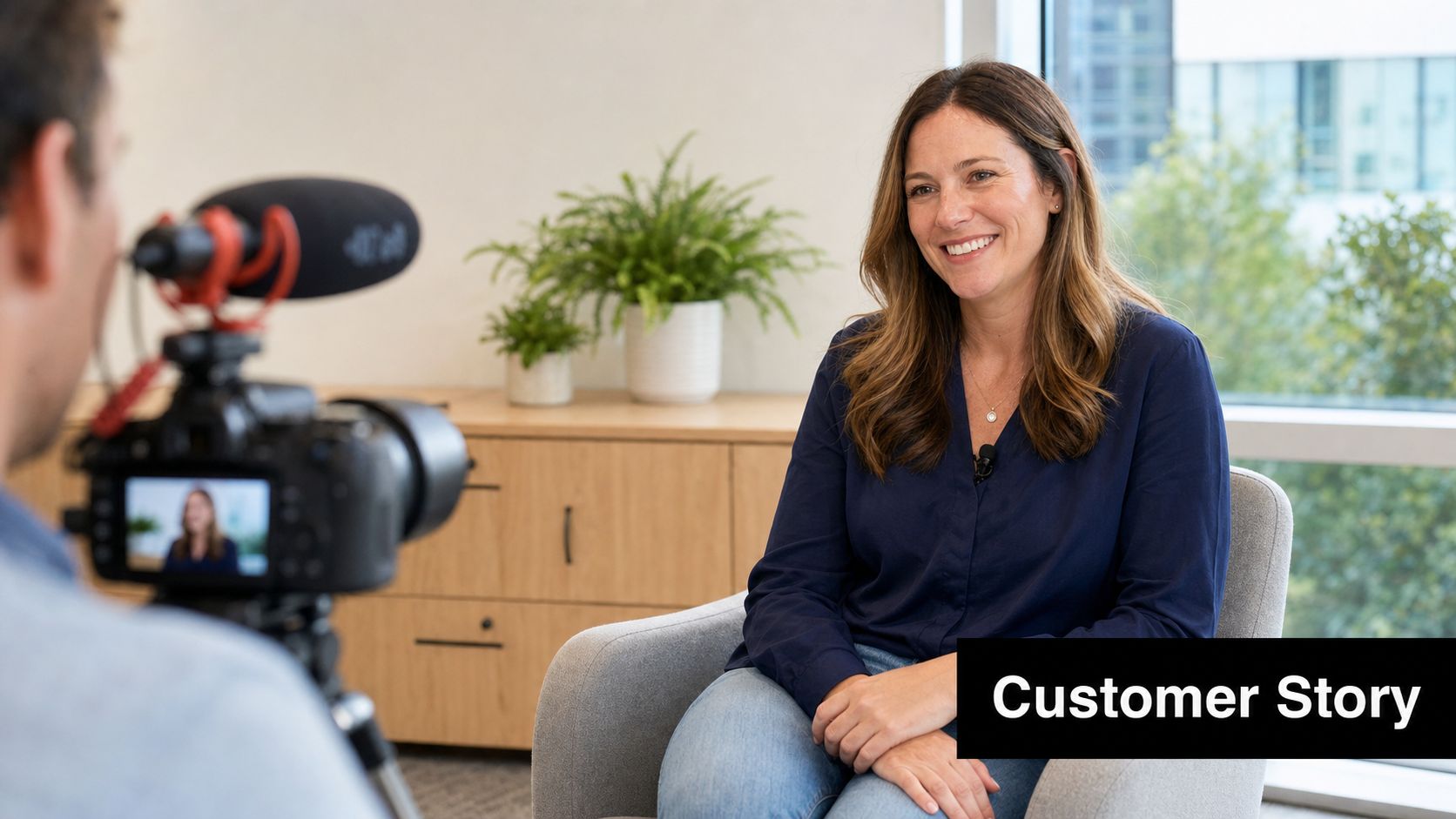
A commercial cleaning company in Fort Myers could feature a local medical office manager in a short customer spotlight. The business gets visibility. The cleaning company gets a testimonial, photos, and social proof. Then the featured customer receives an account perk or charitable donation tied to every successful referral they send.
This works because the content itself becomes referral fuel. It's easier for someone to share a polished customer story than a generic "refer a friend" graphic.
Use a simple workflow:
- Pick your best advocates: Start with happy customers who already praise your team.
- Do the production work: Write the draft, shoot the video, edit the testimonial, and keep approvals simple.
- Tie advocacy to referrals: Give them a custom referral page or code connected to their story.
- Repurpose the content: Website, email, social, sales deck, and follow-up sequences.
If you're combining referrals with reputation building, this guide on how to get more online reviews fits naturally into the same system.
Recognition works best when it's easy for the customer. If they have to build the story themselves, it won't happen.
What doesn't work
Long approval chains, stiff interview questions, and generic praise. Keep stories specific. Show the job, the problem, the result, and why the customer trusted you.
5. Automated Email and SMS Referral Campaign Sequence
A referral program hidden on your website won't do much. You need prompts at the right moment, and automation is the easiest way to deliver them consistently.
Timing matters more than most owners think. Impact's referral research points to the best conversion window right after very positive satisfaction signals or within 1 to 3 days after purchase, and it shares examples in its referral statistics and timing guide. That's exactly how home service businesses should think. Ask when the customer is relieved, happy, and still talking about the experience.
A sequence that fits contractors
For a plumbing company or paver contractor, I'd use a short sequence tied to job completion:
- Message one: Thank them right after the job closes and confirm the work.
- Message two: Ask for a review after they've had time to see the result.
- Message three: Invite a referral with a short explanation of the benefit for both parties.
- Message four: Send a reminder only to customers who clicked or replied.
The copy should sound like a human wrote it. "We appreciated the chance to work on your home. If a neighbor needs help, send them our way and we'll take care of them." That's better than sounding like a loyalty app.
Segment the outreach
Many small businesses commonly leave money on the table. A new one-time customer shouldn't get the same referral message as a repeat maintenance-plan client. Impact also notes in its strategy content that segmented referral journeys can outperform one-size-fits-all outreach by a wide margin, but most businesses still blast the same message to everyone.
So split your list by context:
- Recent first-time customers
- Repeat customers
- Commercial accounts
- High-LTV clients
- Customers who already left a positive review
If your unsubscribe rate creeps up, the fix usually isn't to kill the campaign. It's to improve timing, tighten the list, and make the ask feel earned.
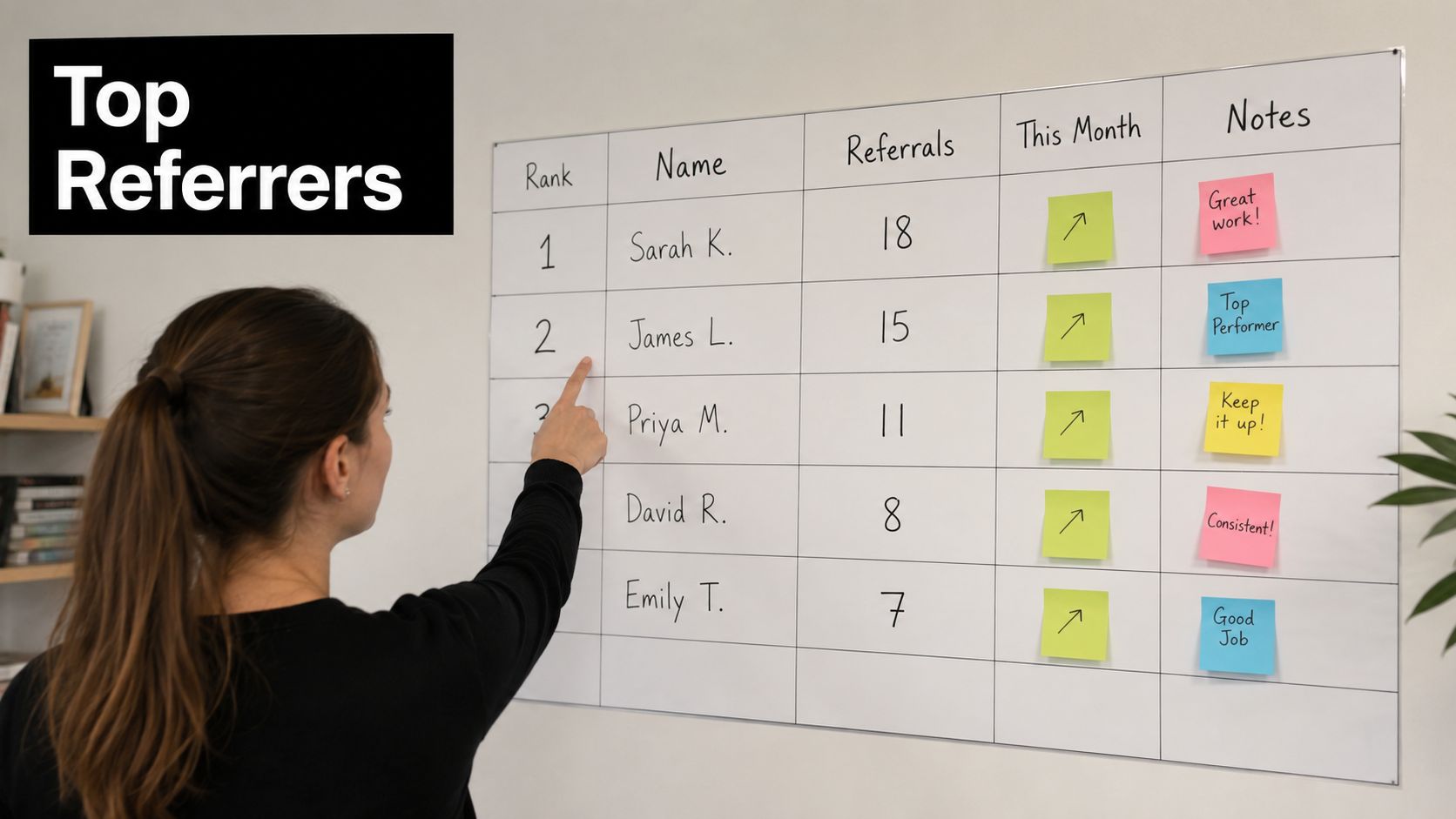
6. Gamified Referral Leaderboard with Seasonal Contests
Most referral programs feel invisible after launch. A leaderboard fixes that because people can see movement, status, and recognition.
This idea works especially well when you have a customer base that likes local bragging rights, trade relationships, or community involvement. In Southwest Florida, that can be commercial accounts, BNI-style networking groups, real estate adjacent businesses, and active neighborhood communities where people already compare vendors.
How to run it without making it cheesy
Keep the contest seasonal. Quarterly works well because it's long enough to build momentum and short enough to keep attention. Feature top referrers in your email newsletter, on a thank-you page, or in a simple social post.
You don't need expensive software to start. A landing page, CRM tags, and a manually updated leaderboard can work if your volume is manageable.
Good reward categories include:
- Most completed referrals
- Highest-value referred jobs
- Best new participant
- Top community advocate
- Neighborhood champion
A leaderboard should reward real business, not just names submitted. Count completed customers, not raw entries.
Where this shines
I like this format for commercial cleaners, property managers, B2B service firms, and contractor networks where participants already know each other. It can also work for residential services if you frame it around neighborhoods, HOAs, or seasonal campaigns after storm recovery.
Where it breaks
If fraud control is weak, people will game it. Verify every referral. Don't post personal information publicly without consent. And if your audience values privacy over competition, skip the public board and use private progress updates instead.
7. Strategic Referral Partnerships with Local Media and Influencers
Not all referrals need to come from current customers. In local markets like Fort Myers, Naples, and Cape Coral, trusted audience owners can introduce your business to the right people faster than a generic ad campaign.
That doesn't mean chasing celebrity influencers. Most contractors do better with smaller local voices. Think real estate creators, local podcasters, neighborhood Facebook admins, business newsletters, or home improvement YouTube channels with engaged local followings.
A better local play
A kitchen remodeler might partner with a Southwest Florida real estate podcast. A pool company might work with a local waterfront lifestyle creator. A med spa might coordinate with a community women-in-business publication. Each partner gets a specific referral code or landing page and a clear explanation of how referrals are tracked.
Use a practical starter package:
- Dedicated landing page: Explain the offer clearly and mention the local angle.
- Prewritten copy: Give partners captions, email blurbs, and talking points.
- Simple tracking: Unique code, custom URL, or intake field.
- Disclosure language: Make sure sponsored relationships are clear.
Keep expectations realistic
This is not a replacement for customer referrals. It sits somewhere between affiliate marketing and trusted local endorsement. The quality can be strong if the audience fit is right, but the wrong media partner will send curiosity clicks instead of buyers.
One useful benchmark from Talkable's stats roundup is that B2B referral sales average an 11% conversion rate, while affiliate marketing averages 1.2% in the same discussion of referral efficiency. That's a reminder to prioritize genuine trust channels over raw reach. Local media works best when the host or publisher already has credibility with your ideal buyer.
8. VIP Concierge Referral Service with Personal Relationship Management
Your best customers shouldn't get the same referral treatment as everyone else. If someone has sent business your way before, spends consistently, or influences others in the community, a mass email isn't enough.
A VIP concierge model is high-touch by design. Instead of waiting for those people to remember you, someone on your team reaches out personally, keeps the relationship warm, and makes referral opportunities easy to act on.
Who belongs in this program
For a home service contractor, VIPs might include property managers, Realtors, interior designers, repeat homeowners, commercial account contacts, or HOA decision-makers. For a legal, healthcare, or B2B firm, it could be long-term clients and professional connectors.
ServiceTitan-related reporting highlighted by USTech Automations notes that referrers who receive regular impact updates submit 2.4 times more referrals than those who only get transactional confirmations in its piece on home services customer referral programs. That's a strong argument for staying in touch beyond a one-time thank-you.
What the concierge actually does
This isn't vague relationship management. Give one team member a clear playbook:
- Quarterly check-ins: Ask what's changing in their business or household.
- Impact updates: Remind them who they've referred and what they've earned.
- Easy handoff tools: Direct line, private form, or text number for referrals.
- VIP treatment: Priority scheduling, strategy calls, educational events, or invite-only perks.
People refer more when they can see the impact of what they've already done.
Trade-off
This model isn't scalable for every customer, and it shouldn't be. Reserve it for the people who can generate repeat, high-quality business. For everyone else, use automation.
9. Co-Marketing and Joint Venture Referral Programs
A referral partnership gets stronger when both businesses put real marketing effort behind it. That's where co-marketing and joint ventures come in.
Instead of casually exchanging names, both companies build something together. That could be a seminar, a downloadable guide, a neighborhood event, a webinar, or a co-branded service bundle. Each business brings its own audience, and each agrees to refer qualified prospects that fit the offer.
A practical Southwest Florida version
An HVAC contractor and an insulation company can host a homeowner education session on comfort and energy use. A paving company and an outdoor lighting company can co-promote curb appeal upgrades. A commercial cleaner and office IT provider can publish a joint checklist for facility managers.
The referral channel becomes stronger because the marketing asset creates trust first. You're not asking the audience to buy from a stranger. You're introducing a vetted partner in context.
This model pairs well with one hard measurement habit. Andrew Chen has recommended an on-off test for referral channels in his writing on how to design a referral program. Turn referrals off briefly and watch whether new user acquisition drops. For a local business, you can adapt that logic by pausing a joint campaign for a short window and comparing lead flow quality and volume against your baseline.
What to lock down early
- Lead ownership: Decide who handles what.
- Follow-up speed: Slow response kills partner trust fast.
- Shared assets: Build co-branded pages, forms, and email copy before launch.
- Review cadence: Meet regularly to review actual lead quality.
Joint ventures fail when one side treats the partnership as an afterthought. If you're not willing to promote it actively, don't launch it.
10. Referral Program Integrated with Google Business Profile and Local SEO
For local businesses, referrals and reviews should support each other. When a happy customer recommends you to a neighbor and also strengthens your local search presence, the program does double duty.
This doesn't mean paying for reviews. It means building a post-service flow where customers get invited to review, then invited to refer. The sequence matters. Review first. Referral second. Keep the actions separate and compliant.
How to connect the pieces
A practical setup for a Fort Myers contractor looks like this. After job completion, send the review request. Once the customer responds positively or leaves feedback, follow up with a referral invite and a personalized share link. Put a QR code on trucks, invoices, yard signs, and leave-behind cards that points to the referral landing page.
Your Google Business Profile can support this system too. Mention your referral-friendly service approach in business descriptions, service pages, and follow-up messages. Then make sure your landing page is location-specific so you can see whether Naples, Cape Coral, or Fort Myers generates the strongest participation.
If your team is improving local visibility at the same time, this guide on how to optimize Google Business Profile belongs in the same workflow.
Why this matters financially
Referral marketing isn't just cheaper in theory. Talkable's referral data says referral programs can produce an average 30x ROI when properly tracked and optimized, and it notes that 86% of brands with structured referral programs saw revenue growth within two years in its referral ROI and performance analysis. For local SEO-driven service businesses, combining referrals with review growth gives you two acquisition levers working at once.
What doesn't work is stuffing too many asks into one message. Don't send "leave a review, refer a friend, follow us, and join our email list" all at once. Give customers one clear next step at a time.
Top 10 Referral Program Ideas Compared
| Program | Implementation Complexity 🔄 | Resource Requirements ⚡ | Expected Outcomes 📊 | Key Advantages ⭐ | Ideal Use Cases 💡 |
|---|---|---|---|---|---|
| Tiered Reward Structure with Escalating Incentives | 🔄 Medium, tier logic & dashboard required | ⚡ Medium, referral software + reward budget | 📊 ⭐⭐⭐⭐ Sustained referrals; higher lifetime value | ⭐ Motivates top referrers; scalable budget allocation | 💡 Home services, professional services, healthcare |
| Dual-Sided Incentive Program (Referrer + Referred) | 🔄 Low–Medium, track two-sided payouts | ⚡ Low–Medium, CRM/referral tool + per-acquisition budget | 📊 ⭐⭐⭐⭐ Higher acceptance and faster sign-ups | ⭐ Win‑win incentives; increased conversion | 💡 E‑commerce, SaaS, repeat-transaction businesses |
| Exclusive Partner Network Referral Program | 🔄 Medium, partner contracts & onboarding | ⚡ Low initial, moderate ongoing, relationship mgmt | 📊 ⭐⭐⭐ Sustained high-quality leads; cross-selling | ⭐ Long-term relationships; reduced CAC | 💡 Home services networks, complementary professionals |
| Customer Advocate Program with Case Study & Content Features | 🔄 Medium, content production and approvals | ⚡ Medium, video, writing, design resources | 📊 ⭐⭐⭐⭐ Authentic, trust-driven leads; SEO lift | ⭐ High-trust marketing; repurposable assets | 💡 B2B services, local businesses, agencies |
| Automated Email & SMS Referral Campaign Sequence | 🔄 Low–Medium, automation and trigger setup | ⚡ Low, email/SMS platform and templates | 📊 ⭐⭐⭐ Efficient, measurable referrals at scale | ⭐ Low ongoing effort; highly measurable | 💡 Any business with digital data; project-based services |
| Gamified Referral Leaderboard with Seasonal Contests | 🔄 Medium, gamification rules & real‑time updates | ⚡ Medium, leaderboard software, prizes, moderation | 📊 ⭐⭐⭐⭐ High engagement; periodic spikes in activity | ⭐ Drives repeat participation; public recognition | 💡 Sales teams, competitive industries, engaged communities |
| Strategic Referral Partnerships with Local Media & Influencers | 🔄 Low–Medium, outreach and affiliate agreements | ⚡ Low–Medium, commissions, creative assets | 📊 ⭐⭐⭐ Reach new local audiences; PR benefits | ⭐ Performance-based reach; trusted endorsements | 💡 Local businesses, B2B services, niche markets |
| VIP Concierge Referral Service with Personal Relationship Management | 🔄 High, dedicated processes & staff training | ⚡ High, account managers, events, premium rewards | 📊 ⭐⭐⭐⭐ Highest-quality referrals; lower churn | ⭐ Deep loyalty; tailored, high-value referrals | 💡 Premium services, high‑LTV B2B clients, luxury brands |
| Co-Marketing & Joint Venture Referral Programs | 🔄 Medium–High, negotiation & joint planning | ⚡ Medium, shared budget, co-created assets | 📊 ⭐⭐⭐ Expanded reach; cost-shared lead generation | ⭐ Combined audiences; shared accountability | 💡 B2B partners, complementary service providers |
| Referral Program Integrated with Google Business Profile & Local SEO | 🔄 Low, GBP setup and review/referral prompts | ⚡ Low, GBP management, QR codes, automation | 📊 ⭐⭐⭐ Improves local visibility and review volume | ⭐ Direct local SEO impact; low cost | 💡 Local service businesses, multi-location companies |
Start Building Your Referral Engine Today
A Fort Myers roofer finishes a job, the homeowner says, "My neighbor needs this too," and nothing gets captured. No referral card. No text follow-up. No note in the CRM. That happens every week across Naples, Cape Coral, and Fort Myers, and it is why many small businesses get word-of-mouth without ever building a referral engine.
The referral programs that hold up in day-to-day operations are easy to explain, easy to track, and easy for office staff to run during a busy week. That matters for home service contractors in Southwest Florida, where the same team is often answering phones, scheduling crews, chasing deposits, and handling review requests. If the program adds friction, it gets skipped.
Start with the model that matches how your business already wins jobs. A company with repeat residential work may do well with tiered rewards. A contractor selling higher-trust services like roofing, plumbing, or restoration may get better response from a dual-sided offer. Businesses that depend on Realtors, property managers, HOAs, or adjacent trades should put more effort into partner referrals and personal follow-up than broad public campaigns.
Execution decides whether the idea works.
Keep the ask close to the moment when the customer is happiest. Give your team one script, not three versions. Add one clear tracking field inside the systems you already use. If you do not want another platform, Syara outlines a practical manual method for home services in its article on auto repair shop referral tracking, including a simple "Referred by" tag in customer notes so staff can log rewards and review performance without adding new software.
Then measure the right things. Track how many customers refer, how many of those referrals turn into booked jobs, and whether those customers are worth more over time. For Southwest Florida contractors, I would also watch referral source by ZIP code and neighborhood. That helps you spot patterns fast. If one gated community in Naples starts producing referrals after every completed job, that is a signal to tighten follow-up there and ask for introductions more directly.
Do not assume referral volume means referral profit. Some programs produce a lot of low-intent names that waste office time. Others generate fewer leads but close at a much higher rate because they come through trusted local relationships. The better program is the one that improves booked revenue, margin, and crew utilization, not the one that creates the biggest spreadsheet.
Polaris Marketing Solutions works with businesses facing these exact constraints. The agency's Fort Myers base and home service experience show up in the recommendations. The focus is on local SEO, review generation, CRM follow-up, landing pages, and referral systems your front office can maintain during peak season, not generic national advice that ignores how small local teams operate.
If you want inspiration from a broader set of effective referral campaigns, study the mechanics, then simplify them for your market and your staff. Pick one model from this list. Launch it cleanly. Train your team on how to mention it. Review the results after 30, 60, and 90 days, then adjust based on close rate and lead quality.
If you're ready to turn word-of-mouth into a repeatable lead source, Polaris Marketing Solutions can help you build the referral system, landing pages, automations, and local visibility strategy behind it. Reach out for a complimentary online analysis and see where your Fort Myers, Naples, or Cape Coral business can tighten follow-up, improve conversion paths, and generate more qualified referrals.