A homeowner in Fort Myers needs a roofer after a storm. A family in Naples is choosing a pediatric practice. A business owner in Cape Coral is looking for an attorney after a contract dispute. In each case, the short list usually starts with a name they have heard before, seen around town, or gotten from someone they trust.
That is the reality for local businesses in Southwest Florida. Strong work still matters, but visibility inside the community often decides who gets the call first. Home services companies, medical practices, and law firms all compete on trust long before they compete on price.
Community engagement helps turn that trust into a repeatable advantage. Done well, it leads to stronger word-of-mouth, better reviews, more return customers, and more direct referrals from local relationships. Done poorly, it becomes expensive activity with no clear return.
The difference is structure. Businesses that get results in Fort Myers, Naples, and Cape Coral show up consistently, choose the right local channels, and give people an easy reason to respond. They also track performance with simple KPIs tied to business outcomes, such as review volume, referral leads, event-generated appointments, email response rates, and repeat customer activity. Just as important, they act on what they hear. If customer feedback never changes the offer, process, or follow-up, engagement turns into noise.
This guide covers 10 practical community engagement strategies built for Southwest Florida. Each one includes local examples, execution ideas that fit this market, and the trade-offs owners should understand before investing time or budget.
1. Local Business Networking and Partnership Development
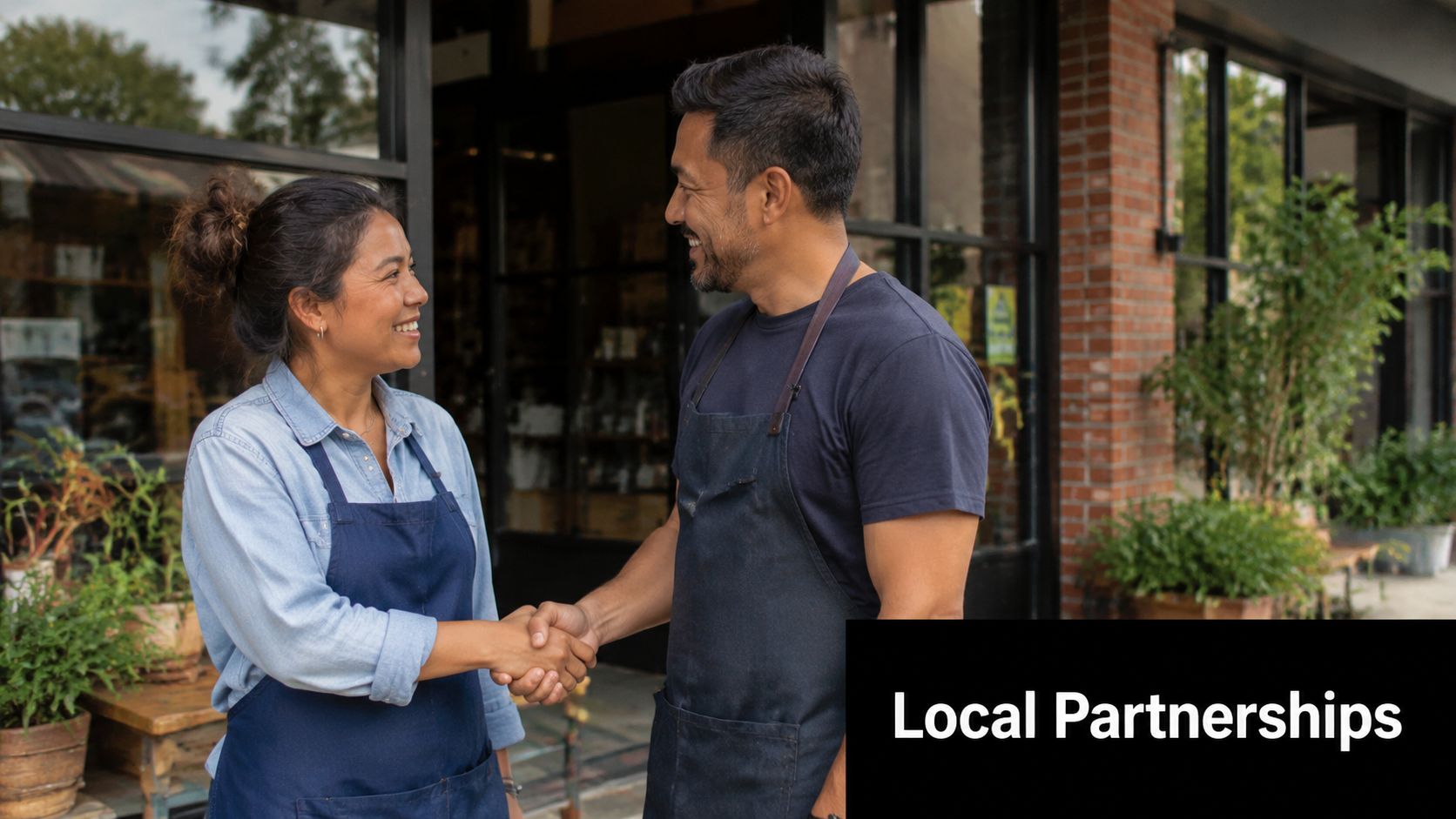
The fastest way to get traction locally is often through someone who already has the trust you want. That's why partnerships work so well for home services, healthcare, and legal businesses in Southwest Florida. A roofer, insurance adjuster, and property manager may serve different needs, but they touch the same homeowner.
Start smaller than most owners think. Two or three well-chosen partnerships usually outperform a loose pile of casual connections. A Cape Coral roofing company might join the local chamber, attend consistently, and build a referral relationship with an insurance adjuster. A Bonita Springs healthcare provider might co-host educational talks with a physical therapy clinic at a library or community room.
What works in SWFL
Partnerships work when both sides serve the same audience without competing. An HVAC company can partner with a real estate office on pre-sale inspections. A cleaning company in Naples can align with a contractor mastermind group and become the preferred post-project cleanup provider.
What doesn't work is vague goodwill. If nobody defines what counts as a referral, how follow-up happens, or when partners reconnect, the relationship fades.
- Choose overlap carefully: Pick businesses that already serve your ideal customer in Fort Myers, Naples, or Cape Coral.
- Write down the process: A simple referral agreement should cover response time, service area, and how each lead gets tracked.
- Set a monthly rhythm: Put a recurring check-in on the calendar to share updates, wins, and missed opportunities.
Practical rule: If a partnership doesn't create a repeatable customer path, it's networking, not a growth channel.
KPIs to track
Use your CRM to track referral source, close rate, and average job value by partner. Also track softer signals such as event attendance with partners and whether those relationships lead to co-hosted content or local introductions.
For more advanced community engagement strategies, this approach also lines up with the broader practice of using multiple channels and documenting where community input influences decisions, not just collecting names.
2. Google Business Profile Optimization and Review Management
A lot of local engagement starts before anyone calls you. It starts when a customer searches “AC repair Fort Myers” or “family lawyer Cape Coral” and scans the map results. Your Google Business Profile is often the first community touchpoint people see.
For many Southwest Florida businesses, this is the simplest high-impact fix. If your hours are wrong, photos are outdated, reviews go unanswered, or categories are incomplete, you're sending a bad signal before a conversation even begins.
What a strong profile looks like
A North Fort Myers plumbing company should upload job photos, list service attributes such as emergency help, and answer common questions directly in the profile. A legal office in Cape Coral can post short updates about legal topics that affect local residents. A healthcare practice in Estero can add photos of staff, waiting areas, and patient-friendly information that reduces uncertainty.
The key is consistency. Review responses should sound human. Posts should reflect actual local work. Photos should prove you operate in the communities you claim to serve.
- Fill every relevant field: Categories, services, attributes, business description, hours, and service areas all matter.
- Ask for reviews at the right moment: Send the request after a successful job, a resolved case milestone, or a positive patient interaction.
- Respond to all reviews: Thank happy customers and address concerns calmly. Future customers read those responses as much as the review itself.
If you need a process, this guide on how to optimize Google Business Profile is a useful starting point.
KPIs to track
Monitor phone calls, direction requests, website clicks, and messages from your profile. Also keep an eye on review volume, review recency, and response time.
One practical mistake to avoid is chasing reviews while ignoring service delivery. Review management is an amplifier. If the customer experience is messy, Google just makes that more visible.
3. Community Event Sponsorship and Participation
A Saturday event in Fort Myers or Naples can put your business in front of more qualified local prospects in four hours than a month of passive brand exposure. That only happens when the event fits your audience and your team shows up ready to help, not just hand out swag.
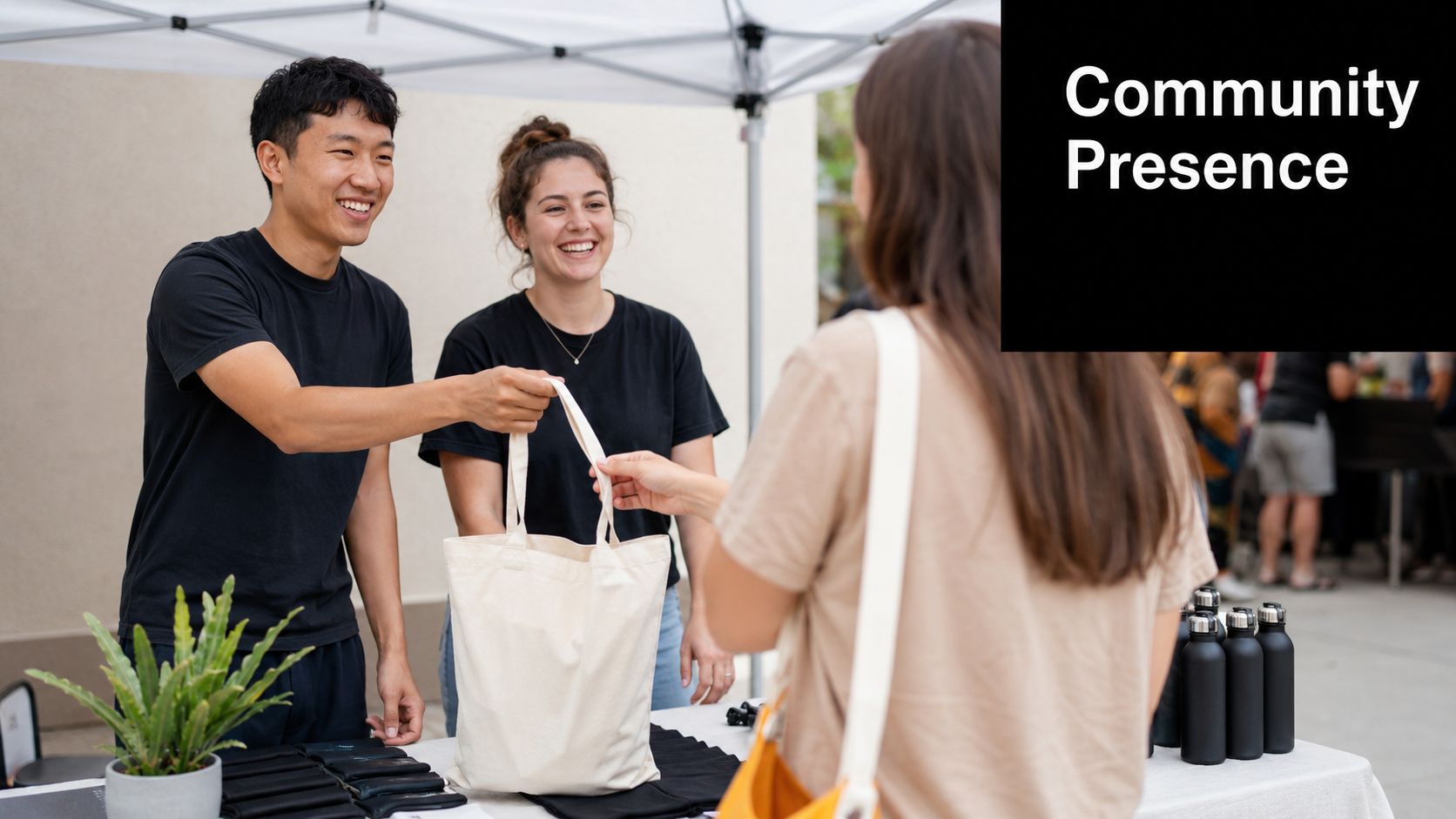
Southwest Florida gives local businesses plenty of options. Charity runs in Cape Coral, school fundraisers in Estero, homeowner expos in North Fort Myers, nonprofit galas in Naples, and seasonal festivals across Lee and Collier County all attract different audiences. The trade-off is simple. Bigger events give you more foot traffic, but smaller niche events usually produce better conversations and cleaner follow-up.
Good sponsorship starts with audience fit. A family law firm will usually get more from school and civic events than from a general business expo. A home services company often performs better at hurricane prep fairs, HOA events, and home shows where homeowners already have maintenance questions in mind. Healthcare practices tend to do well at charity walks, senior resource events, and wellness fairs where education lowers hesitation.
Participation is what makes the spend pay off. A Cape Coral healthcare provider at a charity run should offer blood pressure checks, injury prevention tips, or insurance FAQs. A North Fort Myers HVAC contractor at a home show should demonstrate humidity control, explain what long cooling seasons do to system performance, and offer a fast booking incentive for tune-ups. A Naples law office sponsoring a community event should bring an attorney or intake lead who can answer common local questions clearly and set expectations for next steps.
The best booths teach first and sell second. People remember useful conversations.
Use a simple field plan your staff can follow:
- One clear goal: Book consults, collect qualified leads, or grow a local email list. Pick one primary outcome.
- One event-specific offer: Free inspection, consultation credit, downloadable guide, or priority scheduling for attendees.
- One interaction hook: Demo, mini-screening, Q&A board, giveaway tied to contact capture, or short educational handout.
- One follow-up standard: Contact every qualified lead within 48 hours while the event is still fresh.
For annual sponsorships, ask for more than logo placement. Request booth location, stage mention, email inclusion, attendee list access where appropriate, or permission to contribute educational materials. If your team sponsors golf outings or nonprofit tournaments, this piece on how to maximize golf event sponsor ROI has useful ideas for making participation more intentional.
Here is what this can look like in practice. A Bonita Springs cleaning company at an Earth Day event can run 10-minute mini-lessons on safer home cleaning, collect email signups for a Southwest Florida seasonal cleaning checklist, and send a neighborhood-specific offer within two business days. A Fort Myers roofer at a storm-readiness event can offer attic moisture checks, explain common post-storm warning signs, and book inspections on the spot for homeowners in nearby ZIP codes.
Here's a useful example of event thinking in action:
KPIs to track
Track qualified leads captured, appointments booked, offer redemptions, cost per lead, and follow-up completion within 48 hours. Also log the questions attendees asked most often. For Southwest Florida businesses, those recurring questions often turn into your next workshop topic, FAQ, service page update, or seasonal campaign.
One mistake shows up often here. Owners judge an event by attendance instead of sales relevance. A packed festival feels successful, but a smaller Naples chamber event or Cape Coral homeowner association meeting may produce better leads, shorter sales cycles, and clearer local referral paths.
4. Educational Content Marketing and Thought Leadership
Most businesses already know they should “post content.” That advice is too vague to be useful. Content only helps when it answers the exact questions local customers are already asking before they buy.
In Southwest Florida, educational content works especially well for industries where trust matters. Homeowners want to understand roofing damage, AC maintenance, mold risk, or cleaning standards. Patients want practical health information. Legal clients want clear explanations without legalese.
Content that earns trust locally
A Fort Myers roofer can publish articles about signs a home may need roof attention after storms. An HVAC company can film short videos about indoor humidity and system maintenance during long cooling seasons. A healthcare provider can host free talks on insurance basics, prevention, or condition-specific topics for local residents.
That last format matters more than many owners realize. Educational seminars, workshops, and classes create a transparent way for community members to ask questions and exchange ideas, which is why they remain one of the most practical engagement formats for service businesses, as explained in these community education examples for nonprofits.
- Start with sales questions: Ask your front desk, service techs, attorneys, or care coordinators what they explain repeatedly each week.
- Localize every topic: Tie the content to Fort Myers weather, Naples homeowner concerns, Cape Coral family issues, or SWFL service expectations.
- Repurpose aggressively: Turn one seminar into a blog post, short clips, email follow-up, and social snippets.
KPIs to track
Track email signups, booked consultations from content, webinar attendance, and which topics lead to the most replies or questions. Good content often shortens the sales process because prospects arrive better informed.
What doesn't work is publishing generic articles that could apply to any city in the country. Your content should sound like it was written by someone who serves Southwest Florida.
5. Strategic Social Media Community Building
A Fort Myers plumbing company posts storm prep tips before a summer downpour and gets three service requests in the comments before the day ends. A Naples family law firm answers a common co-parenting question in a short video and starts seeing more direct messages from local parents. That is what social media should do for a Southwest Florida business. It should create conversation that leads to trust, referrals, and booked work.
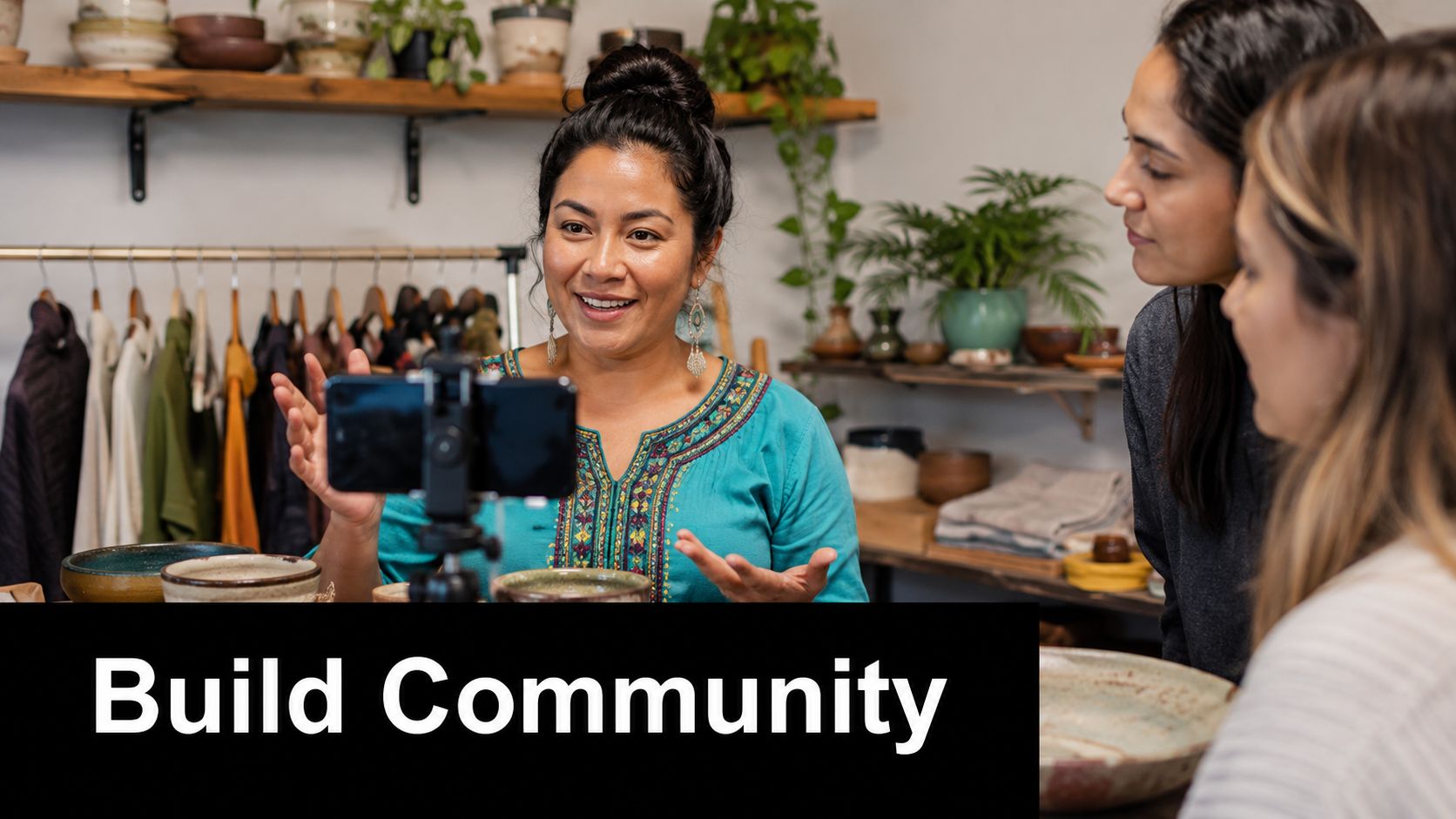
Social media works best as an active community channel, not a stream of promotions. The accounts that perform well in Cape Coral, Fort Myers, and Naples usually share three habits. They respond quickly, speak to local concerns, and make it easy for customers to join the conversation. The Qualtrics overview of community engagement supports that two-way approach.
Choose one or two platforms you can manage well
Southwest Florida owners often spread themselves too thin. A better approach is to pick the platform your customers already use, then build a repeatable response process around it.
For home services, Facebook is usually the first place to start because homeowners use local groups, ask for recommendations, and share vendor experiences there. Instagram can work well for roofing, landscaping, remodeling, med spas, and other visual businesses. Healthcare practices often get better results from Facebook updates, short educational reels, and physician Q&A clips. Legal firms usually benefit from concise video explainers, local commentary, and case-adjacent education that stays within ethics rules.
If you need a broader framework for local channel selection, this guide to local marketing strategies for small businesses gives a useful starting point.
Here is the trade-off. More platforms increase reach, but they also increase response time, approval bottlenecks, and content demands. If your staff can only monitor comments twice a day, two strong channels will outperform four neglected ones.
Build posts around local conversation triggers
Generic social content rarely gets much traction. Local content does.
For a Cape Coral HVAC company, that could mean a post asking homeowners whether uneven cooling is getting worse upstairs this month, followed by a short tip from a service manager. For a Naples healthcare clinic, it may be a video on seasonal resident scheduling, insurance timing, or urgent care versus primary care. For a Fort Myers law office, it could be a short post clarifying a common misconception tied to family, probate, or injury cases that local clients ask about every week.
Customer features also help, if you have permission. So do behind-the-scenes updates, staff spotlights, neighborhood references, storm season checklists, and short polls tied to real service decisions.
Use a simple response system
Community building happens in the replies.
Set a target response time for comments and direct messages. Assign who answers what. Give your team saved replies for common questions, then personalize them before posting. Home services companies can route estimate questions to the office manager. Healthcare practices should separate general engagement from anything that could involve protected health information. Law firms should route legal questions carefully and avoid casual comment replies that sound like advice.
A practical weekly cadence looks like this:
- 3 local posts tied to customer questions, seasonal issues, or recent jobs
- 2 short-form videos featuring staff expertise or quick local tips
- Daily comment and DM checks
- 1 community-focused post featuring a customer story, local partner, or neighborhood connection
Field insight: If your team cannot respond consistently, reduce your posting volume. An unanswered comment thread makes a business look inattentive fast.
KPIs to track
Track comments, direct messages, shares, saves, profile visits, and calls or form submissions that start from social traffic. Also ask every new lead how they found you, then record the answer in your CRM.
Use platform-specific benchmarks too. A home services company should watch message-to-estimate rate. A healthcare practice should monitor appointment requests from social content. A law firm should track consultation inquiries, video completion rates, and which topics generate qualified questions.
The common failure point is overproducing content and underinvesting in response. Strong community building on social media comes from local relevance, quick follow-up, and a posting plan your team can maintain.
6. Local SEO and Localized Content Strategy
Local SEO is one of the most dependable community engagement strategies because it connects your business to people who are already looking for help in your service area. It's not just technical optimization. It's proof that you serve specific places and understand the local context.
A generic service page won't cut it. A Naples HVAC page should not read like a Cape Coral HVAC page with one city name swapped out. Customers and search engines can both tell when content is recycled.
Build pages that belong to the city
Create separate pages for the places you serve. A cleaning company might have distinct pages for North Fort Myers, Bonita Springs, and Estero. A legal firm can create location pages tied to the jurisdictions and communities it serves. A healthcare practice can build service pages around local patient needs and nearby access points.
Each page should include local photos, service-area details, relevant FAQs, and testimonials connected to that area when appropriate. Blog content can support those pages by addressing local seasonal issues, storm prep, insurance concerns, or neighborhood-specific service questions.
- Use unique local copy: Don't duplicate text and change only the city name.
- Strengthen local signals: Add citations, consistent business information, and relevant local references.
- Track by service plus city: That's how you'll know whether the strategy is gaining visibility.
This overview of local marketing for small business is a good primer if your current local search presence is patchy.
KPIs to track
Measure rankings for location-and-service terms, organic calls, form submissions, and page-level engagement. Also compare which city pages generate inquiries, not just traffic.
What usually fails here is scaling too fast. It's better to build a handful of strong location pages for real service areas than dozens of thin pages no customer trusts.
7. Customer Referral Program Development
Referral marketing is still the cleanest form of community trust because it comes from a real relationship. But most businesses leave referrals to chance. They hope happy customers will talk, rather than building a system that makes recommending easy.
A simple referral program works especially well in Southwest Florida because communities overlap. Homeowners talk to neighbors, patient families share provider recommendations, and business owners trade vendor names all the time.
Make the referral process easy enough to use
Your customer shouldn't have to guess what to do. Give them a textable link, a QR code, a short form, or a reply-to-this-email option. Then tell them exactly what happens next.
A cleaning company can offer account credit when a referred customer books. A roofing company can reward completed project referrals. A legal or healthcare practice may need a more careful compliance-aware structure, but they can still encourage introductions, testimonials, and word-of-mouth through appreciation and follow-up.
One overlooked issue is compensation. In deeper community work, especially when you're asking for significant time or input from underserved groups, compensation isn't a nice extra. Research on equitable engagement notes that compensation in some form is an essential element, and that gratitude plus adequate compensation supports successful participation, as discussed in this community engagement report from the University of Arizona.pdf).
That lesson applies to referrals too. If you want people to advocate for you consistently, make the exchange clear and respectful.
For service businesses that want more local lead channels overall, even adjacent resources like these doula SEO strategies can spark ideas about trust-driven visibility and referral paths.
KPIs to track
Track referral source, conversion rate, time to reward fulfillment, and the lifetime value of referred customers. Also note who sends repeat referrals. Those people often become ambassadors, not just customers.
8. Email Marketing and Customer Relationship Nurturing
A Fort Myers homeowner gets a hurricane-prep email from an HVAC company in late spring. A Naples estate planning prospect receives a short follow-up after attending a seminar. A Cape Coral patient gets a practical reminder tied to the care they already asked about. That is how email should work for local businesses here. Timely, specific, and connected to a real relationship.
Email earns its keep after the first interaction. It helps you stay visible between appointments, estimates, consultations, and community events without asking people to make a decision every time you show up in their inbox.
The weak approach is sending the same newsletter to everyone.
A past AC replacement customer, a probate lead, and someone who downloaded a back-to-school pediatric checklist should not enter the same sequence. Segment by service, city, and intent. For Southwest Florida businesses, geography matters more than many owners expect. Fort Myers storm-season messaging, Naples seasonal resident reminders, and Cape Coral family-focused service updates often need different timing and examples.
Start with simple segments you can maintain:
- By service line: Roofing, HVAC maintenance, family law, estate planning, primary care, specialty care
- By location: Fort Myers, Naples, Cape Coral, and nearby service areas
- By customer stage: New lead, active customer, past customer, event attendee, estimate requested, consultation no-show
- By behavior: Opened a guide, clicked a pricing email, requested an appointment, attended a workshop
The trade-off is operational. More segments usually improve relevance, but they also create more list hygiene, more content planning, and more chances for the wrong automation to fire. Start with three to five high-value segments, then add complexity only after the basics are working.
Content should match what people need next. Home service companies can send filter reminders, storm-readiness checklists, maintenance timing notes, and what-to-expect-before-we-arrive emails. Healthcare practices can send educational follow-ups based on service interest, appointment reminders, and post-visit instructions that fit their compliance requirements. Legal firms can build trust with short, plain-language emails that answer one question at a time, such as what to bring to a consultation or how long a process usually takes.
Keep the format simple. In many local campaigns, plain emails outperform polished templates because they feel personal and are easier to read on a phone.
Email also works better when it continues a conversation that already started somewhere else. If someone met your team at a Chamber event in Naples, your follow-up should reference that topic. If a homeowner in Cape Coral asked for an estimate after heavy rain, send useful next-step information related to that concern. Relevance is what gets replies.
KPIs to track
Track open rate trends, click rate, reply rate, booked appointments, estimate requests, repeat bookings, and unsubscribe rate by segment. For Southwest Florida service businesses, I also recommend two practical measures. Time from first inquiry to booked appointment, and revenue per email segment. Those numbers show whether your follow-up is producing business, not just activity.
If you use text messages for reminders or review requests, treat email and SMS as separate tools with different jobs. Email handles education and nurture well. Text works better for short confirmations, quick feedback prompts, and time-sensitive reminders, as noted earlier in the article.
9. Strategic Influencer and Micro-Influencer Partnerships
A Cape Coral mom asks her neighborhood Facebook group for a pediatric dentist. A Fort Myers homeowner watches a local contractor on Instagram explain what to check after a storm. A Naples business owner hears a lawyer answer real estate closing questions on a local podcast. Those are influencer moments, even if no one involved calls them that.
In Southwest Florida, the best creator partnerships are built on local trust, not follower count. The right partner might be a Realtor with a strong email list, a youth sports organizer, a neighborhood food account, a fitness coach, or a community podcast host. What matters is whether their audience matches the people you want to reach, and whether the recommendation feels earned.
Choose audience fit, then set the rules clearly
Businesses often overpay for reach they cannot use. A creator with 4,000 engaged followers in Naples and Bonita Springs can produce more qualified leads than an account with 40,000 followers spread across the state.
The standard is simple. Pick partners whose audience already asks the questions your business answers.
For home services, that usually means practical, place-based creators. A roofing company in Fort Myers can work with a local home maintenance account before and after storm season. An HVAC company in Cape Coral can partner with a boating or waterfront-lifestyle creator whose audience owns older homes and cares about humidity, mold, and energy costs.
For healthcare, the bar is higher. A wellness coach, fitness studio owner, or local parent-group admin may be a good fit, but the content must stay educational and compliant. Promote a seminar, screening event, or physician Q and A. Avoid casual claims about treatment outcomes.
For legal, credibility matters more than volume. A local business podcast, chamber-connected creator, or real estate educator usually makes more sense than a broad lifestyle account. The goal is to borrow trust carefully, then convert that attention into consultations with a clear next step.
What works best is a structured partnership with room for the creator's voice. Give them talking points, required disclosures, service areas, and topics to avoid. Do not hand them a stiff script that sounds like your website.
A practical outreach template
Use a short pitch:
“Hi [Name], I work with a [type of business] serving [Fort Myers/Naples/Cape Coral]. Your audience overlaps with the clients we help, especially around [specific topic]. I'd like to discuss a simple partnership around [event, educational post, review, podcast interview, or local campaign]. If it's a fit, I can send a one-page outline with expectations, timing, and tracking.”
That format works because it gets to the point. It also signals that you have a real plan, not just a vague request for “exposure.”
KPIs to track
Track booked consultations, estimate requests, phone calls, form fills, and in-store visits from each partner using unique links, landing pages, or promo codes. Also track lead quality. If a Naples legal podcast sends five qualified consultations and a larger lifestyle account sends twenty weak inquiries, the podcast is the better partner.
I also recommend two local operating metrics. Cost per qualified lead by creator, and close rate by creator. Those numbers show which partnerships produce revenue, not just traffic.
Review the partnership after 30 to 60 days. Keep the creators who bring the right customers. End the ones that only bring attention.
10. Community Forum and Online Discussion Participation
A Cape Coral homeowner posts at 8:15 p.m. that their AC is blowing warm air. A Naples parent asks a local Facebook group which pediatric practice returns calls. A Fort Myers business owner asks Reddit whether they need a new contract before hiring a subcontractor. Those conversations happen every day, and they shape buying decisions before someone ever visits your website.
That is why forum participation works. It puts your business inside the genuine questions people ask when they are still comparing options, checking local credibility, and trying to avoid a bad choice.
The mistake is treating these spaces like another broadcast channel. Forum participation works when the business shows up as a useful local expert. That means reading the group rules, answering the actual question, and staying in the conversation long enough to handle follow-ups.
A lot of businesses get stuck in light-touch participation. The better standard is active discussion, where people can ask for clarification and get a specific answer. The difference is trust, as described in this guide to thin and thick community engagement.
In Southwest Florida, the best forums are usually local and practical. Fort Myers and Cape Coral Facebook groups, neighborhood apps, Reddit threads tied to moving or homeownership, local parent groups, HOA discussions, and small business communities tend to produce better conversations than broad national forums. The trade-off is scale. The audience is smaller, but the questions are closer to a buying decision.
Industry matters here.
A home services company should answer questions about permits, storm prep, maintenance schedules, insurance paperwork, and service timelines by city. A healthcare practice should stay educational, avoid personal medical advice, and direct people toward scheduling, screening information, or practice resources. A law firm should explain process, risk, and next steps without giving case-specific legal advice in public.
A simple response format works well:
- State the issue clearly.
- Give a practical answer in 2 to 4 sentences.
- Add one local detail if it helps, such as hurricane season timing, county differences, or common delays in Lee or Collier County.
- Invite the person to message or call only if the situation needs a private discussion.
Example for a Fort Myers roofer: “If the leak started after the last storm, document the ceiling stain, take exterior photos if it is safe, and keep receipts for temporary mitigation. In Lee County, insurance questions often move faster when the timeline is documented early. If you want, I can outline what a roof inspection usually includes before you file a claim.”
That kind of answer does three things. It proves expertise, shows local familiarity, and avoids the hard sell that gets ignored or removed by moderators.
KPIs to track
Track profile visits, direct messages, referral traffic, booked consultations, and phone calls that mention a specific group or thread. For home services, also track estimate requests by forum. For healthcare, track appointment requests tied to discussion topics. For legal, track consultation quality, not just volume.
I also recommend one simple content KPI. Log repeated questions in a spreadsheet and count how often each topic appears by city. If Naples residents keep asking about seasonal occupancy checks, or Cape Coral homeowners keep asking about water damage and mold, those topics should become FAQ pages, short videos, and front-desk call scripts.
The businesses that get results here are consistent. They show up weekly, answer with detail, and respect the tone of the community. Passive presence gets seen. Useful participation gets remembered.
10-Point Community Engagement Strategy Comparison
| Strategy | 🔄 Implementation Complexity | ⚡ Resource & Time Requirements | 📊 Expected Outcomes | 💡 Ideal Use Cases | ⭐ Key Advantages |
|---|---|---|---|---|---|
| Local Business Networking and Partnership Development | Medium–High, ongoing relationship management | Time-intensive (meetings, CRM); low–medium cash | Steady referral flow; qualified leads in 3–6 months | Local service providers, contractors, B2B partnerships | High-quality referrals, shared costs, local credibility |
| Google Business Profile Optimization & Review Management | Low–Medium, setup + consistent maintenance | Low cost; time for photos, posts, review responses | Improved local rankings, more calls/visits within 1–3 months | Brick‑and‑mortar & local service businesses | Cost‑effective visibility boost; social proof via reviews |
| Community Event Sponsorship & Participation | Medium, logistics & coordination | Medium–high budget for sponsorships; staff time | Immediate local leads and brand awareness; ROI varies | Consumer-facing services, teams seeking exposure | Face‑to‑face engagement, goodwill, content opportunities |
| Educational Content Marketing & Thought Leadership | High, strategy + content production | Significant time/expertise; ongoing investment | Long‑term organic traffic and authority (3–6+ months) | High‑consideration services; businesses that educate customers | Sustainable leads, repurposable assets, trust building |
| Strategic Social Media Community Building | Medium–High, daily engagement required | Ongoing content creation & moderation; low–medium ad spend | Increased engagement, loyalty, referrals over time | Consumer brands, visual/service businesses, local communities | Direct customer communication, UGC, viral potential |
| Local SEO & Localized Content Strategy | High, technical + content work | Skilled SEO, content/resources, citation building; months | High‑intent organic leads; durable ranking improvements | Multi‑location services, businesses targeting local search | Targets intented customers; measurable, sustainable ROI |
| Customer Referral Program Development | Low–Medium, design + automation | Incentive budget; simple tracking/automation tools | High‑quality, high‑conversion leads; scalable as base grows | Businesses with satisfied customers and repeat business | Best conversion rates; pay‑for‑performance; loyalty boost |
| Email Marketing & Customer Relationship Nurturing | Medium, segmentation & automation setup | Email platform cost; content creation; list growth time | High ROI; repeat sales and retention; trackable metrics | All businesses with customer data; subscription/services | Highly measurable, scalable, strong lifetime value impact |
| Strategic Influencer & Micro‑Influencer Partnerships | Medium, outreach & contract management | Budget varies; creative assets; tracking (codes/links) | Fast audience reach; variable lead quality; measurable via codes | Consumer services, home/improvement, lifestyle brands | Third‑party credibility, authentic content, scalable reach |
| Community Forum & Online Discussion Participation | Medium–High, consistent, authentic engagement | Time‑intensive; requires moderation skills; low cash | Authority building; problem‑moment leads; backlinks over time | Niche experts, service providers answering common questions | Cost‑effective credibility, market insight, long‑term trust |
Turn Your Community into a Competitive Advantage
Community engagement isn't a side project for slow weeks. In Southwest Florida, it's one of the clearest ways to make your business harder to ignore and harder to replace. When people see your team at local events, find your answers online, read your reviews, hear about you from a partner, and recognize your name in neighborhood conversations, your marketing starts compounding.
The important part is choosing the right depth. Not every tactic deserves the same investment. A Google Business Profile needs consistency. Partnerships need trust and follow-through. Events need a real plan for conversations and follow-up. Social media needs responsiveness, not just posting volume. Local SEO needs city-specific pages that reflect the communities you serve.
The best results usually come from combining a few channels instead of trying all ten at once. A Fort Myers HVAC company might pair GBP optimization, local SEO, community events, and email reminders. A Naples law firm might focus on educational content, referral partnerships, selective social media, and forum participation. A Cape Coral healthcare provider might lean into seminars, reviews, email nurturing, and local partnerships with complementary providers.
Measure what matters. Track attendance, response rates, review growth, lead quality, referral sources, booked consultations, and what community feedback changed in your business. If your team only measures impressions or likes, you'll miss whether your engagement is influencing trust, decisions, and revenue.
Also be honest about trade-offs. Some strategies build quickly but fade if you stop. Others take longer and create a stronger moat. Social posts can get attention fast. Referral systems and local search authority often take longer, but they usually create steadier returns. Educational workshops require planning, yet they can establish trust in a way paid ads rarely can.
If you're building for the long term in Fort Myers, Naples, Cape Coral, or nearby SWFL markets, community engagement strategies aren't optional extras. They're how a local business becomes known, remembered, and recommended.
If you want help turning these ideas into a practical marketing system, Polaris Marketing Solutions can help. The team works with Southwest Florida businesses that need stronger local visibility, better lead flow, and a strategy that connects real community presence with measurable growth.
If you're ready to build a stronger local presence, Polaris Marketing Solutions can help you turn community engagement into a structured growth plan. From Google Business Profile optimization and local SEO to content, social media, and lead tracking, the team builds practical marketing systems for Fort Myers and Southwest Florida businesses that want more than generic advice.