
A customer needs cash before the end of the day. They pull out their phone, search for a pawn shop nearby, compare ratings, scan a few listings, and call the store that looks fastest, clearest, and most trustworthy. If your shop is not visible in that moment, your sign, your radio spots, and your reputation in the neighborhood are doing only part of the job.
That gap shows up every day. Two pawn shops in the same city can sell similar inventory, make similar loans, and sit minutes apart, yet one consistently gets more calls, more visits, and more repeat business. The difference is usually not luck. It is marketing infrastructure. One shop waits for foot traffic. The other uses a system that captures high-intent searches, converts local demand, and brings previous customers back into the store.
That system matters because this is a large, mature category. Analysts at IBISWorld value the U.S. pawn shop industry at $4.5 billion in 2026, according to IBISWorld's U.S. pawn shop industry overview. In a market of that size, weak advertising gets expensive fast. You pay for clicks that never call, impressions that never visit, and promotions that attract bargain hunters instead of profitable customers.
Good pawn shop advertising is built around intent, trust, and follow-up. It needs to get your store in front of people who want a fast valuation, a short-term loan, or a nearby place to buy jewelry, tools, or electronics. It also needs to fit together. Google Local Services Ads work differently from standard PPC, reviews support map rankings, local SEO lowers paid acquisition costs over time, and retention campaigns raise lifetime value after the first visit.
The eight tactics in this guide are not a generic checklist. They are a working blueprint. Each one plays a specific role, carries different trade-offs, and produces a different type of return. Used in the right order, they help a pawn shop get more qualified leads now, build stronger local visibility over time, and stop relying on unpredictable walk-in traffic.
1. Google Local Services Ads
If your phone isn't ringing from people who need help right now, start here.
Local Services Ads sit at the top of local search results for service-driven intent. For a pawn shop, that can mean showing up when someone searches for terms tied to immediate needs, local access, or a fast valuation. The biggest advantage isn't just placement. It's that these searchers already want action.
Why this works for pawn intent
Pawn traffic is often urgent. Someone needs cash today, wants a quick value check on jewelry, or is ready to visit a store nearby. That's very different from broad awareness advertising.
Google's local ad products work best when they line up with intent, trust, and speed. If you're exploring this channel, Polaris has a useful breakdown of what LSA means in marketing and how lead-based visibility differs from standard PPC.
Practical rule: Don't run top-of-funnel messaging in a bottom-of-funnel placement. Lead with speed, location, and clarity.
A weak message says “quality service since 1998.” A stronger message says “Local pawn shop. Fast item evaluations. Same-day cash options.”
How to set it up without wasting leads
Before you spend a dollar, tighten the basics:
- Match your service area to reality: If customers rarely drive across town for small-item transactions, don't target every neighboring city.
- Use operational language: Mention jewelry, watches, electronics, tools, or luxury items only if your staff actively handles them well.
- Respond fast: If calls go unanswered or messages sit overnight, the platform will punish you even if the lead was a perfect fit.
Here's a real-world example. A shop that handles estate jewelry, gold buying, and collateral loans shouldn't put every service into one vague profile. It should emphasize the categories that create the best in-store conversions and highest-margin transactions. Another shop that leans heavily into tools and electronics should write for that buyer and seller instead.
One more trade-off. LSAs can produce messy lead quality if your profile is broad and your intake process is weak. If the front desk can't separate “Do you sell used PlayStations?” from “I need a same-day loan against a Rolex,” you'll feel busy without getting better revenue.
2. Google Business Profile Optimization and Review Generation
Most pawn shops underuse the strongest free asset they have.
When someone searches your business name, “pawn shop near me,” “sell gold,” or “cash for jewelry,” your Google Business Profile often shapes the first impression before they ever click your site. That profile is your modern storefront. If it's incomplete, outdated, or full of ignored reviews, your ads and SEO have to work harder.
What a strong profile actually looks like
This isn't complicated, but it does require discipline. Your profile should show the storefront clearly, the counter area, core inventory categories, hours, phone number, and real signs of activity.
Use Google Business Profile optimization guidance from Polaris if you need a step-by-step framework. For pawn shop advertising, the essentials are simple:
- Add real photos: Show jewelry cases, musical instruments, tools, watches, electronics, and the exterior so people recognize the location.
- Write a useful business description: Mention buying, lending, and retail inventory in plain language.
- Post updates consistently: Feature fresh arrivals, holiday hours, buying promotions, or seasonal categories like lawn equipment and power tools.
A practical example: if your shop buys gold aggressively, post a short update featuring rings, chains, bracelets, and same-day evaluations. If your shop moves a lot of pre-owned luxury watches, show those pieces. Don't post generic graphics that could belong to any retailer.
Reviews aren't vanity. They're conversion tools.
People feel risk when they visit a pawn shop for the first time. Reviews reduce that risk.
Ask for reviews after a clean transaction, especially when a customer compliments the speed, fairness, or professionalism of the process. Print a QR card at the register. Add the request to your text or email follow-up. Train staff to ask after positive interactions, not during tense negotiations.
A five-star profile with weak photos and no recent activity still underperforms. Trust needs proof, not just stars.
Respond to every review. Thank happy customers by referencing the service they used. Handle negative reviews calmly and specifically. A defensive owner in public replies can do more damage than the original complaint.
3. Local SEO with Location-Specific Content and Keywords
A customer searches "sell gold near me" from three miles away, lands on your site, and sees a generic services page with no city references, no category detail, and no proof that you buy what they want to bring in. That visit usually ends there.
Local SEO fixes that gap, but only if the site is built around real search intent. In dense metro areas, you are not competing with every pawn shop equally. You are competing for a narrow set of searches tied to city names, neighborhoods, item categories, and customer intent. Shops that map content to those searches usually get better lead quality because the page matches the problem the customer is trying to solve.
Build pages around service, location, and intent
One homepage cannot rank for "pawn shop in North Fort Myers," "sell gold jewelry in Cape Coral," "pawn tools near me," and "where to pawn a watch in Naples" at the same time. Those are different searches with different expectations.
A structure that works well for pawn shops looks like this:
- Location pages: One page for each city or neighborhood you serve
- Category pages: Gold buying, jewelry loans, electronics, tools, watches, musical instruments
- Intent pages: Questions customers ask before they visit, such as what to bring, how loan values are determined, and how same-day evaluations work
This is also where SEO starts supporting the rest of your marketing system. A strong location page gives paid traffic a better landing page. If you run city-based search campaigns later, this guide to pay-per-click for small businesses will make more sense because the site structure is already aligned with the keywords you want to buy.
Write pages that help a buyer or borrower make a decision
Thin local pages rarely perform. Google has seen thousands of pages that swap in a city name ten times and call it optimization. Customers see the same thing and leave.
Useful local content is specific. A page for "sell gold jewelry in Bonita Springs" should explain how weight, purity, condition, and resale demand affect an offer. A page for "pawn tools in Fort Myers" should mention the brands and categories your store handles, such as DeWalt, Milwaukee, Makita, compressors, generators, or laser levels, if that reflects your inventory. Add store photos, nearby landmarks, parking details, and whether larger evaluations are easier to handle during slower hours.
That level of detail does two jobs at once. It helps search engines understand relevance, and it helps a customer feel confident enough to walk in.
Treat local SEO like an asset, not a one-time task
The trade-off is simple. SEO is slower than paid ads, but the economics improve over time. A well-built location page can bring in searches month after month without paying for every click.
For most pawn shops, the best rollout plan is practical. Start with the highest-margin services and the cities that already produce walk-in traffic. Publish those pages first, track calls and form fills by page, then expand into secondary categories and nearby neighborhoods. That is how local SEO turns from "content" into a measurable acquisition channel.
4. Pay-Per-Click Advertising with Location Targeting
PPC is where you buy speed.
SEO takes time. Reviews build gradually. Partnerships compound slowly. Google Ads can put you in front of a high-intent searcher today, which is why it's one of the most practical channels in pawn shop advertising when you need immediate lead flow.
Global pawn market reporting also points in this direction. One industry report says digital platforms and online pawn services are reshaping acquisition, and it specifically highlights Google Ads and Facebook Ads as core channels for targeted promotion and performance tracking in the category, as noted in this overview of digital change in the pawn market.
Campaign structure matters more than budget size
A lot of shops lose money in PPC because they dump everything into one campaign.
Don't combine “pawn shop near me,” “sell gold,” “buy used jewelry,” and “cash for electronics” into the same ad group. Split them by intent. Someone who wants to buy a diamond ring isn't the same as someone trying to collateralize a laptop for fast cash.
If you're building this out, Polaris explains the mechanics well in its guide to pay-per-click for small businesses.
Use separate campaigns for:
- Loan-related searches: Terms tied to cash access, pawn services, and urgent need.
- Buying-related searches: Gold buying, jewelry selling, watch selling, tool selling.
- Retail inventory searches: Used Rolex, pre-owned jewelry, guitars, game systems, designer bags.
What improves ROI fast
PPC works when the click lands on a page that matches the search.
If someone searches “sell gold near me” and lands on a generic homepage, expect weak conversion. Send that click to a focused page with your process, accepted item types, trust signals, hours, and a clear call button.
The fastest way to waste ad spend is to pay for intent and then bury the visitor in a generic homepage.
Also use call extensions, location extensions, and negative keywords. If you don't sell firearms, exclude those searches. If you only buy certain luxury brands, say so. Precision lowers junk clicks and helps staff spend time on better opportunities.
5. Social Media Marketing and Facebook Instagram Advertising
Search captures demand. Social creates it.
That distinction matters. A person may not wake up planning to buy a pre-owned diamond bracelet or trade in a guitar. But a strong Facebook or Instagram presence can put that item in front of them at the right time and turn passive interest into store traffic.
What to post if you want sales, not just likes
The best pawn shop social accounts don't act like generic small businesses. They act like active inventory channels.
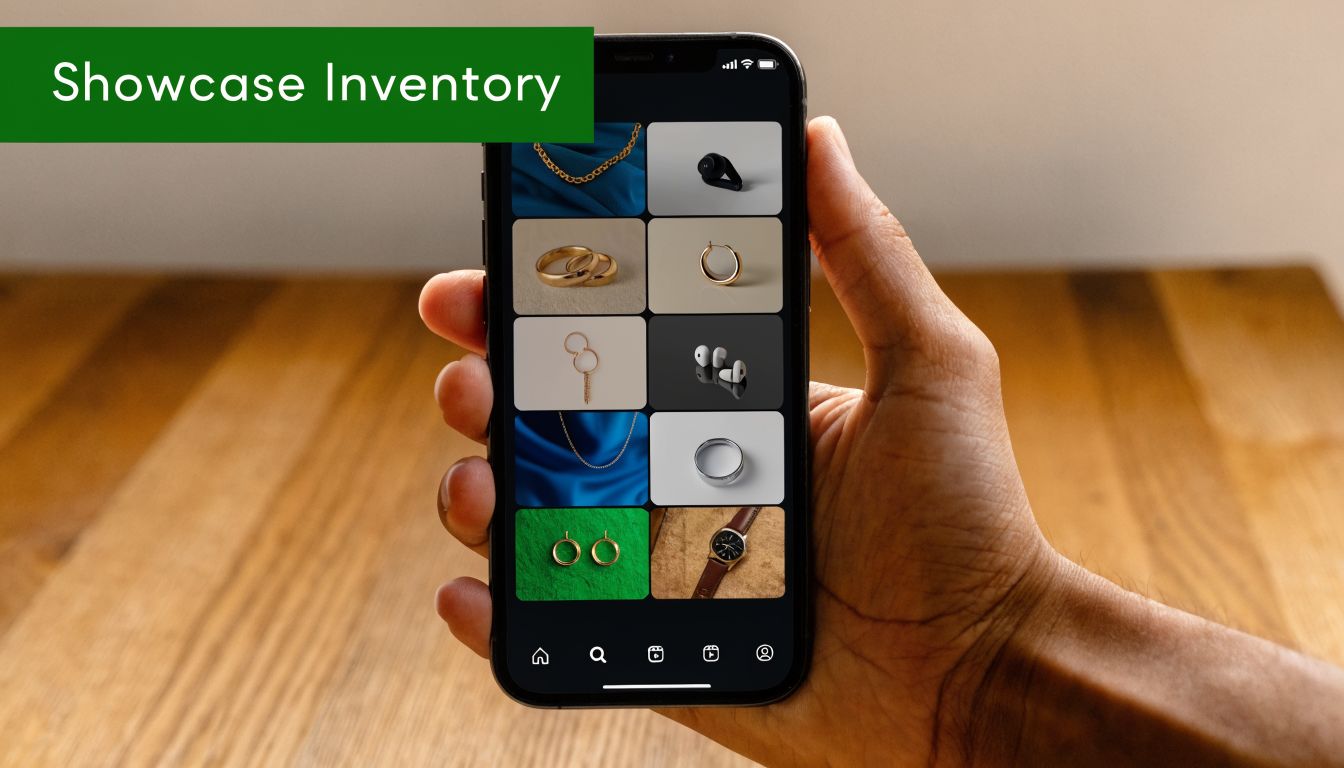
Post real pieces. Show the watch in close-up. Show the gaming console powered on. Show the guitar brand, model, and condition. Show a short video of a jewelry tray moving under good lighting. Buyers respond to specificity.
A practical content mix looks like this:
- Inventory spotlights: Rolex, Citizen, gold chains, diamond studs, laptops, power tools, guitars.
- Process education: Short clips on how pawn loans work or what to bring for an evaluation.
- Local proof: Team photos, community involvement, in-store arrivals, customer-friendly policies.
For shops using AI tools to speed up planning and repurposing, this piece on AI for social media strategy is useful for organizing content workflows.
Paid social works best for inventory and retargeting
Facebook and Instagram ads shine when you have visual categories. Jewelry, luxury watches, handbags, musical instruments, and premium electronics usually outperform bland branding campaigns because the creative does the selling.
Here's a practical scenario. A shop receives several luxury handbags and two high-end watches. Instead of posting one collage, create a carousel ad with one product per card, target nearby users with interest in luxury goods, and then retarget anyone who viewed the site or messaged the page. That keeps your best inventory in circulation longer than a single organic post.
Social won't replace local search. But it does two things search can't do well. It moves inventory visually, and it keeps your shop top of mind between transactions.
6. Email Marketing and Customer Retention Campaigns
Most pawn shops focus almost entirely on acquisition. That's a mistake.
If someone has already sold to you, borrowed from you, bought a used item from you, or asked about a category you stock, you have a warmer audience than any cold ad platform can provide. Email is where you turn that audience into repeat business.
Segment by interest, not just “customer list”
One master list isn't enough.
A person who buys jewelry should not get the same message as someone who comes in for tools. A customer who asked about gold selling shouldn't receive a blast about gaming systems unless you want lower engagement and more unsubscribes.
Use simple segments:
- Gold and jewelry sellers
- Luxury watch buyers
- Electronics and tool shoppers
- Pawn loan customers
- General retail inventory subscribers
Then write emails that reflect that behavior. “New gold chains and estate rings in stock” beats “Check out what's new this week.”
Keep the emails concrete
Email works when it feels like a useful update, not a newsletter written by committee.
Good pawn shop email content includes fresh arrivals, seasonal buying pushes, reminders about categories in demand, and short educational notes about the transaction process. Include product photos, prices when appropriate, and one clear CTA: call, reply, visit, or browse.
A simple example: if your shop just received Milwaukee tools, a Fender guitar, and several gold bracelets, don't bury that in a long message. Send category-specific emails. Tool buyers don't care about bracelets, and jewelry buyers usually don't care about cordless impact drivers.
Email isn't for impressing people. It's for giving them a reason to come back this week.
Also make sure capture happens in-store and online. Ask at checkout. Add a website form for “new inventory alerts.” Offer category-specific signup options so people self-select what they want to hear about.
7. Local Partnerships and Community Sponsorships
Some of the best pawn shop advertising doesn't look like advertising.
Referral relationships can send you high-quality business that never clicks an ad. That's especially true when the partner serves people who need fast liquidation, short-term cash options, or a trusted local buyer for valuables.
Pick partners with shared customer moments
Don't chase random “networking.” Build around real overlap.
Strong local partners can include estate sale companies, jewelry repair shops, coin dealers, moving companies, cleanout services, divorce attorneys, estate attorneys, consignment stores, and even storage facilities. Each of those businesses sees customers going through a transition where valuables and cash flow often matter.
Here's a practical example. A local estate liquidator regularly encounters watches, jewelry, collectibles, instruments, and tools that may be better sold through a direct local buyer than held in a longer sale cycle. A simple referral relationship can benefit both sides if expectations are clear.
Sponsorships work when they're connected to follow-up
A logo on a banner won't do much by itself.
If you sponsor a youth sports team, school fundraiser, local car show, or neighborhood event, attach an offer and a capture mechanism. Use a dedicated landing page, a QR code, or a specific in-store mention. Otherwise you'll get goodwill but no way to measure response.
Use partnerships like this:
- Co-branded content: “What to do with inherited jewelry” with an estate attorney or liquidator.
- Event presence: A booth or flyer at local fairs where people bring questions about valuables.
- Referral tracking: Unique cards, forms, or promo language tied to each partner.
This channel usually won't produce instant volume like PPC. What it does produce is credibility, local familiarity, and better-quality introductions. For many shops, that's where some of the highest-value transactions start.
8. Video Marketing and YouTube Optimization
Video does one thing exceptionally well for pawn shops. It removes uncertainty.
A lot of first-time customers don't know what happens inside a pawn shop. They worry about being lowballed, judged, or confused by the process. A simple video can answer those objections before they ever call.
A quick example helps. If your owner records a short walk-through explaining how a jewelry evaluation works, what items the shop buys most often, and how pawn loans differ from outright sales, that video can do more trust-building than a page of marketing copy.
Start with three practical video types
You do not need a studio. You need a phone, decent lighting, and a staff member who can explain things clearly.
Focus on:
- Store tour videos: Show the storefront, counter, cases, and categories you carry.
- Process videos: Explain what to bring, how offers are evaluated, and what affects resale value.
- Inventory videos: Feature standout watches, jewelry, instruments, designer bags, or electronics in short clips.
Use location keywords in titles and descriptions. “How pawn loans work in Fort Myers” is better than “Our process explained.”
Repurpose everything
One YouTube upload should become several assets.
Cut it into Instagram Reels, Facebook clips, a website embed, and a shorter version for your Google Business Profile post. If the content performs well, make it a recurring series.
For keyword strategy and packaging ideas, this guide to optimizing YouTube content for 2025 has practical suggestions you can adapt.
One warning. Don't make every video promotional. Educational content usually earns more attention and trust. Then the promotional result follows.
Pawn Shop Advertising: 8-Point Comparison
| Marketing Channel | Implementation Complexity 🔄 | Resource Requirements ⚡ | Expected Outcomes 📊⭐ | Ideal Use Cases 💡 | Key Advantages ⭐ |
|---|---|---|---|---|---|
| Google Local Services Ads (LSA) | Medium 🔄, Google verification & setup required | Moderate ⚡, pay-per-lead budget + fast response staffing | High 📊⭐, strong local lead quality and conversion | Capture urgent “near me” service searches | Top search placement, Google Guaranteed, pay-per-lead |
| Google Business Profile Optimization & Review Generation | Low-Medium 🔄, initial setup + ongoing maintenance | Low ⚡, time, photos, review automation tools | Very High 📊⭐, boosts local visibility and trust | All local businesses, critical for high-value transactions | Free listing, reviews improve SEO and conversions |
| Local SEO with Location-Specific Content & Keywords | High 🔄, technical SEO, content, citations per location | Medium-High ⚡, content, tools, link building effort | High (long-term) 📊⭐, compounding organic traffic over months | Multi-location businesses wanting sustained local rankings | Sustainable organic visibility and multi-location targeting |
| PPC Advertising with Location Targeting | Medium 🔄, account structure and continuous optimization | Medium-High ⚡, ad spend + skilled management | Immediate-MediumHigh 📊⭐, fast, measurable leads | Short-term promotions, seasonal demand, instant visibility | Immediate traffic, precise targeting, measurable ROI |
| Social Media Marketing & Facebook/Instagram Advertising | Medium 🔄, consistent creative production & targeting | Medium ⚡, creatives, ad spend, community management | Medium 📊⭐, awareness and engagement; lower direct conversion vs search | Showcase inventory, reach younger/local demographics | Visual formats, affordable CPM, strong retargeting options |
| Email Marketing & Customer Retention Campaigns | Low-Medium 🔄, list building and automation setup | Low ⚡, email platform + content creation time | Very High 📊⭐, high ROI and repeat revenue | Nurture customers, promote new inventory and offers | Lowest cost-per-contact, automated repeat sales |
| Local Partnerships & Community Sponsorships | Medium 🔄, relationship building and coordination | Low-Medium ⚡, modest sponsorship budgets and time | Medium (long-term) 📊⭐, referrals and local credibility | Long-term brand trust, referral networks, PR opportunities | Authentic local credibility, cost-effective referrals |
| Video Marketing & YouTube Optimization | Medium-High 🔄, production, editing, and SEO work | Medium-High ⚡, equipment, editing or production budget | High (compounding) 📊⭐, engagement, trust, search visibility | Demonstrations, testimonials, educational content | High engagement, shareable content, YouTube search reach |
Your Blueprint for Sustainable Growth
The shops that win with pawn shop advertising usually don't rely on a single channel. They build a system where each piece supports the next.
Google Business Profile and local SEO make sure you're discoverable when local intent is high. PPC and Local Services Ads help you capture demand immediately while organic visibility grows. Social media turns your inventory into a marketing asset instead of just shelf stock. Email keeps your past customers active. Partnerships and community presence expand trust beyond the screen. Video explains the process and lowers resistance before the first visit.
That's the practical blueprint. Not flashy. Just effective.
If I were prioritizing from scratch, I'd tighten the foundation first. Make sure your profile, reviews, photos, hours, and service descriptions are accurate. Build pages for your top item categories and service areas. Then put paid spend behind the highest-intent searches and the inventory categories that create the best margins. After that, add retargeting, email segmentation, and a content rhythm your team can maintain.
The biggest mistake I see is fragmentation. A shop runs Google Ads without dedicated landing pages. It posts inventory on Facebook but never retargets viewers. It asks for reviews inconsistently. It sponsors local events but doesn't track referrals. None of those efforts are useless. They just don't compound because they aren't connected.
A connected system compounds. Someone sees a watch video on social, checks your reviews, clicks your Google profile, visits the website, and comes in two days later. Another person searches “sell gold near me,” lands on a focused page, calls from the ad, has a good in-store experience, then joins your email list and returns later to buy jewelry. That's how advertising starts producing durable value instead of one-off activity.
The category itself supports that kind of investment. As noted earlier, the market is stable, local competition matters, and digital customer acquisition is becoming more important. That means the right improvements aren't cosmetic. They directly affect lead flow, trust, and close rate.
For shops that want help turning these tactics into one coordinated plan, Polaris Marketing Solutions offers a complimentary online analysis and competitor review specifically for local businesses in Southwest Florida. If video is part of your growth plan, these expert video marketing tips from TimeSkip are also worth reviewing as you shape your content mix.
If you want a clearer plan for your pawn shop's local visibility, paid ads, reviews, and lead flow, talk to Polaris Marketing Solutions. They help small and mid-sized businesses build marketing systems that turn searches, clicks, and profile views into real customers.