

You're probably in one of two spots right now. Either your business does solid work, but the phone doesn't ring as consistently as it should, or you're getting leads, but too many come from referrals alone and not from people finding you online.
That's a risky place to stay in Fort Lauderdale.
A lot of business owners hear “digital marketing” and get hit with generic advice about posting more, blogging more, or running ads. In this market, generic usually means expensive and disappointing. Fort Lauderdale businesses compete in a crowded South Florida environment where local intent, speed, reviews, and visibility all matter at once.
Why Digital Marketing in Fort Lauderdale Is Different
Fort Lauderdale isn't a small, sleepy local market where basic setup work is enough. It sits in Broward County, which had a population of 1,944,375 in the 2020 U.S. Census according to Thrive Agency's Fort Lauderdale market overview. For service businesses, that density creates both pressure and upside. A small lift in visibility can turn into a meaningful increase in calls, form submissions, and estimate requests.
That's why digital marketing in Fort Lauderdale has to be local-first. You're not only competing with the company down the street. You're also competing with larger South Florida players, aggressive advertisers, and businesses that understand how to show up where buyers look first.
What makes this market harder
Most service searches here are high intent and fast decision. A homeowner looking for AC repair, a family searching for a dentist, or someone needing legal help isn't browsing for fun. They want a nearby provider, they want proof, and they want an easy next step.
What usually fails in this environment:
- Broad marketing with no local signal. A generic homepage that says “we serve all of South Florida” rarely converts as well as clear service-area positioning.
- Pretty websites with weak trust elements. If visitors can't find reviews, service details, and a visible phone number quickly, they leave.
- Ad campaigns built too wide. In a competitive metro area, sloppy targeting burns budget fast.
- Neglected business listings. An incomplete Google Business Profile can bury a good company behind a weaker competitor with better local signals.
What tends to work instead
The businesses that gain traction usually do three things well:
- Own local search
- Run disciplined paid ads
- Build visible trust through reviews and content
If you want a quick refresher on the basics behind those moving parts, this guide on understanding digital marketing fundamentals is a useful primer before you start tightening strategy.
The Fort Lauderdale market rewards businesses that remove friction. Clear location signals, strong reviews, and fast follow-up beat vague branding every time.
Mastering the Fort Lauderdale Local Search Landscape
Local search is where most Fort Lauderdale service businesses either succeed or disappear. If someone searches for a provider near them, Google often shows the map pack before they ever reach traditional website results. That means your Google Business Profile, reviews, service categories, photos, and business details often do more lead generation than your homepage.
Google's local ranking guidance says local results are based on relevance, distance, and prominence, and prominence is strongly affected by review quantity and quality, links, and overall reputation, as discussed in Alliance Interactive's Fort Lauderdale digital marketing page.
Start with your Google Business Profile
Treat your profile like a sales asset, not a listing you set up once and forget.
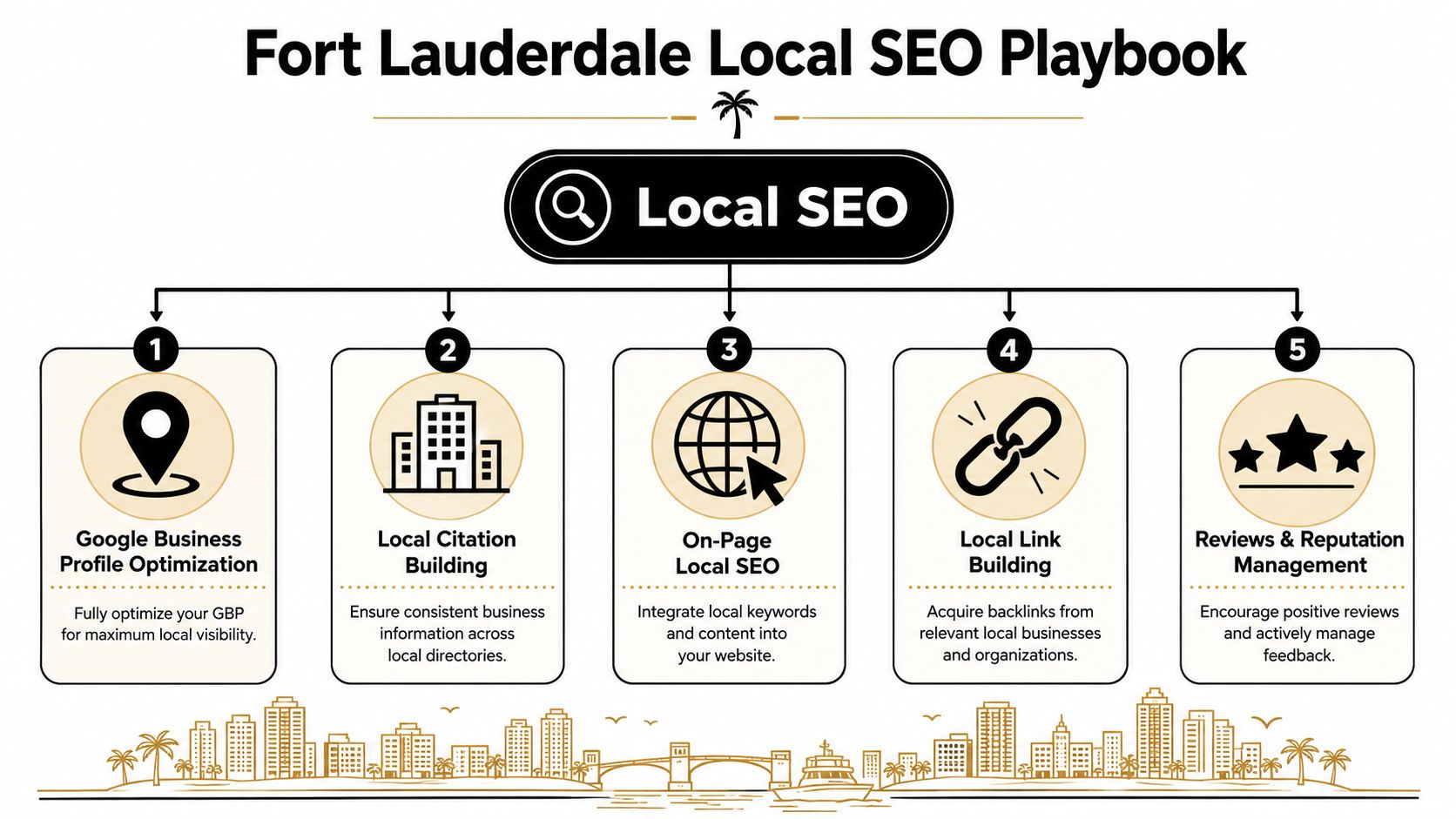
A strong profile usually includes:
- Primary and secondary categories that match buyer intent. A marine mechanic near the Intracoastal shouldn't stop at a broad category if more specific service categories fit the work.
- A service description written for real customers. State what you do, where you work, and what problems you solve.
- Consistent service areas. Don't list places you can't realistically serve quickly.
- Fresh photos. Teams, trucks, projects, storefronts, and before-and-after work all help.
- Questions and answers you control. Add common questions before random users do it for you.
If you want a practical framework, this Google Business Profile optimization checklist is a solid place to audit what's missing.
Reviews are not a side task
In Fort Lauderdale, reviews do two jobs at once. They help visibility and they help conversion.
A simple review process works better than waiting and hoping. Ask at the right moment, right after a successful service visit, completed install, case milestone, or positive handoff. Text and email requests usually work well when they're short and direct.
Practical rule: Don't ask for “support.” Ask for a review tied to the service just completed. Specific prompts produce better feedback than generic requests.
Examples:
- A roofing company can ask the customer to mention cleanup, communication, and timeliness.
- A dental office can ask patients to mention staff friendliness and scheduling ease.
- A law firm can ask for comments on responsiveness and professionalism, without pushing anyone to discuss sensitive case details.
Build local consistency outside Google
Your local footprint also depends on consistency across directories and your own website. Your business name, address, phone number, services, and hours should match wherever they appear.
Use this short checklist:
| Area | What to check |
|---|---|
| Business listings | Same name, phone, address, and hours everywhere |
| Service pages | Separate pages for core services and key locations |
| Photos | Real branded images, not stock-only galleries |
| Links | Mentions from chambers, local groups, suppliers, and partners |
| Reviews | Ongoing requests, not one-off bursts |
This walkthrough helps visualize how the local pieces fit together:
On-page local SEO still matters
Your website still has to support your profile. A Fort Lauderdale plumber, med spa, or accountant shouldn't rely on one broad services page. Build dedicated pages for core services and the areas you target. Keep the copy useful. Add FAQs, process details, trust signals, and real contact options.
Local SEO isn't mostly about tricks. It's mostly about completeness, consistency, and proof.
Driving Immediate Leads with Paid Local Ads
SEO builds momentum over time. Paid search is what you use when you need lead flow now, when a service line is underbooked, or when you want more control over where demand comes from.
Fort Lauderdale businesses can do very well with Google Ads, but only if the account is built tightly. In competitive local markets, the most efficient paid search campaigns use exact and phrase match, separate campaigns by intent, and layer geographic bid adjustments to reduce waste and improve ad rank, based on Connectica's Fort Lauderdale PPC guidance.
What a practical campaign setup looks like
A home service company shouldn't throw every keyword into one campaign. That usually creates messy search terms, weak ad relevance, and expensive clicks.
A cleaner setup looks like this:
- Branded campaign for people already searching your business name
- Non-branded campaign for high-intent service searches
- Competitor-intent campaign if you want to test that traffic separately
- Location targeting by radius or ZIP code around the areas you can serve profitably
For example, an HVAC company serving Fort Lauderdale and nearby neighborhoods might run separate ad groups for emergency AC repair, AC replacement, and maintenance plans. That gives you more control over ad copy and landing pages.
Where small businesses waste money
Most PPC losses come from preventable mistakes.
Common problems include:
- Sending all traffic to the homepage
- Bidding on broad terms with weak intent
- Ignoring negative keywords like jobs, free, salary, or DIY
- Running ads in areas you don't want
- Using one ad message for every service
If you're comparing options, this overview of pay-per-click for small businesses gives a useful breakdown of how smaller local companies can structure campaigns without overspending.
If your ad promises same-day service, your landing page should repeat that promise clearly, show the phone number immediately, and make the next step obvious.
Match the ad to the landing page
Many campaigns underperform. A search for “emergency electrician Fort Lauderdale” should not land on a vague services page. It should land on a page about emergency electrical service, with local relevance, fast contact options, and trust elements above the fold.
Good paid traffic management is less about flashy tactics and more about disciplined alignment:
- keyword intent
- ad message
- landing page content
- follow-up process
The businesses that treat PPC like a controlled lead system usually last longer in the auction than the ones who treat it like a switch they turn on and hope for the best.
Building Trust with Social Media and Reputation Management
A lot of Fort Lauderdale business owners either expect too much from social media or ignore it completely. Both are mistakes. For local service brands, social media usually isn't the main lead source. It's the place where prospects check whether you look active, credible, and real.
When someone finds you through Google, they often inspect your Facebook page, Instagram feed, or recent content before calling. They want to see evidence that you do the work you say you do.
What to post if you sell a local service
The best content for a service business is rarely clever. It's useful and believable.
A paving contractor might post before-and-after driveway photos in Davie. A family law attorney might publish short clips answering common questions. A med spa might show treatment rooms, staff introductions, and appointment preparation tips. A cleaning company might share project snapshots, team routines, and seasonal homeowner advice.
If your team needs ideas beyond the usual recycled posting tips, these creative social media approaches can help spark formats that still feel practical.
Reputation management is public sales work
Reviews on Google, Yelp, and Facebook don't just sit there. They shape conversion before a prospect ever speaks to you.
That means your responses matter. Thank happy customers in a way that sounds human. Respond to criticism calmly, even when the review feels unfair. Never argue in public. Never sound defensive. Future customers are reading those exchanges to judge how you handle pressure.
A simple response framework works well:
- Acknowledge the concern
- State that you take it seriously
- Invite an offline resolution
- Stay professional and brief
For a more detailed process, these online reputation management tips are worth reviewing.
A weak review response doesn't only affect the unhappy customer. It affects every prospect who reads it later.
Don't chase vanity metrics
Followers don't pay invoices. Local trust does.
That's why the right social media strategy usually focuses on:
- showing real work
- answering buyer questions
- reinforcing expertise
- backing up your reviews and search presence
There's also value in monitoring brand mentions and customer sentiment across platforms. For teams thinking more broadly about mastering social media reputation, the bigger lesson is simple: your public digital presence needs consistency. If your Google reviews say one thing and your social presence looks abandoned, trust drops fast.
Ensuring Your Website Is a High-Performance Asset
Your website is your digital building. If the foundation is weak, everything else works harder than it should.
I've seen service businesses spend money on SEO, ads, and social media only to send traffic into a site that loads slowly, hides the phone number, buries service info, or looks clumsy on a phone. That's not a traffic problem. That's a conversion problem.
The non-negotiables
Start with the basics and be honest about what's broken.
Use this self-audit:
- Mobile usability. Open the site on your own phone. Can a customer call, find their way, and request service without pinching, zooming, or hunting?
- Service clarity. Does each core service have its own page, or are everything and anything lumped into one block of text?
- Local alignment. Do you have pages that reflect the places you serve, such as city-specific service pages when that structure makes sense?
- Contact friction. Is the phone number visible? Is the form short? Are hours and service areas easy to find?
- Trust signals. Do visitors see reviews, credentials, photos, FAQs, and recent work?
What strong service pages look like
A good service page answers the buyer's immediate questions. What do you do, where do you do it, how do they contact you, and why should they trust you?
For example, a page for “roof repair in Fort Lauderdale” should include:
- the repair problems handled
- what happens when someone calls
- signs a homeowner should act now
- photos or proof of work
- nearby service coverage
- a direct call to action
That's far better than a thin page stuffed with city names.
Your website doesn't need to impress a designer first. It needs to help a stressed prospect decide fast.
Technical health is part of marketing
Business owners hear “technical SEO” and assume it's mysterious. In practice, much of it is routine maintenance. Broken pages, confusing navigation, duplicate service content, bad mobile layouts, and missing metadata all get in the way.
A clean website supports every other channel. Better local pages help search. Better landing pages improve paid ads. Better trust elements improve conversion from social and referral traffic.
If the rest of your marketing is working but leads still feel inconsistent, check the site before buying more traffic.
Budgeting for Digital Marketing and Measuring ROI
Business owners usually ask the right question, just in the wrong order. They ask, “How much does digital marketing cost?” The better question is, “What result am I paying for, and how will I know if it's working?”
That matters because digital is now the default customer acquisition environment. The U.S. digital ad market reached $225.0 billion in 2023, according to Blue Interactive's Fort Lauderdale digital marketing summary. If your competitors are active online and you aren't measuring performance, you're operating half blind.
What to measure instead of vanity metrics
Some metrics are interesting. Some pay the bills.
Track these first:
| Useful metric | Why it matters |
|---|---|
| Phone calls | Direct signal of buyer intent |
| Form submissions | Shows website conversion activity |
| Qualified leads | Separates real opportunities from noise |
| Booked appointments | Connects marketing to operations |
| Cost per lead | Helps compare channels realistically |
Metrics to treat carefully:
- Impressions without lead quality
- Clicks without conversion tracking
- Follower growth without inquiries
- Traffic spikes that don't produce sales activity
How to think about budget tiers
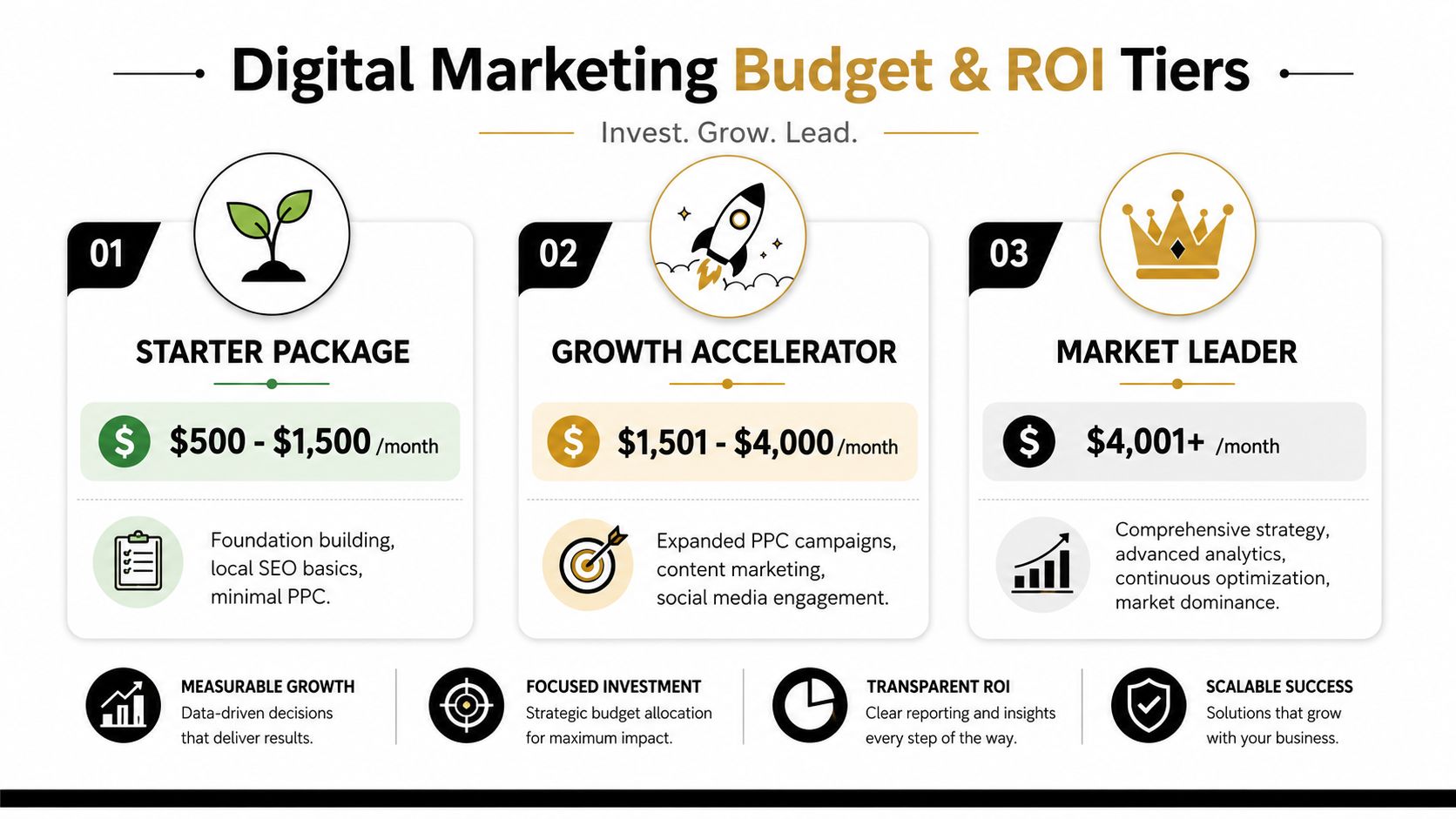
The pricing graphic shows common budget bands, but the main issue is fit. A starter budget usually supports foundational local SEO, some profile work, and selective ad testing. A mid-range budget can support more serious PPC management, stronger landing pages, and regular content. A larger budget can fund broader market coverage, deeper tracking, and faster iteration.
The right budget depends on:
- how competitive your category is
- how urgently you need leads
- how many services or locations you're promoting
- how well your website already converts
For some businesses, one well-run campaign and a stronger local presence will beat a scattered multi-channel plan.
How to Choose the Right Digital Marketing Partner
Choosing an agency gets easier when you stop listening to broad promises and start asking operational questions. You don't need another sales pitch. You need to know how a team thinks, how they report, and whether they understand local service business reality.
A good partner should be able to explain what they would fix first and why. If the answer is vague, overloaded with buzzwords, or skips straight to “we do everything,” keep looking.
Questions worth asking before you sign
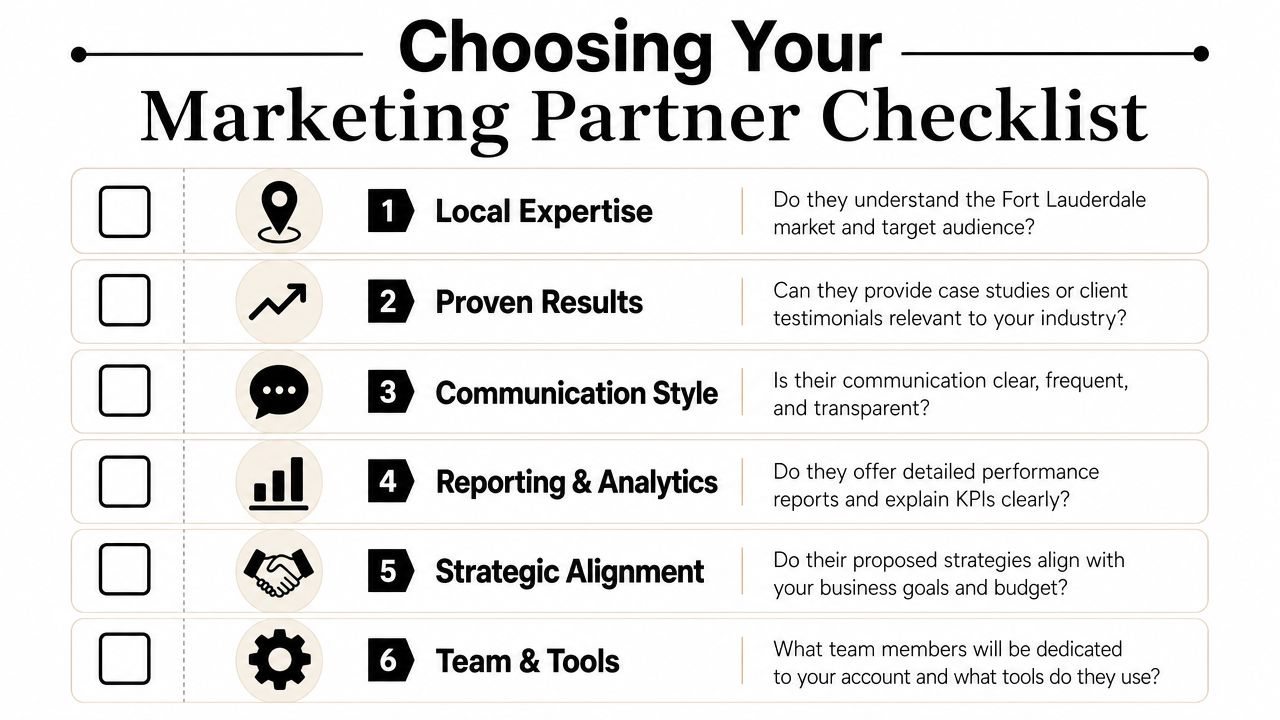
Use a shortlist like this in every agency conversation:
- What would you audit first? The answer should mention your website, Google Business Profile, current rankings, reviews, and ad setup if ads are running.
- How do you define success? Look for calls, leads, booked jobs, and conversion tracking. Be cautious if they focus on impressions alone.
- How often will we communicate? You want a clear reporting rhythm and a real point of contact.
- What work happens monthly? Ask what gets updated, tested, written, optimized, and monitored.
- How do you handle local SEO and reviews? If they barely mention profile optimization or reputation, they may not understand local lead generation well.
- What happens if paid ads underperform? Good agencies talk about search terms, landing pages, keyword intent, and budget reallocation.
What a strong answer sounds like
A serious agency sounds specific. They'll talk about service pages, call tracking, campaign segmentation, review systems, citation cleanup, and conversion points. They won't guarantee rankings. They won't pretend every business needs the same package.
One option businesses can review is Polaris Marketing Solutions, which offers services such as local SEO, PPC, social media management, website design, and a complimentary online analysis and competitor report. That kind of upfront audit is useful because it gives you something concrete to evaluate before making a decision.
If an agency can't explain your first 90 days in plain language, they probably can't execute them cleanly either.
The right partner should help you make better decisions, not leave you more confused than when the conversation started.
If you want a clearer picture of where your business stands online, Polaris Marketing Solutions offers a complimentary online analysis and competitor report. It's a practical way to see how your website, local visibility, reviews, and lead paths stack up before you commit to a bigger marketing plan.