
You know the pattern. January through April feels like controlled chaos. Visitors pour into Fort Myers, Naples, and Cape Coral. The wait list is long, your staff is sprinting, and your dining room finally looks the way you always want it to look.
Then the season shifts.
Suddenly you're staring at slower weekdays, a quieter phone, and a lot more competition for local diners who have endless choices. The restaurant down the road is posting daily specials on Instagram. Another spot is showing up first on Google Maps. A third is pushing online ordering so smoothly that a hungry customer never even considers anyone else.
That gap between “packed house” and “where did everybody go?” is where digital marketing earns its keep. It gives you a way to stay visible when foot traffic softens, keep locals engaged, and stop relying on luck, weather, and seasonal swings.
The shift isn't minor. The global online food delivery market reached $111.32 billion USD in 2020, and the U.S. saw a 123% growth rate, a change that shows digital access now sits at the center of how restaurants get discovered and how orders get placed, according to Statista's restaurant digitalization data. If you're running a restaurant in Southwest Florida, digital marketing isn't a side project anymore. It's part of operations.
From Busy Season to Ghost Town The Digital Divide for SWFL Restaurants
A Fort Myers owner can do almost everything right inside the four walls and still lose business online. The food can be excellent. Service can be warm. The room can have that exact Gulf Coast energy people want. But if the menu is buried in a PDF, the Google profile is half-finished, and social media has gone quiet since spring training, the restaurant starts disappearing from consideration.
That happens every day in Southwest Florida. A couple staying in Naples searches for seafood. A Cape Coral family looks for takeout on a Tuesday. A local in Estero wants a patio and quick reservations. They don't drive around hoping to “discover” the right place. They search, compare, click, and decide in minutes.
What the digital divide looks like locally
The restaurants that keep momentum past tourist season usually have a few basics locked down:
- A fast mobile site: It loads quickly, shows the menu clearly, and makes it easy to order or reserve.
- An active Google profile: Hours, phone number, categories, photos, and service options are current.
- A simple content habit: Specials, events, behind-the-scenes posts, and review responses don't sit untouched.
- A direct customer channel: They collect emails, build repeat traffic, and don't depend entirely on delivery apps.
The restaurants that struggle often lean on reputation alone. In a smaller market, word of mouth still matters. It just isn't enough by itself anymore.
Practical rule: If a new customer can't find your menu, your hours, and your ordering option in under a minute on their phone, you're making the sale harder than it needs to be.
A lot of owners know this, but they get stuck on where to begin. That's fair. Running service, staffing, inventory, and scheduling already fills the week. If you want a strong overview of the bigger operational shift, 10Seat's digital roadmap for restaurants is a useful read because it connects marketing decisions to how modern restaurants function day to day.
In Southwest Florida, the winners usually aren't the restaurants with the biggest ad budgets. They're the ones that make it easy for hungry people to find them, trust them, and choose them.
Build Your Digital Foundation A Five-Star Website and Google Profile
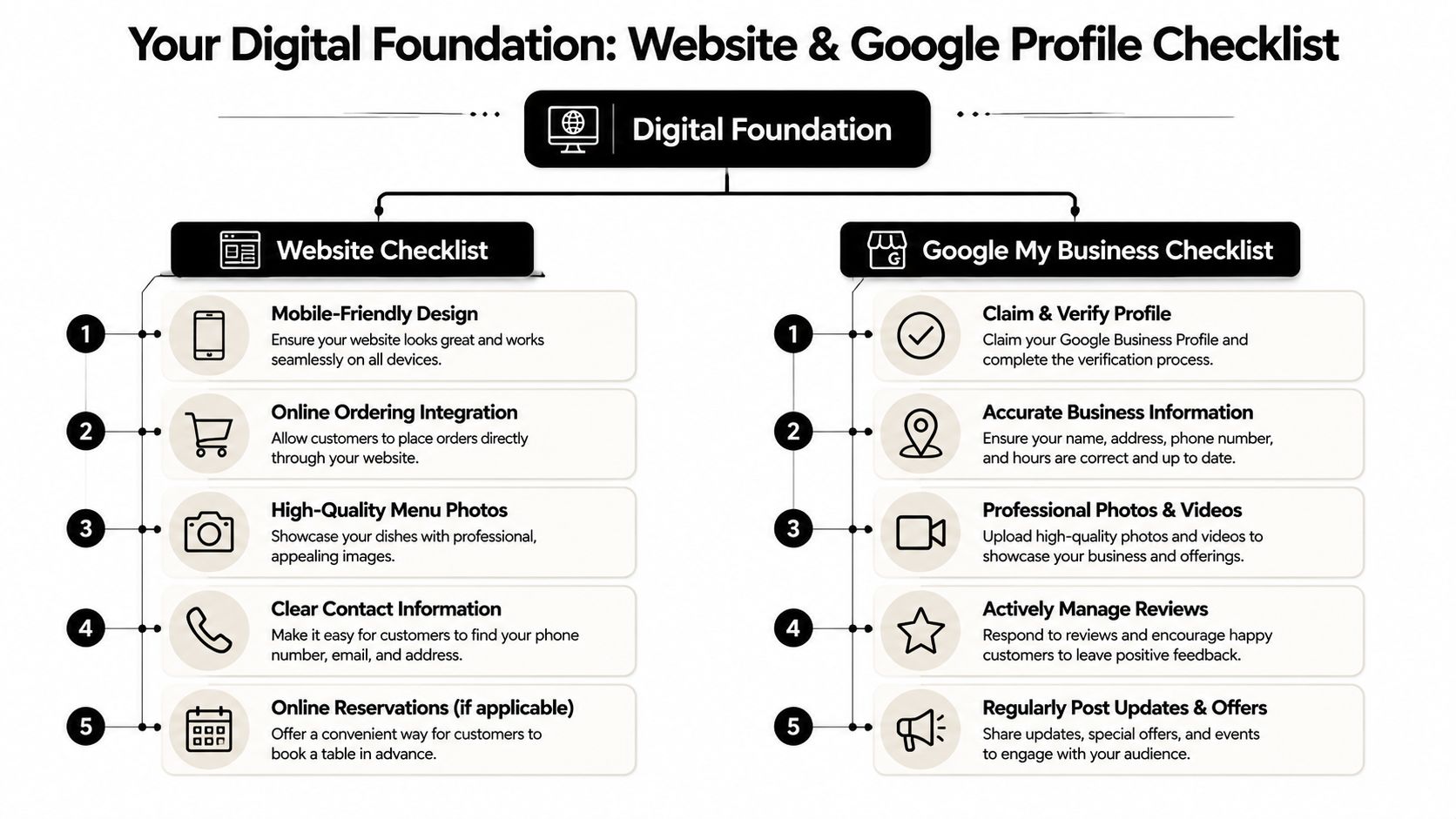
Before you spend money on ads, get your foundation right. For most restaurants, that means two assets matter more than anything else: your website and your Google Business Profile.
Mobile performance is where this gets real. 78.4% of restaurant web traffic comes from mobile, and mobile-optimized ordering pages convert at 18.5% compared with 3.8% overall, according to restaurant website benchmarks from CUFinder. If your site is clunky on a phone, you're not losing “traffic.” You're losing orders.
Fix the website first
A restaurant website doesn't need to be fancy. It needs to be usable.
Start with this short checklist:
Make the menu readable on mobile
Put your menu on a proper webpage, not only in a PDF. Search engines, customers, and AI tools all handle HTML menu content better. If someone in Bonita Springs searches for blackened mahi, your site has a better shot when that item exists as crawlable text.Put ordering and reservations above the fold
Don't make people hunt for the next step. “Order Online,” “Reserve a Table,” and “Call Now” should be obvious on the first screen.Use real photos of your food and space
Not stock images. Show your crab cakes, your bar, your patio at sunset, your dining room lighting, and your takeout packaging. Set expectations accurately.Keep contact details consistent
Your restaurant name, address, and phone number should match exactly across your site and every listing.Check your basics weekly
Hours, holiday closures, happy hour timing, brunch availability, and reservation links need regular review.
If you're rebuilding from scratch or comparing layouts, this guide to the best website design for restaurants gives a practical sense of what should appear on the page.
Treat your Google Business Profile like a revenue channel
For a local restaurant, Google Business Profile is not a passive listing. It's a storefront.
Fill out every field you can, including:
- Primary and secondary categories: Be specific about what you are.
- Services: Dine-in, takeout, delivery, curbside, reservations.
- Attributes: Outdoor seating, waterfront view, family-friendly setting, wheelchair accessibility, and anything else relevant.
- Menu and ordering links: Send people straight to action pages.
- Photos and short videos: Food, staff, interior, exterior, and parking visibility all help.
Google also rewards freshness. Post weekly updates about live music, seasonal dishes, brunch launches, or game-day specials. A Cape Coral restaurant can post “Stone crab special this weekend” or “Friday dockside happy hour” and give both Google and customers a new reason to pay attention.
The best Google profiles answer the next five customer questions before the customer asks them.
Build for AI search too
Traditional local SEO still matters, but restaurant discovery is changing. Structuring menu and location data for AI ingestion is becoming critical for appearing in recommendations from tools like ChatGPT, Perplexity, and Gemini, as explained in Malou's guide to online marketing for restaurants.
For a local restaurant, that means:
- Keep NAP data exact: Name, address, and phone number should match everywhere.
- Use plain language on your site: “Waterfront seafood restaurant in Fort Myers” is clearer than clever brand copy.
- List menu items with descriptions: This helps AI systems understand what you serve.
- Create separate location pages if needed: Especially useful if you serve multiple SWFL markets.
If someone asks an AI tool for “a casual Naples spot with outdoor seating and grouper tacos,” you want your restaurant to be understandable enough to surface in that answer.
Win the Local Search Battle with Menu SEO and Content
Most restaurant owners think SEO means ranking for the restaurant's name. That's the easiest search to win, and often the least valuable. The better opportunity is showing up for what people want to eat or experience.
A diner in Cape Coral might search for “best grouper sandwich Cape Coral.” A couple in Naples might search for “date night Italian restaurant near Fifth Avenue.” A family in Fort Myers might want “kid friendly brunch with outdoor seating.” If your website only has a home page and a menu PDF, you're barely in the game.
Turn your menu into searchable pages
In this context, menu SEO works.
Instead of hiding everything in one long document, build sections or pages around categories and signature dishes. A seafood restaurant could create crawlable pages for:
- Grouper sandwich
- Stone crab specials
- Raw bar
- Sunday brunch
- Happy hour oysters
Each page or section should include the dish name, a short description, a photo, and nearby location language that reflects how customers search. “Fresh grouper sandwich in Cape Coral” is more useful than a vague menu label.
You don't need dozens of pages. Start with your five to ten biggest search-worthy items.
Publish local content that sounds like Southwest Florida
A generic blog won't help much. A local angle will.
Useful content ideas include:
- A guide to dog-friendly patios in Bonita Springs
- What makes Gulf seafood different on our menu
- Where our produce comes from in Southwest Florida
- Best lunch stop before heading to Sanibel or the beach
- How to plan a waterfront birthday dinner in Fort Myers
That kind of content gives Google more context and gives locals a reason to visit your site before they're ready to order.
If you want a simple framework for organizing this work, this small business SEO checklist is a solid starting point for local search basics.
If you want to rank for “best stone crabs in Naples,” your site has to say something meaningful about stone crabs in Naples.
Structure content for AI recommendations
Traditional SEO targets typed searches. AI discovery is more conversational. That's where your menu and local pages need to pull double duty.
Use straightforward wording that helps AI systems understand:
- what kind of restaurant you are
- where you're located
- what signature dishes you serve
- what experience you offer
A Fort Myers waterfront restaurant should say exactly that. A Naples wine bar with small plates should say exactly that. Ambiguity hurts visibility.
This is one area where small independent restaurants can beat larger groups. You know your menu, your neighborhood, and your guests better than anyone. Put that detail online in a clear structure and your restaurant becomes easier to recommend, whether the customer is searching on Google or asking an AI assistant where to eat tonight.
Master Social Media for Local Buzz and Full Tables
A lot of restaurant owners in Fort Myers tell me the same thing: “We know we should post more, but we don't have time.” That's usually true. The fix isn't posting all day. It's posting the right kind of content with a clear purpose.
That matters because social isn't just about attention anymore. In 2024, restaurants saw an average 9.9% increase in B2C revenue directly from social media strategies, according to Deloitte Digital's restaurant social media perspective. If you're doing digital marketing for restaurants, social needs to support sales, not just collect likes.
Use three content pillars
The easiest system for a busy restaurant is this:
Food
Show dishes people will order. Close-up plating, pours, grill shots, dessert finishes, and daily specials work well.People
Introduce your chef, bartender, hostess, kitchen team, or longtime server. People connect with people faster than they connect with logos.Place
Show what it's like to be there. Patio sunsets, waterfront tables, live music setup, brunch atmosphere, happy hour crowd.
A Naples restaurant can lean into ambiance and date-night visuals. A Cape Coral sports bar can post game-day energy and wing specials. A Fort Myers café can feature morning routine content and regulars picking up coffee.
What actually gets traction
The strongest local restaurant posts usually feel current and unpolished in a good way. A Reel of fresh fish hitting the pan. A bartender building a signature cocktail before sunset. A quick phone video of a packed Friday patio.
Here are formats that tend to pull their weight:
- Behind-the-scenes clips: Prep, plating, deliveries, or opening the kitchen.
- Guest-generated reposts: Ask customers to tag you, then reshare their best shots.
- Short Reels with movement: Pouring sauce, slicing key lime pie, flaming a dish, shucking oysters.
- Limited-time promos: “Tonight only,” “weekend special,” and “while it lasts” posts create urgency.
- Local partnerships: A tasting with a Fort Myers food creator or a collab with a nearby business can put you in front of fresh local audiences.
For owners who want a more structured approach, this guide on social media strategy for restaurants can help turn scattered posting into a repeatable workflow.
Don't post like a brand manager. Post like a restaurant people want to walk into tonight.
Sample Weekly Social Media Content Plan
| Day | Content Idea | Example Post Caption |
|---|---|---|
| Monday | Chef prep Reel | “Getting ready for dinner service. Fresh prep, sharp knives, and tonight's seafood features are on deck.” |
| Tuesday | Taco or burger special photo | “Cape Coral locals, tonight's special is built for a midweek reset. Available after 4.” |
| Wednesday | Staff spotlight | “Meet Ana. If you've had a great dinner here lately, there's a good chance she helped make it happen.” |
| Thursday | Patio or bar atmosphere video | “Golden hour hits differently on the patio. Join us for drinks and small plates tonight.” |
| Friday | Signature dish close-up | “This is the one guests keep coming back for. If you know, you know.” |
| Saturday | Guest repost or packed-house Story | “SWFL showed up tonight. Tag us in your photos and we may feature you next.” |
| Sunday | Brunch reminder | “Brunch starts soon. Bring the family, grab a table outside, and take it slow.” |
You don't need a full production setup. A clean lens, decent light, and consistent posting beat overthinking every time.
Build Loyalty with Email Marketing and Review Management
Third-party apps are useful, but they don't own your customer relationship. You do, or at least you should. If someone orders through a marketplace, follows the app, and forgets your restaurant name a week later, that's weak loyalty.
Email and review management solve a different problem. They help you stay remembered.
Build an email list without making it awkward
Restaurants usually overcomplicate list building. Keep the offer simple and the sign-up easy.
Try practical methods like:
- A dessert or appetizer incentive: Offer a small perk for joining your list.
- Wi-Fi sign-up capture: Ask guests to join your email list when they access guest internet.
- Receipt or tabletop QR code: Link to a short form for birthdays, specials, and event updates.
- Online ordering checkbox: Let customers opt into restaurant news during checkout.
Once you collect emails, don't blast random promotions. Send useful, predictable messages:
- monthly updates with events and specials
- birthday offers
- holiday reservation reminders
- early access to seasonal menus
- quiet-season offers aimed at locals
If you want to pair email with repeat-visit rewards, platforms such as loyalty card software can help create a direct retention loop without forcing customers into a punch-card system that gets lost in a wallet.
Reviews shape decisions long before a visit
Reviews don't just affect reputation. They affect conversion. Diners read them to gauge service, consistency, speed, portion size, and whether management pays attention.
Keep your process simple:
- ask happy customers for reviews at the right moment
- monitor Google, Yelp, and TripAdvisor consistently
- respond promptly and professionally
- look for repeated issues instead of treating each review as an isolated complaint
Here are response templates that work without sounding robotic.
“Thanks for coming in and for the kind words about the snapper and service. We appreciate you taking the time to share your experience and hope to welcome you back soon.”
For a mixed review:
“Thank you for the feedback. We're glad you enjoyed the food, and we appreciate your note about the wait time. We're reviewing that with the team so the experience feels smoother next visit.”
For a negative review:
“We're sorry your visit fell short. That's not the experience we want guests to have. We'd like to learn more and make this right, so please contact us directly.”
The trade-off owners need to understand
Delivery apps can bring convenience, but direct channels build durability. Email gives you a way to fill a rainy Tuesday, promote a wine dinner, or push a locals-only special without paying a platform every time you want attention.
Reviews do something else. They show future diners whether you care enough to respond when things go right and when they don't.
Use Smart Advertising for Immediate Customer Traffic
Sometimes you need results faster than organic marketing can deliver. Maybe summer traffic softened. Maybe you launched brunch. Maybe you need to push private dining or fill bar seats on weekdays. That's where paid ads help, if you pick the right platform for the right job.
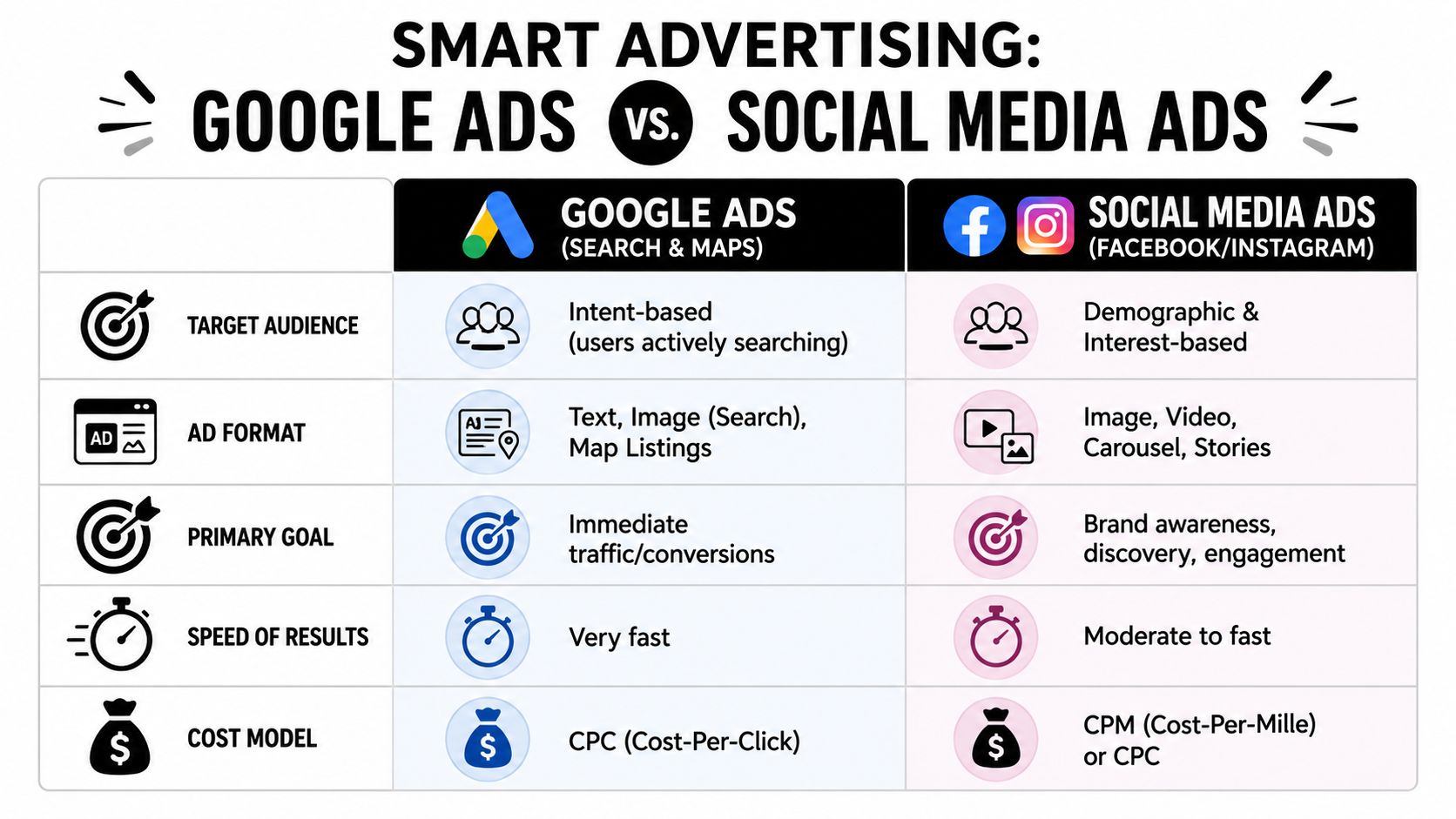
For most restaurants in Southwest Florida, the first decision isn't “Should we advertise?” It's “Should we start with Google or social?”
Google Ads when intent is already there
Google Search and Maps ads work best when people already know what they want. They're looking for “restaurants near me,” “seafood Fort Myers,” or “best lunch in Naples.” That's active demand.
Google is a better fit when you want:
- Immediate local visibility: Especially near your physical location.
- Map-based discovery: Useful for tourists, business travelers, and last-minute diners.
- Reservation or call intent: Great for people ready to act now.
Sample idea for a Fort Myers seafood spot:
“Fresh Gulf seafood in Fort Myers. Order online, reserve a table, or join us tonight for waterfront dining.”
Social ads when you need discovery
Facebook and Instagram ads do a different job. They put your restaurant in front of nearby people who may not be searching right now but could be persuaded by a strong visual or offer.
Social is a better fit when you want:
- Awareness in a tight radius: Think locals within driving distance.
- Promotion for an event or special: Brunch launch, live music, ladies night, wine tasting.
- Visual appetite appeal: Cocktails, desserts, sunsets, and signature dishes usually perform best.
A restaurant in Estero might run an ad to people nearby who are interested in dining out, seafood, or date-night experiences with copy like:
“New weekend brunch in Estero. Coastal cocktails, fresh seafood, and outdoor seating. Book your table today.”
Where your first budget should go
If your goal is foot traffic from high-intent searchers, start with Google.
If your goal is building awareness for a promotion, event, or new concept, start with Facebook and Instagram.
If your budget is tight, don't split it too early. Pick one platform, run a focused test, and judge it by real business outcomes.
One of the smartest ways to do that is with platform-specific promo codes. A code like INSTABRUNCH for Instagram and GOOGLELUNCH for Google gives you a clean read on which channel drives actual orders or redemptions. That's more useful than likes or impressions.
Restaurants often struggle to track channel performance, and Grubhub notes that 60% of marketing spend is wasted on untracked channels, making unique code tracking a practical fix, as suggested in Grubhub's digital marketing advice.
A simple setup:
- One code per platform
- One landing page per offer if possible
- One redemption window
- One weekly review of results
That gives you enough information to stop funding weak channels and double down on the ones bringing diners in.
Measure What Matters and Set a Realistic Budget
Restaurant owners don't need a pile of dashboards. You need a few numbers that connect marketing activity to actual revenue. That's the difference between “we've been posting a lot” and “this is making us money.”
The core metrics are straightforward. Data-driven marketing allows restaurants to track KPIs like customer acquisition cost, retention rate, and average order value, which helps owners adjust strategy based on what customers do, according to AI Digital's overview of data use in restaurants.
Three KPIs worth watching
Customer acquisition cost (CAC) tells you what it costs to bring in a new customer from a campaign.
A back-of-the-napkin version:
- total ad spend for a campaign
- divided by
- number of new customers clearly tied to that campaign
If you spent on a paid promotion and tracked redemptions through a unique code, you can estimate CAC fast.
Average order value (AOV) shows whether your ordering flow, promotions, and upsells are improving ticket size.
Simple version:
- total sales from a period
- divided by
- number of orders or tables in that same period
For restaurants with online ordering, AOV often tells you whether bundles, add-ons, and featured items are working.
Customer retention rate tells you whether people come back.
You don't need a perfect enterprise setup. Start by reviewing repeat visits through your POS, loyalty platform, reservation system, or email list response. If customers return after your offers, events, or seasonal campaigns, retention is improving. If every campaign feels like starting from zero, it probably isn't.
Use a measure, analyze, adjust rhythm
Marketing gets expensive when owners don't review anything until the money is gone.
Set a monthly check-in and ask:
- Which channel drove the most direct actions?
- Which offer got redeemed most often?
- Did new customers come back?
- Did online ordering or reservations increase after a specific push?
- Which reviews or feedback themes keep repeating?
If social is hard to judge, PostSyncer's social media ROI guide is useful because it helps connect platform activity to business results instead of vanity metrics.
A campaign isn't “working” because it reached people. It's working because it changed behavior.
Build a budget you can actually sustain
A realistic marketing budget has to match your stage and your pressure points. A new restaurant usually needs more visibility work. An established one may need to focus on retention, reviews, and seasonal consistency.
A simple way to build a starting budget is to divide it into buckets, not random tactics:
| Budget Bucket | What it covers | Good use case |
|---|---|---|
| Foundation | Website fixes, photo updates, menu cleanup, Google profile work | Best for restaurants with weak basics |
| Content and retention | Social posting, email campaigns, review management | Best for building repeat traffic |
| Paid traffic | Google Ads, Meta ads, promo campaigns | Best for filling short-term demand gaps |
| Tracking | Analytics setup, promo code tracking, landing pages | Best for stopping waste |
For a smaller independent restaurant in Fort Myers or Cape Coral, the mistake isn't usually “spending too little.” It's spreading a modest budget across too many things at once. Clean up the foundation first. Then support one or two channels well.
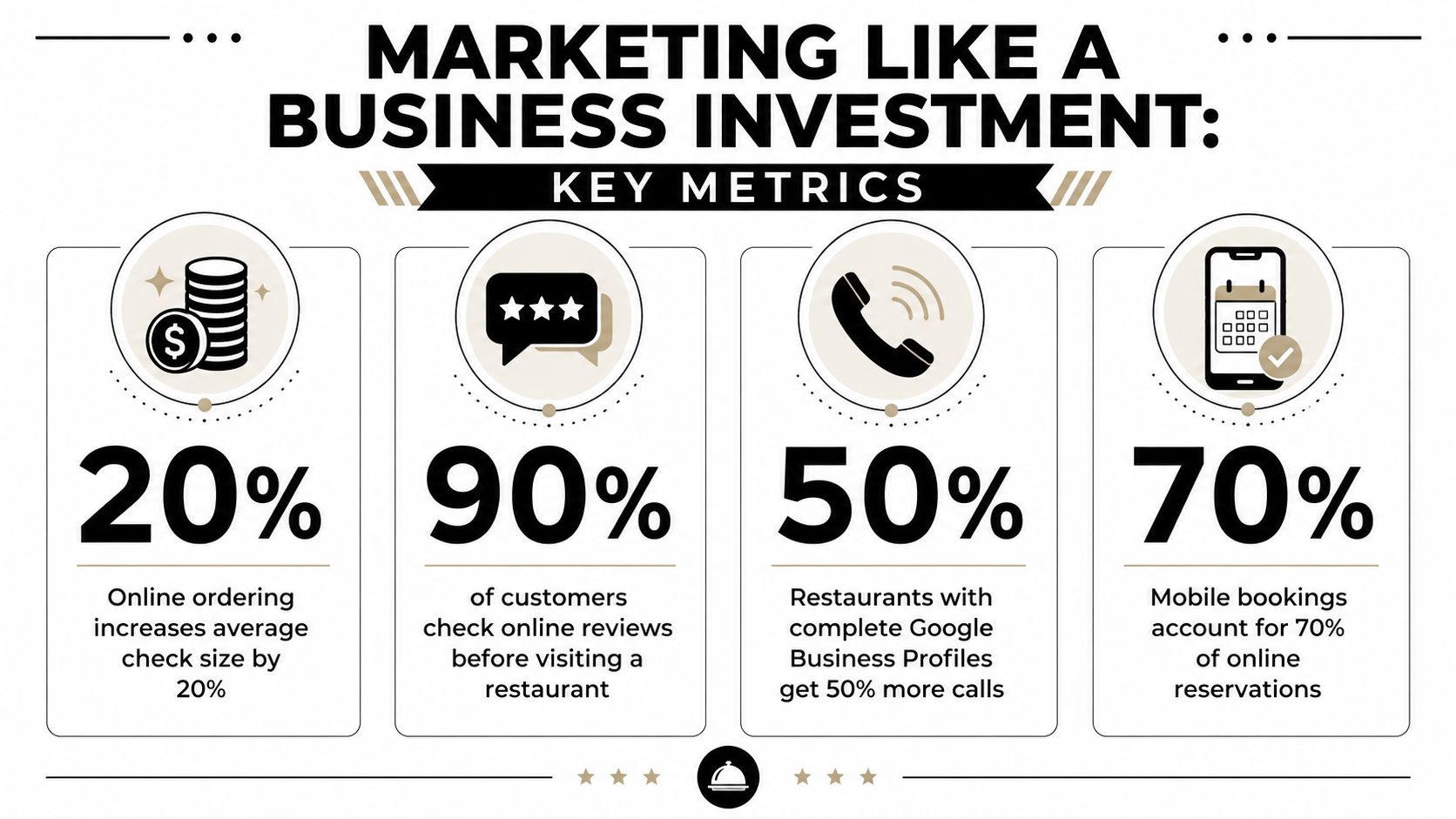
When owners treat digital marketing for restaurants like a business investment, decisions get easier. Keep what produces reservations, orders, and repeat visits. Cut what doesn't. Repeat that cycle every month.
If your restaurant in Fort Myers, Cape Coral, Estero, Bonita Springs, or Naples needs a practical plan instead of scattered tactics, Polaris Marketing Solutions can help you tighten your website, improve local visibility, and build a digital strategy focused on real diners, real orders, and measurable return.