

A lot of Cape Coral business owners don't realize their website is costing them work until they hear the same sentence twice in one month: “We went with the other company because they showed up first.”
That stings when you know your crew does better work, answers the phone faster, and treats customers right. But online, the first company a homeowner trusts often gets the first call. In home services, legal, healthcare, and other local categories, that first call turns into booked estimates, route fills, and repeat business.
A good website fixes that. Not by looking fancy for its own sake, but by doing the hard jobs your office staff can't do around the clock: showing up in search, answering basic questions, proving credibility, and making it easy for someone to call, submit a form, or request a quote. In Cape Coral, that matters because the local market is crowded. Clutch's Cape Coral listing shows at least 22 specialized agencies in the area, and 80%+ of top firms emphasize UI/UX and digital strategy to boost local visibility. That tells you two things. First, demand is real. Second, businesses here are already competing seriously online.
If your current site is outdated, slow, hard to use on a phone, or built with no local search strategy behind it, it isn't neutral. It's working against you.
Your Website Is Your Hardest-Working Employee
A roofer in Cape Coral gets a referral. The homeowner types the business name into Google, lands on the website, and immediately sees an old layout, broken mobile formatting, and no clear way to request an estimate. They back out and search “roofing contractor near me” instead.
The competitor wins that job because their site answered the customer's next questions fast. Are they local? Are they active? Can I trust them? Can I get someone on the phone now?
That's how most buying decisions start online. Your website isn't a brochure people politely skim after they already trust you. It's often the first employee a customer interacts with, and it works nights, weekends, and during storms when call volume spikes.
What that employee needs to do
A productive website handles three jobs at once:
- Sales support: It gives visitors a reason to call, request a quote, or book an appointment.
- Customer screening: It helps people self-identify whether you serve their area, offer their service, and fit their budget.
- Trust building: It shows reviews, photos, service details, and local relevance before your team ever speaks to the lead.
If any one of those pieces is missing, the site underperforms. A beautiful homepage with no strong call button won't help much. A fast website with weak messaging won't convert much either. And a service page with no local relevance won't rank the way it should.
Your website should reduce friction. If a customer has to hunt for your phone number, service area, or next step, the site is creating work instead of removing it.
In a city where businesses have real options for digital vendors and competitors are investing in visibility, cape coral web design isn't just about looks. It's about replacing guesswork with a system that brings in more qualified calls.
What business owners usually get wrong
The most common mistake is treating the website as a one-time design project. That mindset leads to a site that launches, sits untouched, and slowly loses relevance. Services change. Photos get old. competitor pages improve. Search behavior shifts.
The stronger approach is to treat the website like an active business asset. That means it should support marketing, help local SEO, and reflect how people buy in Southwest Florida.
The Anatomy of a High-Performing Cape Coral Website
A strong website is a lot like a well-built house. If the foundation is weak, the finishes don't matter. If the curb appeal is off, people hesitate. If the layout is confusing, nobody enjoys being inside long enough to take action.
Technology is the foundation
Many small businesses lose leads without realizing it. A site can look acceptable on a desktop and still perform badly in the place most customers see it. Huemor's Cape Coral web design page notes that over 50% of internet traffic comes from mobile, non-responsive sites suffer 62% higher bounce rates, and responsive sites that score over 90 on Google's PageSpeed Insights can see 15-25% conversion uplift in markets like Cape Coral, where 70% of home service leads are mobile-sourced.
For a contractor, that means the mobile version isn't a smaller copy of the desktop site. It's the primary version. Buttons need to be thumb-friendly. Text needs to be readable without pinching. Images need to load fast on imperfect cell service.
A solid technical setup usually includes:
- Mobile-first layouts: Responsive grids, clean spacing, and forms that are easy to complete on a phone.
- Fast media handling: Compressed images, modern formats, and disciplined file sizing. If you want a practical walkthrough, this guide on optimizing images for web covers the basics that often get missed.
- Clean code and caching: Fewer bloated plugins, fewer unnecessary scripts, and a setup that doesn't drag page speed down.
Design is the curb appeal and flow
Design does two jobs. It creates trust in seconds, and it guides people toward action.
That starts with brand consistency. If your truck wraps, uniforms, business cards, and website all feel disconnected, the business looks less established than it is. Many owners benefit from reviewing a clear explanation of what is brand identity guide before approving a redesign, because it helps connect logo use, color, voice, and layout decisions into one system.
Good design also means restraint. Too many sites in local markets rely on giant sliders, cluttered homepages, and stock photos that feel generic. A stronger layout usually looks simpler:
| Website area | What works | What doesn't |
|---|---|---|
| Hero section | Clear service, service area, visible CTA | Vague slogan with no next step |
| Navigation | Short menu with key pages | Overstuffed dropdowns |
| Service pages | One service per page, local intent | One generic services page |
| Contact options | Call, form, and map cues | Hidden contact details |
After the visual plan is set, this short overview helps explain how design decisions connect to user behavior:
Strategy is the floor plan with a purpose
A website can be fast and attractive and still fail because it wasn't built around business goals.
Practical rule: Every important page should answer three questions fast. What do you do? Where do you do it? What should I do next?
For a Cape Coral HVAC company, that might mean separate pages for AC repair, maintenance, ductless systems, and emergency service. Each page needs a clear call button, a service area cue, trust signals, and copy written for buyer intent rather than filler text.
That's what separates a site that gets compliments from a site that books jobs.
How Local SEO Puts Your Business on the Cape Coral Map
A generic website fails in a local market for one simple reason. It sounds like it could belong to any business in any city.
That doesn't help when a homeowner searches “Cape Coral AC repair,” “roofer near me,” or “family lawyer Cape Coral.” Google is trying to match local intent, and your website needs to give clear local signals if you want to compete for those searches.
The Cape Coral city page used in the verified data cites a 45% YoY increase in local queries like “Cape Coral HVAC website SEO” from May 2025 to May 2026, and notes that 68% of home service leads come from local search. That gap matters because many sites still focus on appearance and basic responsiveness while ignoring the local SEO work that brings in actual calls.
Generic pages don't rank well for local intent
A plumber with one page titled “Services” is at a disadvantage. A better setup is a page structure that mirrors what people search for:
- Emergency plumbing in Cape Coral
- Water heater repair in Cape Coral
- Drain cleaning for Cape Coral homes
- Repiping services in Southwest Florida
A law firm can use the same logic with practice-area pages tied to local intent. A medical office can build condition or service pages paired with location relevance. A cleaning company can create pages for recurring cleaning, move-out cleaning, and office cleaning with city-specific detail.
This isn't about stuffing city names everywhere. It's about matching the language customers use when they're ready to hire. If you run a retail or e-commerce business, keyword placement matters there too. This practical piece on optimizing Shopify store search language is useful because it shows how search phrasing connects to product and page visibility.
The three local signals that matter most
A local website usually performs best when these three pieces work together:
Google Business Profile alignment
Your website and your business profile should reinforce each other. Service categories, service areas, business description, and landing pages should match cleanly.Citation consistency
Your business name, address, phone number, and core business details need to be consistent across directories and profiles. Inconsistent listings weaken trust and create confusion.Location-specific content
Service pages should mention neighborhoods, service patterns, common customer problems, and the way locals search. For map visibility, this guide on how to rank in Google Maps lays out the practical factors businesses usually overlook.
A “near me” search doesn't reward the nicest design by itself. It rewards the business that clearly signals relevance, trust, and location.
What this looks like in practice
For a Cape Coral roofing company, a strong page might include storm damage repair details, roof types common in the area, a simple financing note if relevant, before-and-after project photos, and a call button pinned on mobile.
For a real estate business, the local angle may come from neighborhood pages, relocation content, and guides that help buyers compare areas. Different industry, same principle. The site should prove local knowledge, not just claim it.
Web Design Pricing in Cape Coral What to Actually Expect
Most business owners don't need a lecture on web design pricing. They want to know what they're paying for, what they can skip, and what helps the phone ring.
The cleanest way to think about pricing is to compare it to building options. Some businesses need a basic structure that gets them online fast. Others need a site that acts like a lead-generation system. The mistake is buying one while expecting the performance of the other.
Adore Design's related source in the verified data points to an important shift in the local market. There's growing need for cost-effective e-commerce and lead-gen sites for Cape Coral SMBs, SWFL e-commerce traffic is up 28% YoY, and a conversion-optimized site integrated with PPC can boost qualified leads by 40% for home services clients.
Three common pricing tiers
| Tier | Best fit | Typical trade-off |
|---|---|---|
| Template site | New businesses that need a clean online presence quickly | Lower flexibility and weaker local differentiation |
| Semi-custom site | Established SMBs that need stronger branding and better lead flow | Requires clearer strategy and better content inputs |
| Fully custom site | Businesses with multiple services, aggressive growth goals, or advanced integrations | Higher planning demand and more moving parts |
What each tier usually includes
A template site is like a pre-fab home. It can work well if your needs are simple. You get a faster launch and lower design complexity, but you usually sacrifice flexibility in page structure, conversion flow, and local SEO depth.
A semi-custom site is the middle ground most serious local businesses should evaluate first. You still control cost, but you get room for better service pages, stronger calls to action, original messaging, and a cleaner lead path.
A fully custom build makes sense when the business model demands it. Think multi-location companies, businesses with custom quote workflows, member areas, booking systems, e-commerce complexity, or high-value lead funnels that justify deeper strategy.
What actually moves the price
The biggest drivers usually aren't just “design.” They include:
- Content needs: Writing service pages, collecting photos, and structuring messaging takes time.
- Feature complexity: Booking tools, e-commerce, custom forms, or CRM connections increase work.
- SEO planning: A site built for Cape Coral search visibility takes more strategy than a brochure site.
- Revision process: Fast decisions and clear approvals keep costs tighter.
Cheap websites often cost more later because they need to be rebuilt once the business realizes they can't support search, ads, or conversion goals.
If your budget is limited, the smarter move is usually a simpler site with a strong structure, clear service pages, and conversion-focused messaging. Skip flashy extras first. Keep the pieces that help bring in qualified leads.
How to Choose Your Cape Coral Web Design Partner
A web design company shouldn't just ask what colors you like. They should ask how leads come in now, which services are most profitable, what areas you want more work from, and what happens after a form submission.
That's the difference between a designer and a growth partner.
Red Star Technologies' Cape Coral page includes useful benchmarks for vetting agencies. It notes that top Cape Coral firms deliver UX designs that drive 40% more lead generation via targeted calls-to-action and data analysis, and says you should ask how they use semantic HTML and schema.org markup, which can improve SERP visibility by 20-30%, and how they keep sites loading in under 3 seconds to avoid losing 53% of visitors.
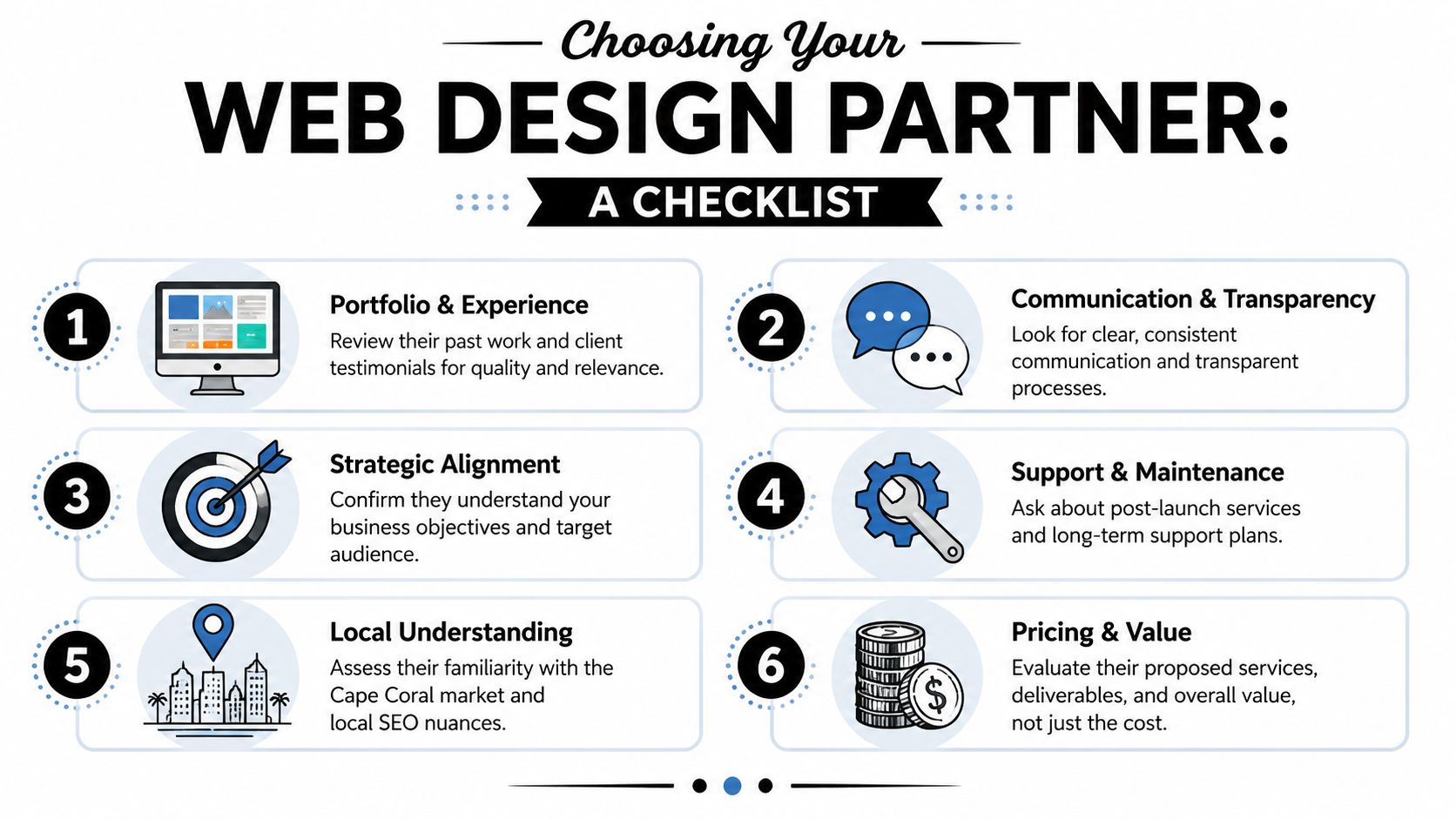
Questions worth asking in the first meeting
Don't settle for “We build beautiful websites.” Ask direct questions that expose how they think.
How do you define success for this project?
Good answers mention leads, booked calls, quote requests, local visibility, and user actions. Weak answers stay stuck on aesthetics.How will you structure pages for local search intent?
They should be able to explain service pages, location relevance, and how the site supports Google Business Profile signals.What do you need from us to keep the project moving?
Experienced teams know delays usually come from content, approvals, and unclear responsibilities.What happens after launch?
Ask about support, edits, reporting, backups, and who handles issues when forms break or pages need updates.
Red flags that show up early
Some agencies make it easy to spot a mismatch.
- They skip your business goals: If they never ask about margins, service mix, or target areas, they're building blind.
- They can't explain their process: If the steps sound vague, the timeline usually will be too.
- They talk only about homepage design: Good performance comes from the whole site structure, not one polished page.
- They avoid technical questions: You don't need a developer lecture, but they should explain speed, markup, and mobile usability in plain language.
A simple decision filter
Use this as a quick comparison tool when reviewing proposals:
| What to compare | Strong answer | Weak answer |
|---|---|---|
| Strategy | Tied to leads and local search | Focused mostly on visuals |
| Technical quality | Explains speed, markup, mobile build | Hand-wavy or overly jargon-heavy |
| Content approach | Helps shape messaging and page structure | Expects you to “send some text” |
| Ongoing support | Clear post-launch plan | Disappears after launch |
If you want a broader decision framework before you hire anyone, this guide on how to choose a digital marketing agency is a useful checklist for comparing fit, communication, and long-term value.
From Project Start to Launch The Web Design Timeline
Most website projects go smoother when the owner knows what's coming and where delays usually happen. The actual work isn't mysterious. The friction usually comes from slow approvals, missing content, and changing direction midway through.
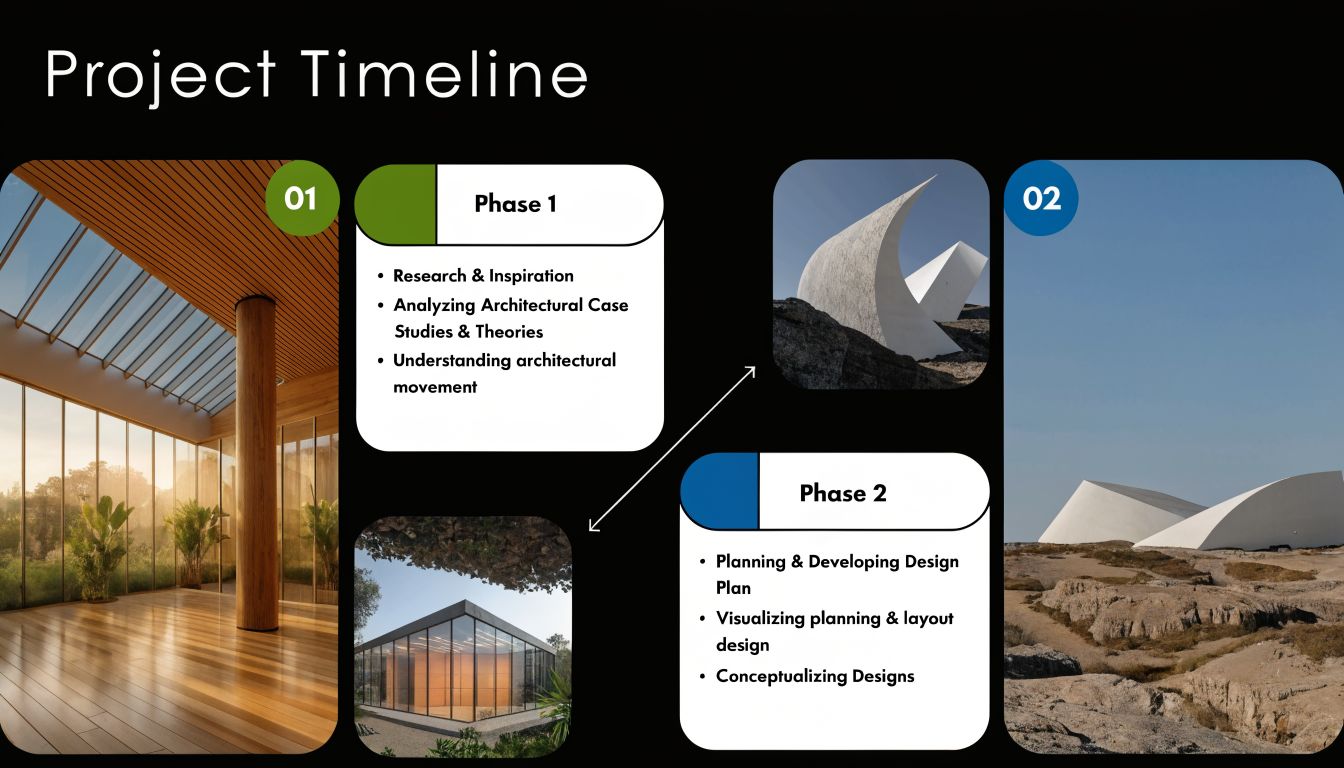
Discovery and planning
The agency learns how your business works during this stage. They should ask about your services, target areas, customer objections, competitors, and what counts as a conversion.
Your role is to be clear. Bring examples of sites you like, explain which services matter most, and identify who signs off on decisions. If too many people weigh in late, projects drift fast.
Design and page mapping
Next comes the blueprint. That usually means sitemap decisions, layout direction, homepage structure, and page-by-page priorities.
This stage works best when you review with business goals in mind. Don't just say “make it pop.” Ask whether the layout makes the next step obvious for a homeowner, patient, or prospect who's in a hurry.
Approve structure before you obsess over fine visual details. A polished page with the wrong flow still underperforms.
Development and content integration
After layouts receive approval, the development phase begins. During this stage, the designs transform into a functional website as forms are integrated, mobile displays are optimized, and performance optimizations are completed.
Content usually enters here too. If you're responsible for photos, bios, certifications, or service descriptions, get them in early. Waiting until the end often creates rushed copy and weaker pages.
A practical handoff list usually includes:
- Business details: Correct contact info, hours, and service areas
- Visual assets: Logo files, team photos, project shots, brand colors
- Trust elements: Reviews, certifications, warranties, memberships
- Operational details: Forms, routing preferences, and who receives leads
Testing and launch
Before launch, the team should test forms, links, mobile views, page speed, and basic analytics tracking. This is also when owners need simple training on updating core text, images, or blog posts if that's part of the setup.
Launch isn't the finish line. It's the moment the site starts doing real work. The best projects leave room for post-launch adjustments based on what users do once traffic hits the new pages.
Turn Your Website Into a Local Growth Engine
A business website in Cape Coral has one job. It should help the right people find you, trust you, and contact you without friction.
That takes more than a clean layout. It takes technical discipline, local search alignment, page structure built around buyer intent, and a partner who understands that business owners care about booked jobs, not design awards. For home services especially, the difference between an average site and a strategic one shows up in call quality, quote volume, and how often your team hears, “I found you on Google.”
The businesses that get the most value from cape coral web design usually keep their focus narrow. They don't chase every trend. They make sure the site loads well, works on phones, supports Google Maps visibility, and gives each core service a dedicated path to rank and convert. Then they measure what happens.
That last part matters. If you want a simple reference for what to track after launch, the Mailtani guide to visitor analytics is a useful overview of the kinds of behavior signals that help owners understand whether traffic is turning into action.
Polaris Marketing Solutions is one option for businesses that want website design, hosting, local SEO, PPC, and reporting under one roof, especially for Southwest Florida service businesses that need a practical lead-generation setup rather than a generic brochure site.
The main point is simple. A website shouldn't sit online like a digital business card. It should pull weight every day.
If you want a clearer picture of where your current site stands, Polaris Marketing Solutions offers a free online analysis and competitor report. It's a practical way to see how your website compares in local search, where leads may be slipping, and what to fix first before you invest in a redesign or SEO campaign.