

Choosing a digital marketing partner feels like a high-stakes decision for a small business, because it is. You’re not just buying a service. You’re investing precious capital and trusting a team with your company’s growth. Get it right, and you can create a repeatable lead pipeline. Get it wrong, and you can burn months on reports that look polished but don’t move revenue.
That pressure is exactly why so many owners get stuck. One agency promises rankings. Another pushes paid ads. Another says you need a full rebrand before anything else can work. Meanwhile, you still need the phone to ring, forms to come in, and booked jobs to cover payroll. The best digital marketing agencies for small business understand that reality and build around it.
Use these five questions before you read a single agency profile.
Actionable Example: The Evaluation Framework
- How do you measure success? Ask whether they report on leads, sales, booked calls, and customer acquisition, or whether they stay at the level of clicks, impressions, and reach. Request a sample report and see if a non-marketer could understand it.
- Can you show me a case study from a business like mine? A local roofer doesn’t need a strategy built for a national supplement brand. Relevance matters more than logo collection.
- What does the first 90 days look like? Strong agencies can explain the sequence clearly: audit, setup, fixes, launch, optimization, reporting. If the answer is vague, expect a vague engagement.
- Who will be my day-to-day contact? Sales calls are often led by senior people. Delivery is often handled by someone else. Meet the actual account lead before you sign.
- What do you need from me to be successful? Good agencies ask for CRM access, sales feedback, service area detail, close-rate insight, and timely approvals. If they say they need nothing from you, that usually means they’re guessing.
One more thing. If social is part of your mix, this social media marketing for small business growth guide is worth bookmarking because it helps you separate posting activity from actual business impact.
1. Polaris Marketing Solutions
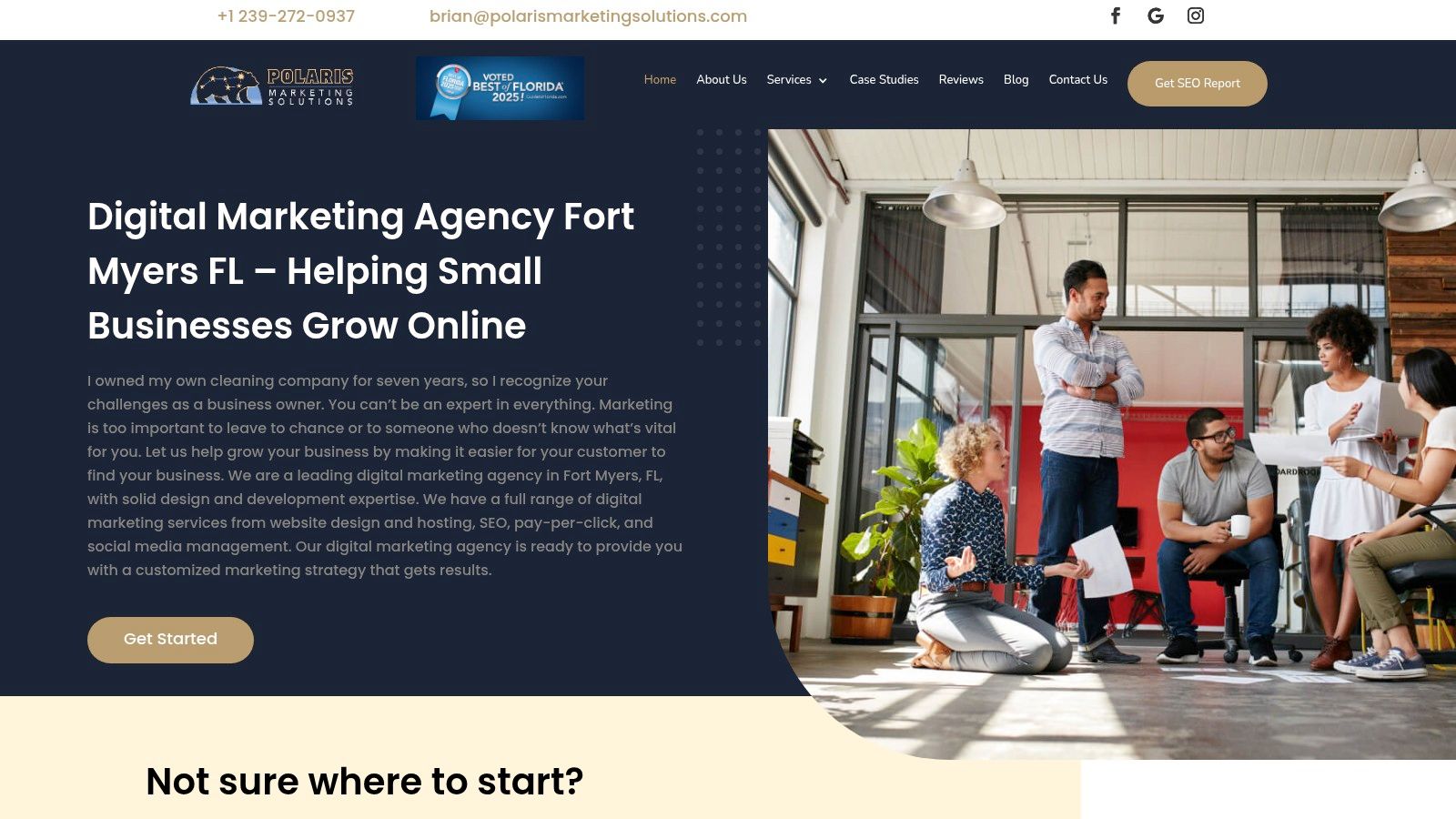
A small business owner in Fort Myers usually does not need another agency pitch about impressions and brand awareness. They need the phone to ring, form fills to improve, and marketing spend to map back to jobs, appointments, or sales. Polaris Marketing Solutions is a credible option because its service mix lines up with that reality.
Polaris works across website design and hosting, e-commerce, local and national SEO, pay-per-click advertising, and social media management. For a small business, that matters because these channels affect each other. A paid campaign performs better when the landing page is strong. Local SEO gets more traction when service pages are built well. Reporting gets easier when one team owns the setup instead of three vendors pointing at each other.
The fit is strongest for local and regional operators. Home services, healthcare practices, law firms, retail businesses, real estate teams, and other service-driven companies tend to get the most value from an agency that understands geographic demand, local search intent, and the operational limits small businesses work under.
Why Polaris makes this list
Polaris stands out less for flashy positioning and more for practical execution. That is often the better deal for an owner who needs progress, not theater.
Its local SEO work deserves a close look. Google Business Profile optimization, citation cleanup, review support, and location-specific page strategy are the kind of tasks that directly affect whether a business shows up in local search results. They are rarely glamorous, but they often produce more business impact than broad top-of-funnel activity.
That also gives you a simple way to evaluate the agency in a sales conversation. Ask what they would review first for a Fort Myers plumber, Cape Coral dentist, or Naples law office. A strong answer should include local rankings, service-area pages, reviews, conversion paths, and competitor visibility. If the conversation stays abstract, keep digging.
Polaris also offers educational content that helps owners set expectations before they buy. Its guide to digital marketing strategies for small businesses is useful if you want to pressure-test whether an agency's plan matches your stage, budget, and sales model.
Best fit, trade-offs, and hiring notes
The clearest advantage here is coordination. If your website is underperforming, your SEO foundation is thin, and your ads are sending traffic to weak pages, one accountable partner can save time and reduce waste. I have seen small businesses lose months because web, SEO, and paid media were handled separately with no shared goal or reporting standard.
Polaris also appears to present timelines in a realistic way. Paid search can generate traffic quickly. Local SEO usually takes longer and depends on site quality, competition, review strength, and location signals. That distinction matters during hiring because agencies that blur those timelines often create the wrong expectations from day one.
A few points to weigh before signing:
- Best for: Local and regional businesses that need lead generation tied to a specific service area.
- Strong use case: Owners who want website work, SEO, ads, and social managed under one strategy.
- Good buying signal: Businesses that value an initial analysis before committing to a broader engagement.
- Trade-off: Pricing is not published, so you need a direct conversation about scope, deliverables, and reporting.
- Potential limitation: The value proposition is strongest for Southwest Florida companies. A national e-commerce brand may want a partner built for larger-scale acquisition.
If Polaris makes your shortlist, ask to see a sample monthly report, clarify who owns day-to-day communication, and confirm what the first 90 days include. That will tell you more than a polished sales deck.
2. WebFX
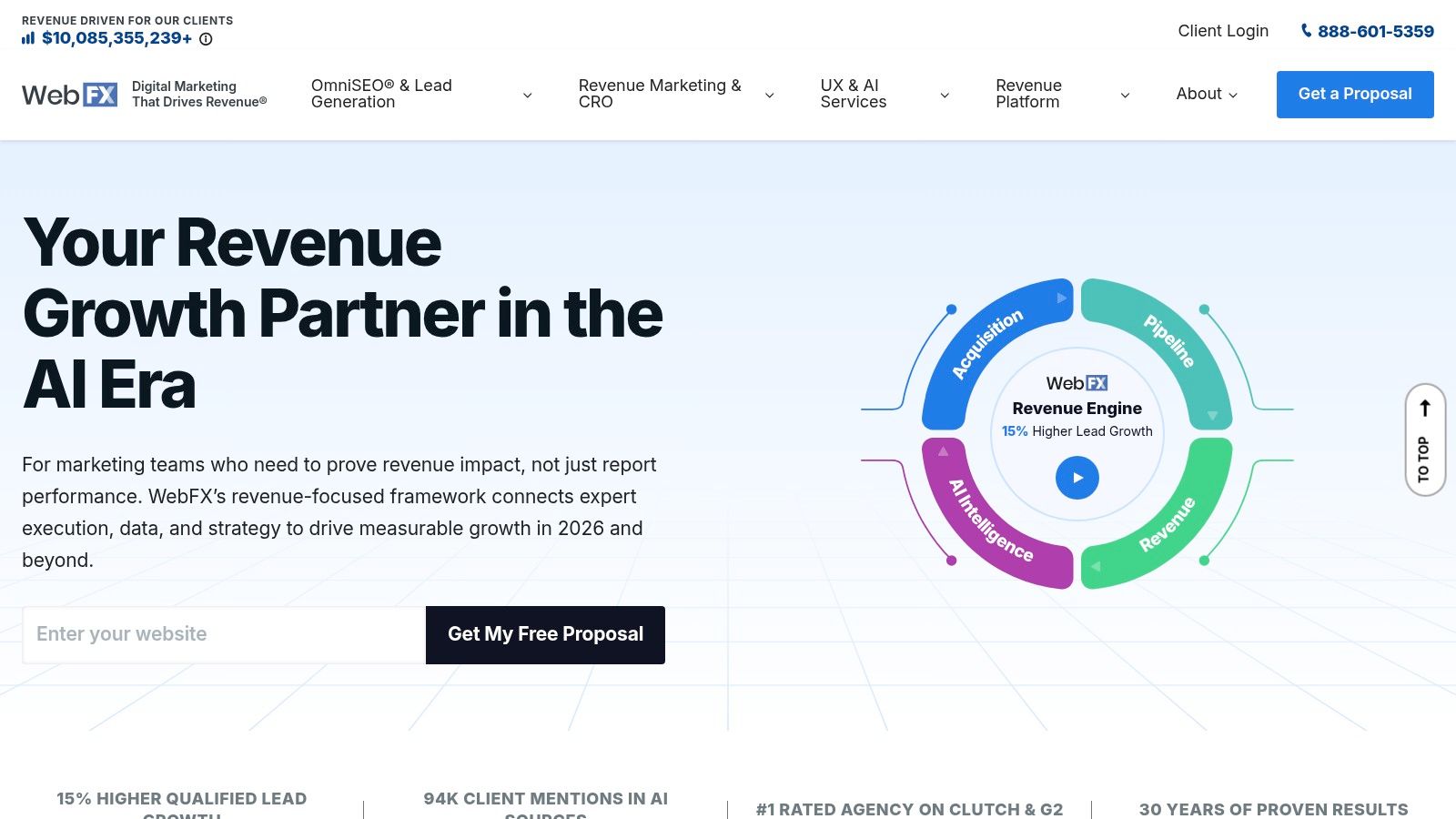
WebFX is one of the most visible names in this space, and for good reason. If you want a full-service partner with strong systems, broad channel coverage, and a very measurement-heavy approach, it deserves a close look.
What separates WebFX from many agencies is the combination of execution and reporting. It offers SEO, PPC, social, email, content, and web design, then ties that work into its own reporting platform. For owners who are tired of stitching together spreadsheets from different vendors, that’s a meaningful advantage.
Where WebFX earns its reputation
WebFX appears at the top of multiple 2026 agency lists for small businesses, and industry coverage also highlights top agencies like WebFX and Ignite Visibility as strong performers in local SEO and multi-location strategy within a U.S. digital advertising agency industry projected at $56.9 billion in 2026, according to IBISWorld’s digital advertising agencies industry outlook.
That doesn’t mean WebFX is automatically the right fit for every small business. It means the agency has the scale, market presence, and operational maturity that many owners want when they’re looking for a long-term partner.
If you’re sorting through larger national firms, this guide on how to choose the best digital marketing company helps frame the right comparison points.
Best fit and trade-offs
WebFX is usually strongest when a business wants sustained, multi-channel support rather than a one-off fix. If you need SEO tied to paid search, landing pages, content, and reporting, that kind of integrated structure is where a bigger agency can justify its overhead.
A practical example: a local multi-location service company might use WebFX for paid search management, location-page SEO, lead tracking, and website optimization under one team rather than hiring separate freelancers for each piece.
Bigger agencies usually win on process, reporting, and bench strength. Smaller agencies often win on flexibility and local nuance.
That trade-off matters. WebFX publishes starting pricing, which many owners appreciate because it reduces guesswork. But the monthly minimum can put it out of reach for the smallest local businesses, especially those that only need one focused channel to start.
Consider WebFX if these points match your situation:
- You want one provider: SEO, PPC, content, and web all under one roof.
- You care about reporting: You want clear attribution and centralized visibility.
- You’re planning to scale: You need an agency that can support growth beyond a basic local campaign.
Skip to a smaller or more local agency if you need a highly customized relationship at a modest budget or if your business only needs a tightly scoped local SEO engagement.
Visit WebFX.
3. SmartSites
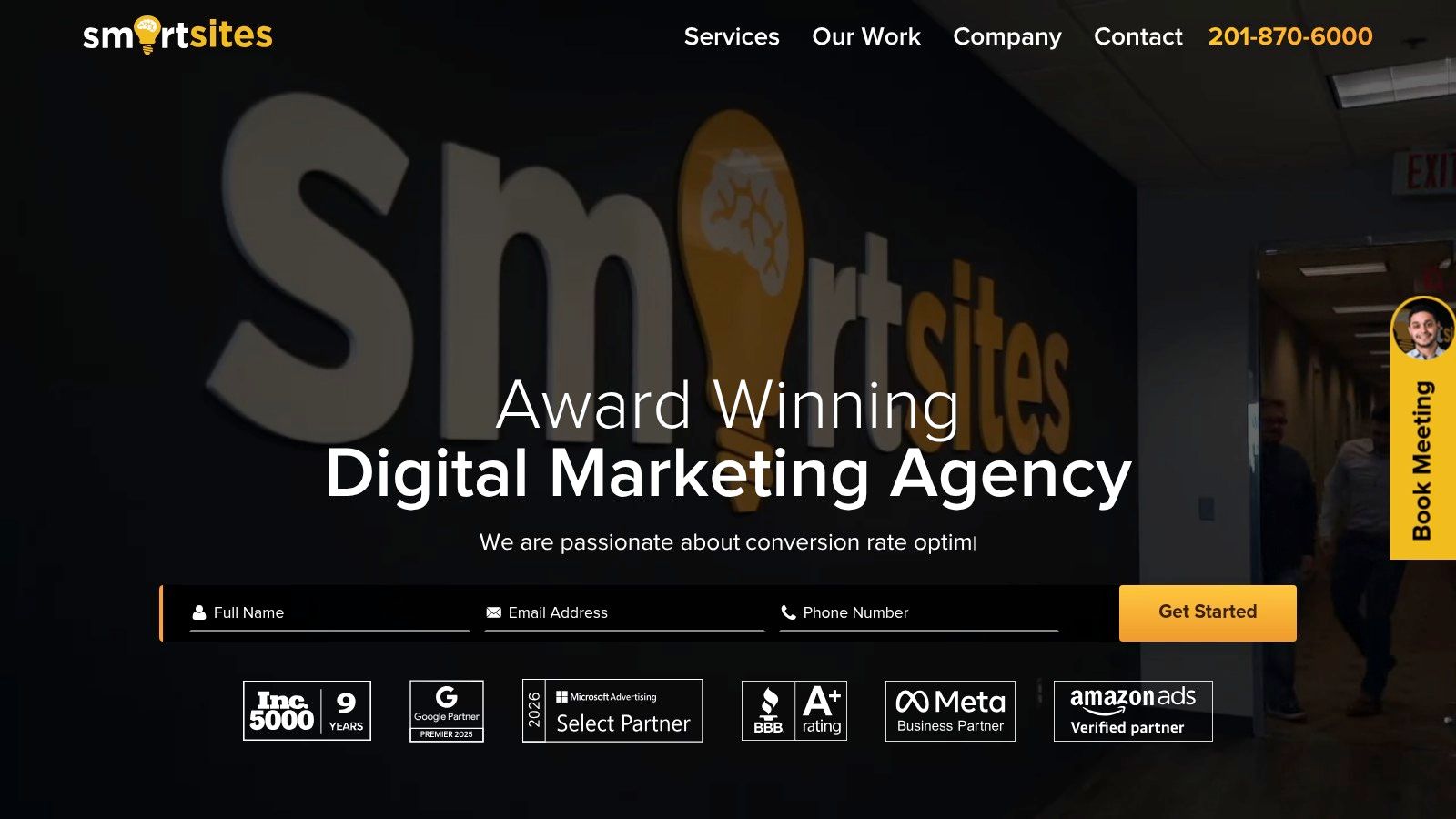
SmartSites is a solid option for owners who want both build and growth support from the same agency. That matters more than it sounds. Plenty of businesses launch a decent site, then discover nobody planned for conversion paths, local intent, or campaign landing pages.
SmartSites offers web design, SEO, PPC, branding, content, and social advertising. For small businesses that don’t have an in-house marketing lead, that breadth can simplify the entire relationship.
What stands out
I like SmartSites most for businesses in transition. If your current website feels dated, your branding is inconsistent, and you also need lead generation, it helps to work with a team that can rebuild the foundation and drive traffic after launch.
The agency is also consistently named among top firms for SMBs in 2026 rankings and roundup lists focused on small business digital marketing. That repeated visibility suggests broad market trust, especially among buyers looking for an established agency rather than a boutique local shop.
If your business is still shaping its channel mix, these digital marketing strategies for small businesses can help you see whether SmartSites’ broader service set matches what you need.
Who should shortlist SmartSites
SmartSites is a practical fit for service businesses, B2B firms, and small brands that need a cleaner handoff between design and growth. A common failure point in agency relationships is this: one team builds the site, another team inherits it, and nobody takes responsibility for whether it converts.
SmartSites avoids some of that friction by keeping design and marketing closer together.
A few practical pros:
- Conversion-minded web work: Useful if your current site looks acceptable but doesn’t turn traffic into calls or forms.
- Broad SMB experience: Helpful for owners who want niche-relevant examples and industry familiarity.
- Full-funnel support: Branding, build, and paid or organic growth can happen within one relationship.
The downside is familiar. Pricing is quote-based, which means you won’t know exact investment without a consultation. And as with many national agencies, account experience can vary depending on who manages the work.
If your site needs major work, don’t hire an agency that only talks about traffic. Traffic sent to a weak website rarely solves the underlying problem.
SmartSites is worth serious consideration if your business needs both a stronger digital storefront and a partner to help drive demand after launch.
Visit SmartSites.
4. Blue Corona
Blue Corona is not trying to be everything to everyone. That’s one reason it belongs on this list. For home services companies, specialization often beats breadth.
If you own an HVAC company, plumbing shop, electrical service, roofing company, pest control business, or restoration firm, Blue Corona’s industry focus can save time during onboarding. You spend less energy explaining your sales cycle, service area structure, and lead quality issues because the agency already understands the basics of trade marketing.
Why specialization matters here
Home services marketing has its own rules. Calls matter more than generic website traffic. Service-area pages matter. Booking friction matters. Review volume and local map visibility matter. Blue Corona’s service mix reflects that reality with SEO, PPC, Local Services Ads support, websites, call tracking, reporting, call answering, and AI chat.
This is one of those cases where narrow focus is a strength. If your business wins or loses based on booked jobs, not broad brand awareness, specialized reporting and operational fit are often worth paying for.
A practical example would be a roofing company needing better lead tracking across paid ads, organic search, and call intake. A trade-focused agency is more likely to ask whether your front desk is answering consistently and whether calls are being attributed correctly, not just whether click volume is up.
Best use case and caution points
Blue Corona makes the most sense when your business already knows it wants aggressive lead generation in a trade category. It’s less compelling if you run a business outside those verticals.
This is how I'd approach it:
- Best for contractors: Especially if call tracking and booked-job visibility matter more than social content or broad branding.
- Best for service areas: Businesses that depend on local intent and neighborhood-level search visibility.
- Best for operational marketers: Owners who want tighter visibility into where leads came from and which campaigns are working.
The trade-off is cost and fit. Specialized agencies can command premium pricing, and pricing isn’t publicly listed. If you’re a small business outside home services, much of that specialization may not help you.
Blue Corona is a good example of a broader lesson in hiring. Don’t choose an agency just because it’s well known. Choose it because its default way of working matches your business model.
Visit Blue Corona.
5. Hibu
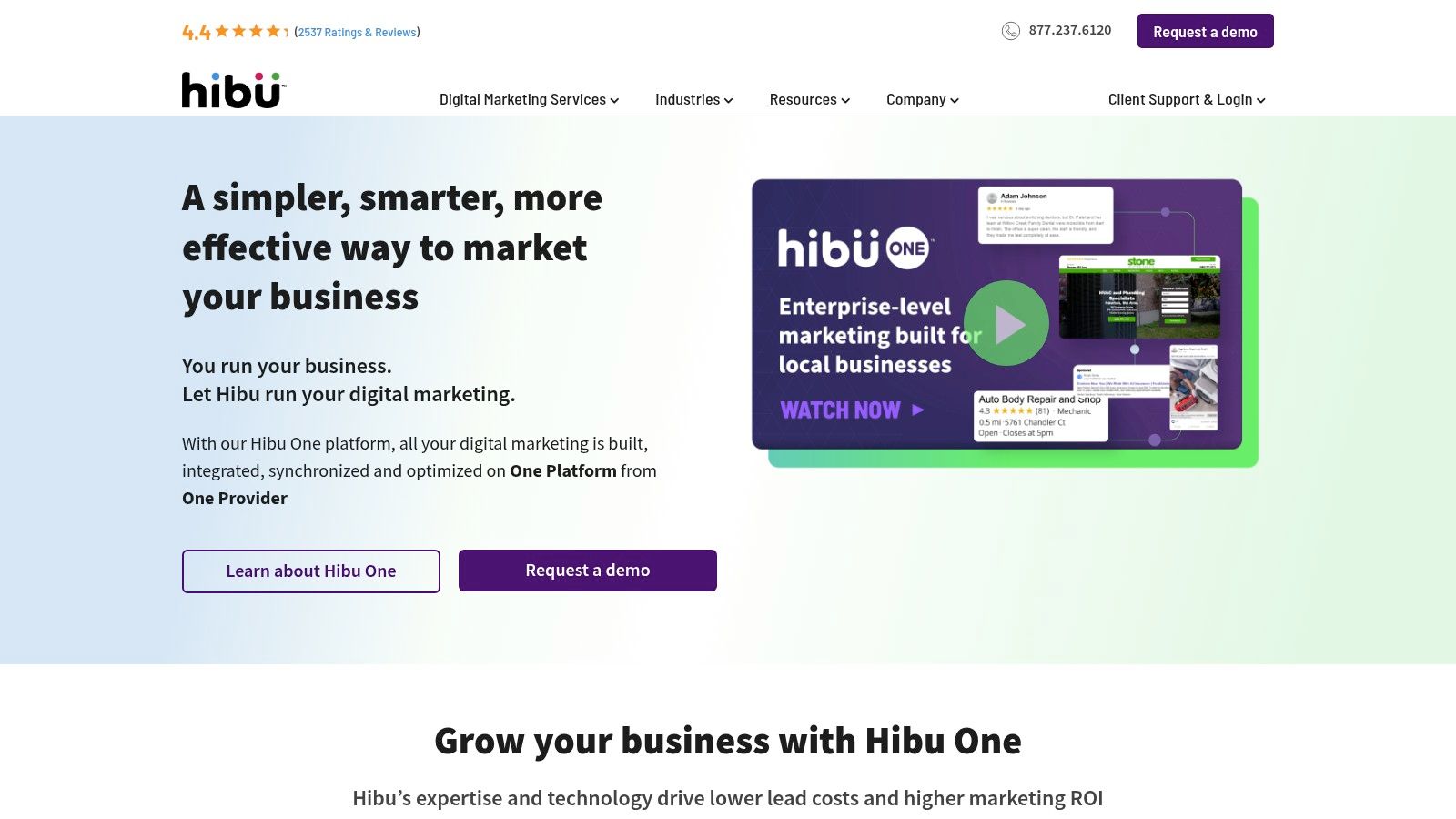
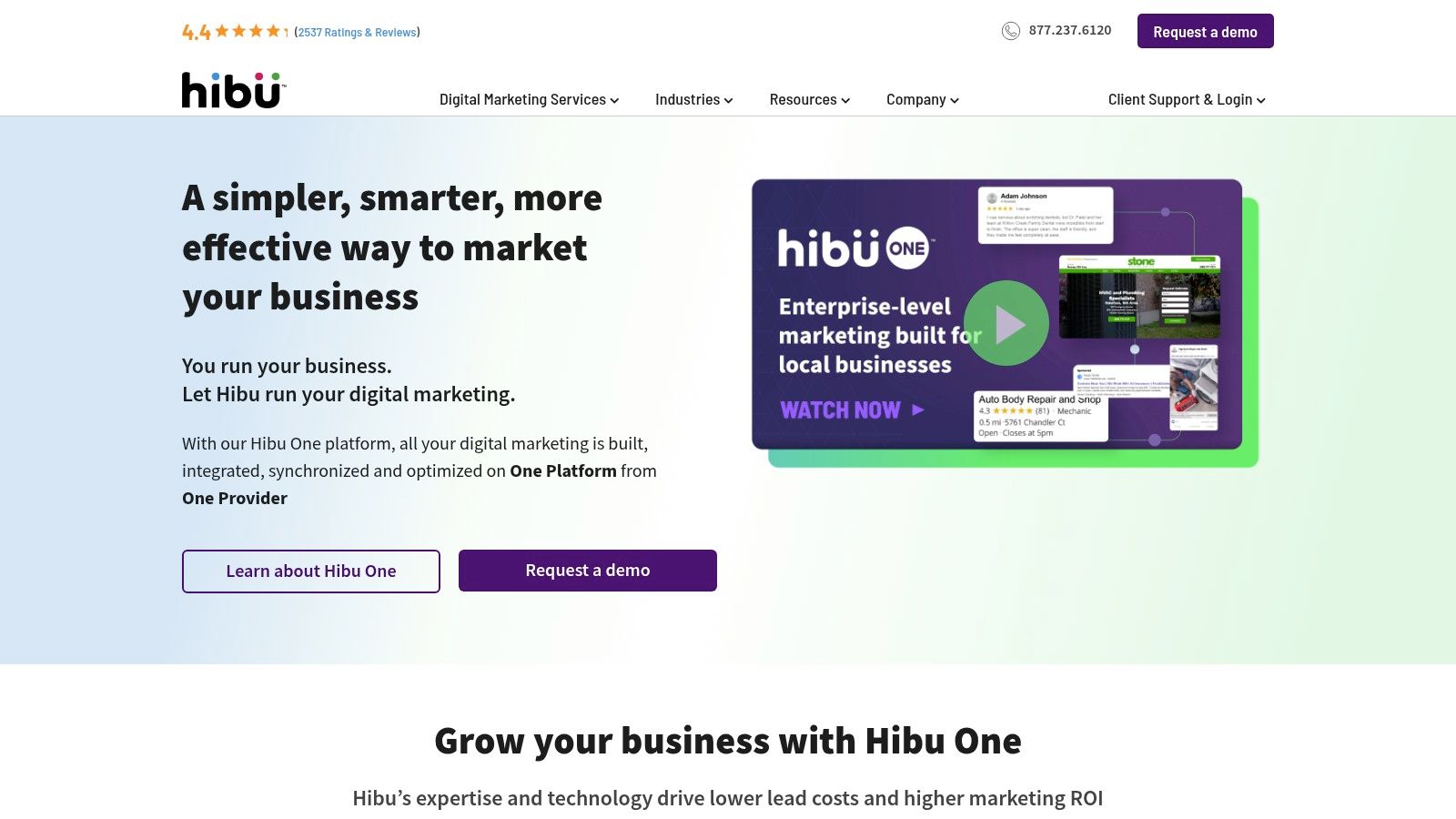
Hibu is built for the owner who wants fewer moving parts. That’s the appeal. You get website support, listings management, reviews, SEO, paid ads, and connected reporting in one managed environment instead of hiring one shop for the site, another for ads, and a third for local listings.
That all-in-one approach isn’t perfect, but it’s often useful for busy local businesses that don’t have time to coordinate multiple specialists.
Where Hibu makes sense
Hibu works best for business owners who value convenience and centralization. If you’re spending evenings trying to reconcile what your web person said with what your ad person said, a bundled managed platform can feel like a relief.
Its integrated setup is especially relevant for local businesses that need consistent business information, review generation, search visibility, and paid promotion working together. If your digital presence is fragmented, Hibu’s simplification can be the product.
There’s also an important market backdrop here. The U.S. digital advertising agencies sector is projected to reach 100,202 businesses by 2026, up from 87,197 in 2025, a 14.9% year-over-year increase, according to IBISWorld’s count of digital advertising agencies. That growth is one reason all-in-one managed options keep attracting overwhelmed SMB owners.
The trade-off with convenience
Bundled solutions are easier to buy than to customize. That’s the trade. If your business needs a clean, managed system, Hibu can be appealing. If you want unusually deep customization in one channel, a specialist agency may be stronger.
A few situations where Hibu can work well:
- You want one dashboard: One place to monitor website, listings, reviews, and ads.
- You’re stretched thin: You need managed execution more than hands-on channel experimentation.
- You need local basics fixed: Listings consistency, reputation management, and local search presence are all part of the priority stack.
The caution point is contract structure and pricing transparency. Costs aren’t published publicly, and longer commitments may not suit every owner. Before signing, ask exactly what gets built, what gets managed, what gets reported, and what happens if you need to change scope mid-engagement.
The easier an agency is to buy, the more carefully you should inspect the details of ownership, reporting, and contract terms.
Visit Hibu.
6. RevLocal
RevLocal has long been associated with local business marketing, and that local-first orientation still defines its appeal. If your biggest need is simple and specific, getting found in local search and turning that visibility into inquiries, RevLocal is easier to understand than many agencies with sprawling service menus.
The named plan structure around local search is also useful. Small business owners often struggle to compare custom agency proposals because every one uses different language. Clear package naming at least gives buyers a starting framework.
Why owners consider RevLocal
RevLocal emphasizes listings, local SEO, review and reputation support, websites, social, and paid advertising. For a single-location or multi-location local business, that’s a sensible stack.
I’d put RevLocal on the shortlist for businesses that know they need “findability” more than a massive brand campaign. Dentists, med spas, repair businesses, contractors, and local professional services often fit that profile.
This agency also benefits from a simple value proposition. It isn’t trying to convince you that you need every possible tactic before local demand generation can work. For many local businesses, that restraint is useful.
What to verify before buying
The main thing to confirm is current service detail and account structure. Since offerings can evolve, you want the proposal to spell out exactly what’s included, who handles what, and how local SEO, reviews, and paid traffic work together.
Ask practical questions such as:
- What happens to listings management if we pause?
- Will you optimize Google Business Profile directly or just advise on it?
- How do you report lead quality, not just lead volume?
Those questions matter because local marketing often looks good on the surface while producing weak leads underneath. A dashboard is only helpful if the data in it leads to better decisions.
RevLocal makes the most sense for owners who want a local-growth partner without buying a full enterprise-style engagement. It may be less attractive if you need advanced creative strategy or highly customized multi-channel work.
Visit RevLocal.
7. Scorpion
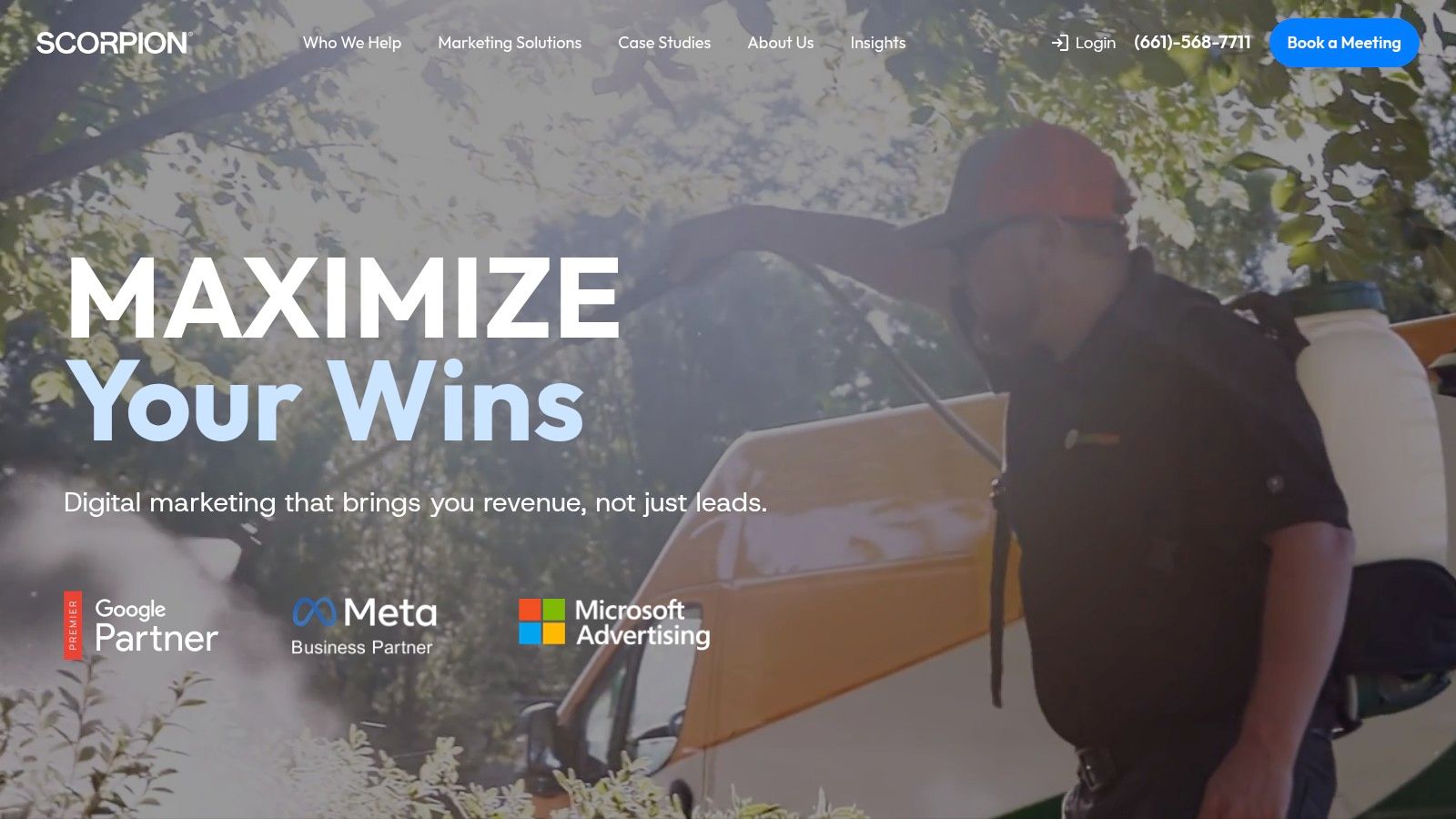
Scorpion leans harder into technology than most agencies on this list. That makes it compelling for service businesses that don’t just need more traffic. They need to respond faster, recover missed opportunities, and turn inbound demand into actual appointments.
That distinction matters. A lot of agencies stop at lead generation. Scorpion spends more energy on what happens next.
Where Scorpion is strongest
Scorpion is especially relevant for home services, legal, healthcare, and franchise businesses. Its websites, SEO, and paid media services are paired with tools like AI Chat and Convert, which focus on answering questions, scheduling, and reducing missed lead opportunities.
For businesses that lose prospects because nobody responded fast enough, that technology can be more valuable than another round of blog posts or minor ranking improvements.
There’s also a broader market signal behind this kind of offering. Clutch highlights top small-business digital marketing firms such as Fuel Online, where over 90% of clients report significant improvements in organic traffic and conversions, and notes that highly rated agencies in this category often show strong operational stability and review quality, according to Clutch’s small business digital marketing agency rankings. Scorpion’s conversion-focused posture fits that wider demand for measurable outcomes.
The real decision with Scorpion
The choice isn’t whether AI tools sound impressive. The choice is whether your business has a speed-to-lead problem big enough that these tools will change revenue outcomes.
That tends to be true for businesses like:
- Home services companies: Missed calls can mean missed jobs.
- Law firms: Fast response can influence consultation volume.
- Healthcare groups: Scheduling friction can reduce inquiry conversion.
- Franchises: Consistency and centralized visibility matter across locations.
Scorpion will likely be too much for some small businesses. If you just need basic local SEO and a simple website refresh, a smaller local agency may be more cost-effective. But if your business already generates demand and struggles to convert it consistently, Scorpion’s model is more interesting than a standard traffic-first retainer.
Visit Scorpion.
Top 7 Digital Marketing Agencies for Small Businesses, Comparison
| Agency | 🔄 Implementation Complexity | 💡 Resource Requirements | 📊⭐ Expected Outcomes | Ideal Use Cases | ⚡ Key Advantages |
|---|---|---|---|---|---|
| Polaris Marketing Solutions | Medium, integrated local campaigns; clear timelines | Modest budgets; scalable SMB packages; in‑house hosting/web | Local map‑pack visibility and qualified leads; PPC quick, SEO 3–12 months | Single‑location/regional SMBs in Southwest Florida (home services, retail, pro services) | Local owner experience; coordinated services; transparent reporting |
| WebFX | Medium‑High, multi‑channel, data‑driven setups | Higher monthly minimums (starts ≈ $3k/mo); in‑house tech stack | Strong revenue attribution and scalable multi‑channel growth | SMBs seeking measurable, full‑funnel retainers | Published pricing; deep measurement via RevenueCloudFX |
| SmartSites | Medium, end‑to‑end build + growth workflows | Moderate; quote‑based; national team | Improved conversion‑focused sites and ongoing lead growth | SMBs needing branding, web design and continuous optimization | Broad SMB vertical experience; conversion‑oriented web work |
| Blue Corona | Medium‑High, industry‑tailored workflows for trades | Custom pricing; specialized tools (call tracking, dashboards) | Trade‑focused lead gen with call/booking attribution and ROI visibility | Contractors and home‑services businesses, single or multi‑location | Deep home‑services specialization; granular call tracking |
| Hibu | Low‑Medium, managed all‑in‑one platform, simpler setup | Subscription model; 6–12 month contracts common; unified dashboard | Simplified local marketing operations and consistent listings/ads | Busy local owners wanting a managed, single‑provider solution | Integrated dashboard; AI‑assisted optimization; partner ecosystem |
| RevLocal | Low‑Medium, tiered local plans for easy onboarding | Modest; plan‑based quoting; national support | Better local findability, listings and reputation signals | Local businesses seeking entry‑level local search visibility | Clear plan tiers; strong Google Business Profile/reputation focus |
| Scorpion | Medium‑High, tech+AI integration with conversion playbooks | Premium pricing; proprietary AI chat/voice tools; platform access | Higher conversion and booking rates; faster speed‑to‑lead | Home services, legal, healthcare, franchises focused on conversions | AI Chat/Convert tools; emphasis on converting leads, not just traffic |
From Shortlist to Kickoff Budgeting and Taking the Next Step
You finally have a shortlist. Three agencies look credible, the proposals are not structured the same way, and the price spread is wide enough to make any owner pause. This is the point where plenty of small businesses make an expensive mistake. They buy the nicest presentation instead of the clearest plan.
Start by matching the pricing model to the job.
A monthly retainer makes sense when you need ongoing work such as SEO, paid search management, content updates, reporting, and steady optimization. Project pricing fits a defined job with an endpoint, like a website rebuild, analytics cleanup, or a local SEO audit. Hourly consulting usually works best for strategy, troubleshooting, or a second opinion before you commit to a larger engagement.
Budgeting gets easier once you stop treating marketing as a bundle of tasks and start treating it as a way to remove one growth constraint at a time. A cheaper retainer that spreads effort across SEO, ads, social, email, and content often produces weak results because none of those channels get enough attention. A tighter scope aimed at one problem usually performs better.
A small business with one clear bottleneck usually gets better ROI by fixing that bottleneck first.
That bottleneck changes by business. If the site looks dated, loads slowly, or makes it hard to request a quote, website and conversion work should come first. If search visibility in your city is poor, local SEO and Google Business Profile management may deserve the first dollars. If leads are already coming in but nobody responds fast enough, the choice with Scorpion is not whether AI tools sound impressive. It is whether your business loses revenue because prospects do not get a quick reply.
Keep the buying process disciplined. That matters more than another demo.
Before you contact agencies, write a one-page brief. Include your service area, main offer, average customer value, top goal for the next 6 to 12 months, current marketing channels, biggest pain points, and a realistic monthly budget range. Good agencies give better recommendations when the business case is clear. Weak agencies tend to fill in the blanks with generic packages.
Then interview a small group. Three or four firms is enough for most owners. More than that usually creates noise, and the conversations start blending together.
Ask every agency the same questions:
- What would you focus on in the first 90 days?
- What do you believe is the main constraint in this business right now?
- Which metrics will you report every month?
- Who will perform the work, and who will I speak with regularly?
- What do you need from my team to make this succeed?
- What should we delay or avoid for now?
- What are the contract terms, cancellation terms, and setup fees?
That last group of questions saves money. A good partner will tell you where not to spend yet. They will also explain reporting in plain English. If you need a translator to understand the proposal, expect the same problem once the engagement starts.
Free audits can help, but judge the thinking, not the giveaway. Polaris Marketing Solutions offers a complimentary online analysis and competitor report. That can be useful as an early screening tool if the findings are specific, tied to your market, and followed by a practical recommendation instead of a hard close.
Watch for red flags. Vague answers about who manages the account. Long contracts before any performance baseline is established. Dashboards with lots of activity metrics but no connection to calls, form fills, booked jobs, or sales. Promises that sound certain in a channel that never is.
The best digital marketing agencies for small business are not just service vendors. They help owners choose where to spend first, what to measure, and what to ignore until the basics are working. That is how you turn a shortlist into a kickoff that has a fair shot at producing ROI.
If you want a practical starting point instead of another sales pitch, Polaris Marketing Solutions is one option to consider, especially for Southwest Florida small and mid-sized businesses that want an initial analysis, competitor context, and a focused discussion around website performance, SEO, PPC, social media, and monthly ROI reporting.