
Local SEO can turn a nearby search into a phone call, booking, store visit, or quote request, but only when the pieces work together. A complete Google Business Profile earns visibility, accurate business information reinforces relevance, useful location pages capture specific intent, reviews build trust, local links add authority, and measurement shows where the next improvement belongs.
Consider a roofing contractor based in Fort Myers who serves Cape Coral, Estero, Bonita Springs, Naples, and North Fort Myers. A profile with the wrong holiday hours can lose a ready-to-buy customer. A generic service-area page may fail to answer what homeowners in Cape Coral need. A strong review process can create trust, while a slow mobile website can waste it before someone calls.
This guide presents 10 local SEO best practices as a practical growth system. You'll find actionable examples for Southwest Florida businesses, from home services and healthcare to legal and professional services. The focus stays on qualified actions, not vanity rankings. Google's local results are shaped by relevance, distance, and prominence, so the work below connects accurate information with local usefulness, authority, technical quality, and recurring execution. Google explains these local ranking factors, including how categories, location data, reviews, and positive ratings can support visibility.
1. Optimize Your Google Business Profile with Complete and Accurate Information
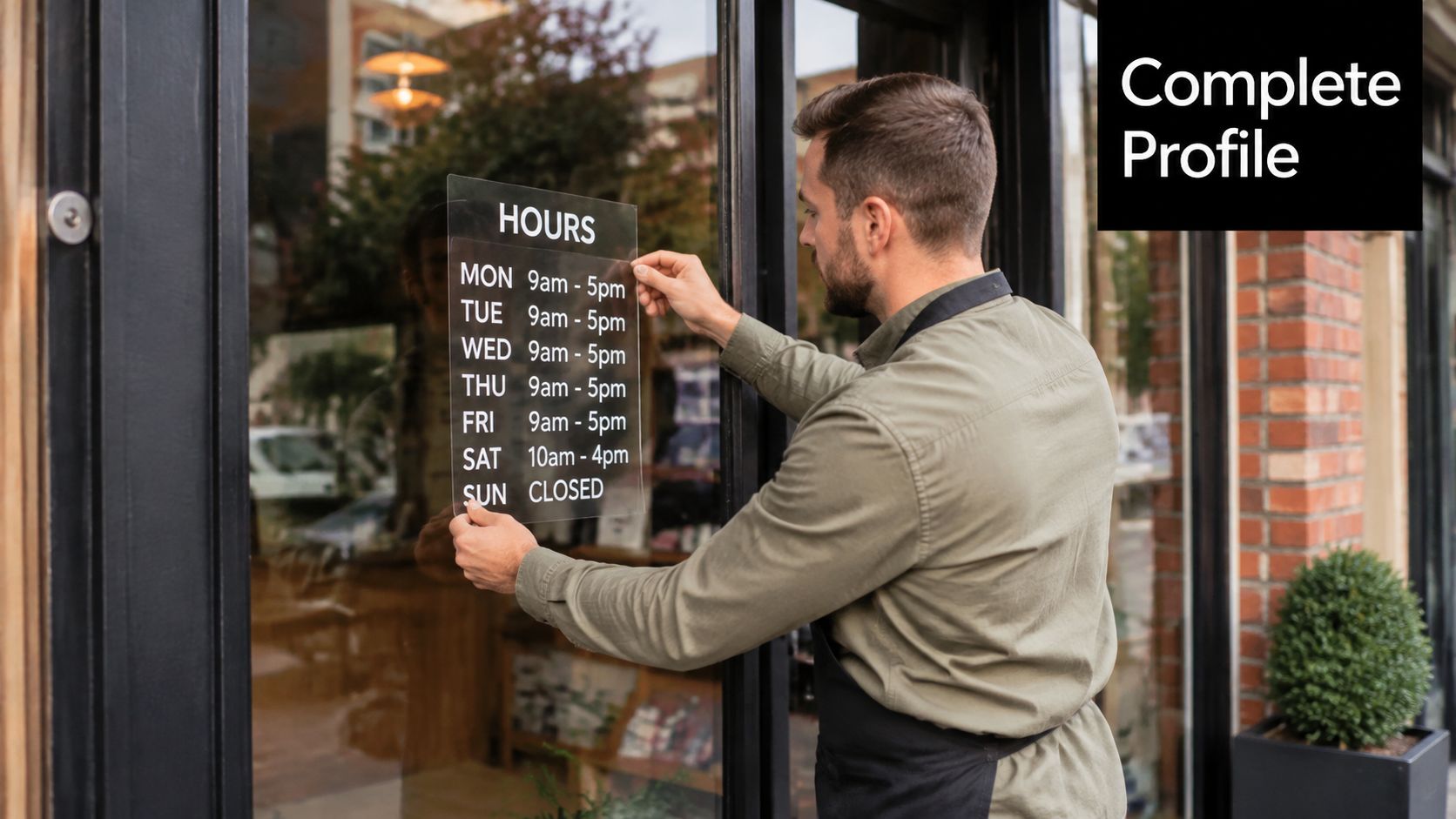
Your Google Business Profile is often the first place a local prospect encounters your business. It displays essential details in Google Search and Maps, including your hours, phone number, website, services, photos, location information, and reviews. Treat it as a working storefront, not a form you complete once and forget.
Google reports that businesses with a complete Business Profile are 2.7 times more likely to be considered reputable, while customers are 70% more likely to visit and 50% more likely to consider purchasing from those businesses. Google's Business Profile guidance makes the practical point clear: completeness supports both discovery and customer confidence.
A Fort Myers HVAC company should select the most accurate primary category, add relevant secondary categories, describe the communities it serves, and publish genuine photographs of technicians, equipment, vehicles, and completed work. It should also keep service details, booking options, attributes, and operating hours current. A Cape Coral contractor may mention service coverage for North Fort Myers, Estero, and Bonita Springs, but it shouldn't add locations it doesn't genuinely serve.
Make the profile useful for immediate decisions
Use profile features to remove friction:
- Categories: Choose categories that accurately describe your core service, not every loosely related offering.
- Services: List each important service with clear descriptions that match your website.
- Photos: Add authentic, location-relevant images instead of stock photography.
- Hours: Update regular, emergency, and holiday hours as soon as they change.
- Attributes: Highlight legitimate features such as online booking, accessibility, or appointment availability.
- Questions and answers: Monitor customer questions and provide concise, accurate responses.
For a deeper implementation walkthrough, use this Google Business Profile setup resource.
Post updates when they help customers understand what you offer, how to schedule, or what seasonal service is available. The strongest profile is accurate, complete, active, and aligned with the experience customers receive after they call.
2. Build and Manage Local Citations Across Relevant Directories
Local citations place your business name, address, and phone number on websites customers already use. Common sources include Yelp, Facebook, the Better Business Bureau, chambers of commerce, industry directories, review platforms, and mapping services. Consistent listings help search engines connect a legitimate business with its service area.
Choose directories based on customer behavior and industry relevance. A North Fort Myers HVAC company should review its Google Business Profile, Yelp, Facebook, Better Business Bureau, home-service directories, and local organizations. A Naples law firm should focus first on legal directories and professional associations rather than unrelated listing sites.
A citation spreadsheet keeps the work accountable. Record each listing URL, login owner, business name, address, phone number, website, categories, hours, and last review date. Assign one person to check the sheet monthly, especially after a move, rebrand, phone change, or new service area.
Small inconsistencies can create real confusion. Check shortened street names, old phone numbers, former suite numbers, duplicate profiles, and outdated business names. Claim an existing listing before creating another one. One eligible business location should not have multiple profiles to occupy more search results.
Organize the audit by priority:
- Core platforms: Google Business Profile, Yelp, Facebook, and the Better Business Bureau.
- Local organizations: Chambers of commerce, business associations, and community directories.
- Industry sources: Home-service directories for contractors, healthcare directories for providers, and legal directories for attorneys.
- Business descriptions: Explain the service and areas served, including Estero, Bonita Springs, and South Fort Myers when relevant.
- Ongoing review: Search the business name regularly and correct outdated information.
Businesses serving several Southwest Florida communities should use consistent location wording without forcing city names into every description. Check whether an old address or business name remains indexed, then request updates or remove duplicate listings where the platform allows it. If manual cleanup is difficult to maintain, use this local directory submission service.
Set a monthly citation task alongside other local SEO work. Review recently changed details, inspect priority directories, and log unresolved listings. This recurring process prevents a corrected profile from becoming outdated again.
3. Create Location-Specific Content and Landing Pages
A service-area business needs more than one generic page listing nearby cities. Customers in Cape Coral, Estero, Bonita Springs, Naples, and North Fort Myers may have different concerns, neighborhoods, property types, and reasons for choosing a provider. Useful location pages give each audience a relevant entry point and help the business match specific local searches.
A Bonita Springs cleaning company could publish separate pages for house cleaning in Bonita Springs, office cleaning in North Fort Myers, and post-construction cleaning in Naples. Each page should explain the service in that area, include genuine project details, feature relevant testimonials when available, and answer questions local customers ask. Copying a template and changing the city name creates thin content that search engines can easily identify as templated.
Avoid the visibility versus thin-content trade-off
Separate pages work when each city represents meaningful coverage and the business can provide useful, location-specific information. Publishing dozens of near-identical pages creates maintenance work and weakens the site when those pages lack local evidence, service detail, or a clear reason to exist.
Build pages around:
- Local intent: “Roof repair in Cape Coral” should explain the service, common property needs, and the problems customers want solved.
- Community knowledge: Mention relevant neighborhoods, landmarks, property types, access issues, or climate-related concerns when they affect the service.
- Proof: Add local projects, customer feedback, photographs, and partnerships only when they are real and permission allows.
- Conversion paths: Include a visible phone number, quote form, booking option, or directions link.
- Internal connections: Link each location page to related services, case studies, and helpful articles.
- Unique value: Give every page information that a potential customer would not find on the main service page.
A Fort Myers plumber could publish an article about plumbing concerns in older Estero homes or water-related service questions in Cape Coral, then connect each article to the relevant service page. Review these pages monthly for outdated examples, broken conversion paths, and locations the business no longer serves. This keeps local content useful while extending its reach beyond direct service-page searches.
4. Generate and Manage Customer Reviews Systematically
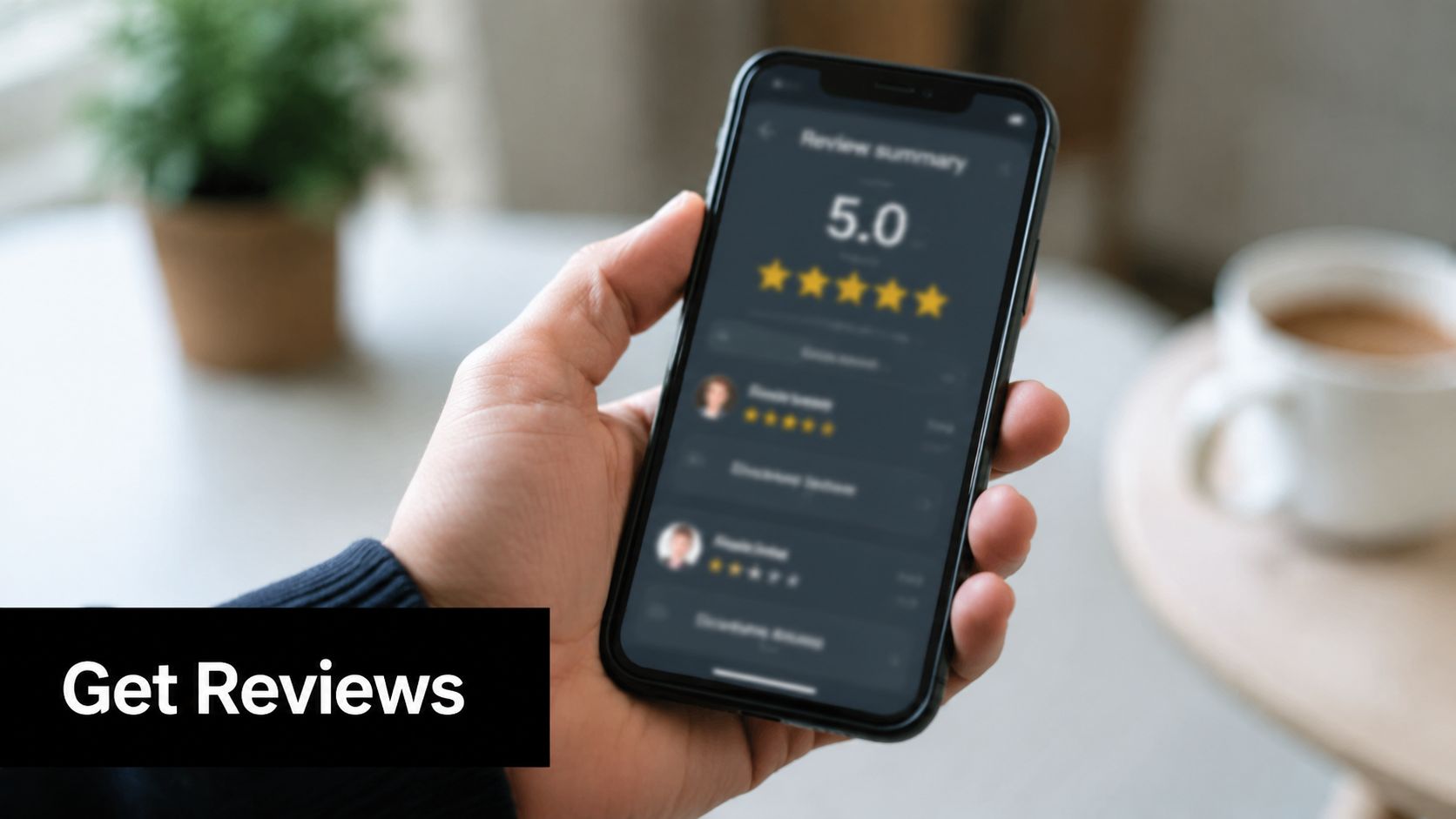
Reviews affect local visibility, customer confidence, and the quality of your operations. Google hosted 81% of global online review volume in 2024, up from 79% in 2023, according to SOCI's local SEO statistics report. For a Southwest Florida business, a reliable review process belongs in the customer-acquisition workflow, not in occasional reputation cleanup.
Request feedback soon after a satisfactory experience, while the details remain fresh. A Fort Myers home-services company can text a direct Google review link after completing a job and ask the customer to comment in their own words. A dental practice can make the request during checkout, then follow up by email when appropriate. Both approaches should respect customer privacy and platform rules.
Turn reviews into a monthly operating rhythm
A steady flow is more useful than a sudden burst followed by silence. Build the request into normal service follow-up, then review the results each month for recurring issues and response gaps.
- Choose the right moment: Send the request the same day or shortly after a positive interaction.
- Remove friction: Provide a direct review link and brief instructions.
- Follow platform rules: Never buy reviews, write them for customers, or offer incentives in exchange for them.
- Respond with care: Thank positive reviewers. Address negative feedback with empathy, specific next steps, and a private route to resolution.
- Record recurring themes: Track complaints about scheduling, communication, cleanliness, wait times, or billing, then assign operational fixes.
- Reuse feedback responsibly: Publish customer comments on your website or social channels only with suitable permission.
A review response should help a prospective customer judge how the business handles problems. It should also give the owner usable information. If several Fort Myers customers mention delayed appointments, the response process has identified a scheduling issue, not just a public-relations task.
Review the request rate, unanswered reviews, recurring complaints, and resolved issues during the monthly local SEO check. Keep the process consistent across service areas, including Cape Coral, Fort Myers, and nearby communities, while allowing customers to describe their own experience naturally.
5. Optimize Your Website for Local SEO and Mobile Experience
A slow website can erase the trust a Google Business Profile built. A local prospect may arrive ready to call, request a quote, or check availability, then leave if the page loads poorly or hides the next step. Build each page to answer where you work, what you provide, and how customers can contact you.
Use local relevance in page titles, headings, URLs, service descriptions, image alternative text, and internal links. A Cape Coral roofing contractor might use “Roof Repair and Installation in Cape Coral and North Fort Myers” as a title, then support it with accurate service details, local project photographs, and a direct quote request. Mention only areas the business serves, and keep the wording natural.
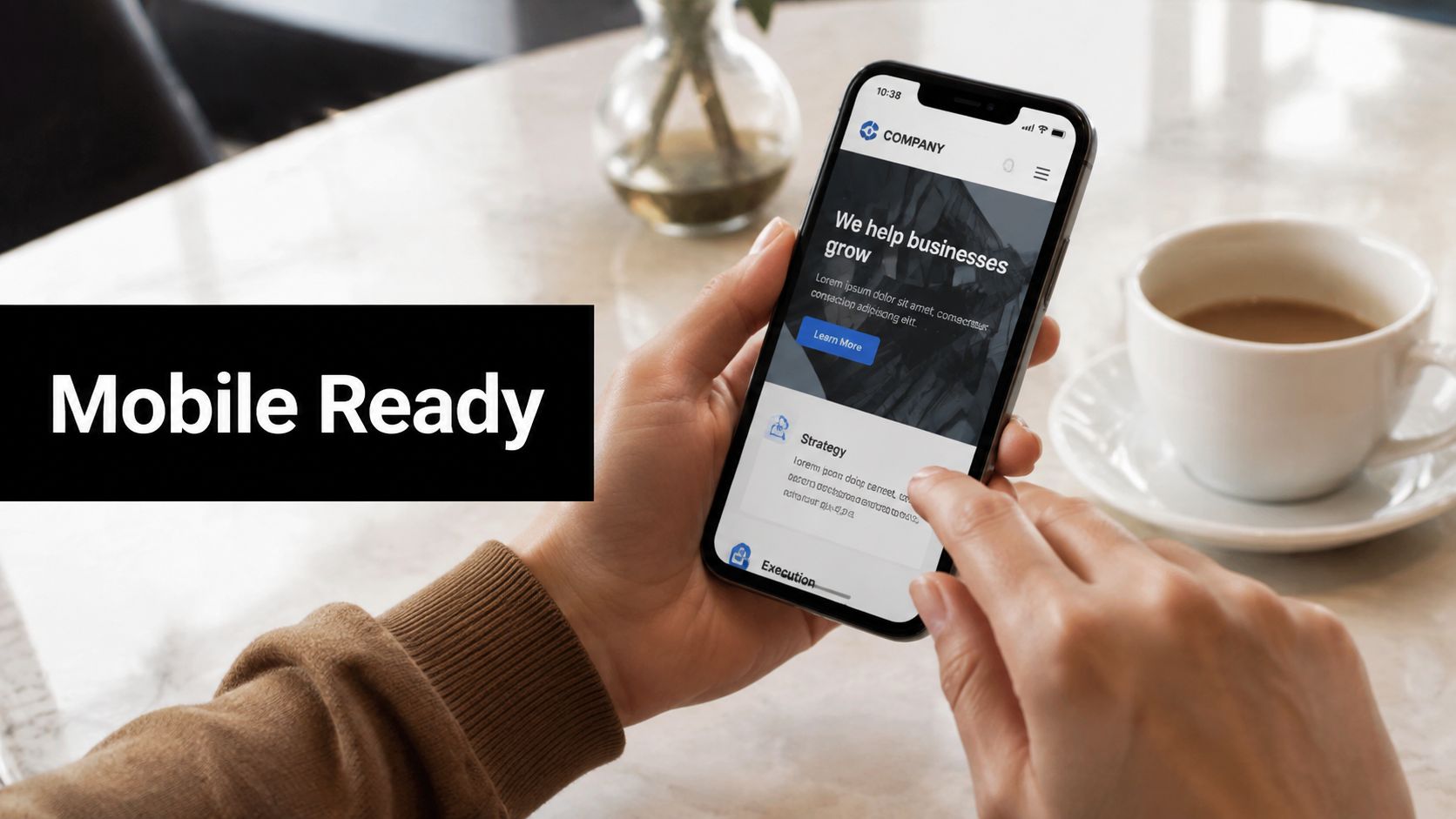
Mobile performance deserves attention because 76% of mobile users who conduct a local search visit a physical business within 24 hours, according to recent local SEO market data. A slow, confusing, or difficult-to-call website can lose that motivated prospect before the business has a chance to respond.
Put conversion paths where thumbs can find them
Make the next action visible on smaller screens. Include:
- Tap-to-call controls: Keep the phone number visible and clickable.
- Short forms: Ask only for information needed to begin the conversation.
- Booking options: Make appointment scheduling easy for eligible services.
- Directions: Connect physical locations with clear map and directions options.
- Service-area navigation: Help visitors move from a city page to the service they need.
- Trust evidence: Place reviews, credentials, guarantees, and project photos near decision points.
Use LocalBusiness or an appropriate industry schema type. Keep the business name, address, phone number, and hours in crawlable page text. Test key pages on real phones, including contact forms, menus, maps, and phone links. Avoid promising a page-speed score or specific load time unless testing supports it.
Track calls, form submissions, booking starts, and mobile drop-offs each month. Fix the largest source of friction first, then recheck performance across service areas such as Cape Coral, Fort Myers, and North Fort Myers.
6. Build Local Links and Partnerships for Authority and Credibility
Local authority grows through relationships that make sense to customers. Chambers of commerce, business associations, neighborhood publications, community groups, event organizers, and complementary providers can connect a company with the places and industries it serves.
For a Fort Myers home-services company, that might mean participating in chambers in its primary markets, supporting a community event, and sharing useful expertise with a local publication. The goal is a relationship that can produce referrals, coverage, and a relevant website mention. A purchased link with no connection to the business rarely offers the same value.
Start with partnerships that can send business
A roofing contractor could establish a referral arrangement with an insurance professional or real estate agent. A plumber might work with property managers who need reliable maintenance support. An Estero attorney could contribute educational material to a community organization or collaborate with professionals whose clients need related guidance.
The link should document a real connection. Build the relationship first, then identify an appropriate page or resource to reference.
Prioritize opportunities such as:
- Chamber participation: Join organizations in Fort Myers, Cape Coral, Naples, Bonita Springs, or Estero where the company actively serves customers.
- Community involvement: Sponsor or volunteer at events, youth sports, or local initiatives that fit the company's values.
- Useful contributions: Write a practical article for a community publication or association website.
- Local expertise: Provide commentary to local news outlets about a timely issue related to the company's field.
- Resource creation: Publish a guide, directory, seasonal advisory, or homeowner resource that other local organizations would want to reference.
- Customer relationships: Ask business customers whether a relevant project page or partner resource could mention the company.
Avoid mass guest-post networks, irrelevant directories, and paid placements created only to influence rankings. A smaller group of genuine local relationships can support authority and referral business more effectively than a large collection of weak links. Review this local link-building guidance before planning outreach, and record each contact, contribution, requested link, and follow-up in a monthly outreach log. This keeps partnership work tied to real community value rather than a one-time link chase.
7. Implement Local SEO Schema Markup and Structured Data
Structured data helps search engines interpret information already visible on a local business website. It can clarify the company's type, name, address, phone number, hours, services, coverage area, and frequently asked questions.
For example, a Fort Myers HVAC company might use an appropriate LocalBusiness type on its main page, Service markup for clearly described offerings, and FAQ markup for visible answers about scheduling, emergency coverage, or service areas. A Cape Coral dental practice could identify its practice type, services, hours, and appointment process.
Connect every field to visible content
Schema should support the page, not introduce claims that visitors cannot verify. Do not mark up a service, rating, location, or FAQ answer unless the page displays that information. Google's developer documentation for local business structured data outlines available properties and eligibility considerations.
Use this implementation sequence:
- Choose the business type: Select the most accurate schema category available for the company.
- Match core details: Keep the business name, address, phone number, URL, hours, and service information consistent with the website.
- Describe real services: Connect each service to the locations it supports.
- Mark visible FAQs: Use FAQ markup for useful answers shown on the page, never for hidden keyword text.
- Test the code: Run the markup through Google's Rich Results Test, then correct errors before publishing.
- Schedule reviews: Recheck the code whenever hours, services, address, or other business information changes.
Implementation can also fit a monthly local SEO routine. During the monthly website review, compare the schema with the Google Business Profile, service pages, and location details. A Fort Myers business that adds seasonal hours or expands into Estero should update each relevant source rather than changing only one field.
WordPress plugins such as Yoast SEO, Rank Math, and Schema Pro can simplify setup, but they still require human review. A plugin may generate technically valid markup while displaying outdated hours, an old address, or services the company no longer provides. Accuracy remains the standard.
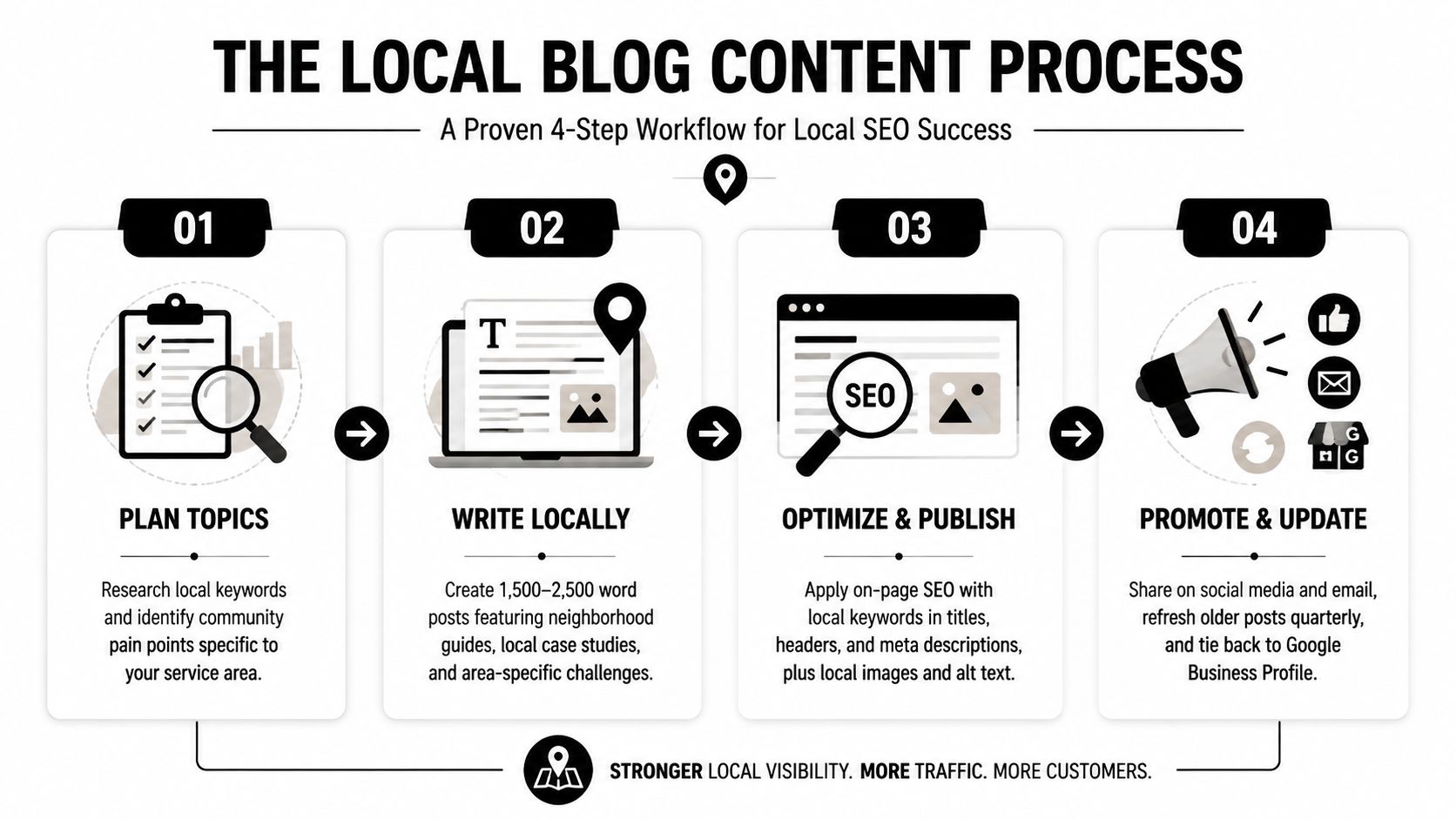
8. Create and Maintain a Local Blog with Relevant, Community-Focused Content
A local blog earns attention by answering questions customers ask before they are ready to hire you. It can demonstrate practical knowledge that a generic service page cannot provide. A Fort Myers cleaning company might publish a seasonal home-care guide for Cape Coral residents, while a Naples healthcare provider could explain locally relevant seasonal concerns in plain language.
Start every local article with the customer's actual problem. A city name belongs in supporting details, not the headline. “Roof repair in North Fort Myers” may target a useful service query, while an article explaining how homeowners can recognize storm-related roof damage is more likely to help someone researching a real need. Local references should add substance through neighborhood conditions, property types, seasonal patterns, community resources, or service logistics.
Use content to support the sales conversation
A useful article helps prospects decide whether to call, what information to prepare, and which questions to ask. It can also guide readers to a service page and a relevant location page through internal links.
Build a sustainable editorial rhythm:
- Answer recurring questions: Ask technicians, receptionists, and sales staff which issues customers raise repeatedly.
- Use local long-tail topics: Connect a service with a genuine community need rather than repeating city names.
- Show genuine work: Include project photographs, process details, and customer experiences with permission.
- Address seasonal needs: Southwest Florida businesses can cover weather, humidity, travel periods, property maintenance, or local routines when relevant.
- Refresh useful pages: Update outdated advice, service details, photographs, and links as circumstances change.
- Promote each article: Share it through email, social media, relevant community groups, and the Google Business Profile where appropriate.
Avoid publishing thin posts solely to fill a calendar. One useful article that helps a customer make a decision provides more value than generic announcements. The blog should strengthen service pages, address sales objections, and give local partners worthwhile material to share. Review the content plan each month, then publish, refresh, and promote topics that reflect current customer questions in the communities you serve.
9. Implement Local SEO Technical Audits and Monitoring
Technical faults can erase the value of strong local optimization. Broken links, duplicate pages, missing titles, indexing errors, incorrect canonical tags, inaccessible content, and poor mobile usability can keep search engines and customers from finding the information they need.
Start with Google Search Console. Review indexing status, search queries, page performance, and manual actions on a regular schedule. Use Google Analytics or another analytics platform to connect visits with actions that matter, including calls, form submissions, bookings, direction requests, and quote requests. Local rank tracking can reveal geographic gaps, but rankings should remain one signal among several.
A Cape Coral contractor might find that service pages are indexed while several city pages are not. A Fort Myers professional-services firm might receive traffic to a blog article but few inquiries because the page lacks a relevant next step. Each finding requires a different fix, so monitoring should connect visibility to customer behavior.
Make the audit actionable
Run a practical review each month:
- Crawl the website: Find broken links, redirect chains, missing metadata, duplicate content, and orphaned pages.
- Check indexing: Confirm that priority service and location pages appear in Search Console.
- Test mobile use: Review tap targets, forms, phone links, navigation, and page layout on real devices.
- Validate structured data: Recheck markup after website, template, or plugin changes.
- Track conversions: Separate calls, forms, bookings, directions, and other valuable actions.
- Compare service areas: Identify locations where impressions or leads trail stronger markets.
- Assign priorities: Log the issue, recommended fix, owner, status, and result.
Use Google Search Console, Google Analytics, Google PageSpeed Insights, Screaming Frog, and a local rank tracker based on the site's needs. A small business does not need a report packed with unused metrics. It needs a short monthly record showing which technical problem affects visibility or inquiries, who will address it, and whether the fix worked.
Keep technical monitoring tied to the operating rhythm for the rest of local SEO. Review urgent errors as they appear, complete the broader audit monthly, and revisit service-area performance before deciding where to invest effort next.
10. Use Local Social Media for Community Engagement and Referrals
Local social activity supports search visibility by strengthening relationships around the business. Useful posts can bring nearby customers to the website, start service conversations, encourage reviews, and build connections with organizations that may refer or mention the company.
A Fort Myers home-services company might share completed projects in Cape Coral, Bonita Springs, and Estero, tag relevant partners, and explain the problem solved instead of posting only a finished photo. A Naples healthcare practice can publish practical educational content and local event information while protecting patient privacy and meeting professional obligations.
Treat social channels as community touchpoints
Effective local engagement is specific, timely, and responsive. Add location tags when they fit, mention community organizations connected to a post, and answer questions in local groups without filling those spaces with promotions.
Focus on:
- Local proof: Share project photographs, team visits, customer stories, and community participation with permission.
- Useful education: Explain maintenance, preparation, prevention, or service decisions in plain language.
- Conversation: Respond promptly to comments and messages, especially questions that could become service inquiries.
- Partnerships: Work with complementary businesses, event organizers, and community leaders on relevant posts or activities.
- Content reuse: Adapt useful blog posts, review highlights, and profile updates for social channels.
- Clear action: Point people to a service page, booking form, phone number, or local resource when appropriate.
Follower counts and likes provide limited business context. Track website visits, calls, messages, form submissions, referral conversations, and review mentions instead. Review these signals monthly, compare them with the posts and partnerships that generated activity, and keep the formats that lead to meaningful contact. This approach turns community participation into a repeatable source of trust and referrals rather than a separate publishing task.
10-Point Local SEO Best Practices Comparison
| Strategy | Implementation Complexity 🔄 | Resource Requirements ⚡ | Expected Outcomes 📊 | Key Advantages ⭐ | Tips / Ideal Use Cases 💡 |
|---|---|---|---|---|---|
| Optimize Your Google Business Profile with Complete and Accurate Information | Low, 2–3 hrs setup; ~30 min/week maintenance | Low, time, photos, occasional verification; free platform | Increased local visibility in Maps/Search; more calls & foot traffic | Prominent SERP/Maps placement; free; direct customer engagement | Small storefronts & local services; post 2×/week, use full categories |
| Build and Manage Local Citations Across Relevant Directories | Medium, 8–12 hrs initial; 2–3 hrs/month | Moderate, time, spreadsheet, citation tools; some paid listings | Better local rankings and multi-platform visibility | Consistent NAP boosts credibility and discoverability | Multi-area service businesses; prioritize high-authority directories |
| Create Location-Specific Content and Landing Pages | High, 20–40 hrs initial; 4–6 hrs/month | High, content writers, SEO, images, developer support | Stronger geo-keyword rankings; more qualified local leads | Targets local search intent; easier to rank for specific areas | Multi-location businesses; unique pages with local landmarks (500–800+ words) |
| Generate and Manage Customer Reviews Systematically | Medium, 5 hrs setup; ~30 min/day monitoring | Low–Moderate, review tools, staff training, messaging system | Higher rankings, trust, conversion rates; social proof | Direct impact on local rankings; powerful conversion signal | Customer-facing services; request reviews post-service; respond within 24–48 hrs |
| Optimize Your Website for Local SEO and Mobile Experience | High, 15–25 hrs initial; ongoing testing | High, developer/SEO, testing tools, design resources | Improved rankings, CTR, mobile conversions; lower bounce | Mobile-first, schema and speed boost visibility & UX | All businesses (mobile-driven especially); implement schema & fast, responsive design |
| Build Local Links and Partnerships for Authority and Credibility | Medium, 10–15 hrs outreach; 4–6 hrs/month | Moderate, networking time, sponsorship budget, content | Increased domain authority, local referrals, brand awareness | High-relevance backlinks; community trust & referrals | Businesses seeking long-term authority; join chambers, sponsor events |
| Implement Local SEO Schema Markup and Structured Data | Medium, 8–15 hrs initial; 1–2 hrs/month | Moderate, developer or plugin, testing tools (JSON‑LD) | Rich snippets, higher CTR, better search understanding | Enables review stars, service info, voice search support | Service businesses with multiple locations/services; test with Rich Results tool |
| Create and Maintain a Local Blog with Community-Focused Content | Medium, 3–4 hrs/post; ongoing commitment | Moderate, writers, images, promotion channels | Organic traffic, authority, multiple indexable pages | Low-cost long-term traffic; reusable marketing content | Businesses that can publish consistently; 2 posts/month targeting local queries |
| Implement Local SEO Technical Audits and Monitoring | Medium, 6–8 hrs initial; 3–4 hrs/month | Moderate, audit tools (GSC, PageSpeed), technical skill | Identifies blockers; measurable ranking & speed improvements | Data-driven fixes prevent ranking losses; prioritizes work | Sites with growth or issues; set up GSC, rank tracking, monthly reports |
| Leverage Local Social Media Engagement and Community Building | Medium, ongoing 5–10 hrs/week | Moderate, content creation, community manager, ad budget | Increased referrals, website traffic, local awareness (indirect SEO) | Builds community, encourages reviews and word-of-mouth | Consumer-facing brands; post local content, engage groups, use local hashtags |
Make Local SEO a Monthly Growth System
Local SEO works best as an operating system, not a one-time cleanup. Google's local surfaces have changed over time, from Google Local in March 2004 to Google Maps in 2005, Google Places in 2009, Google My Business in June 2014, and Google Business Profile in November 2021. This local search timeline shows why businesses now need to manage their presence inside Google as carefully as they manage their websites.
Ranking research supports that priority. Whitespark's 2023 study surveyed 44 local SEO practitioners across 149 signals and found that Google Business Profile signals represented 32% of local pack and finder importance, ahead of on-page signals at 19%, review signals at 16%, link signals at 11%, behavioral signals at 8%, citation signals at 7%, and personalization at 6%. The study's findings don't mean you should ignore your website or links. They show that local growth depends on coordinating the profile with every supporting asset.
Start with the foundations:
- Verify the profile: Confirm the business name, categories, services, phone number, website, address or service area, photos, attributes, and hours.
- Clean up citations: Correct duplicate or outdated listings and keep the approved business information in one tracking sheet.
- Strengthen core pages: Build or improve the primary service pages and location pages that support your most valuable Southwest Florida markets.
- Improve mobile conversion: Test calls, forms, booking, directions, navigation, and page content on real phones.
- Create a review process: Ask after completed work, respond to every review, and use feedback to improve operations.
- Add authority layers: Pursue relevant community relationships, local links, useful content, structured data, and social engagement.
- Measure outcomes: Connect search visibility with calls, bookings, visits, quote requests, and qualified leads.
A practical monthly SOP keeps the work manageable. At the start of each month, verify profile information and upcoming holiday hours. Audit priority citations and check for duplicates. Review new customer feedback, send appropriate review requests, and respond to every review. Publish or update a useful service-area article or location page. Pursue one relevant local relationship, such as a chamber activity, community partnership, referral conversation, or expert contribution. Review rankings, Search Console queries, profile actions, calls, forms, and booked work. Finish by recording the next priority and assigning an owner.
Practical rule: Fix the action path before chasing more impressions. If customers can't call, book, request a quote, or find your location easily, additional visibility won't solve the underlying problem.
For small and mid-sized businesses in Fort Myers, Cape Coral, North Fort Myers, Estero, Bonita Springs, and Naples, the right sequence depends on the starting point. A business with an incomplete profile shouldn't begin with an advanced content campaign. A business with accurate listings but weak leads may need better service pages, stronger calls to action, faster mobile interactions, or a clearer review process. A business with a strong foundation may be ready to build partnerships and expand its location-specific content.
Polaris Marketing Solutions is one relevant option for Southwest Florida businesses that want customized local SEO, transparent monthly reporting, and a complimentary online analysis and competitor report. Its services include Google Business Profile optimization, citation work, location-specific content, review management, website support, and broader digital marketing for small and mid-sized businesses.
The immediate next step is simple. Audit your profile, contact details, top service pages, review process, and mobile conversion path this month. Then choose the one weakness most likely to affect qualified calls, bookings, visits, or quote requests, fix it, and measure what changes.
Polaris Marketing Solutions helps Southwest Florida businesses improve Google Business Profile visibility, local citations, location-specific content, review management, websites, and conversion paths through customized strategies and transparent monthly reporting. Visit Polaris Marketing Solutions to request a complimentary online analysis and competitor report, then use the findings to set your next local SEO priority.