

Most advice about SEO for landscaping companies starts with “publish more blog posts.” That's usually the wrong first move. A landscaping professional doesn't win a lead because a homeowner read a generic article about backyard ideas. They win because the homeowner searched for a nearby provider, saw a credible Google Business Profile, found a page for the exact service, and had enough local proof to call.
The practical priority is structured local proof. That means an accurate Google Business Profile, clear service-area signals, recent reviews, intent-matched service pages, fast mobile performance, and authority from genuine local relationships. Blog content can support that system, but it shouldn't replace it.
Why Landscaping SEO Is a Local Visibility Game
Local visibility determines whether a landscaping company gets the call. A homeowner searching for “landscaper near me” typically wants a provider who can inspect the property, understand local growing conditions, prepare an estimate, and complete the work within a defined service area.
That makes relevance and credibility the core SEO objectives. Your company needs to appear for the services you provide, in the communities you serve, with enough proof for a prospect to choose you over nearby alternatives.
Google's local search system also provides measurable signals. Businesses can review Google Business Profile performance by time period in the profile dashboard, including activity from Google Search and Maps, according to Google Business Profile guidance for landscaping companies. Those discovery surfaces can produce calls, direction requests, and website visits before a searcher reaches the standard results.
Search intent has moved closer to the job
Queries such as “landscaping near me,” “landscaping companies near me,” and “commercial landscaping near me” include a proximity signal and often reflect an active need. Independent keyword datasets report global monthly search volumes of 201,000 for “landscaping near me,” 40,500 for “landscaping companies near me,” 60,500 for “landscapers near me,” and 8,100 for “commercial landscaping” in the cited dataset. Those terms deserve separate intent planning instead of one broad homepage target (keyword data from Seopital).
Advertising behavior adds another commercial signal. One keyword dataset lists “landscaping companies” at 22,200 global monthly searches with a $12.26 CPC, and “landscaping services” at 18,100 searches with a $9.56 CPC (landscaping keyword data from The SEO Labs). CPC does not affect organic rankings, but it can help prioritize terms for service pages built to generate inquiries.
Practical rule: Build SEO around proof that helps a local buyer choose, not content volume that only produces page views.
AI-generated search summaries increase the value of clear local evidence. Home-services SEO analysis emphasizes Google Business Profile optimization, reviews, service-area signals, detailed service pages, mobile performance, and structured data because search systems may summarize answers before users browse traditional results (home-services SEO analysis from Improve and Grow).
Operations affect conversion quality as well. An inconsistent estimating process can turn increased visibility into inquiries your team cannot qualify or price efficiently. Companies reviewing workflow options may find Exayard landscaping estimating software useful for organizing estimates after local search generates a lead.
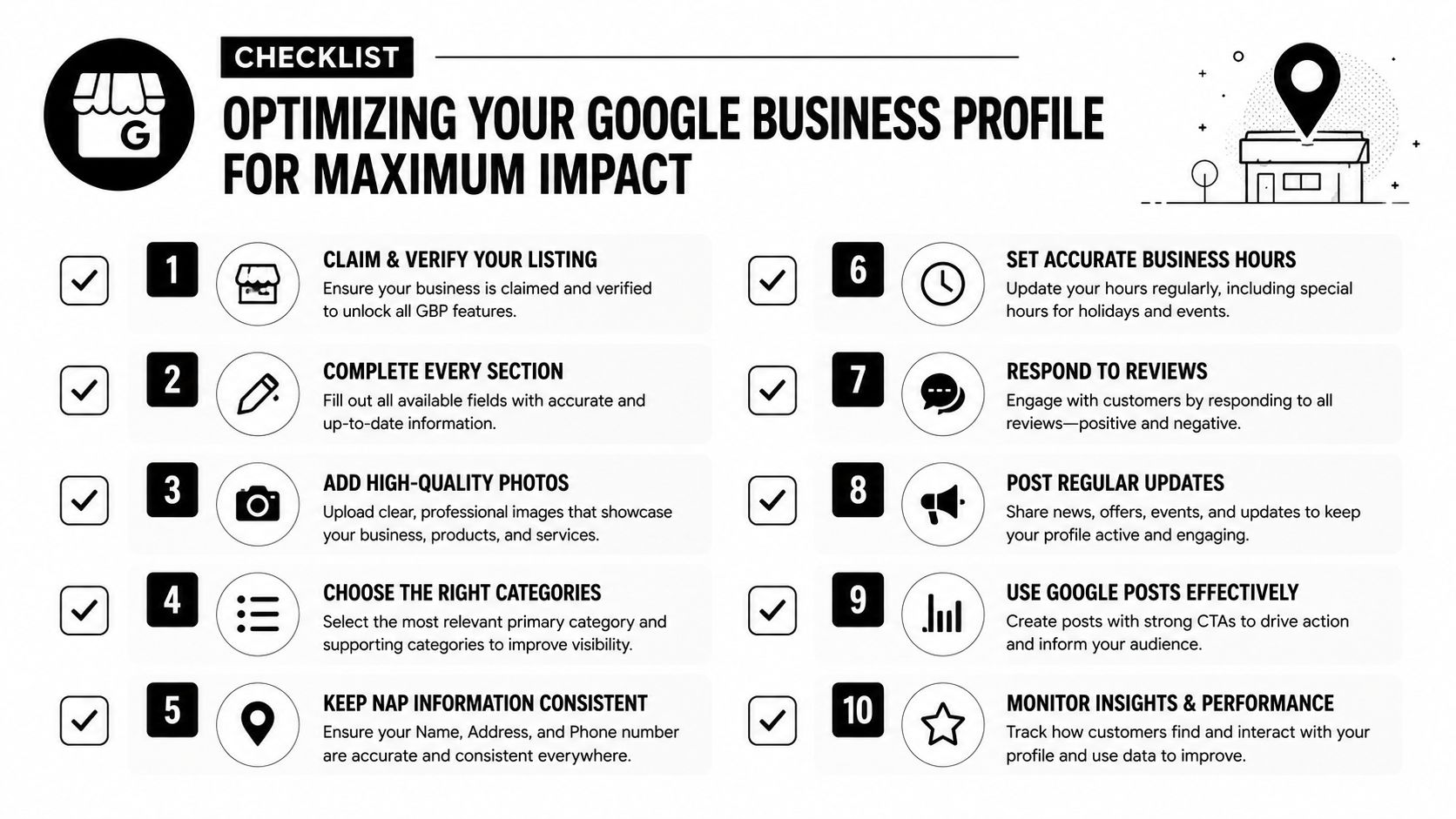
Optimizing Your Google Business Profile for Maximum Impact
Your Google Business Profile is the asset to fix before investing heavily in blog production. BrightLocal reports that customers are 2.7 times more likely to consider a business reputable when they find a complete Business Profile on Google Search and Maps (BrightLocal data cited in this landscaping marketing guide).
Start with verification, then complete every field that describes who you are, what you do, and where you work. A sparse listing forces Google and potential customers to fill in the gaps. A complete listing gives both audiences clearer evidence.
Configure the profile around actual services
Choose the primary category that best represents the core business. Add relevant secondary categories only when they accurately describe services you provide. A company focused on lawn maintenance shouldn't select categories for unrelated construction work just to appear for more searches.
Add each major offering as a separate service where the profile allows it. Use specific names such as:
- Lawn maintenance: Describe recurring mowing, edging, trimming, and cleanup.
- Design: Explain consultation, planting plans, renovation concepts, or installation coordination.
- Hardscaping: Identify patios, walkways, retaining walls, or paver work you perform.
- Irrigation: Separate installation, repair, maintenance, or drainage services when those are distinct offers.
Keep hours, phone details, website information, and service areas current. If you serve Fort Myers and Cape Coral, name those communities accurately in the service-area configuration and reinforce them with useful website pages. Don't create a city list that suggests coverage far beyond your crews' practical travel range.
Upload recent project photographs, including completed outdoor spaces, hardscape details, planting work, irrigation components, and crew activity. Before-and-after images are especially useful because they demonstrate the transformation a buyer is considering. Use descriptive filenames on your website, but don't force keywords into every image caption or profile update.
For a more detailed implementation reference, review this Google Business Profile setup resource. The useful test is simple: could a homeowner understand your services, locations, hours, and visual quality without visiting another directory?
Building Location and Service Pages That Convert
A generic “Landscaping Services” page usually misses the reason a homeowner searched. It may list lawn care, design, irrigation, patios, and maintenance, yet leave the visitor unsure whether the company handles their specific project in their area.
Build each page around one service, one market, and one clear next step. A page targeting “landscaping services in Fort Myers” should explain the work available there, the property problems your crew addresses, what the consultation includes, and how to request an estimate. This structure also gives Google clearer service-area and intent signals than a broad page with every offering combined.
Match the page to the buying decision
A service-location page can use this sequence:
- Specific opening: State the service and location plainly. “We design and install residential outdoor spaces in Fort Myers, including planting beds, outdoor living areas, and property refreshes.”
- Local problem context: Address conditions your team regularly handles, such as drainage concerns, irrigation needs, sun exposure, or maintenance expectations.
- Scope of work: Explain what the project includes, what affects the plan, and what customers should prepare before the consultation.
- Pricing guidance: Describe cost factors such as materials, access, design complexity, plant selection, demolition, and ongoing maintenance. Avoid a fixed price when every project requires a site evaluation.
- Proof: Show completed projects, relevant testimonials, certifications you hold, and the neighborhoods or communities your crews serve.
- Conversion path: Keep the phone number and estimate form visible. Tell visitors what happens after they submit their details.
Answer decision-stage questions directly. Search coverage for home services points to interest in cost-focused, emergency, seasonal, and conversational queries, while many companies leave questions such as “How much does lawn installation cost in my area?” or “What's the best time to schedule irrigation work?” unanswered (home-services search trend discussion from Spacebar Collective).
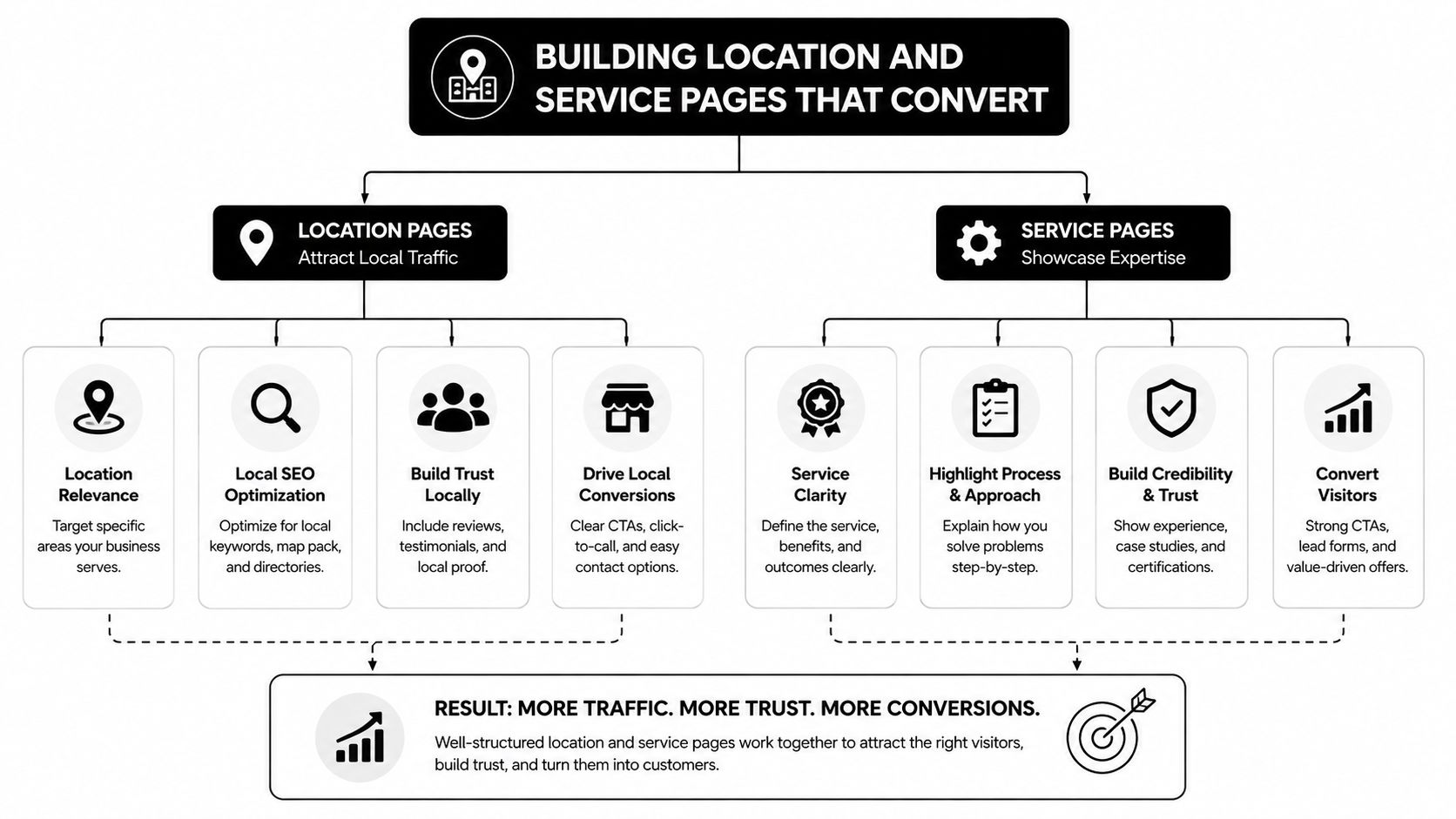
Do not clone one page for every nearby city. A location page needs a genuine reason to exist, such as completed work, locally relevant service details, customer language, or a distinct service area. Swapping only the city name creates thin pages that provide little value and weaken the site's topical clarity.
For homeowners who want to explore visual concepts before contacting a contractor, a resource such as Best landscape design apps can support early planning. The service page should then show how your company turns an early idea into a site-specific design and installation plan.
Use internal links with a purpose. A hardscaping page can connect to a patio page, a drainage guide, and a location page. A seasonal article can point back to the service page that generates estimates. These links create a clear path from research to contacting the company, while matching each visitor's intent to the next useful page.
Review Generation and Reputation Management Strategies
Reviews influence both customer confidence and local prominence. Google identifies relevance, distance, and prominence as the three main factors used in local results, and Google's explanation of prominence includes review quantity and review scores as contributing signals (local review guidance from MBA Digital Marketing Agency).
That doesn't mean you should chase reviews mechanically. A profile with a large review count but unresolved complaints can still lose trust. The better system produces a steady flow of authentic feedback and demonstrates that the business responds responsibly.
Ask at the right operational moment
The best time to request a review is after the customer has seen the finished work and confirmed that the job is complete. For recurring maintenance, ask after a meaningful service interaction, such as a seasonal cleanup or a resolved issue, rather than sending an automated request after every visit.
A simple SMS can say:
Review request: “Thanks for trusting us with your yard. If you're happy with the completed work, would you share an honest review on Google? Mentioning the service and city is helpful for homeowners looking for similar work.”
Don't script the customer's opinion, offer incentives in exchange for positive feedback, or ask employees to create reviews. Send the direct review link through your CRM, invoicing system, or a carefully managed follow-up workflow.
Make responses useful
Respond to positive reviews with a specific acknowledgment. If a customer praises a paver installation, mention the project type without exposing private details. For negative reviews, acknowledge the concern, avoid arguing in public, and move the conversation to a private resolution channel.
A crew-based business can assign the process clearly:
- Crew lead: Confirms the project is complete and records the service type.
- Office coordinator: Sends the review request and monitors responses.
- Owner or manager: Handles complaints and approves sensitive responses.
- Marketing contact: Tracks recurring themes, such as drainage, communication, or cleanup quality.
Review wording that naturally includes a service and location can help future buyers understand the company's relevance. Never manufacture that wording. The customer's own honest description carries more value than a keyword-stuffed request. For additional workflow ideas, see how to get more online reviews.
Technical SEO and Schema Markup for Outdoor-Service Contractors
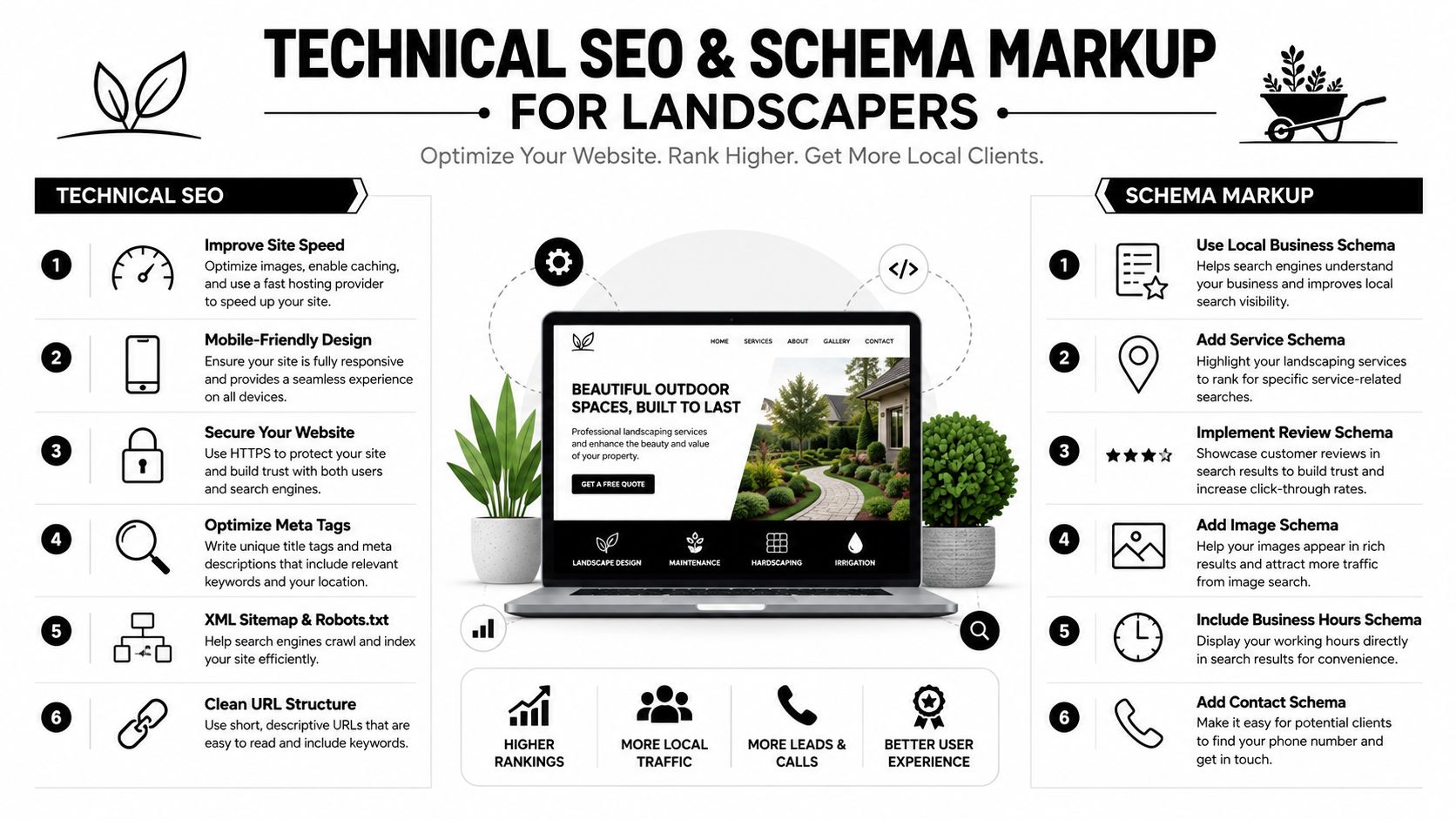
Technical SEO removes friction for search engines and customers. A polished project gallery cannot compensate for a site that is difficult to crawl, slow on phones, or unclear about which page covers each service.
Start with site structure. Link every important service and location page from the main navigation or a relevant internal page. Submit the XML sitemap in Google Search Console, confirm that robots.txt allows important content, and fix broken links and outdated redirects. These checks also support the service-area signals that help search engines connect your pages with the markets you serve.
Prioritize mobile usability
Outdoor-service buyers may search while inspecting a property, between jobs, or ready to call from the driveway. The mobile experience should make the next action obvious:
- Tap-to-call access: Keep the phone number visible near the top of important pages.
- Short forms: Request only the details needed to start the conversation.
- Readable galleries: Compress images while keeping project details clear.
- Clear navigation: Group services and locations so visitors can find the right page quickly.
- Stable layouts: Keep buttons and form fields from shifting as the page loads.
Use Google PageSpeed Insights and Google Search Console to find technical problems. Fix oversized images, unnecessary scripts, layout shifts, and error pages before spending time on advanced markup. Fast load times matter, but a clear service path matters just as much for turning local searches into inquiries.
Add structured data carefully
Schema describes the business and its services in a format search systems can process. A contractor site may use LocalBusiness or a relevant subtype, Service markup for individual offerings, and review-related markup only when it follows Google's guidelines and matches visible, legitimate page content.
A practical implementation includes:
- Business name, phone, website, and address when the company has a public location.
- Service descriptions connected to the correct intent-matched service pages.
- Opening hours that match the Google Business Profile and website.
- The actual service area, without claiming communities the business does not serve.
- Review information that matches what visitors can see.
Do not add fake ratings, hidden text, or markup for services you do not provide. Validate the implementation with Google's Rich Results Test, then check Search Console for warnings after deployment. Accurate markup supports the structured local proof already established through the profile and service pages, while excessive or misleading schema can create cleanup work without improving visibility.
Local Link Building and Authority Signals
Local authority grows from relationships that exist outside your website. A generic guest post on an unrelated site rarely communicates much about a company's standing in Fort Myers, Cape Coral, or another service market. A link from a local nursery, neighborhood organization, supplier, or community publication provides a more meaningful connection because it reflects where the company operates.
Start with relationships you already have. Ask a garden center whether it would feature an installation guide. Offer a drainage checklist to a local property management company. Provide expert input for a community publication covering storm preparation, outdoor living, or water-conscious planting.
Turn community work into useful assets
A landscaping company that sponsors a neighborhood cleanup or contributes to a community project should document the work professionally. Create a short project page with photographs, the organization's name, the problem addressed, and the company's role. Then send the page to the organization so it can decide whether to reference it.
Other credible opportunities include:
- Industry associations: Maintain accurate member profiles and participate in relevant directories.
- Local partnerships: Build referral relationships with pool contractors, builders, real estate professionals, and garden suppliers.
- Community organizations: Support projects that align with the company's actual presence and values.
- Local media: Offer practical commentary or original project information when a story fits your expertise.
The strongest local content also earns attention without direct outreach. A clear guide to landscaping considerations in a specific Florida community, a seasonal maintenance checklist, or a carefully documented before-and-after project can become a resource other local sites reference.
For a more detailed framework, review this guide to link building for local SEO. Avoid paid link schemes, irrelevant directories, and mass outreach that treats every website as interchangeable. Authority comes from relevance, trust, and consistency.
Measuring Success and Implementation Roadmap
Traffic is only a partial SEO signal for a landscaping company. Measure whether local visibility produces business: map-pack presence, Google Business Profile views, calls, direction requests, website visits, form submissions, qualified leads, and booked work. A ranking improvement that brings unqualified visitors is less valuable than a smaller visibility gain that produces estimate requests.
Review Google Business Profile performance by comparing periods before and after meaningful changes, such as completing service fields, adding project photographs, or improving review follow-up. The dashboard can show profile actions over time. Google Business Profile performance documentation for outdoor-service contractors provides further guidance. Use Google Search Console to monitor queries and landing pages, Google Analytics to assess on-site behavior, and call tracking when phone leads are a major conversion path.
A practical implementation sequence
First phase: Verify the profile, correct business details, choose accurate categories, add services, confirm service areas, and make the website easy to use on phones.
Second phase: Build the highest-value service and location pages. Match each page to a clear search intent, then add project proof, pricing considerations, FAQs, internal links, and an obvious estimate request.
Third phase: Set up the review workflow, resolve technical issues, implement appropriate schema, and pursue a small number of relevant local partnerships.
Use a monthly report that separates visibility from outcomes. Record changes made, pages updated, queries generating impressions, profile actions, qualified leads, and booked jobs. Review whether inquiries came from the right service areas and whether the sales process converted them. This makes it easier to distinguish a visibility problem from a response-speed, pricing, or estimate-experience problem.
Landscaping SEO KPIs and Benchmarks
| KPI | Target Benchmark | Measurement Tool |
|---|---|---|
| Map-pack visibility | Improve visibility for priority service and location queries | Local rank tracker and manual checks |
| Google Business Profile actions | Establish a consistent upward trend in calls, website visits, and direction requests | Google Business Profile dashboard |
| Service-page conversions | Generate qualified estimate requests from high-intent pages | Google Analytics and form tracking |
| Organic calls | Attribute calls to organic and local discovery where possible | Call tracking platform |
| Review activity | Maintain a steady, authentic review process | Google Business Profile |
| Technical health | Keep important pages crawlable, usable, and free of major errors | Google Search Console and PageSpeed Insights |
| Local authority | Earn relevant mentions from businesses and organizations in the service area | Backlink monitoring tool |
A focused roadmap beats a scattered campaign. Complete the profile before publishing more articles. If service pages remain generic, build them around actual buyer questions and service-area needs. If visibility exists but leads remain weak, inspect calls to action, response speed, pricing clarity, and the estimate process.
Polaris Marketing Solutions provides local and national SEO support for home-service businesses, including Google Business Profile optimization, location-specific content, review management, citation building, and transparent reporting. Visit Polaris Marketing Solutions to request a complimentary online analysis and competitor report for your landscaping business.