
If you’re a real estate agent in Fort Myers, Cape Coral, or Naples, you probably know the pattern. One week you’re juggling showings, listing appointments, and text messages from buyers who want to see something today. The next week your pipeline looks thin, and you’re wondering which marketing effort is producing business.
That’s the problem with outdated real estate agent lead generation. Random social posts, a neglected website, and the occasional boosted listing won’t carry a modern pipeline. Buyers and sellers search online first, compare agents fast, and often decide who gets the conversation based on who appears credible and who responds first.
Speed matters more than most agents want to admit. A widely cited real estate benchmark says 78% of homebuyers work with the first real estate agent who responds to their inquiry, and contacting a new lead within 5 minutes can increase conversions by 5x to 10x compared with waiting 30 minutes, while one 2025 survey cited by Inman found an average response time of 917 minutes for agents, according to real estate lead response benchmarks. That gap explains why so many agents feel like they have leads but still lose deals.
In Southwest Florida, that issue gets amplified. Naples buyers often expect a polished digital experience. Cape Coral sellers want fast answers and strong local positioning. Fort Myers prospects usually compare several agents before they ever call. If your systems don’t capture, route, and nurture demand quickly, you’re giving away business.
The good news is that effective real estate agent lead generation isn’t mysterious. It comes from a handful of channels that work together. Local search, paid ads, niche content, email follow-up, referrals, video, and reputation all play a role when they’re built into a real system.
These 10 strategies are practical, market-specific, and built for agents who want more than generic advice.
1. Google Business Profile Optimization & Local SEO
Your Google Business Profile is one of the most impactful assets you control. When someone in Naples searches for “real estate agent near me” or a seller in Cape Coral looks up listing help on Google Maps, your profile often makes the first impression before your website ever gets a click.
A lot of agents set up the profile once and never touch it again. That’s a mistake. Independent agents regularly outrank bigger brokerages when their profile is complete, active, and review-rich. If you serve multiple Southwest Florida areas, add those service areas clearly and make sure your website supports them with matching location pages.
What this looks like in Southwest Florida
An agent targeting Fort Myers can post local updates about riverfront inventory, new community developments, and open house schedules. A Naples agent can lean into luxury neighborhood searches, condo community names, and relocation questions. A Cape Coral agent can publish updates tied to canals, boating access, or neighborhood-specific market activity.
For a deeper framework, review this guide to local SEO for real estate agents and this breakdown of how real estate agents use local SEO.
Practical rule: If your Google Business Profile hasn’t been updated this week, it’s already falling behind agents who treat it like a live marketing channel.
Actions that actually move the needle
- Post consistently: Share listings, local market commentary, and community updates several times each week.
- Request reviews fast: Ask happy clients for a review within a day of closing, while the experience is still fresh.
- Use real local photos: Upload your office, team, neighborhood landmarks, and listing photos instead of relying on stock visuals.
- Respond to every review: A thoughtful response shows prospects you’re attentive before they even contact you.
- Keep contact details identical: Your name, address, and phone details should match your website, directories, and social profiles.
This channel isn’t flashy, but it compounds. Local SEO keeps working after the ad spend stops, and that’s why it belongs near the top of any serious lead generation plan.
2. Targeted Facebook & Instagram Advertising
Paid social works best when you stop treating it like digital billboard space. Most agents waste money by boosting a listing to a broad audience and hoping someone self-identifies as a lead. Good campaigns are narrower, segmented, and tied to one clear action.
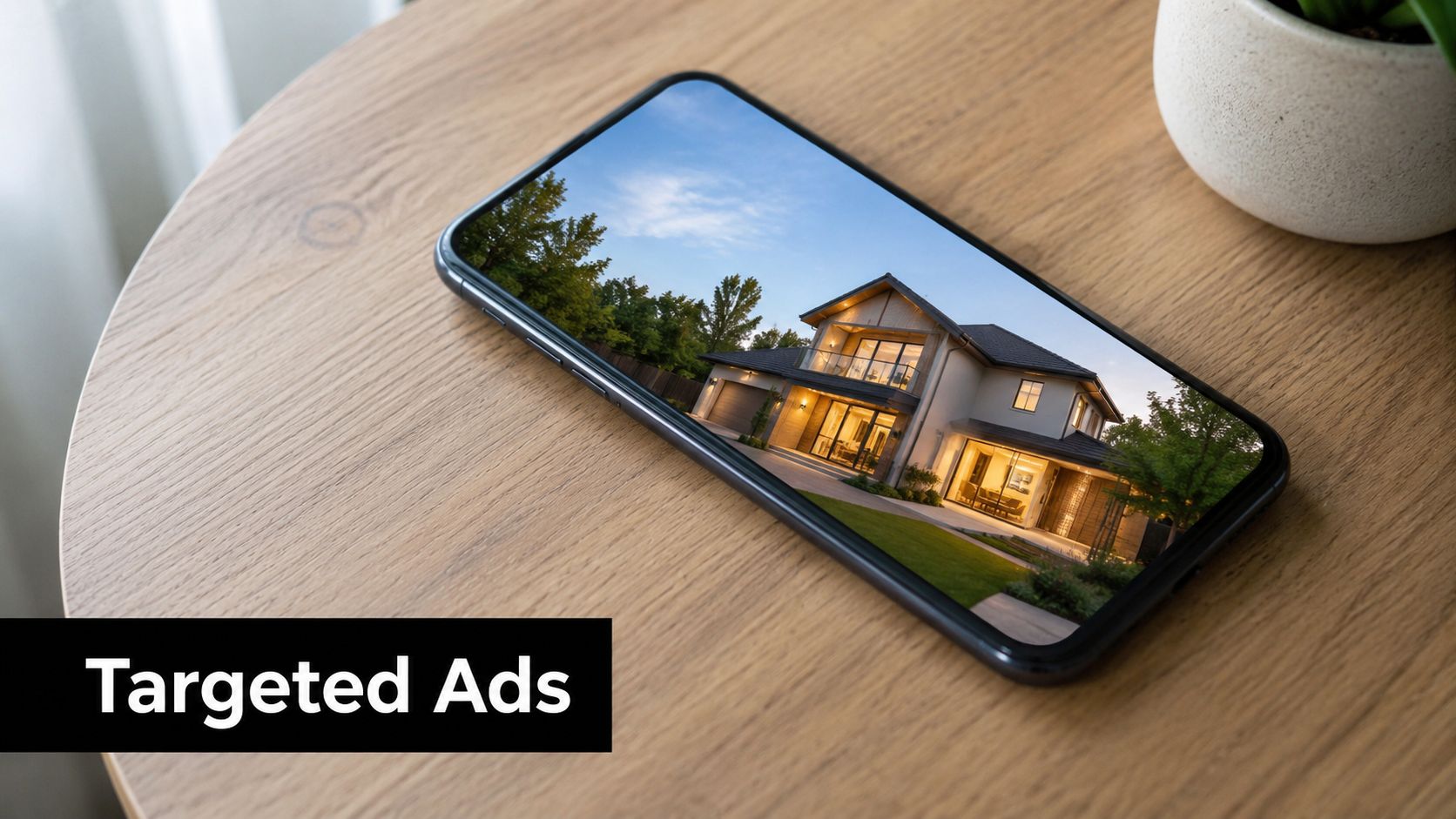
In Naples, that might mean running video ads around a luxury neighborhood and retargeting anyone who watched a property tour. In Cape Coral, it could mean separate campaigns for waterfront sellers, first-time buyers, and investors looking at rental areas. In Fort Myers, social ads often perform best when the offer is useful, such as a neighborhood guide, market update, or home value landing page.
Separate the audience before you spend
Buyers, sellers, and investors don’t respond to the same message. A seller in Estero cares about pricing strategy and timing. A buyer relocating to Naples wants neighborhood clarity, commute context, and confidence that you know the area. If one campaign tries to talk to everyone, it usually converts no one well.
Campaign structure matters more than clever copy. Build different ad sets for each audience, test different creative angles, then cut the weak performers. If you want a cleaner setup, these best practices for Facebook ads are a useful starting point.
A practical ad example
Say you’re targeting homeowners in Cape Coral who may be considering a sale. Instead of promoting your brand broadly, run a short video explaining what buyers are actively looking for in specific canal-access neighborhoods. Send clicks to a landing page offering a custom home value review and local market summary. Then retarget visitors who didn’t submit the form.
- Use lead forms carefully: They reduce friction, but low-friction leads still need strong follow-up.
- Refresh creative often: Audiences tune out quickly when they keep seeing the same property image or message.
- Retarget site visitors: Some of the best paid social opportunities come from people who already know your name.
- Track appointments, not vanity metrics: Likes don’t pay for signs, photography, or gas.
The trade-off is simple. Paid social can generate attention quickly, but it needs tight targeting and disciplined follow-up to become profitable.
3. Content Marketing & Real Estate Blog Strategy
Most real estate blogs fail because they read like generic market filler. “Top reasons to buy now” and “Is it a good time to sell?” aren’t enough when every brokerage publishes the same thing. Content works when it answers a specific search with a specific local perspective.
In Southwest Florida, that means writing for actual intent. A buyer might search for homes in Cape Coral under a certain price point, condo rules in Naples, or where to find neighborhoods in Fort Myers that fit a family lifestyle. A seller might want to know how to price a waterfront property differently from an inland home. Those are useful content angles because they match real questions.
Build content around local search intent
A strong content plan usually starts with pillar pages and then branches into focused supporting posts. One pillar page could cover relocating to Fort Myers. Supporting posts could address school-adjacent neighborhoods, downtown condo living, golf communities, or seasonal buying patterns. The same structure works for Naples luxury, Cape Coral boating communities, or age-targeted housing niches.
This is also where micro-market strategy becomes valuable. Hyperlocal guidance often recommends niche targeting, but the better move is to choose a niche you can dominate, then validate whether that segment is generating qualified conversations. The case for underserved micro-markets is explained well in this article on identifying underserved real estate micro-markets.
The agents who win organic search in a local market usually sound less like marketers and more like informed neighbors.
Content examples worth publishing
- Neighborhood guides: “Living in Pelican Preserve” or “Best canal-access areas in Cape Coral for boating buyers.”
- Decision-stage pages: “How to prepare a Naples condo for sale” or “What Fort Myers sellers should fix before listing.”
- Relocation content: Moving-from-out-of-state questions, community comparisons, and local cost considerations.
- Lead magnets: Downloadable area guides, buyer timelines, and seller prep worksheets tied to email capture.
Content doesn’t produce overnight results, but it improves over time. It also supports every other channel. Your ads need landing pages, your emails need helpful resources, and your SEO needs pages that deserve to rank.
4. Email Marketing & Drip Campaigns
A Fort Myers seller requests a home valuation on Tuesday night. A Cape Coral buyer downloads a waterfront guide on Saturday morning. A Naples condo prospect clicks an Instagram ad but does nothing else. If all three get the same follow-up email, response rates drop fast.
Email does the hard part after the lead comes in. It keeps you present without forcing a sales call too early, and it gives you multiple chances to earn the reply. Agents who treat email as a one-time autoresponder waste good leads they already paid for.
The fix is simple. Segment first, automate second.
A buyer comparing canal access in Cape Coral needs different information than a homeowner in Fort Myers who plans to list after season. A Naples luxury lead usually expects a different tone, price-point context, and pace than a first-time buyer looking east of I-75. Good drip campaigns reflect those differences. Poor ones flatten every lead into the same generic newsletter.
Segment before you automate
Start with practical buckets you can maintain:
- New buyer lead
- Active seller lead
- Long-term nurture
- Past client
- Investor
- Geographic segment by market: Fort Myers, Cape Coral, Naples
Then match the sequence to the decision that person is trying to make. Seller emails should answer pricing, timing, prep work, and what happens during listing. Buyer emails should help narrow area, budget, financing, and property type. Past clients need check-ins that keep the relationship alive without flooding their inbox.
A simple Southwest Florida nurture example
Say a lead downloads a Cape Coral neighborhood guide from your site. The first email should deliver the guide right away and ask one useful qualifying question: Are they focused on boating access, commute time, rental potential, or price? The second email can compare a few neighborhood options based on that priority. The third can offer a short call or a custom list of homes.
That sequence works because it feels local and specific. It sounds like someone who knows the difference between Gulf-access expectations and standard canal inventory, not someone blasting the same template to every contact in the CRM.
A seller sequence should be just as practical. For a Fort Myers homeowner, I would send a short series on pricing strategy, what to repair before listing, and how timing changes around seasonal demand. For Naples condo owners, I would include building-specific considerations, fees, showing logistics, and how buyers in that segment evaluate value.
What makes these campaigns work
- Send the first email immediately: Delivery lag kills momentum.
- Keep each message on one topic: One email, one question, one next step.
- Write like an advisor, not a platform: Clear guidance gets more replies than polished slogans.
- Mix automation with personal follow-up: The sequence starts the conversation. Your direct reply moves it forward.
- Use listing alerts with restraint: Helpful alerts build familiarity. Too many train people to ignore you.
- Review engagement by segment: If Naples luxury leads never click the same content as Cape Coral buyers, adjust the sequence.
Email works when it answers the next obvious question in the lead’s mind. That is the standard. Stay relevant, keep the timing tight, and make the content feel like it came from an agent who works Fort Myers, Cape Coral, and Naples every week.
5. Strategic Partnership & Referral Programs
Some of the most valuable leads never come through a form fill or ad click. They come from people who already have trust with your future client. Mortgage professionals, attorneys, contractors, insurance agents, financial advisors, property managers, and past clients can all become reliable lead sources if you treat referrals like a system instead of a happy accident.
A lot of agents say they rely on referrals, but they don’t make it easy for someone to refer them. Their contacts don’t know exactly who they serve, what neighborhoods they focus on, or what kind of client is the best fit. That creates friction, and friction kills referrals.
Make it easy to send you the right lead
If you’re strong in Naples luxury condos, say that plainly. If you specialize in first-time buyers in Fort Myers or waterfront homes in Cape Coral, give partners language they can repeat. One-page referral sheets work well here. Keep them simple. Ideal client profile, service area, contact details, and what happens after the referral comes in.
A referral partner doesn’t need your life story. They need confidence that you’ll take good care of their client and report back.
Southwest Florida partnership ideas
An agent in Fort Myers can build a consistent loop with a local lender, moving company, estate attorney, and home services vendors. A Naples agent can build relationships with interior designers, financial planners, and relocation specialists. A Cape Coral agent can connect with marine contractors, insurance professionals, and title contacts who regularly interact with waterfront homeowners.
A few ways to make the program operational:
- Follow up immediately: When a partner sends a lead, acknowledge it fast and update them appropriately.
- Create partner-specific assets: Co-branded seminar invites, neighborhood guides, or seller prep resources can help both sides.
- Host small events: Breakfasts, happy hours, or market briefings keep your name active without feeling transactional.
- Track referral sources in your CRM: If you don’t track it, you won’t know who deserves more attention.
Referral programs usually produce warmer conversations than cold acquisition channels. They scale slower, but the trust is higher from the start.
6. Video Marketing & YouTube Strategy
Video helps prospects pre-qualify you before they ever book a call. They can hear how you explain the market, see how you present a listing, and get a feel for whether you’d be helpful in a high-stress transaction. That matters in real estate, where trust often forms before the first meeting.
A lot of agents overcomplicate video and never publish. They obsess over cameras, scripts, and editing. Meanwhile, another agent with decent audio, a clear point, and local knowledge keeps showing up every week and becomes the familiar face in that market.
Start with a quick example of the style that works for real estate video:
What to film in Fort Myers, Cape Coral, and Naples
Neighborhood tours are often stronger than generic market updates because they match search behavior. A Naples prospect may search a community by name. A Cape Coral buyer may want to compare canal neighborhoods. A Fort Myers relocation buyer may care about lifestyle trade-offs between downtown living and suburban communities.
Property tours still matter, but educational videos often have a longer shelf life. Topics like “What to know before buying a condo in Naples” or “How waterfront insurance questions affect Cape Coral buyers” can keep generating traffic long after a listing is gone.
Keep the production practical
- Prioritize sound quality: People will tolerate imperfect video faster than weak audio.
- Open with the topic immediately: Don’t spend the first minute introducing yourself.
- Reuse footage across channels: One YouTube video can become Reels, Shorts, listing-page content, and email material.
- End with one next step: Schedule a consultation, request listings, or ask for a neighborhood guide.
The biggest mistake is making every video about you. The best-performing videos usually answer a prospect’s question clearly and quickly.
7. Paid Search Advertising Google Ads and PPC
Google Ads captures intent that social media often can’t. When someone searches for a real estate agent in Naples, a home valuation in Fort Myers, or homes for sale in Cape Coral, they’re already in motion. That’s why paid search can produce strong leads, but only when the campaign structure is disciplined.
This is not a set-it-and-forget-it channel. Search campaigns require keyword control, negative keywords, strong landing pages, and close tracking. If your ads dump traffic onto your homepage, your budget will disappear fast.
Match keywords to transaction intent
The best terms usually contain local and action-oriented intent. Think buyer keywords tied to neighborhoods or seller keywords tied to valuation and listing help. Keep buyer and seller campaigns separate. Their searches, psychology, and landing pages are different.
Industry coverage of modern real estate lead systems points to all-in-one platforms like Market Leader and CINC, which combine advertising, IDX websites, lead capture, CRM, SMS and email follow-up, and AI-assisted nurturing in a centralized workflow, as described in HousingWire’s review of real estate lead generation platforms. That integrated setup matters because paid search only works when capture and follow-up are equally strong.
A practical PPC setup
A Fort Myers seller campaign might target valuation and listing-related terms and send clicks to a page focused only on home-selling help in Fort Myers. A Naples buyer campaign might focus on community-specific searches and send visitors to a neighborhood landing page with listings, local context, and a clear inquiry form.
- Write local ad copy: Mention the city or neighborhood in the headline and description.
- Use dedicated landing pages: One campaign, one audience, one conversion goal.
- Track calls and forms: Otherwise you’ll optimize for clicks instead of business.
- Review search terms weekly: Good campaigns improve by cutting waste, not just adding keywords.
PPC is expensive when it’s loose. It’s profitable when the intent, landing page, and follow-up line up tightly.
8. Real Estate Website with Lead Capture Systems
Your website shouldn’t be an online brochure. It should function as your lead hub. Every marketing channel you run eventually sends people there, whether directly or indirectly, so the site has to help visitors act instead of just browse.
That means clear calls to action, mobile-friendly design, fast loading pages, neighborhood content, simple forms, and a structure that supports search visibility. If your site is hard to use on a phone, your pipeline is leaking. Real estate prospects often browse listings, save pages, and compare agents from mobile devices during small windows of time.
The website has one job
It needs to turn interest into a next step. That could be a showing request, home value inquiry, saved search signup, relocation guide download, or consultation request. If every page lacks a next move, you’re forcing prospects to do the thinking.
This matters even more because recent guidance keeps emphasizing the shift beyond initial lead capture toward automation, AI-assisted response, live chat, QR-based open house registration, and faster operational follow-up, as discussed in recent real estate lead generation guidance. Traffic is only half the equation. Conversion infrastructure matters just as much.
What to include on a real estate lead site
For agents evaluating site strategy, this overview of what is a lead generation website is useful because it frames the site around conversion, not just design.
Then build around actual user behavior:
- Neighborhood pages: One page per community you want to rank for and convert from.
- Simple forms: Name, phone, email, and one relevant question is usually enough.
- Visible trust signals: Reviews, certifications, market specialization, and local expertise.
- Multiple CTAs: Some visitors want to call. Others want a guide, alerts, or a valuation.
- CRM integration: Every form should route instantly into your follow-up system.
A good website doesn’t replace prospecting. It makes every other marketing effort more efficient.
9. Networking Events & Community Involvement
Online channels capture demand. Community presence creates it. If you’re known in the neighborhoods you serve, lead generation gets easier because people connect your name with the area before they need an agent.
This is especially true in Southwest Florida, where communities often have strong local identities. A Naples agent who shows up consistently at neighborhood events, business groups, and community gatherings builds a very different kind of brand than an agent who only appears in ads. The same applies in Fort Myers and Cape Coral. Visibility plus familiarity usually beats visibility alone.
Be present where your ideal clients already gather
Open houses still matter, but they shouldn’t be the only in-person strategy. Buyer education events, seller workshops, HOA-adjacent community talks, relocation sessions, and local sponsorships all create natural conversation starters. If you work a niche, your events should reflect it. A 55+ segment needs a different message than a first-time buyer audience.
The trade-off here is time. Community involvement doesn’t scale as quickly as digital campaigns. But the trust it creates is harder for competitors to copy.
Practical local examples
- Fort Myers: Host a buyer workshop with a lender and title contact at a local business venue.
- Cape Coral: Run a neighborhood open house weekend with a boating or waterfront lifestyle angle.
- Naples: Sponsor a community event and follow it up with useful market commentary instead of direct selling.
- Across Southwest Florida: Join chambers, business groups, and neighborhood organizations where your target clients already spend time.
Ask every new lead how they heard about you. A surprising number of agents underestimate how often “I’ve seen your name around” contributes to the decision to reach out.
10. Reviews, Reputation Management & Personal Branding
Many agents think branding means colors, logos, and polished headshots. Those things matter, but your actual brand is what prospects find when they search your name. Reviews, social content, listing presentation quality, video presence, and public responsiveness all shape that perception.
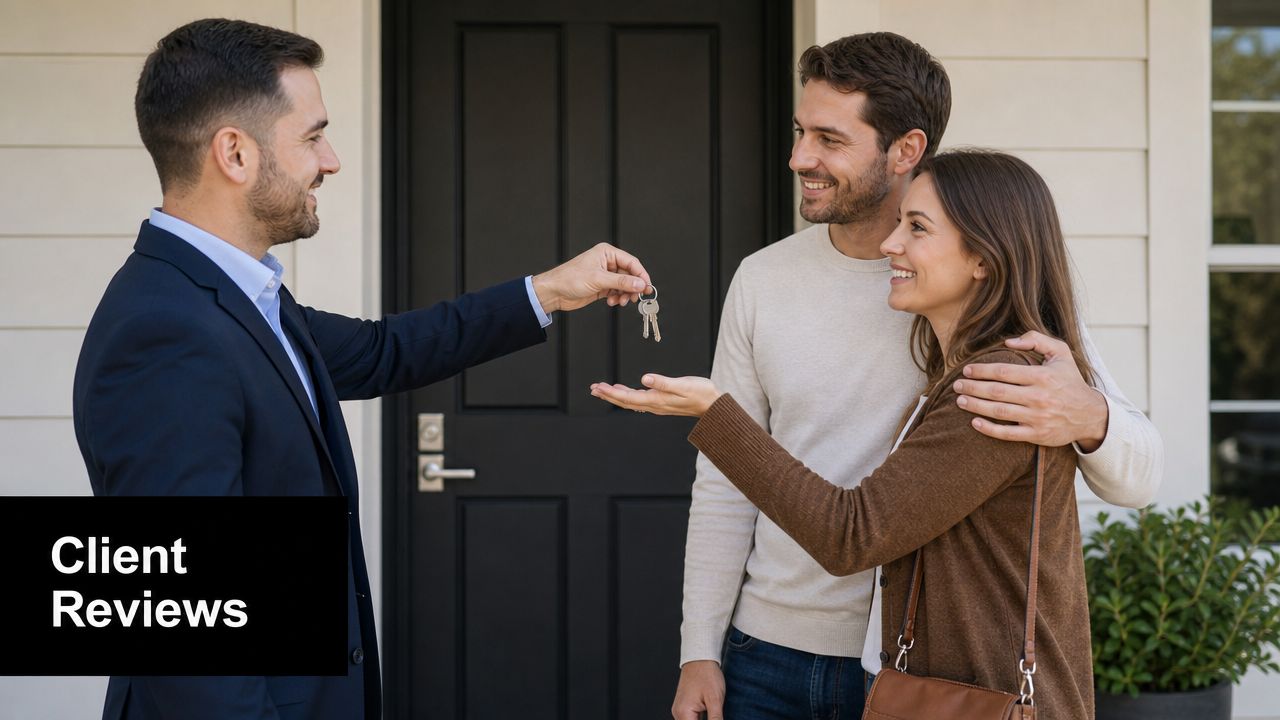
Reputation also affects conversion. If two agents appear similar on paper, the one with recent reviews, clear positioning, and a consistent online presence usually gets the call. Consequently, many good agents lose to more visible agents.
Turn closings into trust assets
The best time to request a review is soon after a successful close, when the client still remembers specific parts of your service. Don’t just ask vaguely. Send a direct link and tell them what kind of feedback helps. If they mention communication, negotiation, or local knowledge, future prospects get more useful proof.
Then use those reviews actively. Feature them on your website, in listing presentations, and in follow-up emails. Pull themes from them. If clients repeatedly praise your responsiveness or neighborhood knowledge, that becomes part of your message.
Your reputation isn’t built when you ask for business. It’s built in the public record of how you handled the last client.
Personal branding that helps lead generation
- Choose a clear identity: Waterfront specialist, relocation guide, Naples condo expert, Fort Myers family-home advisor.
- Publish consistently: Educational posts, behind-the-scenes moments, local updates, and client wins all support credibility.
- Respond publicly: Reviews, comments, and questions show how you communicate under normal conditions.
- Align your profiles: Your website, Google profile, Instagram bio, and YouTube presence should tell the same story.
Personal branding works when it reduces uncertainty. A prospect should understand who you help, where you work, and why they should trust you within a few minutes of researching you.
Top 10 Real Estate Lead-Gen Strategies Compared
| Approach | Implementation Complexity 🔄 | Resource Requirements & Speed ⚡ | Expected Outcomes & Impact 📊⭐ | Ideal Use Cases 💡 | Key Advantages ⭐ |
|---|---|---|---|---|---|
| Google Business Profile Optimization & Local SEO | Moderate, ongoing optimization and schema work | Low monetary cost; requires consistent effort; slow ramp (3–6 months) | Improved local search & Maps visibility; sustained organic leads | Local agents, multi-location teams targeting nearby buyers/sellers | Cost-effective long-term visibility; builds trust via reviews |
| Targeted Facebook & Instagram Advertising | Medium, audience setup and creative testing | Paid budgets required; quick start and rapid results; creative intensive | Fast lead generation; measurable ROI; variable lead quality | Promote listings, open houses, retargeting, rapid prospecting | Highly targeted reach; fast feedback loops; lead capture tools |
| Content Marketing & Real Estate Blog Strategy | High, strategy, research and consistent publishing | Requires writing or agency costs; slow compounding growth (3–6 months) | Authority building, organic traffic growth, lead capture via content | Long-term SEO, neighborhood expertise, education-driven lead gen | Compounding organic traffic; repurposable assets; trust building |
| Email Marketing & Drip Campaigns | Moderate, setup of automations and segmentation | Low platform costs; fast to deploy; ongoing content creation | High ROI; improved nurturing and repeat business; trackable metrics | Nurturing leads, past clients, converting website signups | Scalable nurture, measurable performance, strong conversion rates |
| Strategic Partnership & Referral Programs | High, relationship-building and tracking systems | Low direct financial cost; high time investment; slow to scale (6–12 months) | High-quality referrals with better close rates; predictable once established | Agents seeking warm leads via lenders, inspectors, past clients | Best lead quality; lower acquisition cost; long-term predictability |
| Video Marketing & YouTube Strategy | High, production, editing and consistent publishing | Equipment or vendor costs; time-intensive; quick social wins, slow YT growth | Strong engagement, better-qualified leads, SEO boost | Property tours, personal branding, reaching younger buyers | High engagement and shareability; builds trust and credibility |
| Paid Search Advertising (Google Ads/PPC) | High, bidding, landing pages and continuous optimization | High budget needs; immediate visibility; requires expert management | Captures high-intent searchers quickly; measurable conversions; CPA varies | Capture active property/agent searchers and motivated sellers | Immediate visibility; scalable by budget; high-intent leads |
| Real Estate Website with Lead Capture Systems | High, significant build and ongoing maintenance | High upfront cost ($2k–10k+); technical resources; results over months | Central hub for marketing; consolidated leads; improves SEO long-term | Agents wanting owned platform, IDX integration, conversion focus | Owned asset integrating channels; credibility and conversion gains |
| Networking Events & Community Involvement | Medium, event planning and consistent presence | Low monetary cost; high time commitment; slow to accumulate results | Deep local relationships and high-quality word-of-mouth referrals | Community-focused agents building local authority and referrals | Builds trust, strong referrals, local media and PR opportunities |
| Reviews, Reputation Management & Personal Branding | Moderate, systematic requests and monitoring | Low cost; ongoing effort; impacts over weeks–months | Increased trust, higher click-throughs, improved local rankings | Agents prioritizing trust, conversion and local pack visibility | Social proof drives conversions; supports SEO and referral growth |
Your Blueprint for Sustainable Lead Generation
A Southwest Florida agent can stay busy for two weeks from one good listing, then hit a dry stretch because the pipeline underneath it is thin. That pattern is common in Fort Myers, Cape Coral, and Naples. The fix is a lead generation system that keeps producing demand, captures it cleanly, and follows up fast enough to turn interest into conversations.
The strongest setup starts with demand you can already reach. For many agents, that means Google Business Profile, local SEO, a website that makes contacting you easy, and follow-up that happens the same day. Those pieces support the rest of your marketing. They also protect you from overpaying for leads you could have earned organically.
After that, add one growth channel based on your strengths and your market. An agent targeting waterfront sellers in Cape Coral may get traction faster with Google Ads tied to seller intent. A Naples agent with strong neighborhood knowledge may get better returns from video and local content. An agent in Fort Myers with solid community ties may see referral partnerships outperform paid social. Channel choice should follow likely ROI, not whatever tactic is getting attention this month.
Budget matters, but channel quality matters more. As noted earlier, many agents set aside a meaningful share of revenue for marketing and lead generation. The better question is where that money creates actual appointments. A small, well-run local SEO program plus disciplined follow-up often beats a larger ad budget pointed at weak landing pages and slow response times.
A practical stack usually looks like this:
- Local demand capture: Google Business Profile, local SEO, and review generation
- Paid intent capture: Facebook, Instagram, or Google Ads tied to dedicated landing pages
- Trust builders: neighborhood pages, market updates, blog content, and video
- Conversion infrastructure: CRM routing, lead forms, text and email follow-up, speed-to-lead
- Relationship channels: past clients, referral partners, local groups, and community visibility
The order matters.
If follow-up is inconsistent, hold ad spend steady until that is fixed. If your website gets traffic but few inquiries, improve the pages before buying more clicks. If your review profile is thin, build that proof before trying to compete head-to-head with larger teams on paid channels. Weak execution in one part of the system reduces return everywhere else.
Hyper-local execution separates serious producers from agents using generic templates. “Southwest Florida real estate” is too broad to carry much weight on its own. A better plan is Naples content built around actual communities buyers search for, Cape Coral ad campaigns segmented by canal access or new construction interest, and Fort Myers visibility tied to school zones, commuter patterns, or neighborhood turnover. Specificity gets better click-through rates, better lead quality, and better conversations once the lead comes in.
Polaris Marketing Solutions is one relevant option for agents who need support with local SEO, paid advertising, and website strategy in Fort Myers and the surrounding Southwest Florida market.
Keep the blueprint simple at first. Pick two channels you can manage well. Build the follow-up process. Measure booked calls, listing appointments, and closed business, not just lead volume. Once that system is producing consistently, add the next channel with confidence.
If you’re ready to build a more dependable lead pipeline in Southwest Florida, Polaris Marketing Solutions can help with local SEO, PPC, social media, and website strategy designed to turn online visibility into qualified inquiries.