

Your site may be live, but that doesn't mean it's pulling its weight. A lot of small business owners in Fort Myers, Cape Coral, Naples, and beyond are paying for a website that looks fine, yet still fails at the jobs that matter most: ranking locally, earning trust fast, and turning visitors into calls, bookings, and quote requests. If that sounds familiar, you're not alone.
The good news is that buying a small-business website doesn't have to be a guessing game. GoodFirms' small-business web design research puts the estimated average cost for a professionally designed site with core features at about $3,200, with an average delivery time of about 2 months. That gives you a practical benchmark before you start comparing agencies, platforms, and proposals.
This guide cuts through the noise. It compares the best website design companies for small business through an ROI-first lens, with a mix of national options and a strong Southwest Florida choice for companies that need local lead generation, local SEO, and hands-on support.
Actionable example: before you choose an agency, decide whether you need a custom partner or a simpler builder-first approach. If you're weighing both paths, these productization and automation tips can help you think more clearly about service delivery, capacity, and long-term maintenance.
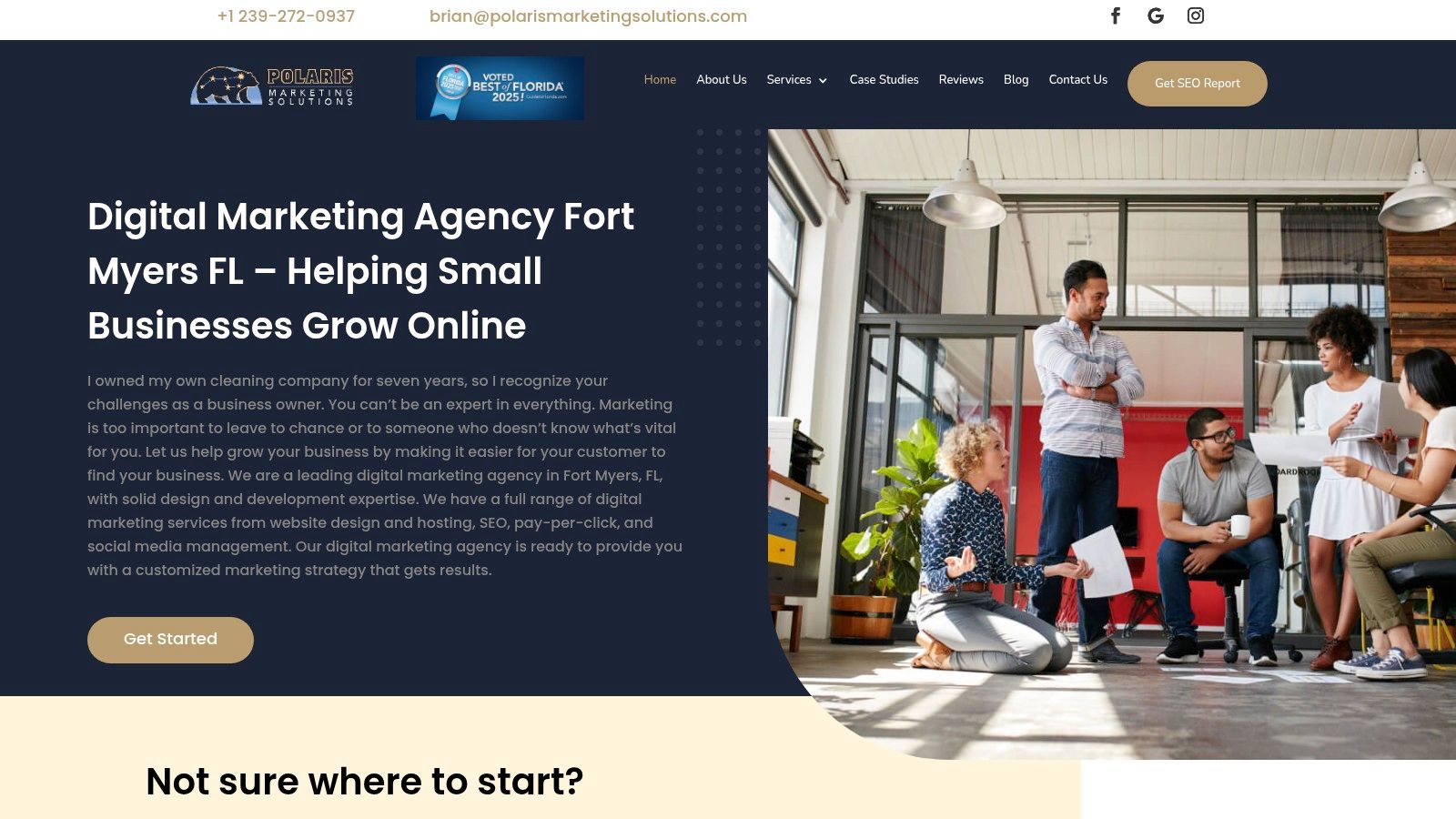
1. Polaris Marketing Solutions
A Southwest Florida owner usually has a different problem than a business shopping for a national agency. The question is not just, "Can this team build a good-looking site?" It is, "Can they help me show up in Fort Myers, Cape Coral, Estero, Bonita Springs, and Naples, then turn that traffic into calls and booked jobs?" Polaris Marketing Solutions is built for that local reality.
What gives Polaris an edge here is business context. The owner spent years running a cleaning company, so the work is shaped by the way small businesses buy marketing. Budgets are tighter. Lead quality matters more than vanity metrics. A site has to support sales, trust, and follow-up, not just look polished in a proposal.
Why Polaris stands out in Southwest Florida
Polaris handles web design as part of a revenue system. That includes hosting, SEO, PPC, social media management, and ecommerce support, which is useful for owners who do not want separate vendors pointing fingers when lead flow drops.
That local execution matters. A national agency may have stronger process documentation or bigger teams, but it can miss the details that drive performance in a regional market. Polaris puts more weight on Google Business Profile work, city-specific pages, citation consistency, review strategy, and the user experience factors that affect rankings and conversions. Its explanation of how user experience affects SEO is a good example of that practical connection between design choices and lead generation.
For Southwest Florida service businesses, that is often the difference between a site that sits online and a site that produces inquiries.
Practical rule: If your revenue depends on local search, ask how the agency handles map visibility, call tracking, form tracking, reviews, and location targeting. If the answer stays at the level of colors and layout, keep looking.
Best fit and trade-offs
Polaris fits small and mid-sized businesses that want one team handling design and ongoing marketing. That is especially useful for home services, healthcare practices, law firms, real estate businesses, and other companies where local trust and fast lead response drive ROI.
There are trade-offs. Polaris makes the most sense for businesses that care about regional growth and direct lead generation. If you need a large-scale national brand campaign, a multi-location enterprise rollout, or a heavily layered corporate approval process, a larger national firm may be a better operational match.
Pricing is not published, so budget comparisons take an extra step. Some owners will see that as friction. In practice, custom scoping can be a benefit if you need a site tied to SEO, ads, or ecommerce rather than a flat template package. Polaris also offers a complimentary online analysis and competitor report, which gives owners a clearer view of what needs fixing before they commit.
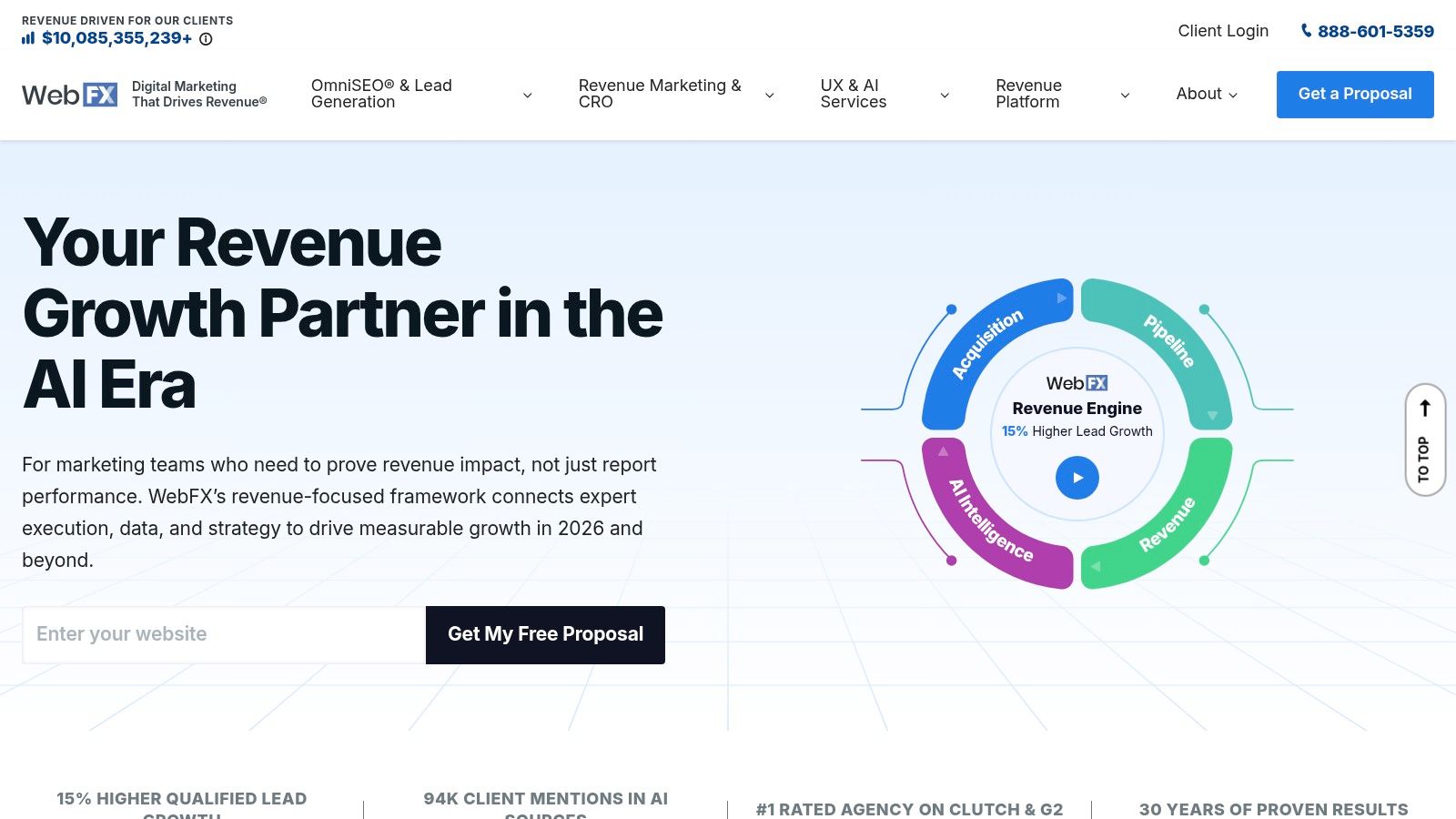
2. WebFX
WebFX is a strong national option for small businesses that want a structured process and broad in-house marketing support. If you already know your website has to work alongside SEO, PPC, content, and conversion optimization, WebFX makes that conversation easier than most agencies do.
The appeal here is transparency. Many agencies make you sit through discovery just to get a rough sense of cost. WebFX is more open about budgeting and scope, which helps business owners separate realistic projects from fantasy wish lists.
Where WebFX works best
WebFX is a good fit for companies that need more than a brochure site. It builds custom sites, often on WordPress, and can roll in hosting, maintenance, content, and ecommerce functionality. That's useful if you don't want your website vendor blaming your SEO vendor, and your SEO vendor blaming your developer.
SBDC guidance reinforces why that matters. For small-business websites, SEO practices, content management, and payment-processing capability are core requirements, not optional extras, according to SBDC website design guidance for small businesses. WebFX aligns with that broader technical view better than firms that focus mainly on visual design.
A practical example: if you run a local medical clinic, the site itself needs clear service pages, strong mobile usability, and conversion paths for calls or appointment requests. But it also needs clean SEO structure so those pages can rank. That overlap between UX and search is where this kind of agency can help.
For a sharper view of that relationship, Polaris has a useful explainer on how user experience affects SEO.
Trade-offs
WebFX is easier to budget than many competitors, but scope still drives the final price. Once you add advanced integrations, custom features, or heavier content needs, the investment rises quickly.
A polished site without traffic support often underperforms. A traffic plan without a usable site does the same. Agencies like WebFX are strongest when you hire them for both sides of that equation.
You can explore the agency at WebFX.
3. Hibu
Hibu is less of a pure design agency and more of an all-in-one local marketing system. That distinction matters. If you want a one-time build and full control over every technical decision, Hibu may feel too managed. If you want one provider to handle your site, listings, reviews, and campaigns in one dashboard, it becomes much more appealing.
For local lead-gen businesses, that model can be efficient. Home services, healthcare practices, and law firms often don't need a highly custom brand experience. They need a site that loads well, points visitors toward calls and forms, and fits into a broader local presence strategy.
Why Hibu makes sense for local operators
Hibu's platform approach is designed around ongoing marketing management. The website is part of the package, not the whole package. That can reduce complexity for owners who are tired of logging into different systems for leads, messaging, reputation management, and ads.
This setup tends to work best when the business values convenience over deep customization. For example, a roofing contractor who cares more about getting incoming estimates than crafting a highly differentiated visual brand may prefer this model. The business owner gets one dashboard and one vendor relationship.
There's a practical downside. Pricing is custom, and the service often makes more sense when you commit to the full ecosystem rather than buying design only. That's fine if you want an ongoing managed service. It's less ideal if you want to own every piece independently from day one.
What to ask before signing
Don't just ask about launch. Ask about exit.
- Clarify ownership: Make sure you understand what happens to your site and content if you cancel.
- Review lead handling: Ask how calls, forms, chats, and reporting are tracked in the dashboard.
- Confirm flexibility: Find out how much control you'll have over edits, pages, and future changes.
You can review the platform and services at Hibu.
4. Scorpion
Scorpion is built for aggressive lead-generation environments. If you're in legal, healthcare, or home services and competition is intense, Scorpion is one of the better-known names in that space. It combines web design with ads, SEO, intake tools, and automation.
This is not the vendor for a minimal, low-maintenance site. It's the vendor for businesses that want a website tied directly into a larger acquisition engine.

Best use case
Scorpion fits businesses that rely on fast intake and steady lead flow. Think personal injury firms, HVAC companies, dental groups, and multi-location operators. In those categories, speed, mobile usability, and call handling aren't side issues. They decide whether traffic turns into revenue.
The company's value is in the stack, not just the site. If you want AI-assisted intake, booking support, campaign visibility, and ongoing optimization, Scorpion is set up for that.
That said, there's a common concern with platform-driven providers: portability. If your website, lead handling, and campaign systems are all tied tightly to one vendor, leaving can get messy unless terms are clear up front.
Ask this in writing: “If we leave, what do we keep, what gets transferred, and what needs to be rebuilt?” The answer tells you a lot about the real cost of the relationship.
Trade-offs
Scorpion is usually a stronger fit for businesses with meaningful acquisition budgets and a clear need for ongoing marketing support. For a small local company with a simple brochure site and limited monthly spend, it may be too much infrastructure.
Still, for service businesses that need speed, scale, and category-specific marketing, it's a serious option. You can learn more at Scorpion.
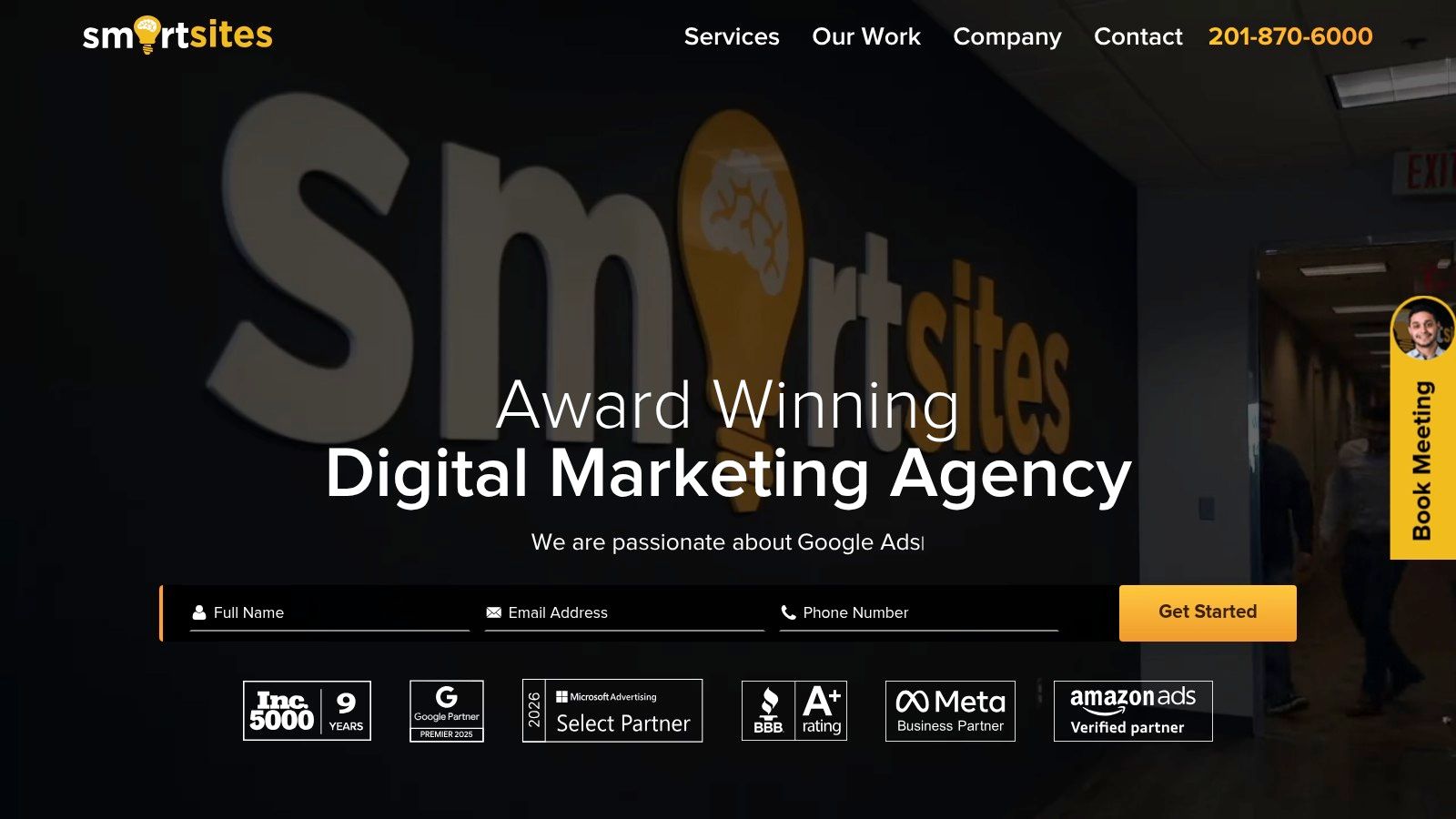
5. SmartSites
SmartSites sits in a useful middle ground. It's a national agency with broad capabilities, but it still feels more accessible to small and growing businesses than some enterprise-leaning competitors. If you want custom design backed by in-house SEO and paid media teams, it's a solid shortlist candidate.
One reason SmartSites stands out is breadth. It works across industries and doesn't force you into one narrow vertical model. That helps if your business needs flexible support rather than a preset template for one category.
Why some SMBs choose SmartSites
A lot of small businesses don't just need a website. They need a site that can support paid traffic, organic search, and conversion improvements after launch. SmartSites is built around that reality.
This matters in a mature market. Wix's 2026 small-business website statistics report says 73% of U.S. small businesses had a website, and about 71% of small businesses globally in major markets had one. In other words, having a website doesn't separate you anymore. Execution does.
For a local business, that means things like page structure, local service pages, review placement, form friction, and mobile experience matter more than whether the homepage looks trendy. If you also sell online, the quality of your store design and checkout flow becomes part of the equation. Polaris has a practical breakdown of best practices for ecommerce website design that lines up well with how to evaluate agencies like SmartSites.
Trade-offs
SmartSites is proposal-based, so you won't get simple shelf pricing. That's normal for custom agency work, but it means you need a clear brief before comparing quotes.
- Strong fit: SMBs that want one partner for site design plus post-launch traffic growth.
- Potential drawback: Performance-focused retainers may exceed what a micro-budget business can support.
- Good question to ask: How much of the proposal covers launch work versus ongoing optimization?
You can explore the agency at SmartSites.
6. Blue Corona
Blue Corona is one of the clearer choices for contractors and trades businesses. If you run HVAC, plumbing, roofing, electrical, pest control, or another home-services company, Blue Corona's specialization is an advantage.
Specialization matters. A generalist may build a beautiful site for a contractor. A home-services specialist usually thinks more carefully about service pages, call paths, trust signals, and local lead capture.
What Blue Corona gets right
Blue Corona builds and manages WordPress websites, then supports them with hosting, security, maintenance, and local lead-generation services. For busy operators, that's useful because website upkeep often gets ignored until something breaks.
Its clearest practical advantage is site ownership. The company explicitly states that clients own their website assets, including code, content, and logins. That's not a glamorous selling point, but it's one of the most important ones.
For a contractor, this can prevent a painful rebuild later. If you invest in service pages, local SEO content, and years of site history, you don't want that asset trapped in a vendor-controlled environment.
Best fit and limits
Blue Corona is strongest for home services. That focus is a plus if you're in the trades and a limitation if you're a retailer, restaurant, or more design-led brand.
A practical example: a local plumbing company benefits from category-specific page architecture, quick quote CTAs, financing or service-area content, and managed maintenance. A boutique clothing store usually needs a different playbook.
You can review the company at Blue Corona.
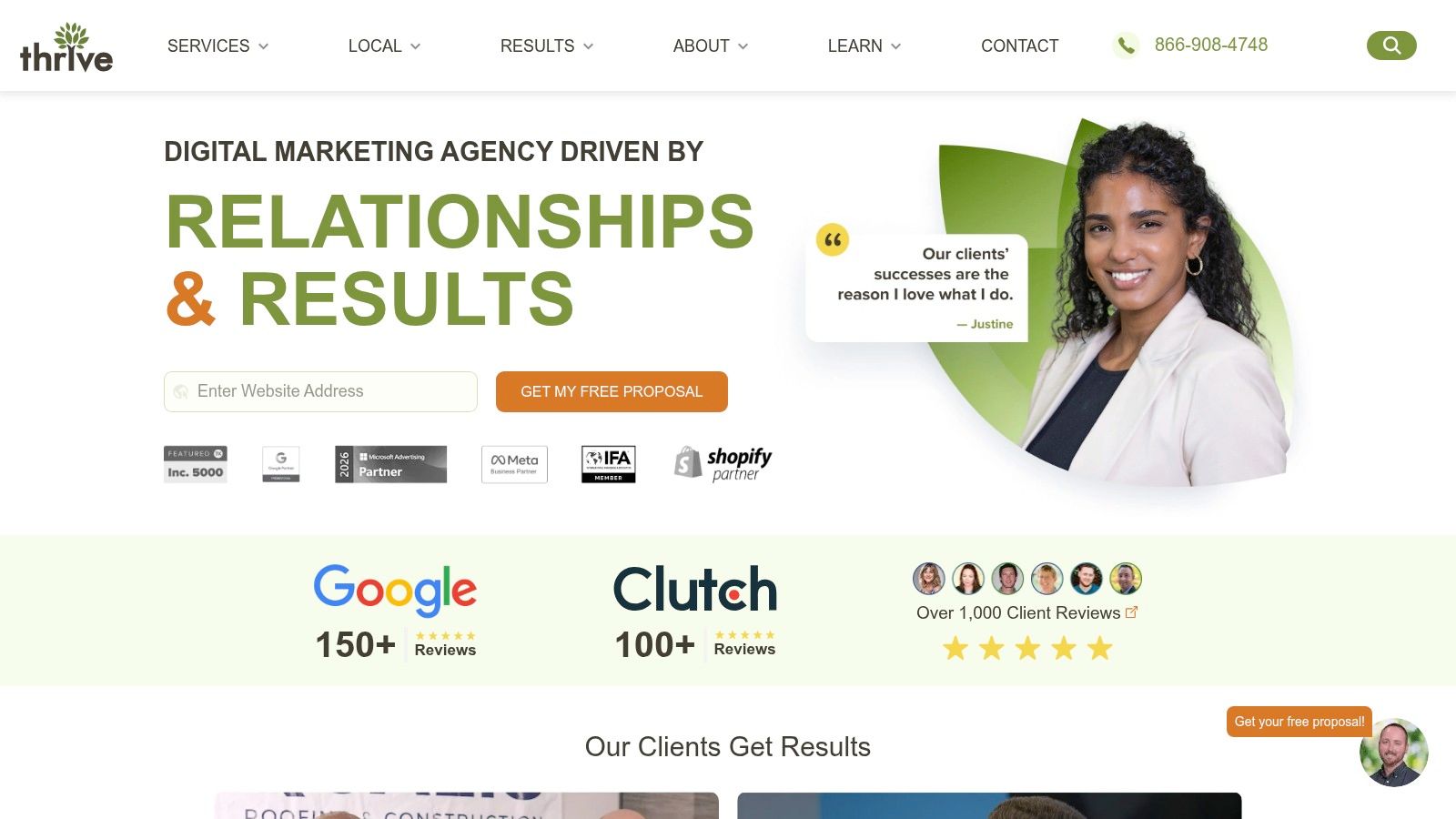
7. Thrive Internet Marketing Agency
Thrive is a credible option for businesses that want a WordPress-centered website and ongoing digital marketing support after launch. It's especially suitable for service businesses that need room to grow without locking themselves into a rigid platform.
WordPress still makes sense for a lot of SMBs. It offers flexibility, broad plugin support, and strong content management when handled well. Thrive leans into that model and pairs it with SEO and paid media support.
Where Thrive fits best
Thrive works well for companies that have outgrown DIY tools but aren't looking for a heavyweight enterprise engagement. If your current site feels limited, hard to update, or disconnected from your marketing, this kind of agency can be a good next step.
There's also a broader buying question worth addressing. Many business owners looking for the best website design companies for small business should first ask whether they need an agency at all. TechRadar's 2026 guide says Wix remains the top small-business website builder, with plans starting at $17 per month. For a very simple site, that can be enough. For businesses that need local SEO control, conversion strategy, and long-term growth support, an agency like Thrive is often the better fit.
Trade-offs
Thrive's custom work usually requires discovery and scoping, so pricing isn't posted as a flat menu. That's common, but it does mean you'll need to come prepared with goals, required features, and content expectations.
A useful rule of thumb: if you need a clean starter site and can manage updates yourself, a builder may be enough. If your site needs to support campaigns, SEO content, service pages, and deeper tracking, agency support earns its keep faster.
You can learn more at Thrive Internet Marketing Agency.
Top 7 Website Design Companies for Small Business, Comparison
| Provider | Implementation Complexity 🔄 | Resource Requirements ⚡ | Expected Outcomes 📊⭐ | Ideal Use Cases 💡 | Key Advantages |
|---|---|---|---|---|---|
| Polaris Marketing Solutions | Moderate, hands‑on small‑agency workflows | Low–Moderate budget; local market focus; monthly reporting | Local SEO gains in 3–6 months; PPC traffic in 24–48h, ⭐⭐⭐ | Small/mid businesses in Southwest Florida seeking local leads | Deep local expertise, integrated services, free SEO/competitor analysis |
| WebFX | Moderate–High, custom builds and data integrations | Moderate–High; scope‑dependent; transparent pricing guidance | Scalable, measurable ROI when scoped properly, ⭐⭐⭐⭐ | SMBs needing data-driven, scalable websites and bundled marketing | Pricing transparency, in‑house SEO/PPC/CRO, price calculator |
| Hibu | Low, platform/turnkey "Hibu One" setup | Subscription/platform fee; 6–12 month typical contracts | Rapid centralized lead/reporting; steady listings/review gains, ⭐⭐⭐ | Local lead‑gen businesses (home services, healthcare, legal) wanting all‑in‑one | Listings/reputation stack, single dashboard for campaigns |
| Scorpion | High, proprietary platform and deep integrations | High budget; enterprise/agency‑level management | Aggressive lead generation and mobile performance, ⭐⭐⭐⭐ | Multi‑location or heavily lead‑driven service firms (legal, home services) | Vertical expertise, AI intake/automation, end‑to‑end stack |
| SmartSites | Moderate, custom design plus in‑house growth teams | Moderate; proposal/retainer based | Performance growth with measurable case studies, ⭐⭐⭐⭐ | Small to mid‑market companies seeking sustained traffic and conversions | Single team for design + growth; strong partner credentials |
| Blue Corona | Moderate, WordPress builds with managed hosting | Moderate; includes hosting/security/maintenance | Conversion‑focused lead generation for trades; clear asset ownership, ⭐⭐⭐ | Contractors and trades focused on portability and local leads | WordPress expertise, explicit ownership/portability guarantee |
| Thrive Internet Marketing Agency | Moderate, WordPress‑focused custom work | Moderate; proposal/retainer based | Scalable WordPress sites with post‑launch marketing, ⭐⭐⭐ | Startups to mid‑market service businesses needing WordPress + retainers | Strong WordPress skillset and integrated marketing retainers |
How to Choose the Right Web Design Partner for Your Business
Selecting a website design company is a business decision, not a style decision. The right partner helps you generate leads, improve visibility, and reduce headaches after launch. The wrong one gives you a redesign bill, unclear reporting, and a site you outgrow too fast.
Start with your goal and budget. Be specific about what success looks like. If you're a plumber, that may be qualified quote requests. If you run a boutique or specialty retailer, it may be online sales. Write down one primary outcome before you contact anyone. That alone will make agency conversations more productive.
Then weigh local insight against national scale. A local agency like Polaris Marketing Solutions understands how Southwest Florida businesses compete, what nearby customers search for, and how service-area SEO affects map visibility. A national firm may offer broader teams and more infrastructure, but it won't always bring the same regional context.
You should also review portfolios with better questions. Don't stop at “Does this site look good?” Ask whether it supports lead flow, whether it was built for mobile use, and whether the company can explain the SEO and conversion thinking behind the structure. Straight North emphasizes device-optimized websites built to generate leads and ongoing support, which points to the broader issue many buyers miss: your site has to work after launch, not just on launch day, as noted in the small-business web design discussion from Straight North.
Here's the final non-negotiable: clarify ownership. Ask directly whether you keep the domain, content, files, and backend access if service ends. If the answer is vague, keep looking.
A practical shortlist process looks like this:
- Define one business goal: Example, “Get qualified quote requests from local homeowners.”
- Set a realistic range: Use the benchmark noted earlier as context, then ask what drives scope up or down.
- Ask about SEO, CMS, and payments: These are core requirements, not add-ons.
- Review post-launch support: Maintenance, edits, and reporting matter.
- Confirm ownership in writing: Don't rely on verbal reassurance.
If you want a grounded, no-pressure starting point, request a free website analysis and competitor report from Polaris Marketing Solutions. It's a practical way to see where your current site stands and what an ROI-focused rebuild could improve for your Southwest Florida business.
If your business also depends on a strong niche web presence, it can help to review how other industries approach site infrastructure, such as this guide on how to manage your real estate agency website.
If you want a website that does more than sit online, Polaris Marketing Solutions is a smart place to start. The team builds websites for small and mid-sized businesses with local SEO, lead generation, and real-world business goals in mind. If you're in Fort Myers or anywhere in Southwest Florida, request a complimentary website analysis and competitor report to see exactly where your current site is helping, where it's leaking leads, and what to fix next.