
You've probably been in this spot already. Your business has a decent website, your services are solid, and customers who find you tend to convert. But when someone in Fort Myers searches for a roofer, dentist, family lawyer, HVAC company, or physical therapist, your business is hard to find.
That usually isn't a website-only problem. In Southwest Florida, local visibility is spread across Google Business Profile, your site, review platforms, mapping apps, industry directories, and local business listings. If your business data is thin, inconsistent, or missing from the right places, Google has less confidence connecting your brand across the web. That weakens visibility right where buyers are comparing providers.
Why SEO Directory Listings Still Matter in Fort Myers
A lot of business owners still think directory listings are old SEO. They remember cheap submission packages, weak backlinks, and cluttered websites that never sent a lead. That part of the market deserves the skepticism.
But seo directory listing work still matters because local search results still include directories at a meaningful level. BrightLocal's 2026 local SEO statistics report found that directories account for 31% of Google's top ten organic results for local searches in its local SEO statistics report. In plain terms, nearly a third of page-one organic visibility for local intent can belong to platforms other than your own website.

That matters in Fort Myers, Naples, and Cape Coral because buyers rarely make decisions from one result. They click around. A homeowner looking for AC repair may check Google Business Profile, Yelp, Angi, and a local chamber listing before calling. A personal injury prospect may compare law firm sites with legal directories. A patient searching for a specialist may trust a healthcare platform before visiting the practice website.
Directories fill visibility gaps
If your site isn't yet strong enough to dominate local organic rankings, directories can still put your business in front of searchers. That's especially useful in crowded Southwest Florida categories like:
- Home services such as roofing, paving, cleaning, and HVAC
- Healthcare practices where trust and profile completeness matter
- Legal services where prospects compare credentials and reviews before they contact anyone
Practical rule: If customers search your category and see directories on page one, your business needs to be represented well on those directory pages.
Directories also support trust. They reinforce your business name, address, phone number, categories, service areas, and reputation signals. That's why listings are part of local SEO infrastructure, not just a side task.
For owners who serve women-led ventures or consumer-facing local brands, this piece on discover how directories help women's businesses gives a useful perspective on directory visibility beyond pure rankings.
If you want hands-on help with that groundwork, a directory submission service for local businesses can handle the citation side while you stay focused on operations.
Choosing the Right Directories for Your SWFL Business
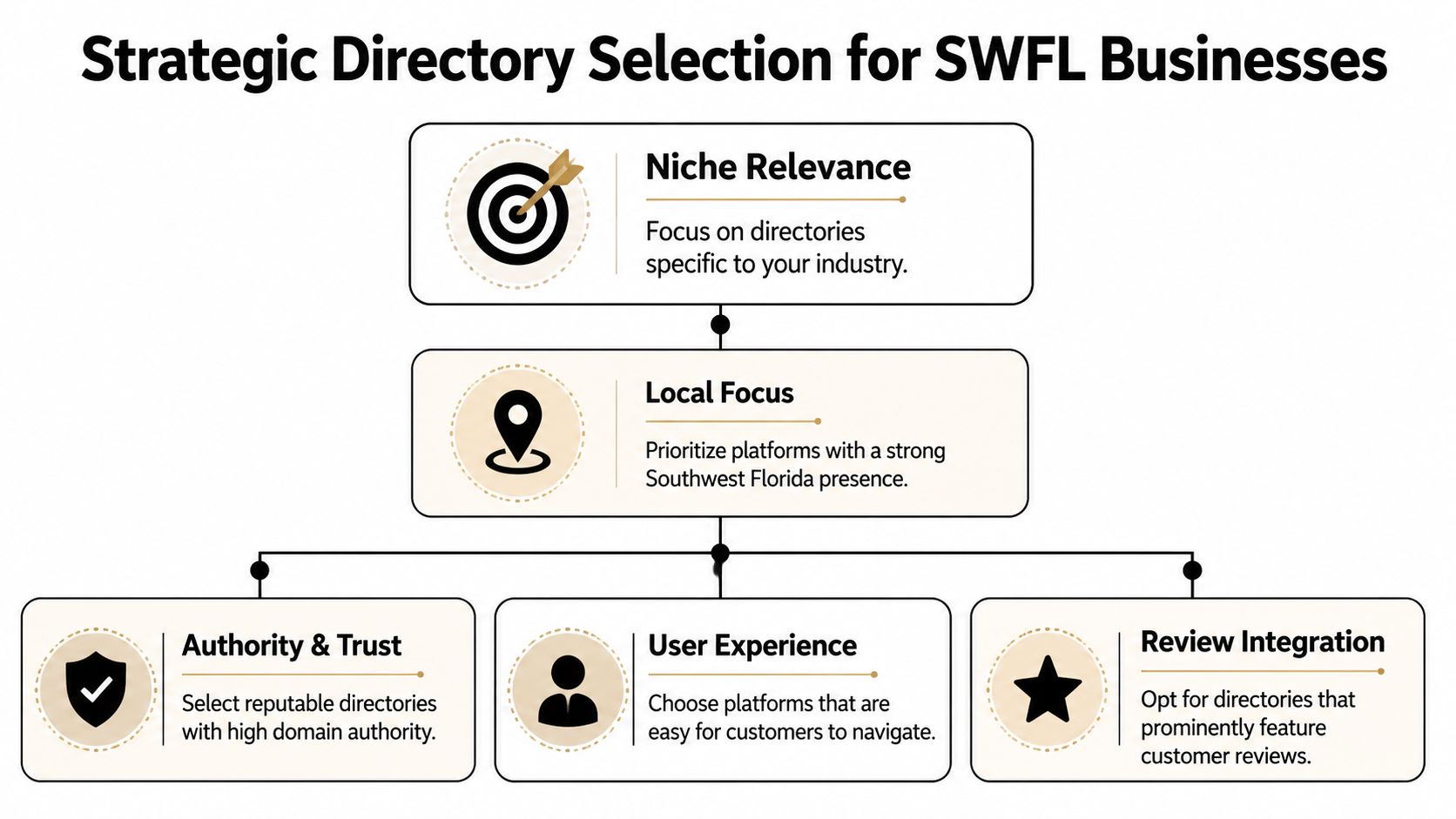
The right move isn't “submit everywhere.” The right move is choosing directories that real customers use and that search engines trust.
A practical filter comes from Active Marketing's guidance on directory submissions. As a baseline, prioritize directories with a Domain Authority of 30 or higher, and high-authority directories at DA 50+ can show SEO impact within 30–45 days, while lower-quality sites may take 60–120 days and provide minimal value based on this industry guide.
Use a tiered selection process
A Fort Myers business should sort targets into tiers instead of treating every listing the same.
| Directory Tier | Description | Examples for SWFL |
|---|---|---|
| Foundational | Core platforms that define business identity and map visibility | Google Business Profile, Apple Maps, Bing Places |
| High-authority general | Major directories with broad consumer usage and strong search visibility | Yelp, Better Business Bureau, Angi, Facebook business pages |
| Hyper-local and niche | Industry-specific or local platforms tied to buyer research | Fort Myers Chamber, Naples Chamber, Cape Coral Chamber, Avvo, Houzz, Healthgrades |
That structure keeps your effort focused. A Naples attorney should care more about Avvo and local chamber visibility than a random national directory nobody uses. A Cape Coral remodeler should care more about Houzz, Yelp, and service directories than a bulk-submission network.
What to look for before you submit
Don't judge a directory by whether it lets you create a profile. Judge it by what that profile can do for visibility and trust.
Use this checklist:
- Local relevance: Does the directory rank or get used in Fort Myers, Naples, Cape Coral, Estero, or Bonita Springs?
- Industry fit: Would a buyer in your field compare providers there?
- Editorial review: Human oversight tends to filter out junk listings and spam.
- Review visibility: Platforms that show customer feedback often influence decision-making.
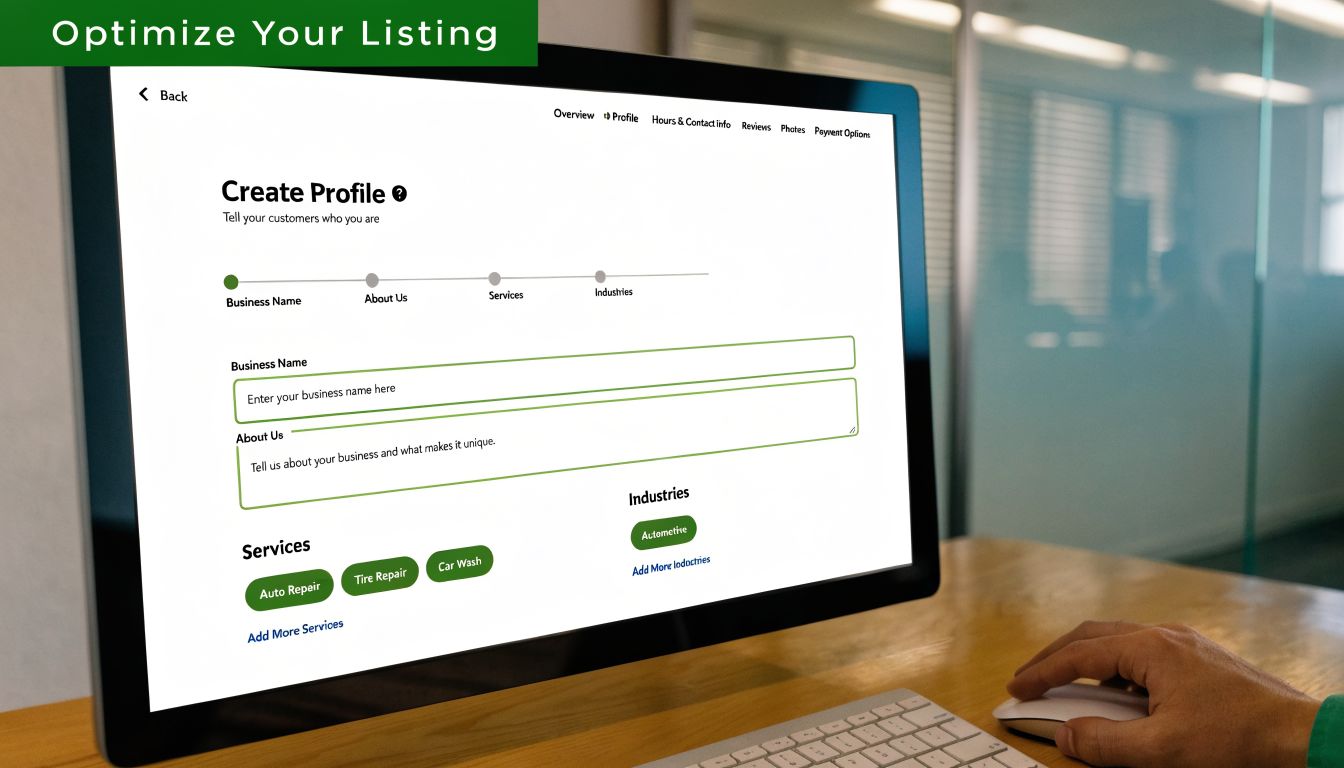
- Profile depth: Better directories let you add categories, services, photos, hours, and descriptions.
A good directory does two jobs. It helps customers evaluate you, and it helps Google validate who you are.
For businesses building a shortlist, this guide to local listing sites for small business SEO can help narrow down which platforms deserve attention first.
Southwest Florida examples that make sense
A few practical examples:
- Fort Myers roofer: Google Business Profile, Apple Maps, Bing Places, Yelp, Angi, Houzz, local chamber.
- Naples medical practice: Google Business Profile, Apple Maps, Bing Places, Healthgrades, Vitals, local chamber.
- Cape Coral family law firm: Google Business Profile, Apple Maps, Bing Places, Avvo, Justia, local chamber.
That's a smarter use of time than dumping your business into a long list of weak directories that no buyer visits.
Creating a Perfect SEO Directory Listing
Most listing problems aren't caused by absence. They're caused by sloppy setup.
A Fort Myers roofing company might have profiles on Yelp, Houzz, and a few local sites, but one says “ABC Roofing LLC,” another says “ABC Roofing of SWFL,” and a third uses an old phone number. To a customer, that looks messy. To Google, it weakens confidence in the business entity.
Match your Google Business Profile exactly
This is the first rule because it affects everything else. Local SEO Guide analyzed Google listings and found that listings with exact business name matches to the Google Business Profile averaged much stronger rankings. In one summary version of that finding, directory listings with a business name that exactly matches the Google Business Profile name average a ranking position 65% higher than mismatched names in this Local SEO Guide case study.
That means your business name should match your Google Business Profile exactly across directories. No added keywords. No unnecessary abbreviations. No switching between toll-free and local numbers unless your core records already use that number consistently.
For a hypothetical roofer, if the Google Business Profile says:
Suncoast Roofing & Restoration LLC
then every important directory should use that exact format unless the platform has a separate field structure that forces a legal distinction.
Use this same discipline for:
- Address formatting: Pick one format and stick with it
- Primary phone number: Use the same main number on your key listings
- Website URL: Use the preferred version consistently
- Business hours: Keep them aligned, especially during storm season and holidays
Write descriptions for real local buyers
A directory description isn't the place for fluff. It should help a Fort Myers prospect decide if your business serves their area and solves their problem.
For example, a stronger roofing description would mention the actual work and service footprint:
- Roof repair
- Tile and shingle replacement
- Storm damage inspections
- Service in Fort Myers, Estero, Bonita Springs, Cape Coral, and Naples
Avoid stuffing city names into a paragraph with no context. Write like a company a homeowner would trust.
Customers read directory descriptions fast. Lead with services, geography, and credibility signals they can verify.
Choose categories with discipline
Categories often do more work than business owners realize. Pick the most accurate primary category first, then add relevant secondary categories only when they reflect real services.
Examples:
- A dentist shouldn't also choose cosmetic surgeon because it sounds prestigious.
- An HVAC company shouldn't choose plumber unless it offers plumbing.
- A law firm shouldn't list every practice area if only one attorney handles those matters occasionally.
Wrong categories bring weak traffic and poor-fit leads.
Here's a useful walkthrough before you build or clean listings:
Complete the fields most businesses skip
Incomplete profiles lose trust. Fill out the fields buyers use when they compare providers.
For a Southwest Florida business, that usually means:
- Services list: Name the actual services you want leads for.
- Service area details: Include places like Fort Myers, Cape Coral, Naples, Estero, and Bonita Springs when the platform supports service areas.
- Photos: Upload team, location, vehicle, jobsite, interior, and before-and-after photos where allowed.
- Business hours: Keep storm response or emergency availability current.
- Appointment or contact options: Make the next action easy.
For healthcare and legal listings, add credential details where the directory supports them. For home services, jobsite and truck photos usually do more persuasive work than stock images.
Optimizing and Maintaining Your Listings for Peak Performance
A listing that was correct six months ago can be wrong today. Office hours change. Staff changes. New locations open. Service areas expand. Seasonal demand shifts. If you don't maintain listings, accuracy slips and lead quality follows it.
That's why listing management isn't a one-time project. It's recurring reputation and data maintenance.
Review management affects conversion quality
Reviews influence whether someone calls you, but the response matters too. A quiet profile can look neglected. A defensive profile can push people away.
Use a simple structure for responses:
- Positive review response: Thank the customer, mention the service, reinforce locality.
- Negative review response: Stay calm, acknowledge the concern, offer an offline resolution path.
- Short review with no detail: Reply anyway. Confirm appreciation and professionalism.
Example for a Fort Myers HVAC company:
Thank you for trusting us with your AC repair in Fort Myers. We appreciate the feedback and are glad we could get your system running again quickly.
Weak response:
Thanks.
Example for a legal or healthcare practice handling a complaint:
We're sorry to hear you had a frustrating experience. We take concerns seriously and would like to address this directly. Please contact our office so we can review the matter with you.
That tone protects your brand without turning the listing into an argument.
Keep listings active and current
Fresh activity helps profiles stay useful. It also gives buyers confidence that your business is operating normally.
A practical monthly maintenance routine:
- Check core data: Verify name, address, phone, website, and hours
- Add new photos: Recent staff, office, projects, completed jobs, or updated signage
- Monitor duplicate listings: Suppress or correct extra versions of the same business
- Review Q&A areas: Answer common pre-sale questions before prospects call
- Update seasonal details: Holiday hours, storm-response scheduling, special clinic times, or weekend availability
If your business has old citations, moved offices, or inconsistent records across platforms, a citations cleanup service for local SEO can be one practical option to standardize them before more listings are added.
Use Q&A to remove friction
The best listings answer buyer concerns before the first call.
For example:
- A Naples med spa can answer whether consultations are required.
- A Cape Coral roofer can clarify whether estimates are free.
- A Fort Myers law firm can explain what documents to bring to the first appointment.
A well-maintained directory profile saves your staff time because it filters out avoidable questions and attracts better-prepared leads.
Tools and Tracking Your Directory Success
A Fort Myers plumber can show up on Yelp, Angi, Google Business Profile, and Apple Maps, yet still have no clear answer to a basic question. Which listing is producing booked jobs? The same problem shows up for Naples attorneys and Cape Coral clinics. If tracking is weak, directory work turns into maintenance with no accountability.
The first choice is operational. Manage listings by hand, or use software.
Manual versus software-assisted management
For a single-location business in Southwest Florida, manual management often works well. A Fort Myers HVAC company with one office can usually keep Google, Yelp, BBB, Angi, and Apple Maps updated without paying for a platform, as long as one person owns the process and follows a checklist.
Software starts to make sense when the listing count gets harder to control. That usually happens with multi-location medical practices, law firms with several offices, or home service brands covering Fort Myers, Naples, and Cape Coral under one umbrella. In those cases, tools like BrightLocal or Yext can help monitor changes, catch inconsistencies, and push updates faster.
Agency support can also fit here, especially if directory management is tied to broader local SEO work. Polaris Marketing Solutions offers local SEO services that include citation building and profile management.
Track what matters
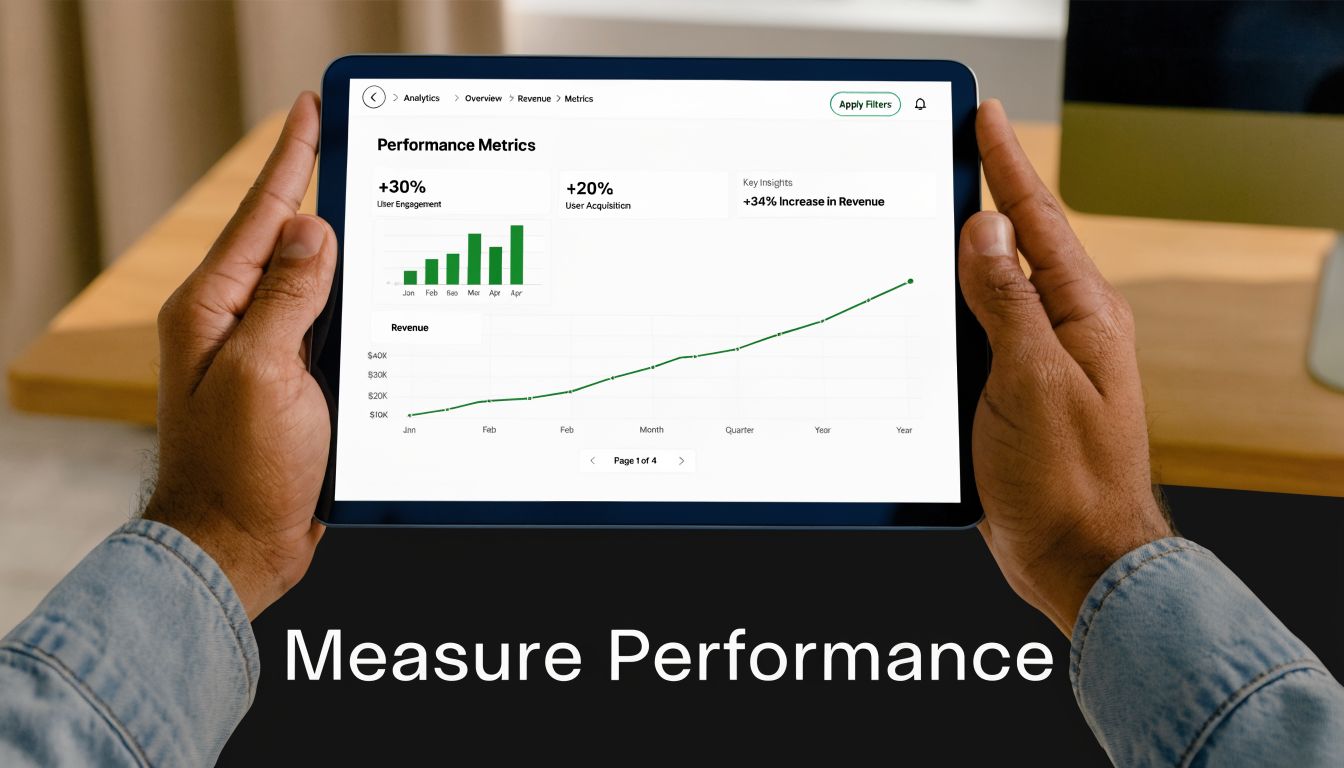
More listings do not mean better results. Useful directory work creates stronger local visibility, better lead quality, and cleaner attribution.
A simple tracking setup is enough for most small businesses:
- UTM-tagged website links: Add tracking parameters to directory URLs so GA4 can separate visits from Yelp, Avvo, Healthgrades, Angi, and other platforms.
- Call tracking with care: Use call tracking only if it is configured without creating public NAP inconsistency across your listings.
- Lead intake notes: Train front desk staff or intake teams to ask, "Where did you find us?" and log the answer in the CRM or scheduling system.
- Branded search trends: Watch whether more people search your business name after your listings improve. That pattern often shows up for firms and practices with stronger review visibility.
- Booked lead quality: A Naples personal injury firm should care less about raw clicks and more about qualified consultations. A Cape Coral roofer should care about estimate requests in the right service area.
For businesses comparing directory leads with other acquisition channels, resources like Best affiliate marketing strategies can help frame attribution questions. Local directories still need to be judged by local lead quality first.
Read the signals correctly
Some directories will never send high click volume. They still influence decisions.
A prospect might find a Fort Myers dentist through Google, check Healthgrades for reviews, visit Facebook to confirm recent activity, then call from the website later that night. In analytics, that path can look messy. In real buying behavior, it is normal.
That is why I look at a mix of direct and assisted signals. Website visits from directory profiles matter. Calls matter. Branded searches, stronger review activity, and better close rates matter too. If your listings are accurate, your staff is hearing platform names during intake, and lead quality improves in the markets you serve, your directory setup is doing its job.
Common Pitfalls and How to Avoid Them
The biggest mistake is treating directory work like a shortcut to rankings. It isn't.
The more useful way to look at directories comes from Serpmaestro's explanation that the primary SEO gain is operational: clean, consistent business data helps search engines connect your business information across the web, while the link itself is usually only a foundational backlink as described in this directory submission guide. That's the right frame for local businesses in Southwest Florida.
The mistakes that waste time and money
Some errors show up constantly:
- Buying bulk submission packages: These usually prioritize volume over relevance and accuracy.
- Ignoring duplicate profiles: Multiple versions of the same business confuse customers and platforms.
- Changing business names across listings: Adding city names or keywords creates inconsistency.
- Leaving old phone numbers live: That breaks trust fast.
- Neglecting reviews: Prospects often judge your responsiveness before they judge your star rating.
A Cape Coral contractor doesn't need hundreds of weak citations. That business needs a tight set of accurate, complete, trusted listings. A Naples attorney doesn't need spammy backlinks. That firm needs clean identity signals and strong profiles where clients compare lawyers.
Cheap directory SEO usually creates cleanup work later.
Quality beats quantity here. Build the right profiles, complete them fully, keep them current, and use them as part of a wider local SEO system that includes your website, Google Business Profile, reviews, and local content.
If your business in Fort Myers, Cape Coral, Estero, Bonita Springs, or Naples needs help cleaning up listings, choosing the right directories, or turning citation work into a practical local SEO system, Polaris Marketing Solutions can help you build a directory strategy that supports real local visibility instead of busywork.