
You paid for a website. It looks polished. The logo is crisp, the colors match your trucks, and the homepage says all the right things. But your phone still depends on referrals, your contact form barely gets used, and most weeks your site feels like a digital flyer nobody reads.
That’s the problem.
A lot of small businesses in Fort Myers, Cape Coral, Estero, Bonita Springs, and Naples don’t have a bad website. They have the wrong kind of website. They have an online brochure when they need a system that creates calls, quote requests, consultations, and booked jobs.
If you’re asking what is a lead generation website, the short answer is simple. It’s a website built to turn visitors into leads instead of just showing visitors who you are. That means every page has a job. Every message points toward action. Every form, offer, and landing page exists to move someone from curious to contactable.
Your Website Looks Great But Is It Growing Your Business
A Fort Myers contractor calls after launching a redesign. The site is clean. It has drone photos, service pages, testimonials, and a contact page. On paper, it should work.
In reality, it doesn’t.
The site gets visits, but very few inquiries. The owner starts wondering whether the traffic is bad, whether SEO is broken, or whether people in Southwest Florida just don’t convert online. Usually the issue is simpler. The site was designed to impress, not to capture demand.
That’s where a lead generation website changes the game. It doesn’t sit there waiting for someone to be fully sold. It gives people a reason to act now, even if they’re still comparing options.
A 2026 lead generation statistics report says 90.7% of marketers rely on websites for lead generation, while 96% of first-time visitors are not ready to make a purchase. That should reshape how you think about your website. Most people who land on your site won’t call on the first visit unless you give them a lower-friction next step.
What most local business sites get wrong
A typical small business site does three things:
- It explains the business: who you are, what you do, where you serve.
- It assumes buying intent: it expects a visitor to be ready to call right now.
- It offers one weak next step: usually a generic “Contact Us” button.
That setup leaves money on the table. Someone with a roof leak concern, a legal question, or an AC problem may be interested but not ready to commit. If your only option is “call now,” many of them leave.
Practical rule: If your website only works for people who are already ready to buy, it’s underperforming.
What a better site does
A real lead gen site works like a front desk, a salesperson, and a follow-up assistant. It gives visitors the right offer at the right stage.
For a local service business, that might mean:
- a service page with a “Request a Quote” form
- a local landing page for a city-specific service
- a guide, checklist, or estimate tool for people still researching
- a thank-you workflow that pushes leads into your CRM for follow-up
That’s how a website starts contributing to revenue instead of just existing online.
Brochure Site vs Lead Generation Machine
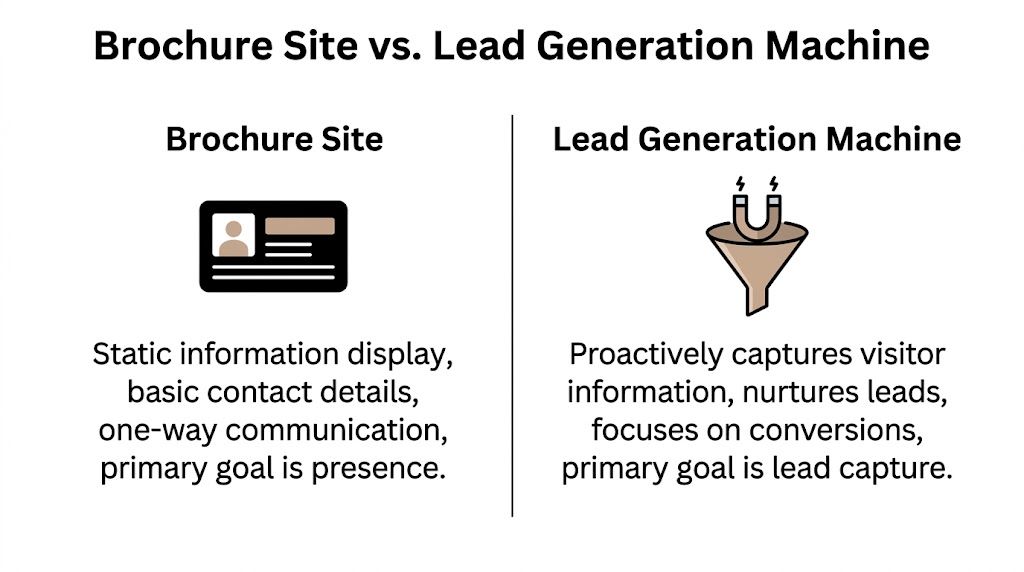
A brochure site is a business card on a screen. A lead generation website is a working sales asset.
That distinction matters because a lot of owners think they have a marketing problem when they really have a conversion problem. They’re sending traffic to a site that doesn’t guide anyone toward action.
The real difference
Here’s the blunt version.
| Website type | Primary purpose | Typical behavior | Result |
|---|---|---|---|
| Brochure site | Show the business exists | Lists services, has basic contact info, waits for the visitor to decide | Looks professional, often produces inconsistent leads |
| Lead generation website | Capture and qualify opportunities | Uses offers, forms, landing pages, CTAs, and follow-up paths | Turns more visitors into calls, forms, and sales conversations |
A brochure site says, “Here’s who we are.”
A lead gen site says, “Here’s why you should take the next step right now.”
Signs you’re running a brochure site
You can usually spot it fast:
- The homepage is vague: It talks about being trusted, experienced, and committed to quality, but doesn’t give a concrete next step.
- The contact page does all the work: The entire site funnels to one generic form with too many fields or no urgency.
- Service pages are thin: They describe the service but don’t address buyer questions, objections, or local intent.
- There’s no targeted offer: No downloadable resource, no inspection request, no consultation prompt, no estimate tool.
- No landing pages for specific searches: Someone searching “roof repair Cape Coral” lands on a general roofing page and has to hunt.
A website that asks visitors to figure out their own path will lose to a website that guides them.
What a lead generation machine looks like in practice
A stronger site is structured around intent. Someone who wants pricing needs a different page than someone researching a problem. Someone in Naples needs a different page than someone in Fort Myers.
That means separate pages, clear calls to action, and forms that match the moment. It also means building the site around measurable actions, not aesthetics alone. Good design matters. Conversion matters more.
If your current site looks great but acts passive, review what a modern conversion-focused build should include in comprehensive web design services for modern businesses. The difference isn’t cosmetic. It’s strategic.
The Anatomy of a High-Converting Lead Gen Website
A lead generation website isn’t complicated, but it does need the right parts working together. Most underperforming sites are missing one of four essentials: the offer, the CTA, the form, or the landing page.
Start there.
Offer first
“Contact us for more information” is not an offer. It’s a placeholder.
A strong offer gives the visitor a reason to raise their hand. For local service businesses, the best offers are practical and low friction.
Examples:
- Roofer: Florida hurricane roof prep checklist
- HVAC company: AC performance audit request
- Family law firm: Florida divorce process guide
- Paving company: parking lot resurfacing estimate worksheet
- Cleaning company: office cleaning scope checklist
These work because they fit the buyer’s real concern. They also help you capture leads before the prospect is ready to commit.
CTAs need to be specific
Weak CTA: “Learn More”
Better CTA: “Get Your Roof Repair Estimate”
Weak CTA: “Submit”
Better CTA: “Request My AC Inspection”
Your CTA should answer one question fast: what does the visitor get if they click?
Use action plus outcome. Keep it concrete. Put it high on the page, repeat it lower on the page, and make sure it matches the page intent.
Forms should reduce friction
Most local business forms ask for too much too early. Full name, company name, phone, email, service type, budget, timeline, address, referral source, project description. That’s not qualification. That’s abandonment.
A better approach is to ask for the minimum needed to start the conversation, then gather more detail later. According to technical benchmarks on multi-step forms, multi-step forms can increase submission rates by 20-40% compared to traditional single-step forms.
A practical example:
- Step one asks what service is needed.
- Step two asks where the project is located.
- Step three asks for name, email, and phone.
That feels easier because the visitor is making small decisions instead of facing a wall of fields.
Don’t confuse more form fields with better lead quality. Better page intent usually does more filtering than a longer form.
If you want a deeper look at improving form flow, CTA placement, and page structure, this guide on how to improve website conversion rates is worth reviewing.
Landing pages do the heavy lifting
Your homepage shouldn’t carry your whole marketing strategy. Dedicated landing pages exist to match a specific traffic source, keyword, or offer.
A proper landing page includes:
- a headline that matches the visitor’s search or ad
- a clear local promise
- proof points like reviews, service area relevance, or process detail
- one main CTA
- a focused form
- no unnecessary distractions
For example, don’t send Google Ads traffic for “Naples emergency AC repair” to your generic services page. Build a Naples emergency AC repair landing page.
If you work in a niche that depends on lead routing and quick qualification, there’s useful crossover thinking in this piece on lead generation software for real estate. Different industry, same lesson: speed, routing, and clean intake matter.
A short visual walkthrough helps here:
Simple before-and-after fixes
| Element | Weak version | Stronger version |
|---|---|---|
| Offer | Free consultation | Hurricane readiness checklist for Fort Myers homeowners |
| CTA | Contact us | Book your on-site estimate |
| Form | 9 required fields on one page | Short multi-step request form |
| Landing page | General service page | City and service-specific landing page |
That’s what turns a decent-looking site into a lead engine.
Lead Generation Examples for Southwest Florida Businesses
Generic advice falls apart when it hits a real local market. Southwest Florida buyers search by city, by service, and by urgency. If your site doesn’t reflect that, you’ll lose calls to a competitor that does.
Example one, Fort Myers roofer
A roofer wants more residential repair leads after storms. The weak approach is one roofing page, one contact form, and a hope that SEO handles the rest.
The stronger approach is a funnel.
Someone searches for storm-related roof help in Fort Myers. They land on a local page built for that specific need. The page offers a storm damage inspection request and a simple intake form. If the visitor isn’t ready, the page also offers a homeowner checklist on signs of hidden roof damage after severe weather.
That creates two lead paths:
- Ready now: inspection request
- Researching: checklist download followed by follow-up
The page should also reinforce service area relevance, explain what happens next, and make calling easy from mobile.
Example two, Naples family law attorney
A family law attorney shouldn’t send every visitor to a generic practice overview page. Search intent is too specific.
A better flow starts with a landing page tied to a service, such as divorce consultation in Naples. The page speaks directly to the concern, explains the consultation process, and offers a downloadable guide that helps someone understand the early steps in a Florida divorce matter.
That visitor may not be ready to schedule a meeting today. But they may be willing to download the guide, submit their details, and enter follow-up.
The best local lead generation systems give buyers two ways to convert. One for people ready to talk now, and one for people who need a little more trust first.
Why local page depth matters
A lot of owners resist building many landing pages because it feels repetitive. That’s a mistake. Search behavior is fragmented. “Roof repair Cape Coral” and “roof replacement Bonita Springs” are not the same query, and they shouldn’t lead to the same page.
According to landing page benchmarks for targeted service pages, websites with over 30 targeted landing pages can generate up to 7 times more leads than sites with fewer than 5. For a local business, that means building pages around service and city combinations.
For example:
- Roofing: Fort Myers roof repair, Cape Coral roof replacement, Bonita Springs storm damage roofing
- Legal: Naples divorce consultation, Fort Myers child custody attorney, Estero mediation lawyer
- HVAC: North Fort Myers AC repair, Cape Coral AC installation, Naples ductless mini split service
If you need more examples of how to structure city-based and service-based acquisition, review how to get more leads.
The point isn’t to create fluff pages. The point is to create intent-matched pages that make it easier for local buyers to contact you.
Measuring What Matters Key Performance Indicators
A lead generation website only matters if you can tell whether it’s working. Too many owners look at traffic and stop there. Traffic alone won’t pay payroll.
You need numbers that answer business questions.
The KPIs that actually matter
| KPI | Business question it answers | What to do with it |
|---|---|---|
| Conversion rate | Are visitors turning into leads? | Improve pages with traffic but weak form submissions or calls |
| Cost per lead | What am I paying for each opportunity? | Compare channels and stop overfunding expensive, weak traffic |
| Lead quality | Are these leads worth following up? | Tighten page messaging or forms if junk leads pile up |
| Visitor-to-lead rate by page | Which pages create inquiries? | Send more traffic to winners and rebuild weak pages |
| Source quality | Which channel sends the best leads? | Shift spend toward SEO, GBP, or ads that produce real conversations |
How to read the numbers like an owner
If one page gets steady traffic and almost no forms, the page probably has a message problem, an offer problem, or a CTA problem.
If you’re getting plenty of leads but few close, the issue may be quality. That often points to poor targeting, weak landing page alignment, or broad ad traffic. It can also mean your site attracts information seekers but doesn’t properly frame who you serve best.
If cost per lead climbs, don’t just cut budget. Check the path. Sometimes the ad is fine but the landing page is weak. Sometimes organic traffic is healthy but visitors hit dead-end service pages with no next step.
A website should answer three questions clearly: how people find you, what they do on the site, and which actions become revenue opportunities.
What to track in plain English
Use Google Analytics and your CRM together. Analytics shows behavior. The CRM shows whether those leads become real conversations.
Track these basics every month:
- Calls from website traffic
- Form submissions by page
- Landing pages with the strongest inquiry rate
- Lead source by channel
- Which leads turn into estimates, consultations, or booked jobs
If you want a useful framework for reviewing the right metrics without drowning in dashboards, this roundup of essential lead generation KPIs is a solid reference.
A pretty website hides problems. Good tracking exposes them.
Your Quick-Start Implementation Checklist
Most business owners don’t need a complete rebuild to get traction. They need a smarter setup. Start with the basics that directly affect calls and form submissions.
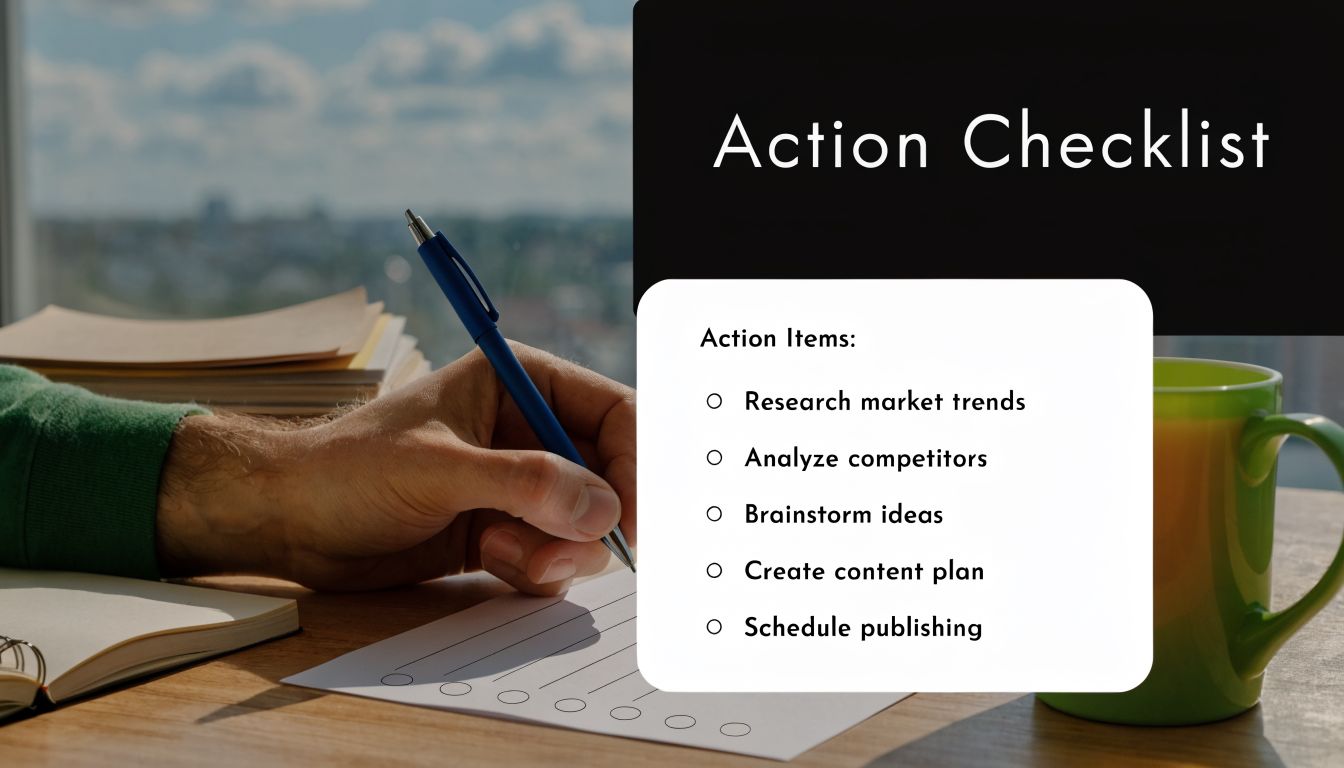
Five moves to make this month
Choose one primary offer
Pick the action you want most. Quote request, inspection booking, consultation, downloadable guide, or estimate worksheet. Don’t give every page five competing goals.Rewrite your main CTA
Replace vague buttons like “Learn More” or “Submit.” Use direct CTA language tied to the outcome. “Request a Roofing Quote” beats “Contact Us” every time.Fix your form
Remove fields that don’t help start the conversation. Keep only what you need for first contact. If your service requires qualification, split the form into steps instead of stacking every question at once.Build one dedicated landing page
Don’t start with ten. Start with one high-intent page for one service in one target city. If you’re an HVAC company, that might be “Fort Myers AC Repair.” If you’re a lawyer, it might be “Naples Divorce Consultation.”Set up basic tracking
Make sure you can see form submissions, calls, top landing pages, and source data. If you can’t trace where leads came from, you can’t improve your spend.
A fast audit you can run in one sitting
Ask yourself these questions:
- Does every core service page have one obvious next step?
- Does each CTA say what the visitor gets?
- Does the page match the keyword or ad that sent the visitor there?
- Can a mobile user call or submit a form without hunting?
- Are you capturing leads who aren’t ready to buy today?
If you answered “no” to several of those, your website probably isn’t acting like a lead generation website yet.
The easiest win
The fastest upgrade for many local businesses is this: create one city-specific service page with one clear offer and one short form.
That won’t solve everything. But it will tell you a lot. If it starts producing better inquiries than your generic pages, you’ve got proof of direction.
Then build from there.
How Polaris Drives Local Leads for Fort Myers Businesses
Most lead generation advice online is written for broad markets. It talks about funnels, automation, and content at a high level, then ignores the reality of local buying behavior. That’s why so many small service businesses end up with websites that sound polished and still don’t generate enough calls.
Local businesses need local intent built into the system.
That means service pages tied to real search demand in Fort Myers, Cape Coral, Naples, Estero, and Bonita Springs. It means Google Business Profile optimization, review strategy, local citations, strong mobile UX, and landing pages that reflect how people search when they need help nearby.
That local angle matters. According to a BrightLocal summary referenced in ActiveCampaign’s glossary, 76% of local searches lead to a call within 24 hours, yet many SMB sites still aren’t optimized for local intent. That’s exactly where businesses lose ready-to-buy leads.
What a smart local system includes
For Southwest Florida service businesses, a working lead generation setup usually includes:
- Location-specific service pages: not one broad service page for every town
- Google Business Profile alignment: categories, services, reviews, and landing page relevance
- Clear mobile conversion paths: tap-to-call buttons, simple forms, visible trust signals
- Real follow-up infrastructure: leads routed into a CRM, not buried in an inbox
- Content built around local problems: not generic blog posts that could belong to any city in the country
Why execution matters more than theory
A business owner doesn’t need another vague promise about visibility. They need a website that supports revenue.
That requires practical decisions. Which services deserve dedicated pages first. Which cities matter most. Which offer will pull the best leads. Which traffic sources are worth funding. Which pages are leaking opportunity.
Experience with small business operations is crucial. If you’ve run a service business, you look at websites differently. You don’t just ask whether the site looks good. You ask whether it helps the owner book work at a cost that makes sense.
That’s the standard.
If your website looks professional but isn’t producing enough calls, quote requests, or consultations, Polaris Marketing Solutions can help you turn it into a real lead generation system built for Fort Myers and the surrounding Southwest Florida market.