Click It Social is associated with a Las Vegas agency that started in 2014 and has expanded under the ClickIt Digital brand. Evaluate the broader service stack, not a standalone social-media tool.
You may be searching from a very practical place. Your website needs attention, your social pages look inconsistent, and local competitors keep appearing ahead of you. Then you type “Click It Social” into Google and find a mix of brand names, company profiles, service descriptions, and local listings that don't immediately answer the question: What would I be hiring?
That uncertainty matters. A small business owner shouldn't approve a proposal until the provider's current brand, deliverables, reporting, and local-market capabilities are clear. The public record points to an agency evolution rather than a simple software product, so the hiring decision should compare managed marketing support against DIY tools, freelancers, and a Southwest Florida agency with local accountability.
What Click It Social Means in 2026
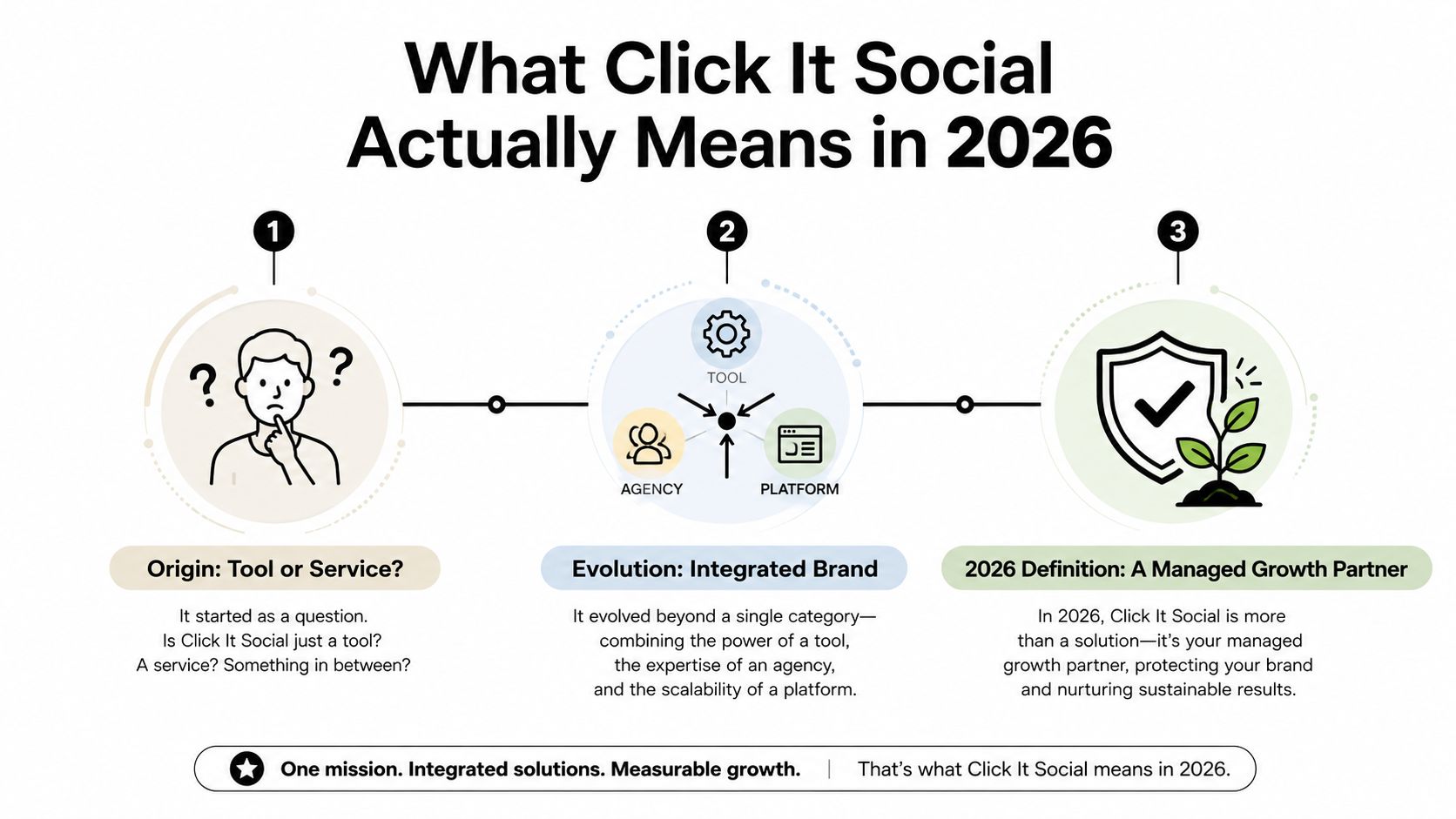
The name can send a small-business owner toward the wrong buying question. Click It Social sounds like a scheduling platform or social-media management application, yet public company materials describe an agency that began in Las Vegas in 2014 and later expanded into web development, SEO, content creation, paid advertising, and AI under the ClickIt Digital brand (ClickIt Digital's company history).
Assess the provider as a broader digital marketing partner. The relevant decision covers who handles social publishing, website work, search visibility, creative production, advertising, and related services, along with how those services are coordinated.
Start with the identity question
Use this sequence before contacting anyone:
- Confirm the operating brand. Ask whether your agreement would be with ClickIt Social, ClickIt Digital, or another business entity.
- Request the current service menu. Do not assume the original social-media positioning describes today's engagement.
- Separate included services from add-ons. Website work, SEO, paid ads, video, and AI workflows may sit outside a basic social package.
- Identify the person responsible for execution. A broad menu has value only when a specific person manages the work.
- Define the reporting relationship. Ask which leads, calls, form submissions, rankings, and campaign actions will be reviewed.
An independent ClickIt Social company profile on LinkedIn lists website design and development, SEO, social media management, 4K drone aerial photography, and Google 360-degree virtual tours. That information supports evaluating the brand through its wider visibility services rather than social posting alone.
For a Southwest Florida owner, the practical choice may be a DIY stack, a remote branded agency, or a local provider such as local social marketing support from Polaris Marketing Solutions. Compare each option on local accountability, execution, and reporting.
Practical rule: Do not buy the keyword. Buy a clearly defined outcome, delivery process, and reporting system.
The Service Stack Behind the Click It Social Name
The public service mix spans several layers, and each layer solves a different business problem. Social media management sits closest to the original Click It Social identity. It can involve planning posts, creating captions and visual assets, publishing across selected platforms, monitoring engagement, and maintaining a consistent brand presence.
That work is useful, but it doesn't replace a website or local search strategy. A pressure-washing company may need social content that shows completed work, while its website needs service pages, clear calls to action, and location relevance. A med spa may need educational content, appointment-focused landing pages, and paid campaigns that reach a defined audience. Social media is one channel inside that system.
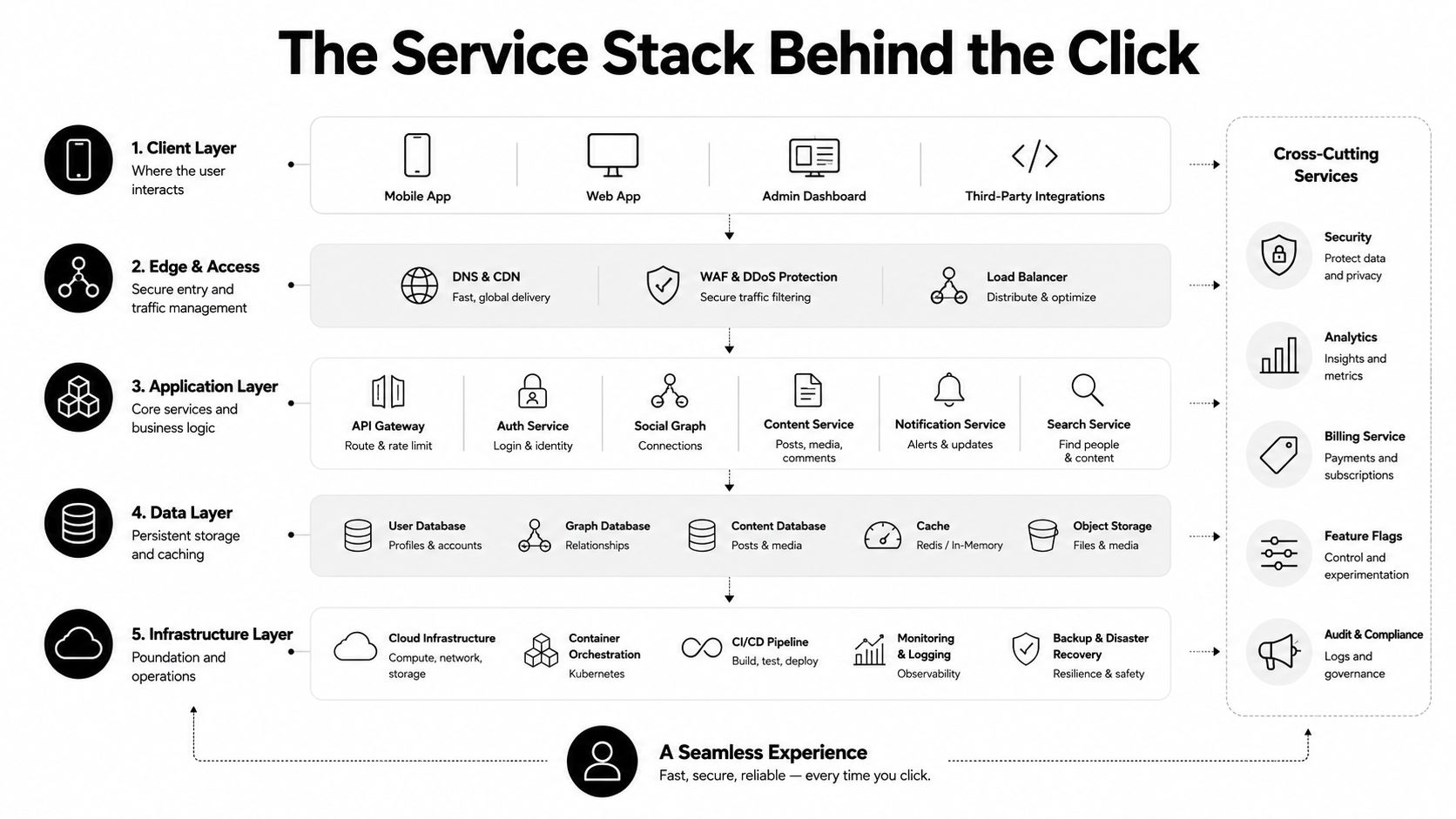
What belongs inside the wider stack
- Website design and development: This is the conversion layer. It includes the pages visitors use to understand an offer, trust the business, and request contact.
- SEO: Search optimization helps align site content with the questions and locations that matter to the business. Ask whether the work includes technical improvements, service pages, location pages, and measurable reporting.
- Content creation: Content may include written material, graphics, photography, video, and campaign assets. You should ask who supplies raw footage and who owns the finished files.
- Paid advertising: Paid media can distribute offers faster than organic posting, but it needs audience definitions, landing pages, tracking, and ongoing optimization.
- Drone aerial photography and Google 360-degree virtual tours: These are specialized visual assets listed in the independent company profile. They may fit real estate, hospitality, construction, venues, and location-dependent businesses particularly well.
- AI-related workflows: ClickIt Digital materials mention AI as part of the expanded offering. Ask how AI is used, who reviews the output, and whether your brand voice and factual standards are protected.
The broad menu is an advantage only when the pieces work together. A proposal that lists every service without assigning priorities is not a strategy. For owners comparing managed work with software, a useful reference is this guide to social media management tools for small businesses. It helps clarify which tasks software can support and which tasks still require human judgment, creative direction, and accountability.
How Click It Social Compares to Other Options an SMB Owner Considers
Small businesses usually compare four categories, not four logos. The categories are point software, freelancers, multi-service remote agencies, and local agencies. Each can work, but they place different responsibilities on the owner.
Point software gives you control and predictable access to publishing features. A tool such as Hootsuite may help organize posts, approvals, and scheduling, but it won't automatically create a complete local SEO plan, capture original creative, rewrite a weak service page, or explain why inquiries aren't converting. A neutral 2026 social media tool roundup from Mallary.ai can help you assess software by workflow and business need rather than by brand recognition.
A freelancer may offer stronger personal attention and lower operational complexity. The tradeoff is capacity. One person may be excellent at captions but unable to handle technical SEO, web development, paid advertising, photography, and reporting at the same level.
The comparison that matters
| Option | Best fit | Main strength | Main consideration |
|---|---|---|---|
| Point software | An owner or employee who can execute | Publishing control and workflow support | You still own strategy, production, and analysis |
| Freelancer | A focused project or one specialist need | Direct communication and flexible creative help | Coverage may be narrow |
| Remote multi-service agency | A business seeking several digital capabilities | Broader service coordination | Confirm who executes the work and how local targeting is handled |
| Local agency | A business dependent on a specific service area | Local context, faster feedback, and direct accountability | May not offer every specialized production capability |
Click It Social's documented mix places it closer to a multi-service agency than to point software. That makes it relevant when you need a website, SEO, content, advertising, and social support under one relationship. It may be less suitable if you only want a simple scheduling tool or a single one-off creative task.
Before signing, use a structured guide to choosing a digital marketing agency and insist on answers about ownership, approvals, access, cancellation terms, reporting, and lead tracking. The cheapest option is often the one that leaves the most work with the owner.
A Realistic Southwest Florida Small Business Scenario
Consider a Cape Coral pressure-washing operator who searches “Click It Social” after noticing that competitors have stronger social profiles and more polished websites. The owner wants more calls, but doesn't have time to write posts, collect project photos, monitor comments, update service pages, or evaluate advertising results.
A discovery call should begin with business facts, not a catalog of platforms. The owner should explain the services offered, the neighborhoods served, seasonal demand, average customer questions, and the difference between a valuable lead and a poor-fit inquiry. The agency should then identify whether the immediate need is social consistency, a website conversion problem, search visibility, paid demand generation, or a combination.
What the first engagement might include
During the early phase, the provider could create a content direction around before-and-after work, surface cleaning, driveway maintenance, and property preparation. Website and SEO work could clarify service pages and geographic coverage, while paid media might promote a focused offer if tracking is in place.
The owner should receive a practical reporting conversation, not a vanity dashboard. Ask to review:
- Published work: Which posts, pages, videos, or campaign assets were completed?
- Audience response: Which topics generated meaningful inquiries or conversations?
- Lead activity: Which calls, forms, messages, or booked estimates can be traced to marketing?
- Next actions: What will change based on the evidence?
Friction usually appears when the owner expects local market understanding but receives generic content. A post that says “Keep your property looking great” could fit any city. A useful asset should reflect the company's actual services, customer concerns, service radius, and sales process.
This scenario doesn't prove a guaranteed result. It shows why the proposal must connect each deliverable to a business task. If the agency can manage several channels but can't explain how a Cape Coral homeowner moves from a post or search result to a booked estimate, the stack is broader than the strategy.
When a Local Southwest Florida Agency Is the Better Fit
A remote agency can be a sensible choice when you need a broad service stack, specialized visual production, or a single provider for web, content, SEO, paid ads, and social work. The ClickIt Digital materials describe that expanded model, and the LinkedIn profile adds drone photography and Google 360-degree virtual tours to the public service picture. Those capabilities may matter to businesses whose sales depend on visual presentation or a distinctive physical location.
Local context becomes more important when most customers come from a defined service area. A Fort Myers roofer, Cape Coral cleaning company, Estero dentist, Bonita Springs law firm, or Naples contractor doesn't compete in an abstract national market. Customers search by service and place, compare reviews, inspect business profiles, and decide whether the company appears credible and reachable.
Where local knowledge changes execution
A Southwest Florida partner can build its recommendations around the places the business serves:
- Fort Myers and North Fort Myers: Content can reflect distinct service areas and customer expectations rather than using one generic regional page.
- Cape Coral: A contractor may need neighborhood-focused service coverage and clear travel-area messaging.
- Estero and Bonita Springs: The business may need carefully organized location content that avoids duplicate, thin pages.
- Naples: Reputation, visual presentation, and high-intent service pages may carry significant weight in the buyer's evaluation.
Local SEO work can include Google Business Profile optimization, citation building, review management, location-specific content, and conversion-focused website improvements. These tasks require more than publishing attractive posts. They require accurate business information, a process for requesting and responding to reviews, and reporting tied to calls, forms, and the communities served.
Face-to-face accountability also has practical value. An owner can bring new offers, staff changes, seasonal services, or customer objections to a nearby partner and get those details into the marketing quickly. A remote relationship may still work well, but you should test response times and meeting availability before committing.
Local hiring test: If your customers use neighborhood names, maps, reviews, and local referrals to choose you, local operating knowledge deserves a place in the evaluation.
Choose a remote agency when its specialized capabilities clearly solve your problem and the team can demonstrate disciplined local targeting. Choose a local agency when proximity, community familiarity, and direct collaboration will affect the quality of execution.
A Simple Decision Framework for SMB Owners
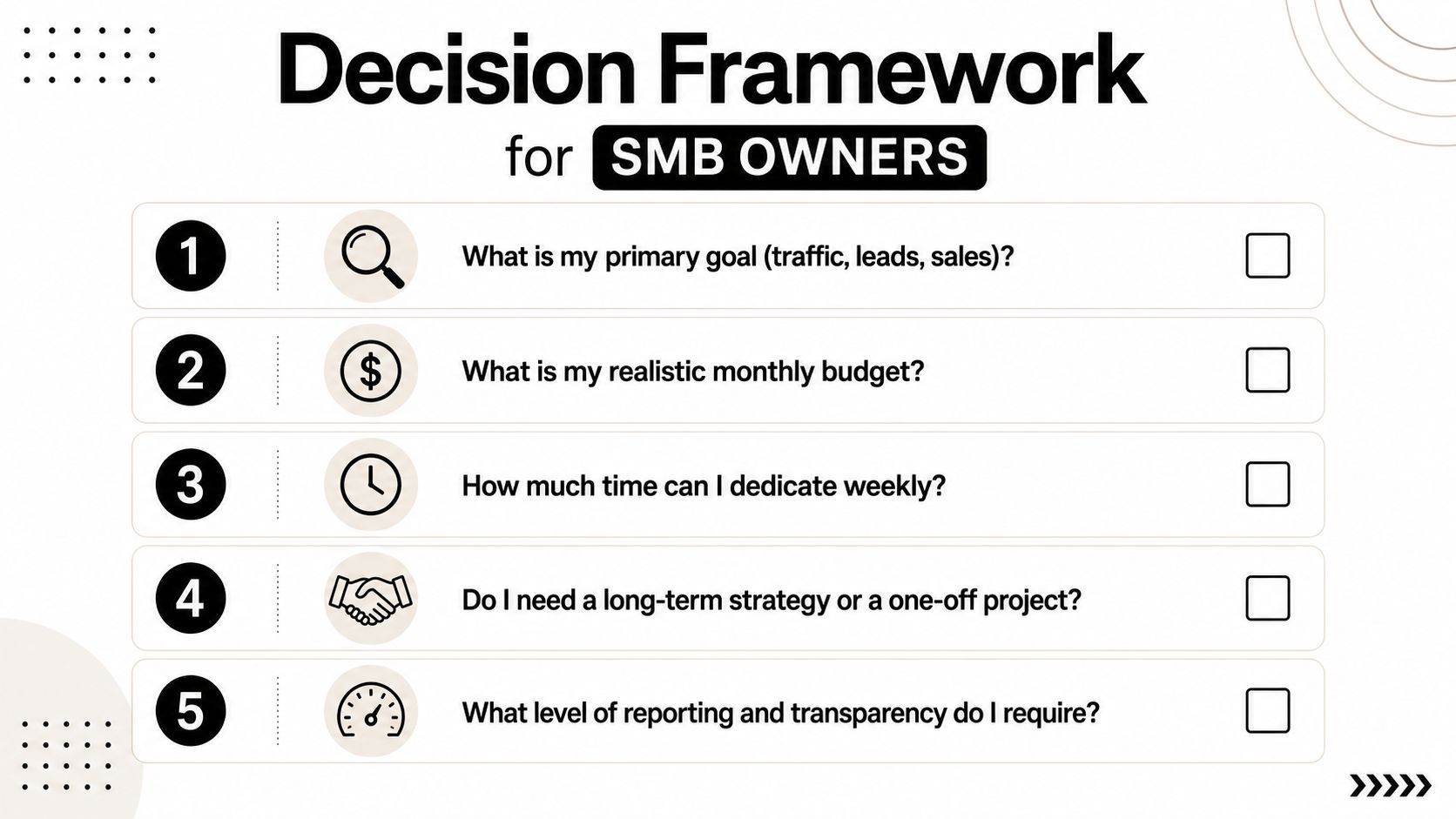
Use five questions before choosing Click It Social, a local agency, a freelancer, or DIY software. Answer them in writing. If your answers are vague, your vendor selection will be vague too.
- What do you need to improve first? Choose one primary objective, such as more qualified calls, stronger local visibility, better social consistency, or a higher-converting website. Don't approve a broad service list before identifying the bottleneck.
- Which channels influence the sale? A home-service company may need search, maps, reviews, and a call-friendly website. A visually driven business may place greater weight on video, photography, social content, and paid campaigns.
- How much owner time is available? If you can plan, create, approve, publish, and analyze content consistently, software may be enough. If marketing repeatedly gets postponed, managed support is more realistic.
- What creative assets do you need? Ask whether the business requires original photography, drone footage, 360-degree tours, video editing, graphics, or mostly text and repurposing. Pay for specialized production only when it supports the buying journey.
- How much contact and transparency do you require? Decide whether you need regular meetings, rapid approvals, campaign-level reporting, lead attribution, and access to accounts and files.
Match the provider to the workload
- Choose DIY software when the business has an internal operator, a defined content process, and enough time to maintain the system.
- Choose a freelancer when you need a narrow skill, a limited project, or direct help with one channel.
- Choose a remote multi-service agency when you want coordinated website, SEO, content, ads, and social services, and you're comfortable managing a remote relationship.
- Choose a local agency when maps, reviews, service areas, community trust, and fast collaboration influence revenue.
Your budget should be sustainable for the time required to evaluate and improve the work. Don't select a package that looks affordable but can't be maintained long enough to produce useful learning. For another perspective on deciding between internal execution and agency support, review Wispra's insights on agency decisions.
Making the Right Call for Your Business
Click It Social is best understood as the earlier identity of a Las Vegas digital operation that has expanded into ClickIt Digital. The public materials describe a broader provider covering social media management, websites, SEO, content, paid advertising, AI, and specialized visual services, while independent listings still preserve the older ClickIt Social name (ClickIt Digital's current site). That makes it a reasonable option for owners who want a remote, multi-service relationship and can confirm exactly what the current proposal includes.
Southwest Florida businesses should make a different calculation when local search and community reputation drive demand. If your customers come from Fort Myers, Cape Coral, Estero, Bonita Springs, Naples, or nearby service areas, prioritize a partner that can connect Google Business Profile work, location-specific content, reviews, citations, website conversion, and lead reporting to those markets.
The name search is only the starting point. Your final decision should rest on clear ownership, defined deliverables, realistic communication, local-market competence, and reporting that relates to revenue-producing actions.
Polaris Marketing Solutions provides website design and hosting, local and national SEO, pay-per-click advertising, social media management, and e-commerce support for Southwest Florida businesses. Visit Polaris Marketing Solutions to request a complimentary online analysis and competitor report before choosing your marketing partner.