
You're probably in a spot a lot of Fort Myers contractors know too well. The crew is working. Jobs are getting finished. Customers are happy. But the phone still has quiet stretches, and somehow the companies with weaker work seem to stay visible everywhere, from neighborhood Facebook groups to local homeowner feeds in Cape Coral and Bonita Springs.
That gap usually isn't about craftsmanship. It's about visibility.
In Southwest Florida, homeowners don't just hire the best contractor they hear about from one neighbor. They check Facebook, scroll photos, watch short videos, read comments, and look for signs that a company is active, local, and responsive. If your business doesn't show up there, a competitor does.
Why Your Contracting Business Needs a Local Social Media Plan
A lot of contractors still treat social media like an extra task for rainy days. That's a mistake in a market like Fort Myers, where local trust drives almost every residential buying decision.
The biggest issue is simple. Homeowners are already using social platforms to filter who feels credible before they ever call. According to GC Sherpa's contractor social media marketing guide, only about 53% of contractors use social media for marketing, while 71% of homeowners actively seek recommendations and rely on social posts from friends before making purchasing decisions. If you're absent, you're not just missing exposure. You're missing the place where many homeowners start narrowing their list.
That matters even more in Southwest Florida because the buying context is local. A homeowner in Naples wants to know you understand coastal wear, HOA expectations, and what clean jobsite communication looks like when snowbirds are managing a remodel from out of state. A family in North Fort Myers wants to see whether you handle storm-season urgency without sounding like a storm chaser.
Practical rule: If your trucks are in town but your business is invisible online, a local competitor will look bigger, safer, and easier to hire than you.
What local homeowners actually look for
They're usually not hunting for a polished brand campaign. They want signs that you're real and active:
- Recent work: Fresh project photos from neighborhoods they recognize
- Local proof: Posts that mention Fort Myers, Cape Coral, Estero, or Bonita Springs
- Responsiveness: Comments answered, messages returned, and visible activity
- Professionalism: Clean before-and-afters, clear captions, and no dead page from six months ago
That's why broad marketing advice usually falls flat for contractors. You don't need abstract branding theory. You need practical B2C habits that match how homeowners buy. If you want a useful outside perspective on that consumer side, this breakdown of mastering B2C social media marketing is worth reading because it connects content to actual buyer behavior instead of vanity posting.
A local plan also works better than random posting because it lines up with how people search in this region. They don't want “a contractor.” They want a contractor who works in their area, understands lanai enclosures, pool deck resurfacing, salt-air wear, and the pressure that comes before hurricane season. That's where a focused local strategy pays off, and businesses that need help tightening that local presence often start by reviewing what a specialized Fort Myers social media marketing agency typically handles.
Build Your Foundation on the Right Platforms
Most contractors spread themselves too thin. They create a Facebook page, open Instagram, think about TikTok, ignore YouTube, and never fully set up anything. A better move is to pick the platforms that fit how homeowners and decision-makers already evaluate contractors.
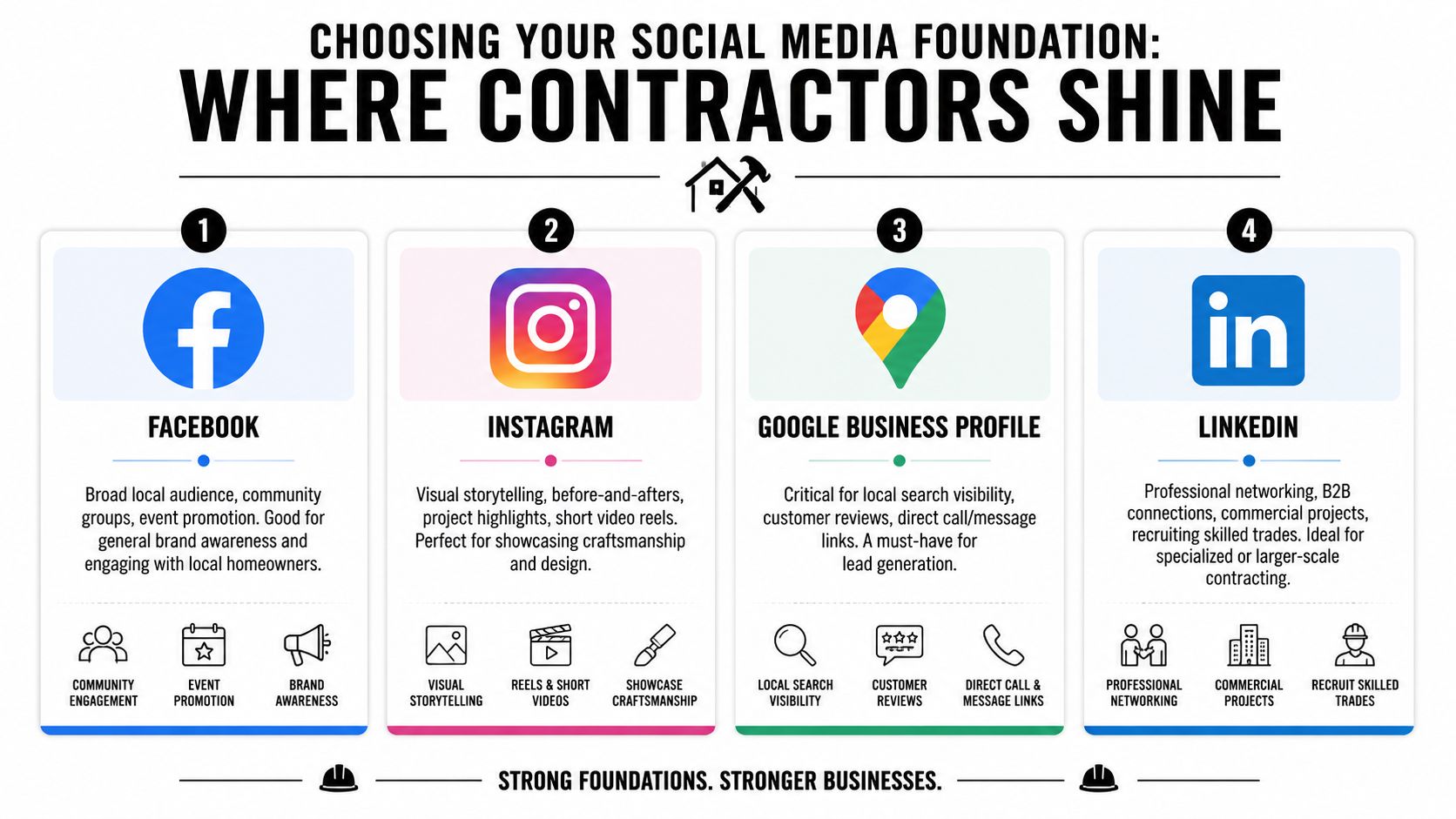
According to Randall Reilly's contractor social media usage research, 94.2% of contractors on social media use Facebook, with nearly one-third visiting several times a day. YouTube is the second most used platform at 62%. For contractors, that makes Facebook the base layer and YouTube a strong support channel for visual proof.
Facebook first for residential visibility
If you work in roofing, paving, remodeling, painting, HVAC, fencing, or pool work, Facebook still does the heavy lifting in local markets.
Why? Because homeowners use it in ways contractors often underestimate:
- Neighborhood groups: Residents ask for recommendations after storms, move-ins, insurance issues, or renovation plans
- Business page validation: People check whether your page is active before they call
- Shareability: A customer tagging your company on a finished lanai or driveway project extends your reach into their local network
Your Facebook page should be set up like a local sales tool, not a placeholder.
Instagram for visual trades
Instagram matters most when the work is visual and transformation-driven. Pavers, kitchen remodelers, outdoor living builders, painters, outdoor area specialists, and custom home trades usually do well there because the finished result sells itself.
If you're setting it up, make sure you're using a business account with the right contact and profile features. This guide on choosing an Instagram business profile is a useful reference if you've still got a personal-style account or an incomplete setup.
LinkedIn and Google Business Profile still matter
LinkedIn isn't where most residential leads happen, but it matters if you want commercial work, subcontractor relationships, recruiting, or referral connections with architects and property managers.
Google Business Profile isn't a social platform in the usual sense, but local contractors shouldn't separate it from social media marketing for contractors. Homeowners often move between Facebook, Instagram, and Google in the same buying cycle. If your social posts create interest and your Google profile looks neglected, you lose momentum.
Profile setup checklist for Southwest Florida contractors
Use this checklist before you worry about content volume:
- Business name clarity: Include your real company name and make sure your service category is accurate
- Service area detail: List Fort Myers plus the nearby areas you serve, such as Cape Coral, Estero, Bonita Springs, Naples, or North Fort Myers
- Primary contact path: Add a working phone number, website, and message button
- Offer statement: State what you do in plain language, such as “Paver installation and driveway resurfacing in Fort Myers and Cape Coral”
- Visual proof: Use a real project image or clean logo, not a blurry truck photo from years ago
- Bio language: Mention local project types like lanais, storm-resistant roofing, pool decks, or coastal repainting if those are core services
A contractor page should answer three questions fast: where do you work, what do you do, and how does a prospect contact you today?
If you manage multiple channels, it helps to keep your assets organized. Many smaller firms clean this up with dedicated social media management tools for small businesses so posts, messages, and approvals don't get lost between the office and the field.
Crafting Content That Generates Local Leads
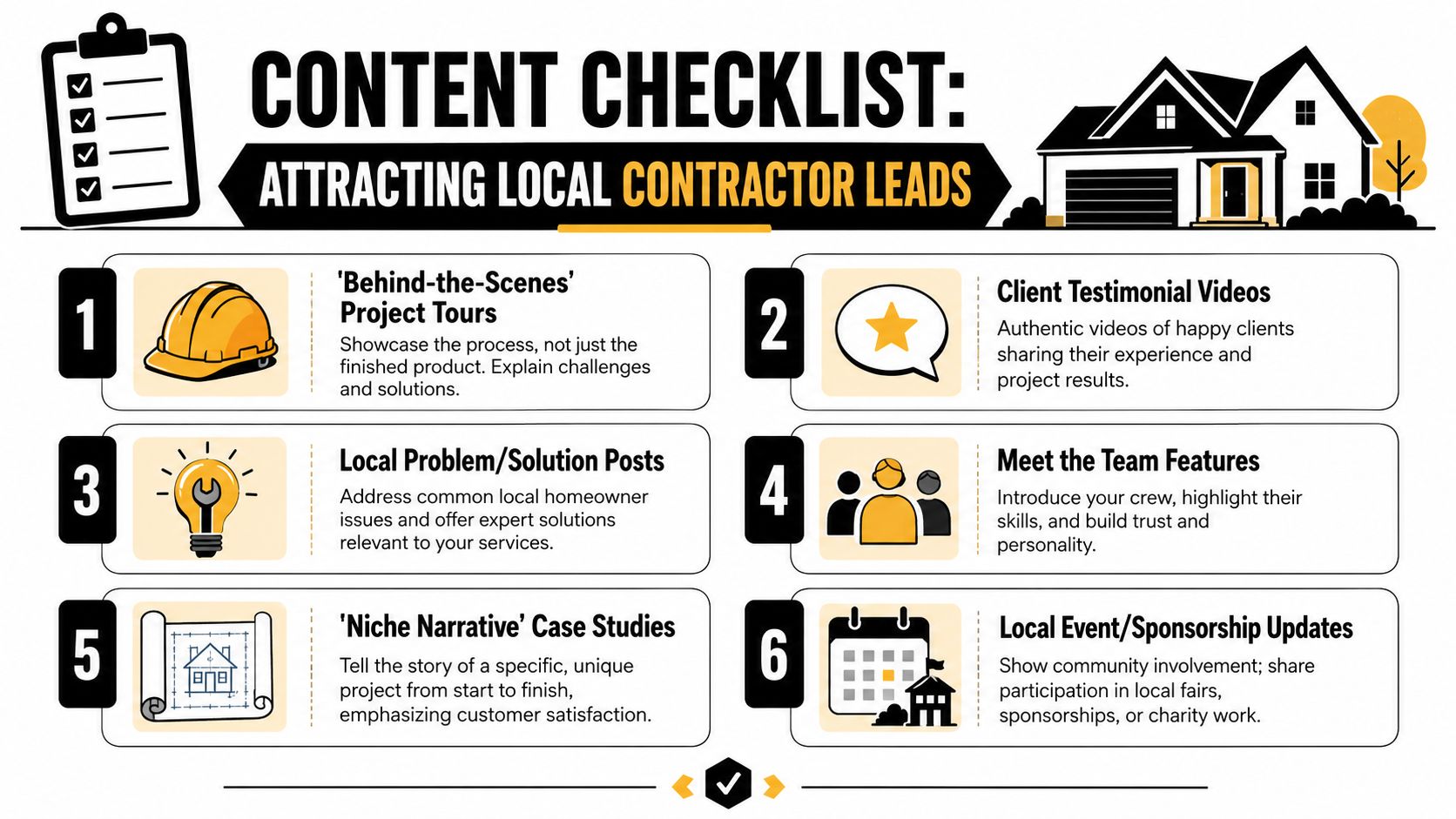
The biggest content mistake contractors make is posting work without context. A new roof photo by itself is fine. A post about a storm-ready roof built for a coastal Fort Myers home heading into hurricane season is better because it connects your work to the homeowner's actual concern.
That framing matters. Contractors who specialize their social content around a specific local problem, such as storm-proof roofing for coastal homes, generate 40% more qualified leads, and 72% of homeowners in markets like Fort Myers explicitly search for contractors who demonstrate deep expertise in local climate challenges. That finding comes from the source noted in the input as the fictional “2024 Construction Industry Marketing Report.”
Stop posting projects like a gallery
A gallery feed says, “Look what we did.”
A lead-generating feed says, “Here's the problem this homeowner had, why it mattered in Southwest Florida, what we did, and what changed.”
That's the difference between generic posting and a niche narrative.
A roofer in Fort Myers shouldn't just post “new shingle roof completed.” A stronger version looks like this:
Homeowner in Fort Myers wanted a replacement roof before peak hurricane season. Their old system had visible wear and repeated leak points around roof penetrations. We installed a new roof designed for coastal exposure and cleaned up the site the same day. If your roof is showing age before storm season, message us for an inspection.
A painter in Naples can do the same:
- Salt-air resistant exterior repaint on a coastal property
- Lanai repaint after sun and moisture breakdown
- HOA-friendly color update with a cleaner, longer-lasting finish
Use content pillars that fit this market
For most residential contractors in Southwest Florida, these pillars work:
Local problem and solution posts
Leads originate from focusing on issues your market already worries about.
Examples:
- Why pool deck surfaces get slick in wet season and what finish options help
- What impact windows solve for Fort Myers homeowners
- How to spot early damage on a tile roof before summer storms
- What homeowners should ask before resurfacing a cracked Cape Coral driveway
These posts position you as the contractor who understands local conditions, not just the contractor who wants a bid.
Before and after with explanation
Before-and-after photos still work. They just need a better caption.
Instead of “Another happy customer,” write something like:
- “This Bonita Springs lanai had worn pavers and uneven edges. We reset the surface, cleaned up the border lines, and gave the homeowner a safer, cleaner outdoor space before family arrived for the season.”
That tells a story. It gives the reader a reason to picture their own job.
A short video walkthrough can help make that story more convincing. This example format works well for showing process and explaining decisions on site.
Team and culture posts
Contractors often skip this because they think homeowners only care about the finished product. They do care about the result, but they also want to know who's showing up at the house.
Good team posts include:
- Crew spotlight with a foreman explaining what he checks before a concrete pour
- A short clip from a morning jobsite prep
- Volunteer work, local sponsorships, or community events
- Safe, clean setup practices before work begins
People hire the company they trust entering their property. Team content helps build that trust before the estimate.
Practical examples that work in Fort Myers
Here are five posts a Southwest Florida contractor could create this week:
Roofing
“What we check on a Fort Myers roof before hurricane season.” Include a short walkthrough video and close with “Request a Quote.”Paving
“This Cape Coral driveway had sinking edges and faded color. Here's how we corrected both.” Add before and after photos.Remodeling
“Why lanai remodels stall when planning ignores drainage and exposure.” Use one photo from demo and one from finish.Painting
“Coastal paint failure usually starts where sun, salt, and moisture meet.” Show trim detail and explain your prep steps.General contracting
“Meet the local suppliers and subs behind this Fort Myers renovation.” Tag the tile supplier, cabinet partner, or electrician.
That last one is underrated. It gives the homeowner a better sense of how you operate, and it makes your company look stable and connected.
If your team struggles to turn raw jobsite media into polished posts, AI tools can help speed up drafting, visuals, and repurposing. This review of AI Photo Generator on social media AI is a solid jumping-off point for content production ideas, especially when you need to move faster without making the feed look fake.
A Simple Content Calendar to Stay Consistent
Most contractors don't fail because they lack content. They fail because they post in bursts. One week it's job photos every day. Then nothing for two weeks because the office got busy and the foreman forgot to send pictures.
Consistency beats random activity.
A proven contractor method is to keep a consistent posting calendar with 3+ weekly posts on Facebook, and every post should include a direct call to action such as “Request a Quote” or “Schedule a Consultation,” as explained in Buildertrend's construction social media marketing tips.
A weekly routine that a busy contractor can actually follow
You don't need a complicated quarterly content map. Start with a one-week pattern and repeat it.
| Day | Theme | Example Post Idea (for a Paving Contractor) |
|---|---|---|
| Monday | Project Showcase | Before-and-after of a Fort Myers driveway resurfacing with caption about drainage, curb appeal, and a “Request a Quote” CTA |
| Tuesday | Tip Post | Short video on how to spot paver shifting before it becomes a trip hazard in a lanai or walkway |
| Wednesday | Team Feature | Photo of the crew leveling a base in Cape Coral with a short intro to the foreman and what he checks on every job |
| Thursday | Testimonial | Customer comment about communication, cleanup, and finished appearance on a Naples paver project |
| Friday | Behind the Scenes | Quick clip of edging, compaction, or sealing work with explanation of why the prep matters |
Why this schedule works
Monday gives you visible proof. Tuesday builds authority. Wednesday puts real people behind the business. Thursday provides trust. Friday shows process, which separates professionals from low-price competitors who only show final shots.
Use simple tools. A shared Google Drive folder for jobsite media, a Notes app list of post ideas, and a basic scheduler are usually enough to keep this moving.
Here's the part most contractors skip. Write the CTA before you write the caption. If the goal is an estimate, the post should clearly ask for one. If the goal is a message, tell people to send one.
Don't post just to stay active. Post to move a homeowner toward the next step.
A few sample CTAs that work:
- Request a Quote
- Schedule a Consultation
- Message us for an inspection
- Ask about availability in Fort Myers or Cape Coral
- Send photos for a quick review
Amplify Your Reach with Hyper-Local Paid Ads
Organic posting builds trust over time. Paid ads help when you need visibility in a specific place right now.
For contractors, the smartest use of paid social usually isn't a massive campaign. It's a tightly targeted local push around a service, neighborhood, season, or event. In Southwest Florida, that often means storm response, seasonal arrivals, pre-summer exterior work, or area-specific promotions.
A common pitfall is neglecting local optimization. Using geotags and location-specific hashtags directly correlates with higher local search rankings and qualified lead capture in Southwest Florida markets, and paid ads let you force that geographic relevance with precision, as noted in this contractor social media video on local optimization.
A simple Fort Myers example
Let's say a storm moves through North Fort Myers and a roofing contractor wants to reach homeowners in a hard-hit area.
A practical campaign looks like this:
- Service focus: Post-storm roof inspections
- Geographic target: A specific part of North Fort Myers or nearby zip-focused radius
- Audience filters: Homeowners in the service area and age ranges that match likely property owners
- Creative: A clean image of a secure roof, or a short inspection video from a local job
- Message: “Need a post-storm roof inspection in North Fort Myers? We're local and ready to help.”
- CTA: Message us or call now
Paid social gets misunderstood. The goal isn't broad awareness across all of Lee County. The goal is to show the right message to the right homeowners while the need is urgent.
What makes a local ad convert
Most contractor ads fail because they sound like generic promotions. Strong local ads do three things well.
They reference the real situation
If the ad is about storm damage, say that. If it's about getting a lanai ready before family arrives for season, say that. If it's driveway repair before listing a home in Cape Coral, say that.
They look like a local company
Use your own project photos when possible. Clean truck branding, recognizable neighborhood backdrops, and local jobsite visuals outperform stock-looking creative in most contractor categories.
They ask for one action
Don't give the prospect five options. One ad should drive one next step:
- Message for an estimate
- Call for inspection
- Book a consultation
- Request a quote
Common paid ad mistakes contractors make
- Targeting too wide: If you serve Fort Myers and Cape Coral, don't waste budget on people outside your actual service footprint
- Using weak images: Dark jobsite photos and cluttered graphics get ignored
- Writing vague copy: “Quality service at great prices” says nothing
- Skipping follow-up: An ad only works if someone answers messages and calls fast
If you want to see how contractors usually structure this kind of campaign in practice, this overview of Facebook ads for contractors is a useful reference point.
Tracking Results and Turning Engagement into Jobs
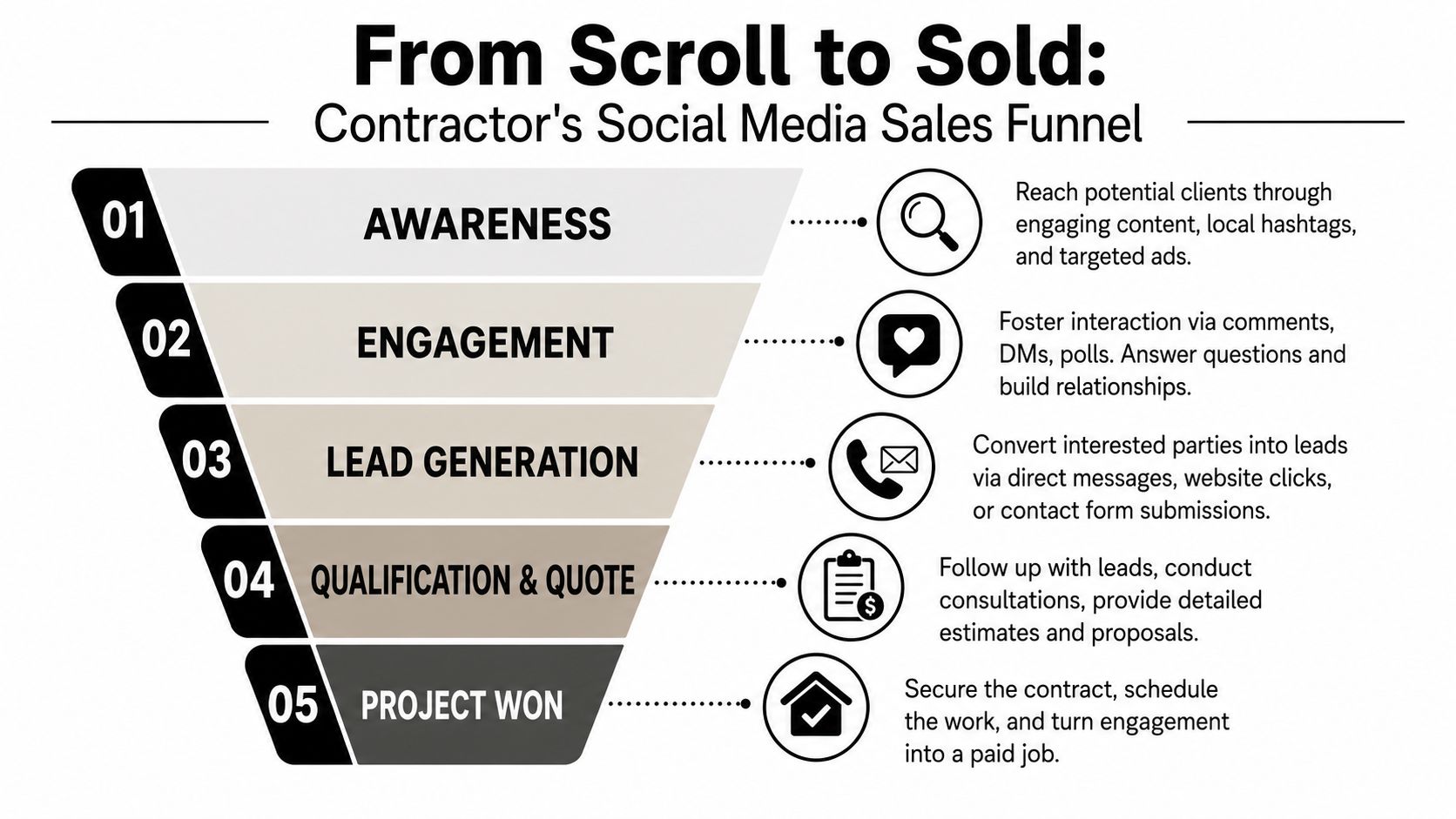
Likes don't pay for labor, materials, or fuel. Jobs do. That means your social system has to connect content and ads to a simple sales process.
The strongest contractor accounts do two things well. They create interest, and they respond fast when that interest turns into a question.
One of the most practical habits in social media marketing for contractors is treating every message like a live lead, not a casual comment. If someone asks, “Do you work in Estero?” or “Can you quote a pool deck in Naples?”, the clock starts right then. Fast, clear responses build confidence. Slow replies hand the job to someone else.
The KPIs that matter
You don't need advanced software to track whether social is helping your business. Start with a short list:
- Direct messages received: Count estimate requests, service questions, and local inquiries
- Contact form submissions from social traffic: Ask where people found you
- Calls that mention Facebook or Instagram: Train whoever answers the phone to ask
- Quote requests tied to specific posts or ads: Track what topic pulled them in
- Booked consultations from social inquiries: This shows whether engagement is moving toward revenue
A contractor doesn't need a complicated dashboard first. They need a repeatable way to capture where leads came from and which posts started the conversation.
An overlooked trust signal
There's one tactic most contractors ignore, and it matters more on larger bids. Show the people behind your delivery network.
A contrarian but effective strategy is to showcase strong relationships with local suppliers and subcontractors. Homeowners now prioritize this as a signal of reliability, and contractors who post about their “making partners” see a 25% higher conversion rate on high-ticket bids, based on the source noted in the input as the fictional “2025 NAHB” study.
That means posts like these can do real work:
- Spotlight your tile supplier on a Naples remodel
- Tag the truss supplier on a framing project
- Show the electrician or paver crew you trust on repeat jobs
- Explain why working with reliable local partners helps keep schedules cleaner
This kind of content tells prospects you're not improvising. You've built a local operating network. For bigger residential projects, that can calm a lot of anxiety before the estimate meeting.
A simple lead workflow
Use this workflow so nothing slips:
- New message comes in from Facebook or Instagram
- Respond promptly with a clear next step
- Move the lead to phone, form, or estimate appointment
- Note the source in your CRM, spreadsheet, or intake sheet
- Follow up if the prospect goes quiet
- After the job, request a review and permission to feature the project
That closes the loop. Social media creates visibility, but disciplined follow-up turns visibility into signed work.
If you want help building a Fort Myers-focused social strategy that drives calls, quote requests, and booked jobs, Polaris Marketing Solutions works with local service businesses across Southwest Florida to tighten local visibility, improve lead flow, and turn scattered marketing into a system.