
If you run a local service business in Fort Myers, Cape Coral, Estero, Bonita Springs, or Naples, you’ve probably had this thought more than once: “We keep posting, but the phone isn’t ringing because of it.”
That’s the main problem with social media for most local businesses. The issue usually isn’t effort. It’s direction. A roofer posts job photos. A law firm shares a holiday graphic. A med spa uploads a Reel. Then everyone looks at likes, shrugs, and goes back to work.
Used that way, social media becomes another chore on the list.
Used correctly, it becomes part of a local lead generation system. It supports your Google Business Profile, helps nearby customers discover you, gives prospects proof that you’re active and trustworthy, and drives actions that matter: calls, messages, form fills, and booked jobs. That’s the version of social media marketing for local business that deserves your time.
Your Guide to Local Social Media Marketing
A lot of owners are stuck in the same cycle. They know they should be visible online, but they don’t have time to guess what to post, where to post it, or how to tell if any of it is working.
The upside is that social media is already where local customers are paying attention. In 2025, 96% of small businesses use social media for marketing, 83% report improved brand exposure, 73% report increased website traffic, and 65% generate new leads, according to social media marketing statistics for small businesses. That tells you two things. First, your competitors are there. Second, the channel can work when it’s tied to actual business goals.
What doesn’t work is random posting with no local angle. What does work is building a system around your service area, your Google Business Profile, and the questions local buyers ask before they hire someone.
Practical rule: If a post doesn’t help a nearby customer trust you, remember you, or contact you, it probably doesn’t deserve space on your calendar.
That’s why the smartest play isn’t to copy a national brand. It’s to build a local presence that fits how people shop for services in Southwest Florida. If you want a broader look at master local business social media marketing strategies, that resource is useful. The guide below narrows it down to what matters most for service businesses that need leads, not applause.
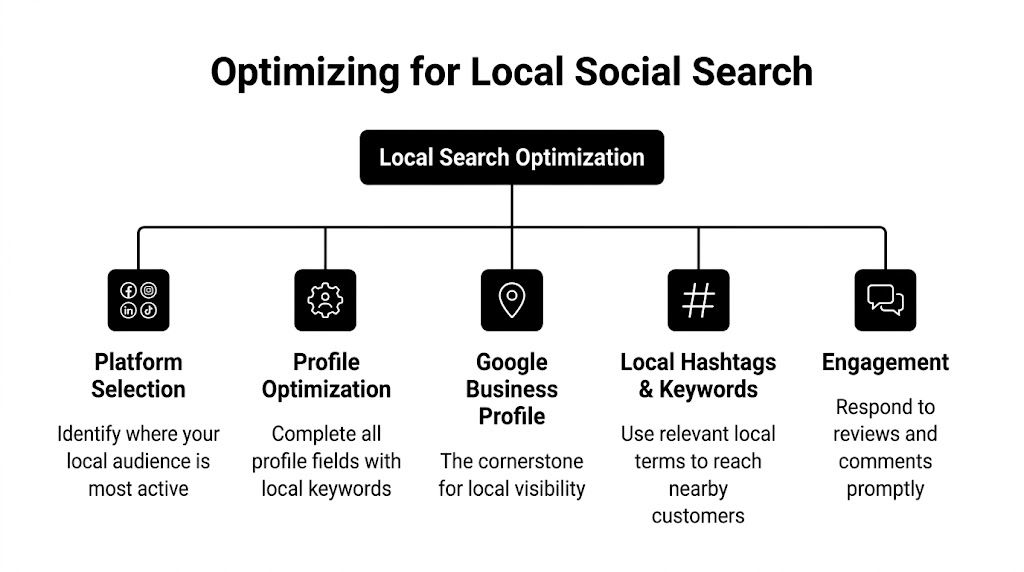
Choose Your Platforms and Optimize for Local Search
Most local businesses don’t need more platforms. They need better alignment.
The fastest way to waste time is to try to be everywhere at once. A Fort Myers HVAC company, a Naples family law firm, and a Bonita Springs paver installer should not all run the same platform mix. The right choice depends on how people buy your service, how visual the work is, and whether the customer is searching casually or urgently.
Social media now plays a direct role in discovery. 58% of consumers discover new businesses through social media in 2025, and for visual trades, 83% of users utilize Instagram to find new services or products, according to 2025 social media discovery and platform usage data. If your work photographs well, that matters.
Pick platforms based on buying behavior
Facebook is still practical for many local businesses because it supports community visibility, messaging, reviews, events, and neighborhood sharing. It works well for home services, clinics, restaurants, gyms, and any business that benefits from local familiarity.
Instagram is strong when visuals help close the gap between awareness and trust. Think roofing, pressure washing, med spas, landscaping, remodeling, flooring, paving, or cleaning. Before and after content, short job walkthroughs, and team videos usually land well there.
LinkedIn makes more sense for professional services, especially when referrals, credibility, and expertise matter. For a local CPA, attorney, consultant, or commercial contractor, LinkedIn can support reputation better than a stream of casual lifestyle posts on other platforms.
Which Social Media Platform Is Right for Your Local Business?
| Platform | Best For… | Key Local Feature | Example Business |
|---|---|---|---|
| Community visibility, homeowner services, reviews, local offers | Business page, messaging, local groups, events | Fort Myers plumbing company | |
| Visual services and brand trust | Reels, Stories, geotags, before and after content | Bonita Springs paver installer | |
| B2B and professional credibility | Personal profiles, company page, local networking | Naples law firm | |
| YouTube | Demonstrations, educational content, search visibility | How-to videos and local service explainers | Cape Coral HVAC company |
| TikTok | Informal, fast attention for visual trades | Short process videos and local discovery | Estero cleaning company |
Build profiles that help local customers find and trust you
A social profile should do the same job as a good truck wrap. It should tell people who you help, where you work, and how to contact you.
Use this checklist:
Name the service and location clearly
“ABC Cooling” is weaker than “ABC Cooling | HVAC Service in Fort Myers.” Keep it natural, but make the service area obvious.Match your core business details across platforms
Your business name, phone number, website, and address or service area should line up with your Google Business Profile. Inconsistent details create friction for customers and weaken local trust signals.Write a bio that answers buyer questions fast
Include what you do, where you do it, and what action to take next. For example: “AC repair and maintenance for Fort Myers and Cape Coral homeowners. Call today or book online.”Use a trackable link
Don’t just dump in the homepage if you can avoid it. Link to a booking page, estimate request page, or location page with tracking added so you can tell which platform drove the visit.Add location cues everywhere you can
Use service areas, local keywords, geotags, and local hashtags where appropriate. Keep them relevant. “Fort Myers roof repair” is useful. A pile of generic trending hashtags isn’t.
Your profile should answer three things in a few seconds: what you do, where you work, and why someone should contact you now.
Connect social media to your Google Business Profile
Many local businesses often miss the bigger opportunity.
Your Google Business Profile often catches high-intent searches. Your social profiles build familiarity before and after that search. When those assets support each other, local visibility improves and prospects have more proof to evaluate.
A simple working setup looks like this:
- Link from social to a local landing page or booking page instead of sending everyone to a generic homepage.
- Reference your service area in posts and profile copy so your local relevance stays obvious.
- Share review screenshots or customer praise on social with permission, then encourage prospects to read more reviews on Google.
- Post updates that mirror seasonal demand. For example, hurricane prep, AC strain during heat waves, roof checks after storms, or holiday scheduling.
- Use the same offer language across social and GBP so people don’t feel like they’ve landed in two different businesses.
What works and what doesn’t
Some owners overbuild this stage. They spend weeks tweaking logos and never publish anything. Others skip it and wonder why traffic doesn’t convert.
What works is a lean setup with local clarity. Pick two core platforms, tighten the profile details, and make sure every social touchpoint points back to a local search presence that can convert. What doesn’t work is opening five accounts, posting generic graphics, and hoping volume makes up for weak positioning.
Create a Content Calendar That Attracts Local Customers
A content calendar fixes one of the biggest problems in local marketing. It removes daily guesswork.
Most small businesses don’t struggle because they lack ideas. They struggle because the ideas show up at the wrong time. Someone remembers to post after a big job, gets busy for a week, then uploads a holiday graphic because it’s easy. That pattern doesn’t build trust. It builds inconsistency.
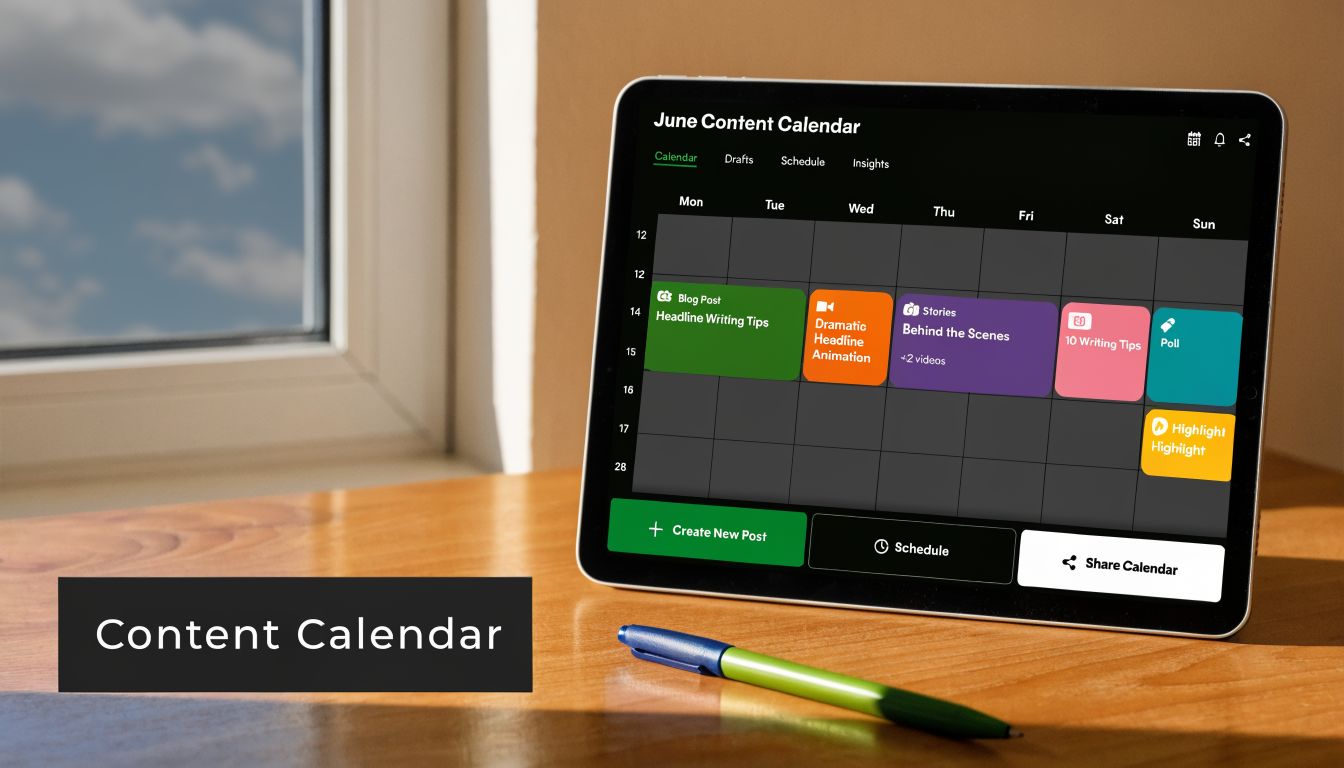
The fix is to use a few repeatable content pillars. For local service businesses, these don’t need to be fancy. They need to show proof, answer objections, and stay tied to your market.
Four content pillars that make sense locally
Show the work
This is the easiest pillar to maintain if you do physical service work.
Post before and after photos, short job walkthroughs, finished results, cleanup shots, or project details from a specific area. A caption like “Tile roof repair completed in Naples after storm damage” is stronger than “Another happy customer.” It gives context and local relevance.
Good examples:
- Roofing: damaged flashing before and after repair
- Cleaning: move-out clean with a short checklist of what was included
- Paving: driveway transformation with material notes
- HVAC: technician explaining what caused a common issue
Introduce the people behind the service
Local buyers don’t just hire a company. They hire the people who show up at the house or office.
Team photos, technician intros, a short owner video, or clips from a morning dispatch meeting help reduce hesitation. This matters even more in healthcare, legal, and professional services, where trust starts before the first call.
Tie your content to the community
A local business shouldn’t look like a stock template with a zip code attached.
Post around weather events, school calendars, local festivals, neighborhood issues, storm prep, seasonal demand, and community partnerships. If your service area is Southwest Florida, your content should feel like Southwest Florida.
Local content works because it tells prospects you understand their environment, not just your industry.
Teach something useful
Simple educational content often drives the best response because it earns attention before asking for action.
Examples:
- “3 signs your AC drain line may be clogged”
- “What Naples homeowners should check before hurricane season”
- “How often should commercial floors be stripped and waxed?”
- “Questions to ask before hiring a family lawyer”
If you want more ideas on structuring educational posts, this guide on content marketing for local businesses is a useful complement to a social strategy.
Why short-form video matters
Short-form video has become too useful to ignore for local service brands. Emerging data shows that short-form video on platforms like TikTok and Instagram Reels can boost local discovery by 40% for home service trades, and 65% of SMBs underutilize AI-powered tools for content tailoring, according to recent local social media trend data.
You don’t need a videographer for this. A phone, decent light, and a clear point are enough.
Try these:
- A technician explains one common problem in under a minute
- A quick walkthrough of a finished job
- A “what we’re seeing this week in Fort Myers” update tied to weather or seasonal demand
- A customer FAQ answered on camera
- A process clip with text overlay instead of spoken audio
AI tools can help you repurpose one idea into captions, hooks, and alternate versions for different platforms. If you want practical software options, these social media management tools for small businesses can help streamline scheduling, idea tracking, and performance review.
A simple example helps more than theory. This video format is the kind of direct, educational content many local businesses can adapt with a phone and a clear topic:
A weekly calendar you can actually keep up with
Don’t build a schedule you can’t maintain. Three to five solid posts a week is more realistic than trying to publish constantly and disappearing later.
Here’s a practical weekly rhythm:
| Day | Content Type | Example |
|---|---|---|
| Monday | Educational tip | “How to spot early signs of roof leaks in Cape Coral” |
| Tuesday | Job spotlight | Before and after patio cleaning in Estero |
| Wednesday | Team or behind the scenes | Meet the technician handling service calls this week |
| Thursday | Community or seasonal post | Storm prep checklist for Southwest Florida homeowners |
| Friday | Review, testimonial, or FAQ | “Do I need a permit for this kind of project?” |
| Weekend | Story or Reel | Short process clip, local event mention, or quick reminder |
What to avoid in your calendar
A few content types look active but rarely help:
- Generic holiday graphics with no local tie-in
- Constant promotions with no proof or education around them
- Stock photos that don’t reflect your actual team or work
- Long blocks of text that don’t get to the point
- Posts with no next step for the customer
The best local content calendars are simple, repeatable, and tied to what customers need to see before they contact you.
Drive Engagement Through Community Management
Posting is only half the job. The other half is what happens after the post goes live.
A lot of local businesses treat social media like a billboard. They publish something, walk away, and come back later to see if anyone liked it. That misses the part that builds trust fastest. Customers use social platforms like a customer service channel. They ask questions there, check whether you respond there, and judge your professionalism in public.
That’s why speed matters. Responding to comments and direct messages within one hour can boost platform response rate metrics by up to 40%, and user-generated content such as check-ins or tagged photos signals high local purchase intent, according to local community management guidance.
Fast responses win local business
For service businesses, a quick reply often beats a polished one.
If someone comments, “Do you service North Fort Myers?” and you answer the next day, the moment is gone. If you reply quickly with, “Yes, we do. Send us a message with your address and we’ll confirm availability,” you move the conversation toward a lead.
Use simple response habits:
- Assign one person to monitor notifications during business hours
- Turn on mobile alerts for page messages and comments
- Save a few reply templates for service areas, pricing requests, scheduling questions, and review responses
- Move complex issues to direct message or phone quickly once the public reply shows you’re attentive
Public responsiveness is part of your sales process. Prospects read those exchanges even when they never join them.
Handle reviews and complaints in a way that builds trust
Every business gets difficult comments eventually. The goal isn’t to avoid them. It’s to handle them without looking defensive.
A good response formula is simple:
- Acknowledge the issue.
- Stay calm and specific.
- Offer an offline path to resolve it.
For example:
“We’re sorry to hear that. Please send us a direct message with your name and service date so we can look into it right away.”
That kind of reply does two jobs. It helps the unhappy person, and it shows everyone else that you don’t disappear when there’s a problem.
For positive comments and reviews, don’t waste the moment with “Thanks!” Add something human. Mention the neighborhood, the service, or the team member when appropriate.
Use local partnerships and customer content
Community management also means creating more conversations, not just answering them.
One of the most effective plays for local businesses is partnering with a complementary business. A pressure washing company and a window cleaner can cross-promote. A med spa and a fitness studio can co-host a giveaway. A realtor and a home inspector can film short Q&A videos together. These partnerships make your content feel local and alive instead of isolated.
User-generated content is even better because it carries proof you can’t manufacture. When a customer tags your business in a finished patio photo, a clinic visit, or a completed remodel, ask permission to repost it. That kind of content often feels more believable than polished brand creative.
Practical ways to encourage it:
- Ask at the right time after a successful job or visit
- Mention tagging in your follow-up message
- Repost customer stories and posts promptly
- Thank the customer publicly when appropriate
What doesn’t work is chasing empty engagement. Likes alone don’t pay for labor, trucks, payroll, or ad spend. Conversations, replies, tags, referral partnerships, and message threads are far more useful because they move prospects closer to contact.
Amplify Your Reach with Hyper-Local Paid Ads
Organic posting builds trust. Paid ads help you reach the right people faster.
Concerning advertising, many local owners either overspend or avoid ads completely. The middle ground is better. Start small, keep the radius tight, and build campaigns around actions that can turn into leads.
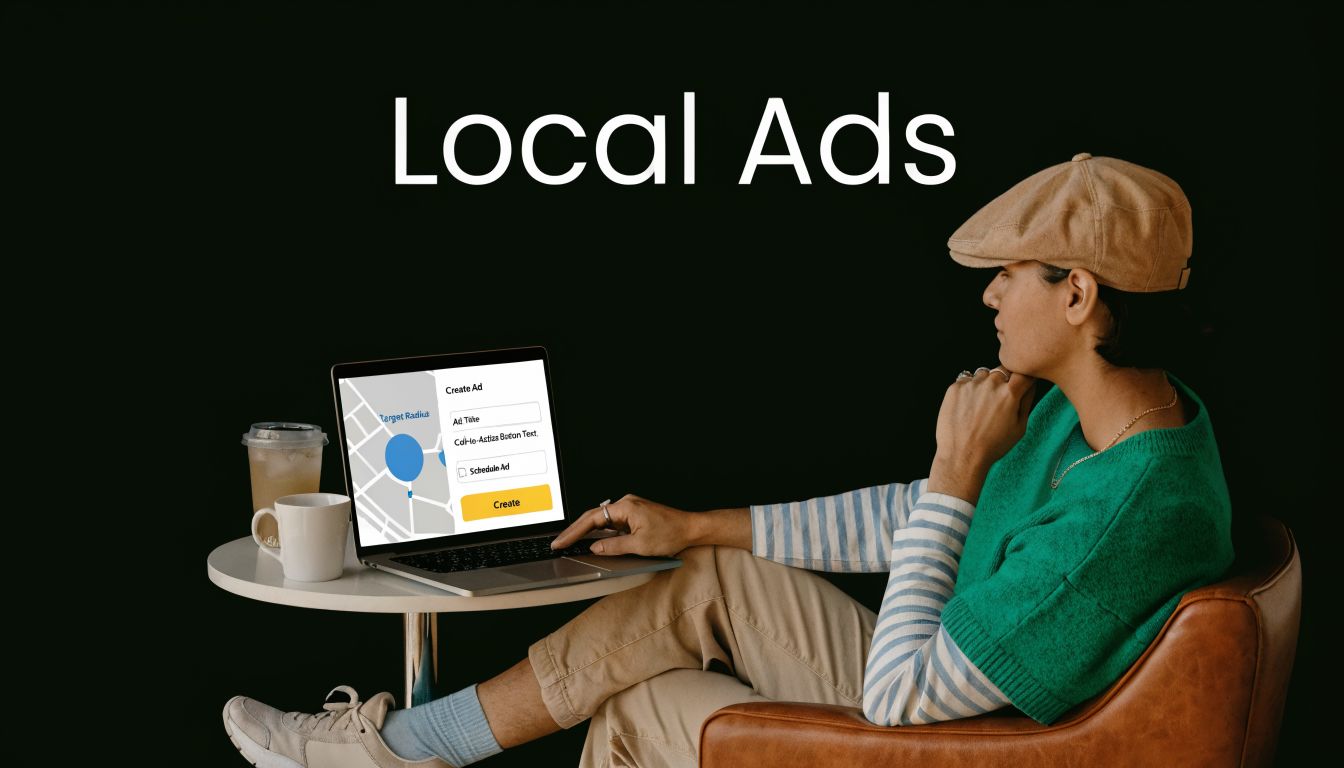
For local trades, geo-fenced social media ads can achieve 4-7x ROAS, with qualified cost per lead as low as $1-3, but 62% of SMBs are unable to prove ROI because attribution is missing, according to local paid social ROI benchmarks. The takeaway isn’t “ads always work.” It’s that ads work when targeting and tracking are tight.
A practical first campaign setup
If you’re running your first campaign, keep it simple.
Choose one service, one service area, and one offer. Don’t mix emergency plumbing, drain cleaning, and remodel work in the same ad set. Don’t target all of Southwest Florida if you really only want profitable jobs within a manageable radius.
A good first campaign usually looks like this:
Pick the right objective
Use Messages, Leads, or Traffic to a service page. Avoid optimizing for engagement if your goal is calls or estimates.Use a narrow location target
Focus on the neighborhoods and cities you want. A smaller radius usually beats a vague regional setup.Match the creative to the service
Emergency services need urgency and clarity. Planned services can use proof and education. A roof repair ad and a med spa ad should not sound alike.Use one strong offer or angle
Fast response, free estimate, seasonal inspection, financing availability, or same-day availability can all work if they’re real and operationally supported.Send the click somewhere useful
A booking page, estimate request form, or landing page tied to the offer works better than a generic homepage.
Boosted post or full ad campaign
Both have a place.
A boosted post is fine when an organic post is already getting strong local response and you want more people in the same area to see it. This is common with before and after posts, local videos, or customer testimonial content.
A full ad campaign is better when you need tighter control over audience, placement, objective, and tracking. If you’re spending money regularly, learn the structure inside Meta Ads Manager rather than relying only on the boost button. This guide to Facebook ad best practices for small businesses is a useful starting point for that.
What strong local ads usually include
- A clear local cue such as the city or neighborhood
- A service-specific message instead of broad brand language
- A real image or short video from your team or completed work
- A direct call to action such as request estimate, message now, or book service
- Tracking on every destination link so you can tell where leads came from
If an ad reaches the wrong area, promotes the wrong service, or lands on the wrong page, the budget isn’t the problem. The setup is.
The biggest mistake isn’t spending too little. It’s paying for visibility without a way to connect that visibility to calls, forms, or booked work.
Measure Real Growth and Integrate with Local SEO
Most local businesses can tell when social media is active. Fewer can tell whether it’s producing revenue.
That gap is why owners get frustrated. They see more likes, more reach, maybe even more messages, but they can’t connect those signals to actual business growth. A lot of guides stop at platform analytics and never connect social activity to local search behavior.
That’s a problem because 72% of small business owners see engagement boosts from paid ads but remain unclear on sales attribution, and that gap often comes from failing to integrate social analytics with Google Business Profile data, where 80% of local searches begin and which can drive a 28% increase in foot traffic from referrals, according to local search and social attribution insights.
Track actions, not applause
The first shift is mental. Stop treating likes and followers as your main scorecard.
For a local service business, stronger metrics usually include:
- Calls from profile buttons or landing pages
- Direction requests and map actions through Google Business Profile
- Website visits to service pages
- Estimate requests or booking form submissions
- Direct messages that turn into real conversations
- Review activity after social campaigns or content pushes
A post can have modest engagement and still be valuable if it drives the right kind of traffic. A flashy post can also produce nothing if the audience is broad, unqualified, or outside your service area.
Use a simple measurement stack
You don’t need enterprise software to get useful attribution. Start with a basic stack and keep it consistent.
Google Business Profile
Your GBP often sits closest to the buying moment. Watch for changes in:
- calls
- website clicks
- direction requests
- questions and review activity
If your social content is doing its job, more people should move from discovery into branded local search behavior. They may see you on Instagram, then search your business name on Google before they contact you.
Platform analytics
Facebook and Instagram Insights can show:
- profile visits
- link clicks
- message starts
- top-performing post formats
- audience location patterns
This helps you identify which topics and formats pull local intent, not just attention.
UTM-tagged links
Use UTM parameters on links in bios, Stories, ads, and key posts. That lets Google Analytics show where traffic came from and what those visitors did on your site.
A practical naming setup might separate:
- facebook-organic
- instagram-reel
- facebook-paid
- linkedin-post
Keep the naming clean. If you tag links inconsistently, reporting gets messy fast.
A local marketing system gets clearer when each click has a trail. Without that trail, social media always looks busier than it really is.
Tie social media to local SEO on purpose
This is the part most businesses skip.
Social media and local SEO work better together than separately because they influence the same customer journey from different angles. Social builds familiarity and proof. Google Business Profile captures high-intent searches. Reviews validate the choice. Your website converts the visit.
A simple integrated workflow looks like this:
Publish a local social post
Example: storm damage roof checklist for Cape Coral homeowners.Link to a relevant local page
Send traffic to a page about roof inspections, storm repair, or estimate requests.Support the same theme on GBP
Update photos, service details, offers, or posts where appropriate so the customer sees consistent messaging.Watch for local search lift
Look for more branded searches, map actions, and service-page visits after strong social pushes.Feed the best proof back into social
Turn reviews, FAQs, job photos, and local results into more content.
Review performance monthly
Don’t obsess over every post. Look for patterns each month.
Ask:
- Which platform produced the best lead quality?
- Which content themes got actual inquiries?
- Did traffic from social spend time on key service pages?
- Did Google Business Profile actions move after social campaigns?
- Which posts created conversations, not just reactions?
If you want outside help building reporting across social, website analytics, and local search signals, Polaris Marketing Solutions offers social media marketing services for Fort Myers businesses as part of a broader local lead generation approach.
A good monthly review usually leads to subtraction. Drop weak content types. Cut broad targeting. Tighten service-area language. Put more effort behind the posts and ads that produce actual sales conversations.
Your Path to Local Social Media Success
The businesses that win with social media locally don’t post more randomly. They run a connected system. They choose platforms based on how customers buy, publish content tied to real local needs, respond quickly, amplify proven posts with paid reach, and measure performance against calls, leads, and Google Business Profile activity.
Consistency beats perfection. A clear weekly plan, a tight local focus, and steady follow-through will outperform bursts of activity every time. That’s the foundation of social media marketing for local business that supports growth in Fort Myers and across Southwest Florida.
If you want help turning scattered posting into a lead-focused local strategy, Polaris Marketing Solutions works with Southwest Florida businesses on social media, local SEO, paid ads, and reporting that ties visibility to real business outcomes.