
You're probably in one of two spots right now. Either you do good work and still aren't getting enough Google reviews to show it, or you've got reviews coming in randomly with no real system behind them. Both are common in Southwest Florida.
A roofer in Cape Coral finishes a job, the homeowner says everything looks great, and then nobody asks for a review. A Fort Myers dentist has happy patients every week, but the front desk only remembers to ask when things are slow. A law firm gets a strong outcome for a client, then misses the best moment to request feedback because the team moves straight to the next file.
That's why learning how to get more Google reviews isn't really about writing one clever text message. It's about building a repeatable process that fits how your business runs. When that process is tight, reviews come in more consistently, prospects trust you faster, and your Google Business Profile starts working harder for you.
Build Your Foundation with an Optimized Google Business Profile
A Fort Myers homeowner gets your review request, taps through, and lands on a profile with old hours, three blurry photos, and no clear list of services. That review ask just got harder. Even if the customer leaves feedback, the next prospect may still hesitate because the profile behind the review does not inspire confidence.
Your Google Business Profile needs to do two jobs before you scale review collection. It needs to reassure the customer you are asking, and it needs to convert the next person who finds you in Maps or local search.
What a complete profile looks like
For Southwest Florida businesses, “optimized” is specific. A roofer in Cape Coral needs storm damage repair, tile roof work, and service areas clearly listed. A dentist in Fort Myers needs current office photos, accepted services, and accurate scheduling details. A law firm needs the right primary category, practice-area context, and business information that matches the website.
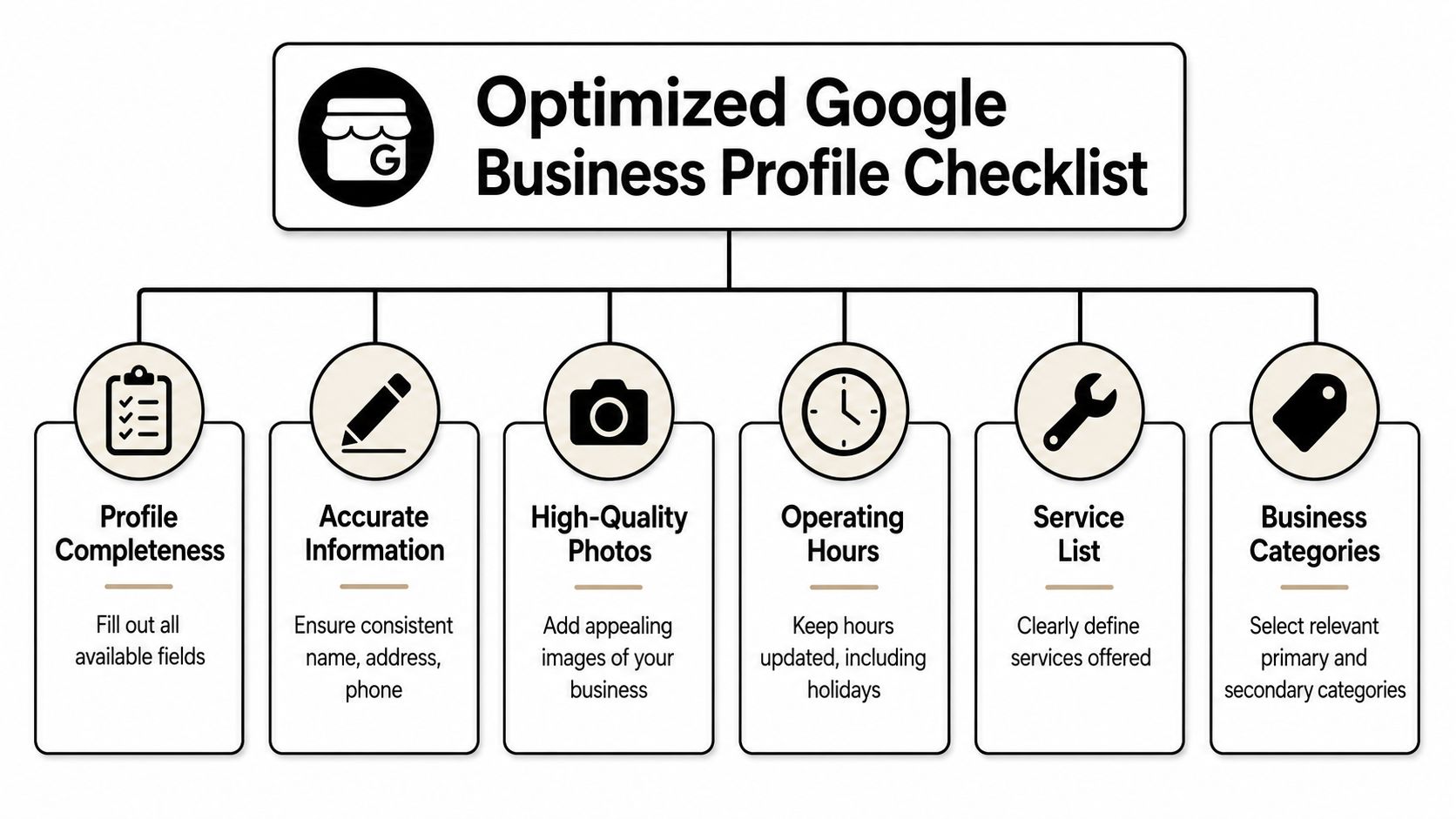
Use this checklist before you push harder on reviews:
- Core business info: Name, address, phone number, website, and hours should match your site and major citations.
- Primary and secondary categories: Choose the main category carefully, then add relevant secondary categories that reflect real revenue lines.
- Services and products: List what you want to be found for. A roofing company should not stop at “roofing contractor” if it also offers roof repair, inspections, maintenance, and reroofing.
- Photos and videos: Add recent exterior shots, interior shots, team photos, and job-specific images. For service businesses, local project photos help.
- Q&A section: Answer common questions before prospects have to call. Cover service areas, insurance, financing, appointment availability, emergency service, and parking if it matters.
- Business description: State what you do, who you serve, and where you work.
A simple rule applies here. If your profile would not persuade a stranger to contact you, it is too early to build a review campaign around it.
What this looks like in Fort Myers
If you run a dental office in Fort Myers, your profile should show the building exterior, the front desk, treatment rooms, staff photos, updated office hours, and the services patients ask about most. If you run a law firm, your categories and description should reflect your actual practice mix, not a vague one-line summary. If you own a roofing company serving Fort Myers, Estero, and Cape Coral, your service area and photos should match the neighborhoods and job types you want more of.
That detail changes how reviews perform. A strong review attached to a thin profile loses some of its selling power. The same review attached to a polished, active listing carries more weight because the business looks established and current.
A practical place to start is this Google Business Profile optimization checklist. Work through every field, fix the weak spots, then build your review process on top of it.
Common profile problems that slow review growth
I see the same issues over and over with local businesses in Southwest Florida. They are easy to miss because the business owner already knows the business. The customer does not.
| Issue | What it signals to customers |
|---|---|
| Old business hours | “I may show up and find the office closed.” |
| Few or low-quality photos | “I cannot tell if this business is active or professional.” |
| Missing services | “They may not handle the job I need.” |
| Unanswered questions | “Getting basic information may take work.” |
For businesses with longer follow-up cycles, this cleanup also makes your post-service outreach stronger. If you send reminders or nurture emails after a job or appointment, these drip campaign examples are a useful reference for structuring that communication without making it feel repetitive.
A polished profile does not get reviews by itself. It does improve the return on every review request you send.
The Art of the Ask When Where and How to Request Reviews
Most businesses don't have a review problem. They have a timing problem.
Historical data from 2020 through 2025 shows that sending review requests within 24 to 48 hours of service delivery can lift successful reviews by 60% to 80%, and SMS can convert up to three times better than email. The same source notes that over 75% of reviews are now written on mobile devices, which is why speed and mobile convenience matter so much, according to Shapo's Google review statistics roundup.
That changes how you should ask. Stop treating review requests like a monthly cleanup task. Ask when the customer is already happy and the experience is still fresh.

Find the moment of highest satisfaction
That moment is different by industry.
For a roofer, it's often when the crew wraps, the site is clean, and the customer sees the finished result. For a dentist, it may be right after a smooth visit when the patient checks out relieved. For a law firm, it usually isn't at intake. It's after a successful consultation, a resolved issue, or a meaningful case milestone.
For multi-step services, the ask gets weaker when it's delayed past the clear win. If the project is complete and the client is pleased, asking days later often feels disconnected.
Ask at the emotional high point, not when it's merely convenient for your staff.
Scripts that actually sound natural
Keep the language short. You're not writing a campaign. You're asking a satisfied customer to do one simple thing.
SMS for a trades business
Hi [Name], thanks again for choosing [Business Name]. We appreciate the opportunity to work on your home. If you're open to it, would you leave us a quick Google review? [Direct Review Link]
Email for a professional service
Subject: Quick favor
Hi [Name], thank you again for trusting us with your matter. If you found the process helpful, we'd appreciate your feedback on Google. Here's the direct link: [Direct Review Link]
Front desk wording for healthcare
- Simple version: “If today's visit went well, would you mind leaving us a Google review? We can give you a quick link.”
- With QR handoff: “If you'd like, this card takes you straight to our Google review page.”
If you want to build this into follow-up sequences, these drip campaign examples are useful for thinking through reminders and message spacing without turning the process into spam.
What works and what usually falls flat
Here's the trade-off. Automation helps consistency, but fully robotic review requests often feel cold. Manual asks feel better, but teams forget them. The best setup is usually a hybrid.
- Best for trades: Technician asks in person, then office sends the text.
- Best for healthcare: Staff member mentions it at checkout, then patient gets a follow-up link.
- Best for professional services: The relationship owner sends the request, not a generic admin inbox.
A broad review strategy only works when the wording matches the customer relationship. If you need a stronger process around timing, templates, and channel choice, this guide on getting more online reviews is a practical companion.
Create a Frictionless Review Process with Links and QR Codes
Customers leave more reviews when the path is obvious. If they have to search your business name, find the right listing, click around, and figure out where to post, many won't bother.
Google explicitly recommends using a link or QR code to remind customers to leave reviews, and the strongest workflow is simple: generate a direct review link, shorten it for sharing, convert it into a QR code, and place it where the customer is already ready to act, as outlined in Google's review sharing guidance.
Build the path once and reuse it everywhere
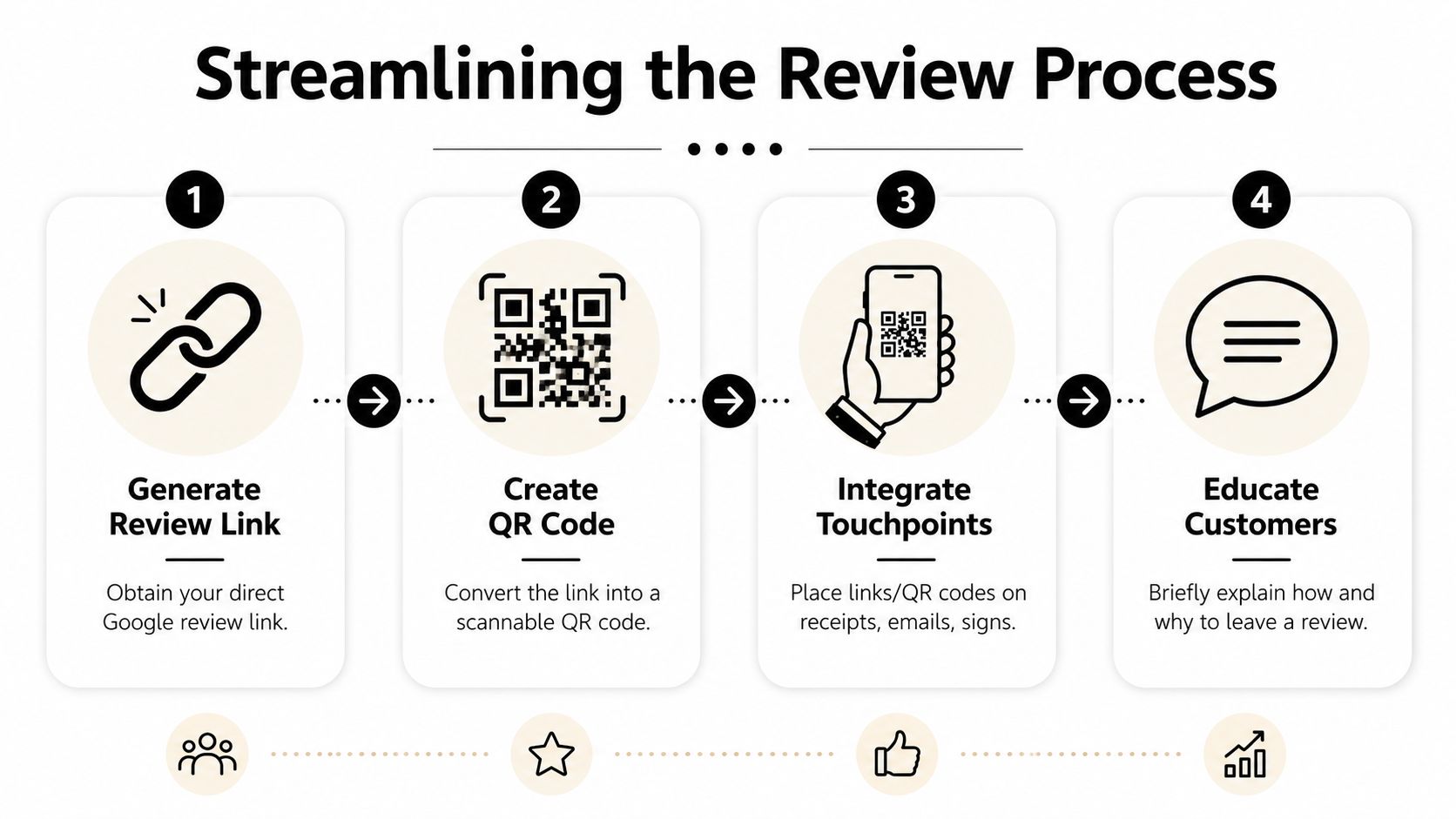
The setup is straightforward:
- Generate your direct review link from your Google Business Profile.
- Shorten the link so it looks clean in texts, emails, and print materials.
- Turn it into a QR code for in-person use.
- Place it at real customer touchpoints where people are most likely to act.
That last part matters most. A QR code hidden on the bottom of a receipt isn't a strategy. A QR code handed to a patient at checkout with a simple verbal prompt is.
For teams that manage assets in spreadsheets, this walkthrough on using a QR code generator with Google Sheets is useful if you want an organized way to create and track codes across staff, locations, or campaigns.
Where to place links and QR codes
Different businesses need different placements. Use the ones that fit how your customers already interact with you.
- Home services: Put the short link in the invoice email and the QR code on the printed job completion sheet.
- Dental and medical offices: Add the QR code to an appointment summary card or checkout sign.
- Legal and professional services: Use the direct link in a personal follow-up email after a milestone.
- Retail or counter service: Place a small sign near payment, then have staff mention it if the customer is happy.
A short explainer helps too. Many customers will review you if they understand that the code goes straight to the review box.
Here's a quick visual walkthrough of the process in action:
What not to do
Avoid these common mistakes:
| Mistake | Why it hurts conversion |
|---|---|
| Sending customers to your generic profile page | Adds unnecessary clicks |
| Using a long, messy URL | Looks clunky in text or print |
| Posting one QR code in a low-traffic corner | Few people notice it |
| Asking without explaining what happens next | Customers hesitate |
The businesses that win here don't use fancy tech. They remove small points of friction until leaving a review feels easy.
Industry-Specific Plays for Southwest Florida Businesses
Generic advice breaks down fast when you try to use it in a real business. The ask that works for a Cape Coral roofer won't sound right coming from a Naples dental office. The timing for a Fort Myers law firm is different again.
Home services in Cape Coral and Fort Myers
A roofing contractor finishes a job in Cape Coral. The project manager walks the customer around the property, answers the last questions, and gets verbal confirmation that everything looks good. That is the ask moment.
The best workflow is simple. The project manager mentions the review in person, then the office sends the text while the customer still has the finished job in mind.
Use wording like this:
Thanks again for trusting us with your roof project. If you have a minute, we'd appreciate a Google review about your experience. Here's the direct link: [Review Link]
If the homeowner commented on how good the finished roof looks, ask for specificity without scripting the review. “If you'd like, mention the crew, communication, or the cleanup. That helps other homeowners.”
This works especially well for visual trades because the customer can connect the request to a visible result. If your business has strong before-and-after work, asking customers to include photos can strengthen the review profile even more.
Healthcare in Naples and Fort Myers
A dental office has a different challenge. Healthcare teams need to keep the ask respectful, quick, and easy to decline.
The front desk is usually the best place to handle it. The patient checks out, the visit went smoothly, and the staff hands over an appointment summary card with a QR code. No long explanation. No pressure.
A good script:
- Checkout version: “We're glad your visit went well today. If you'd like to leave feedback, this QR code takes you right to our Google review page.”
- Follow-up text version: “Thank you for visiting [Practice Name] today. If you'd like to share your experience, here's our Google review link: [Review Link]”
What usually fails in healthcare is overcomplication. If staff have to remember a speech, they won't use it. If the patient has to search for the practice manually later, many won't follow through.
Professional services in Fort Myers
For lawyers, accountants, and consultants, the review ask should come from the person the client trusts most. That often means the principal attorney, lead advisor, or account manager.
A Fort Myers law firm, for example, shouldn't ask for a review immediately after intake just because the CRM says a new matter opened. The stronger moment is after a consultation that clarified next steps, after a resolved issue, or after a meaningful case milestone when the client feels the value of the relationship.
Try this:
Hi [Name], I appreciate the opportunity to work with you. If our team has been helpful so far, would you consider leaving a Google review? Your feedback helps other people in Fort Myers who are trying to choose the right firm. Here's the direct link: [Review Link]
That message works because it feels personal and grounded in a real interaction.
The local pattern that matters
Southwest Florida businesses do best when they tie the request to a specific service moment. Not “sometime after the job.” Not “whenever the office remembers.” A real trigger.
- Roofer: Final walkthrough complete
- Dentist: Smooth checkout after visit
- Lawyer: Clear milestone reached
When you define that trigger by industry, your team stops guessing. That's when review collection becomes consistent.
Master Your Reputation by Responding to Every Review
A Fort Myers homeowner compares two roofers. Both have solid ratings. One profile has recent reviews with thoughtful replies from the owner. The other has months of silence. In practice, the first business usually feels safer to hire.
That is why review responses matter. They are public proof of how your business communicates after the sale, after the appointment, and when something goes wrong.
Why every response has marketing value
Prospects do not read reviews in isolation. They read the customer comment, then they read your reply and make a judgment about how your team operates.
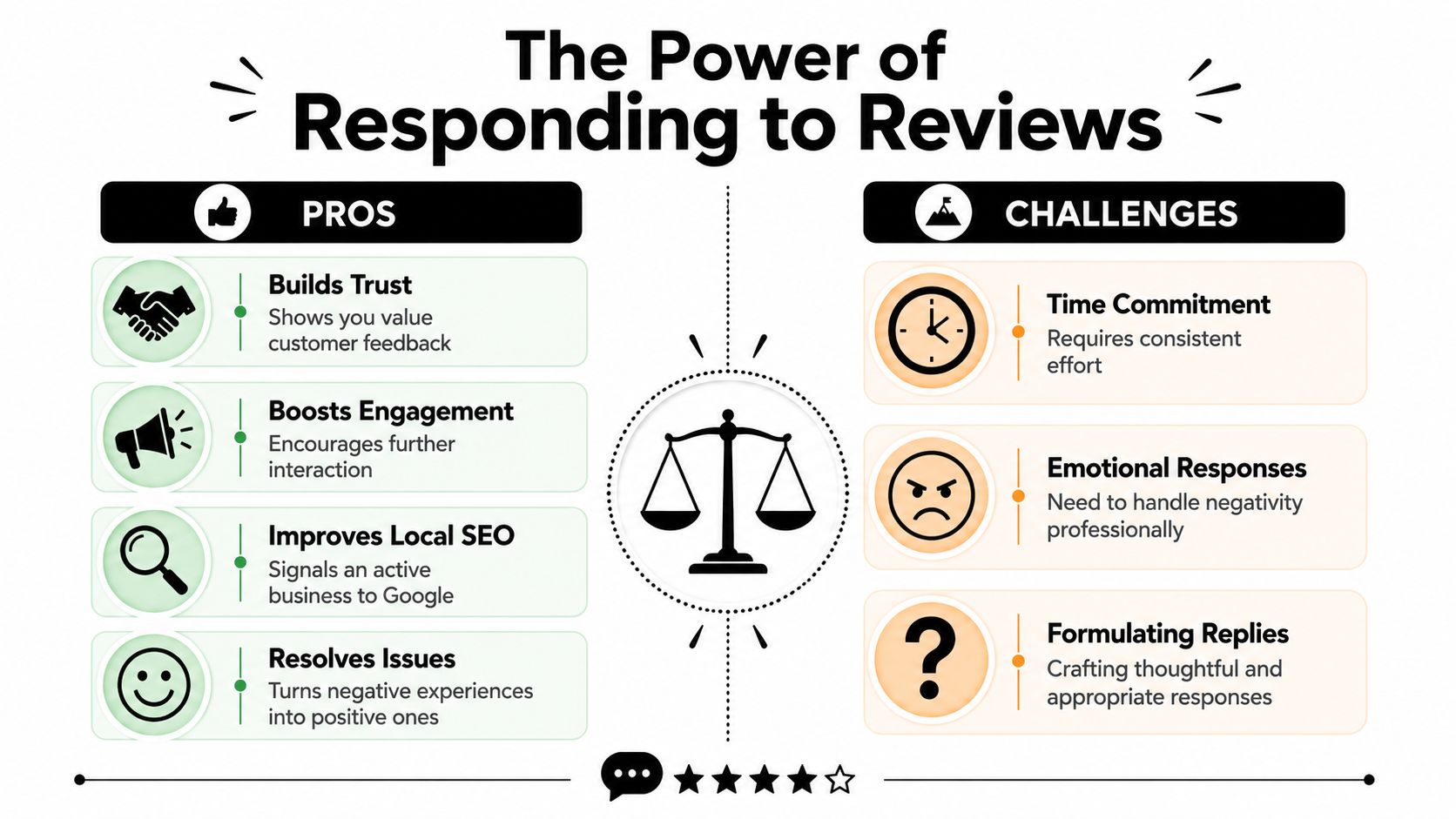
A good response signals that the business is paying attention. A careless one creates doubt. No response at all can make a healthy profile look neglected, especially in competitive Southwest Florida categories where buyers compare several local options in one sitting.
There is a real trade-off here. Responding takes staff time. Ignoring reviews costs trust at the exact moment a prospect is deciding who to call.
Better templates for positive reviews
A short thank-you is better than silence, but it misses the marketing value of the review. The stronger approach is to confirm what the customer appreciated and add a detail that helps the next buyer.
Use this framework:
- Address the reviewer by name when appropriate
- Mention the service they received
- Add a local cue that fits your market
- Keep the tone human, not scripted
Examples:
Thanks, Maria. We're glad your roof replacement stayed on schedule and that our crew kept the job site clean. We appreciate you choosing our Cape Coral team.
Thank you, James. We're pleased to hear your visit felt comfortable and efficient. Our Fort Myers office appreciates you taking the time to share that.
For a dentist, that might mean mentioning comfort, wait time, or clarity during treatment. For a law firm, it might mean responsiveness or clear guidance. For a roofer, it is often cleanup, communication, and whether the project finished as promised. Those details shape how future customers read the entire profile.
A calm framework for negative reviews
Negative reviews do not ruin a profile. Poor responses do.
Use this structure:
| Step | What to say |
|---|---|
| Acknowledge | Recognize the concern without arguing |
| Apologize when appropriate | Show professionalism without overexplaining |
| Move offline | Offer a phone number, email, or direct contact |
| Stay brief | Write for future prospects as much as the reviewer |
Example:
We're sorry to hear your experience did not meet expectations. We take feedback seriously and want to understand what happened. Please contact our office so we can review the details and work toward a resolution.
That kind of reply does two jobs at once. It gives the unhappy customer a path forward, and it shows everyone else that your business stays steady under pressure.
For regulated or high-trust categories, restraint matters even more. A dentist should avoid discussing treatment details publicly. A lawyer should never get pulled into facts about a case in a review thread. A home services company should resist the urge to debate timelines or blame the customer in public, even when the complaint feels unfair.
If your team needs a practical process for public complaints, this guide on how to respond to negative reviews gives a useful framework.
Never argue in the review feed. Never accuse the reviewer of lying. Never turn one complaint into a long public defense. The goal is simple. Protect trust with the next person reading your profile.
Turn Reviews into Your Local Marketing Growth Engine
The businesses that get more Google reviews consistently don't rely on luck. They run a loop.
First, they tighten the Google Business Profile. Then they ask at the right moment. Then they remove friction with direct links and QR codes. Then they respond to every review in a way that builds trust.
That's the system.
Track it like an operating process, not a side task. Watch your review velocity, your freshness over recent periods, and whether your average rating is moving in the right direction. Also pay attention to simple operational questions: which team members ask most consistently, which channel gets the best response, and which service milestones produce the strongest review quality.
A Fort Myers contractor, dentist, or law firm doesn't need a complicated reputation program to win. It needs a clean workflow that the team follows every week. When you treat reviews as part of delivery, not something separate from it, they become one of the most useful assets in your local marketing.
If you want help building that system, Polaris Marketing Solutions works with Southwest Florida businesses on Google Business Profile optimization, local SEO, and review management processes that fit real operations instead of generic playbooks.