
It's 6:15 on a Friday in Fort Myers. A couple searches for dinner on their phones, lands on your site, and wants three things fast: the menu, your hours, and a clear way to book a table or place an order. If any of that is hard to find, they leave and pick a restaurant whose website makes the decision easier.
That is the definitive standard for restaurant web design. A restaurant website needs to do sales work, not just look polished. It should help people order, reserve, call, get directions, and confirm basic details without pinching, zooming, or digging through pages.
For independent restaurant owners, that matters even more. You are not competing with a generic template. You are competing with chains that have larger budgets, stronger brand recall, and systems built to remove friction. A good site closes part of that gap by making your restaurant easier to choose in the moment people are ready to act.
In Fort Myers, local context changes what good design looks like. Seasonal traffic, mobile searches from tourists, map visibility, catering opportunities, and location-driven searches all affect what belongs at the top of the page. A site built for a neighborhood lunch crowd, beach traffic, or a family dinner audience should reflect that reality.
If you're also trying to boost restaurant customer numbers, your website is one of the first places to fix.
The examples below focus on platforms and providers restaurant owners use, then narrow that down into a practical checklist for building a high-converting site in the Fort Myers market. If you want a partner that handles strategy, design, local SEO, and conversion-focused builds, Polaris Marketing Solutions offers web design services for modern businesses that cover design, development, and performance.
1. Web Design Agency In Fort Myers FL – Professional Web Design Services
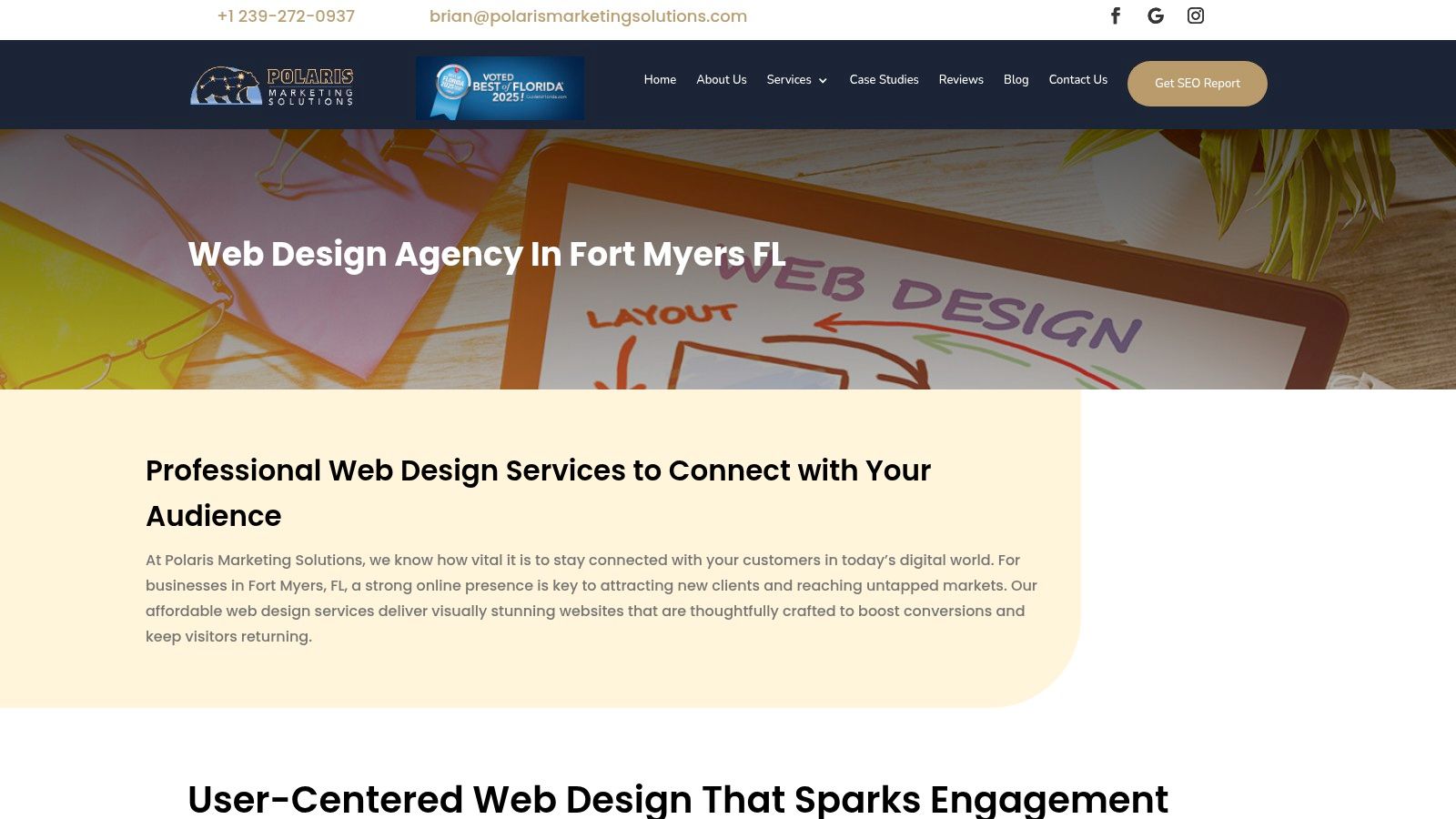
For independent restaurants in Southwest Florida, a local agency can be the right move when you need more than a template. Polaris Marketing Solutions stands out because the service is built around small-business realities, not agency theater. That matters when you need a site that helps people order, call, reserve, and find you fast.
The practical edge here is local execution. A Fort Myers restaurant doesn't compete the same way as a downtown Miami concept or a national chain. Seasonal traffic, tourist search behavior, catering opportunities, and map visibility all affect what should sit above the fold and what should be buried deeper in the site.
Why it works for restaurant owners
Polaris builds on WordPress and Shopify, which is a sensible choice for owners who want control without getting trapped in a proprietary ecosystem. For restaurants, that usually means flexible menu management, online ordering integrations, reservation tools, local landing pages, and SEO work that supports discovery in nearby searches.
Marketing 360's restaurant design guidance puts a useful benchmark on this. Strong restaurant sites make the menu, phone number, hours, address, and map link easy to reach in one or two taps, especially on mobile, where local discovery often happens first, as noted in their restaurant website case study. Polaris is aligned with that kind of build philosophy.
Practical rule: If a first-time visitor can't find your menu, hours, and ordering path within a few seconds, the design is underperforming no matter how polished it looks.
A few strengths matter most for Fort Myers operators:
- Local SEO execution: Google Business Profile optimization, citations, and location-specific content help restaurants show up when visitors search nearby.
- Restaurant-ready functionality: Ordering, reservations, and menu integrations support direct revenue instead of just brand presentation.
- Ongoing support: SEO, PPC, hosting, social, and review management are available if you need more than a launch.
For owners comparing build options, Polaris also offers comprehensive web design services for modern businesses, which is useful if your restaurant also needs catering pages, event promotion, or e-commerce for gift cards and merch.
Trade-offs
This is best for small to mid-sized businesses that want a partner and a strategy, not just software access. If you need a heavily custom backend outside WordPress or Shopify, or you're running a large multi-market enterprise rollout, the fit may be less natural.
Still, for a local independent restaurant, this is often the strongest path because the site, local visibility, and conversion strategy all get handled together.
2. BentoBox (now under Clover)
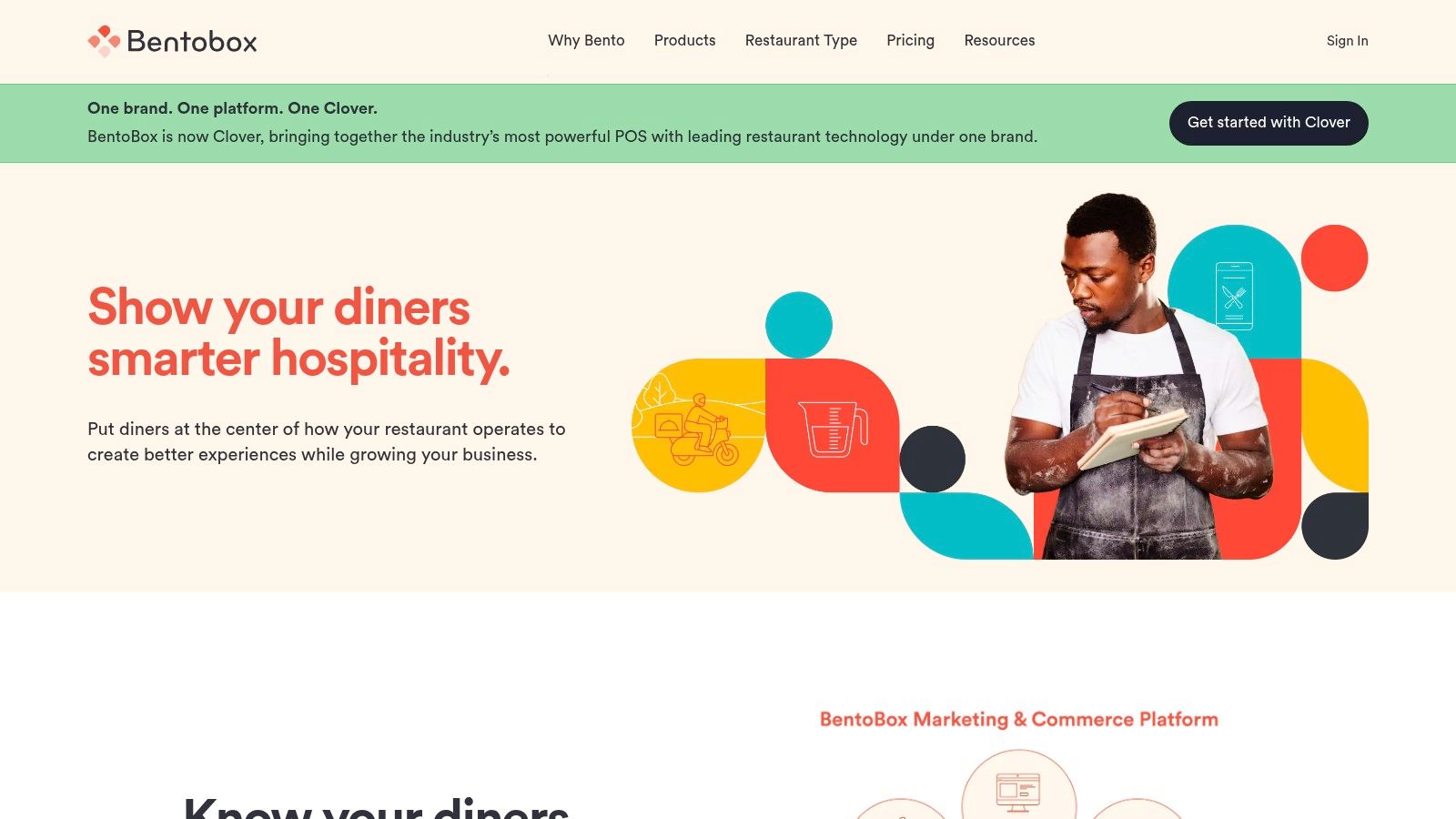
BentoBox has been one of the clearest examples of a restaurant-specific platform that understands what owners need. It isn't trying to be a generic website builder with restaurant templates bolted on later. The CMS, modules, and commerce features are built around restaurant workflows.
That changes the quality of the end result. You're not forcing a brochure builder to behave like an ordering engine.
Where BentoBox is strong
BentoBox is a good fit for operators who want one platform for the website and key guest actions such as ordering, reservations, events, gift cards, and catering. That reduces tool sprawl, which is often the hidden problem behind restaurant websites that feel stitched together.
Lunchbox's roundup of restaurant website examples highlights the same broader pattern. The best-performing restaurant sites use simple navigation, mobile-responsive menus, accessibility options, and prominent paths into online ordering, as described in their guide to best restaurant websites. BentoBox generally fits that model well.
What I like about BentoBox is that the designs usually feel brand-forward without getting in the way of action. You can present a polished concept and still keep the important stuff visible.
- Best for: Restaurants that want a polished site with first-party commerce options
- Works well for: Full-service restaurants, groups, catering-heavy concepts, and brands that care about visual presentation
- Less ideal for: Owners who want full design freedom or low-cost experimentation
A restaurant website should behave like front-of-house staff. It should answer questions quickly, route guests cleanly, and never make people ask twice.
Trade-offs to watch
The biggest drawback is pricing opacity. Costs are quote-based, and the bill can grow as you add modules. The second issue is platform lock-in. If you leave later, you'll likely rebuild rather than export your site cleanly to a different system.
For operators who want restaurant-specific infrastructure and don't mind staying within one ecosystem, BentoBox remains one of the safer bets.
3. Popmenu
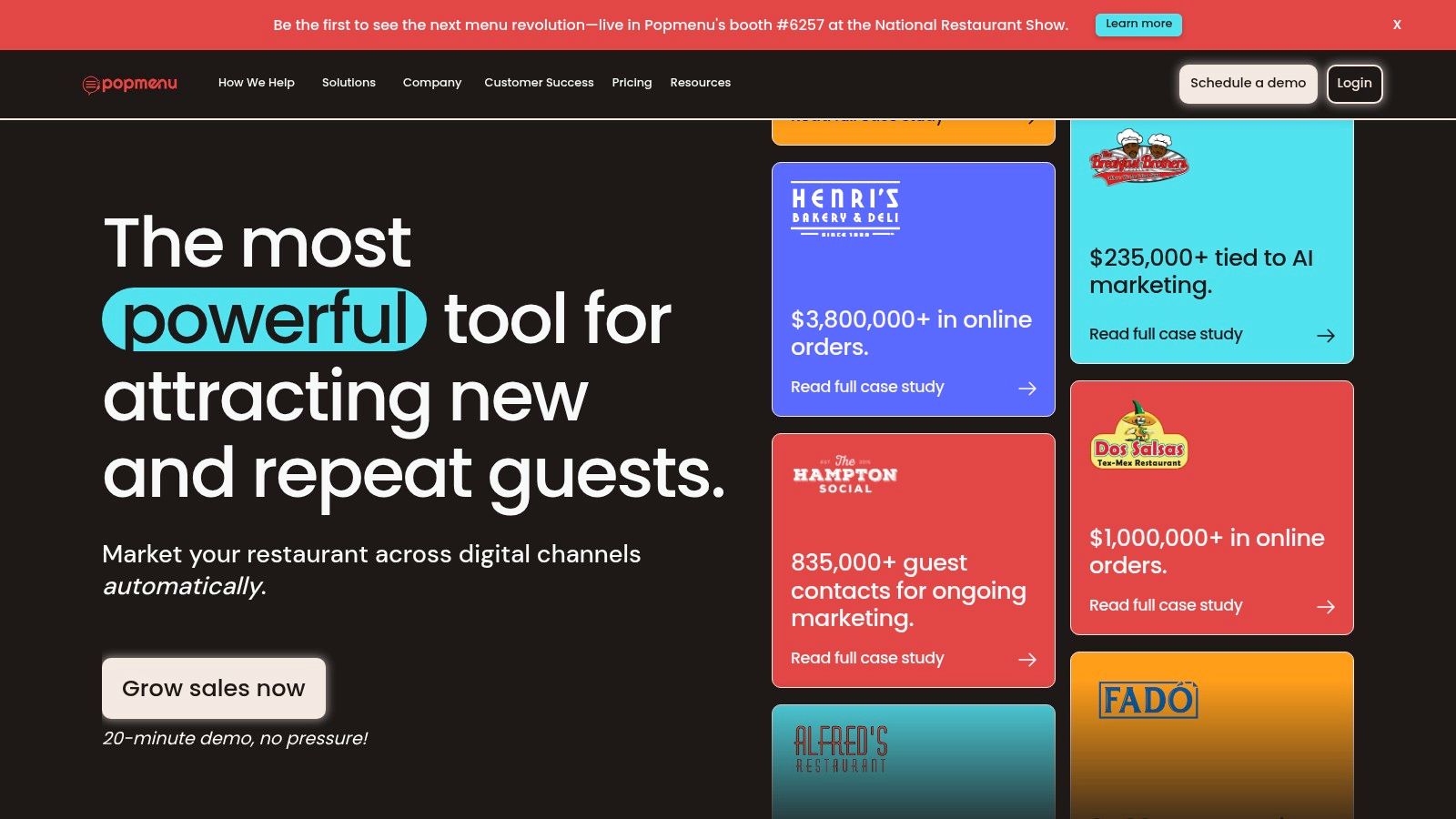
Popmenu takes a different angle. It treats the website as the center of a larger marketing stack, then layers in tools for email, SMS, social posting, review management, and sync features. If you want your restaurant website to do more than host a menu, Popmenu deserves a close look.
That setup is especially useful for independents who don't have time to manage five separate platforms.
What stands out
The website product is built around interactive menus and SEO visibility, which gives it more practical value than a static design-first builder. The platform also publishes plan tiers, and that matters. Many restaurant tech vendors make simple budget planning harder than it should be.
Accessibility is another point in Popmenu's favor. That matters because many restaurant sites still ignore real usability issues. Jess Creatives' discussion of restaurant website examples points out a gap that owners should take seriously. Many design showcases focus on visuals but underplay readability, keyboard navigation, contrast, and alt text, even though those details affect real diners.
If you're weighing template-driven tools against more flexible business platforms, Polaris also has a useful comparison of the best website builders for small business.
Best use case
Popmenu makes the most sense when your website needs to support repeat marketing, not just first visits.
- Strong fit: Restaurants with regular promotions, events, seasonal menu pushes, or review-generation goals
- Helpful feature mix: Interactive menus, messaging tools, Google sync, and optional ordering or reservations
- Main limitation: Add-ons can stack up, and the platform has a defined structure that won't satisfy owners chasing a fully bespoke visual build
This isn't the most custom route. It's one of the more operationally practical ones.
4. SpotHopper
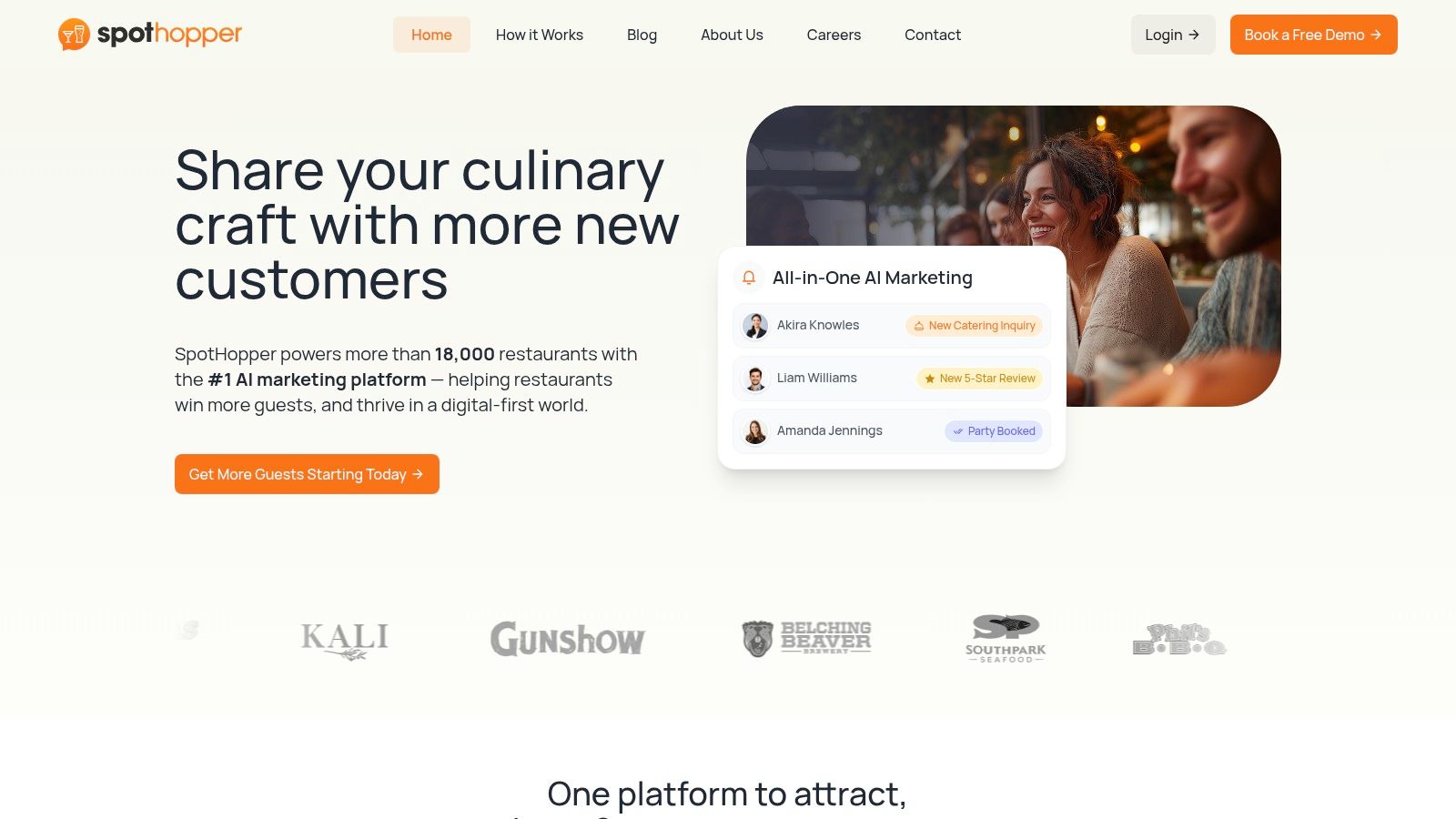
SpotHopper is for restaurant owners who want the website tied directly to marketing activity. Instead of stopping at design and menu presentation, it pushes into promotions, automated reviews, event and catering lead capture, and campaign support.
That makes it a better fit for operators who think in terms of covers, private events, and off-peak traffic, not just page layout.
What it does well
SpotHopper's value is less about design originality and more about marketing continuity. You get a restaurant-specific website plus surrounding tools intended to keep demand moving. For single locations, that can reduce manual follow-up. For groups, it can bring some consistency to promotions across stores.
The platform is also appealing if events and catering matter to your business. Many restaurant websites treat those as afterthoughts. SpotHopper tends to build them into the lead flow more deliberately.
Here's where I'd be cautious. Platforms like this can make life easier, but they can also create sameness if the brand setup isn't handled carefully.
Owner mindset: Don't buy a restaurant website platform just because it offers more features. Buy it if your team will actually use the features every week.
Pros and cons in real terms
- Pros: Restaurant-specific, scalable for multi-location use, useful marketing automation around the site
- Cons: Pricing isn't public, and some operators find the presentation style a bit standardized
If you need an all-in-one restaurant growth platform and you're comfortable booking a demo to sort through pricing, SpotHopper is worth considering. If your priority is a more custom brand feel with local SEO optimized for Fort Myers search behavior, a local build partner may still be the stronger route.
5. Owner.com
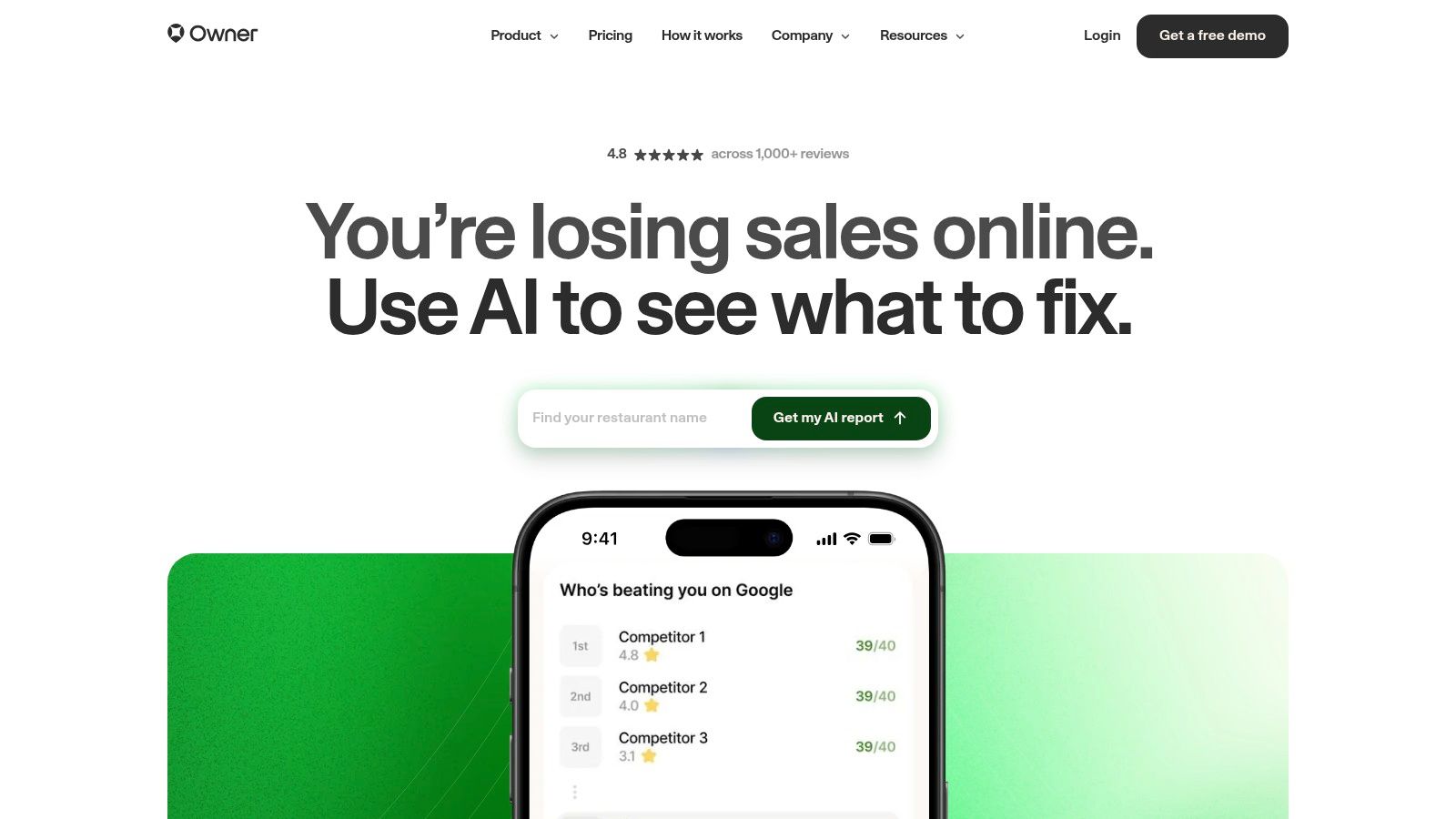
Owner.com is unapologetically conversion-focused. The platform leans into direct ordering, repeat purchase automation, loyalty, and mobile app support. If your restaurant already gets decent traffic but struggles to turn it into direct repeat business, Owner.com is built for that problem.
It's less about creating a visual centerpiece and more about building a sales system around your menu.
Why some owners like it
The biggest advantage is clarity. Published pricing is easier to work with than quote-only sales funnels, and the flat-rate option will appeal to operators trying to simplify cost control. The setup and migration support also help if you're moving off a messy existing system.
Owner.com is strongest when the website is just one part of the machine. Email, SMS, loyalty, and reordering behavior all matter here.
There's also a strategic upside to this approach. Guidance from DoorDash notes that mobile speed is tied to conversion, and it recommends compressing images and simplifying layouts so users can move faster through the site, as explained in their restaurant website guidance. Owner.com's stripped-down, performance-first style fits that logic.
Where it falls short
The visual flexibility is tighter than what you'd get from a custom build. If your concept depends on a highly specific brand experience, the design may feel constrained.
Also read the fee model carefully. Simpler pricing doesn't always mean simpler economics if your plan includes platform or support fees tied to orders.
- Best for: Takeout-driven restaurants, fast casual, pizza, sandwich, and repeat-order concepts
- Not ideal for: Restaurants where ambiance, storytelling, and custom visual identity carry most of the sales burden
For owners who care more about direct ordering systems than design experimentation, Owner.com is one of the more focused options on the market.
6. Toast Websites (for Toast POS users)
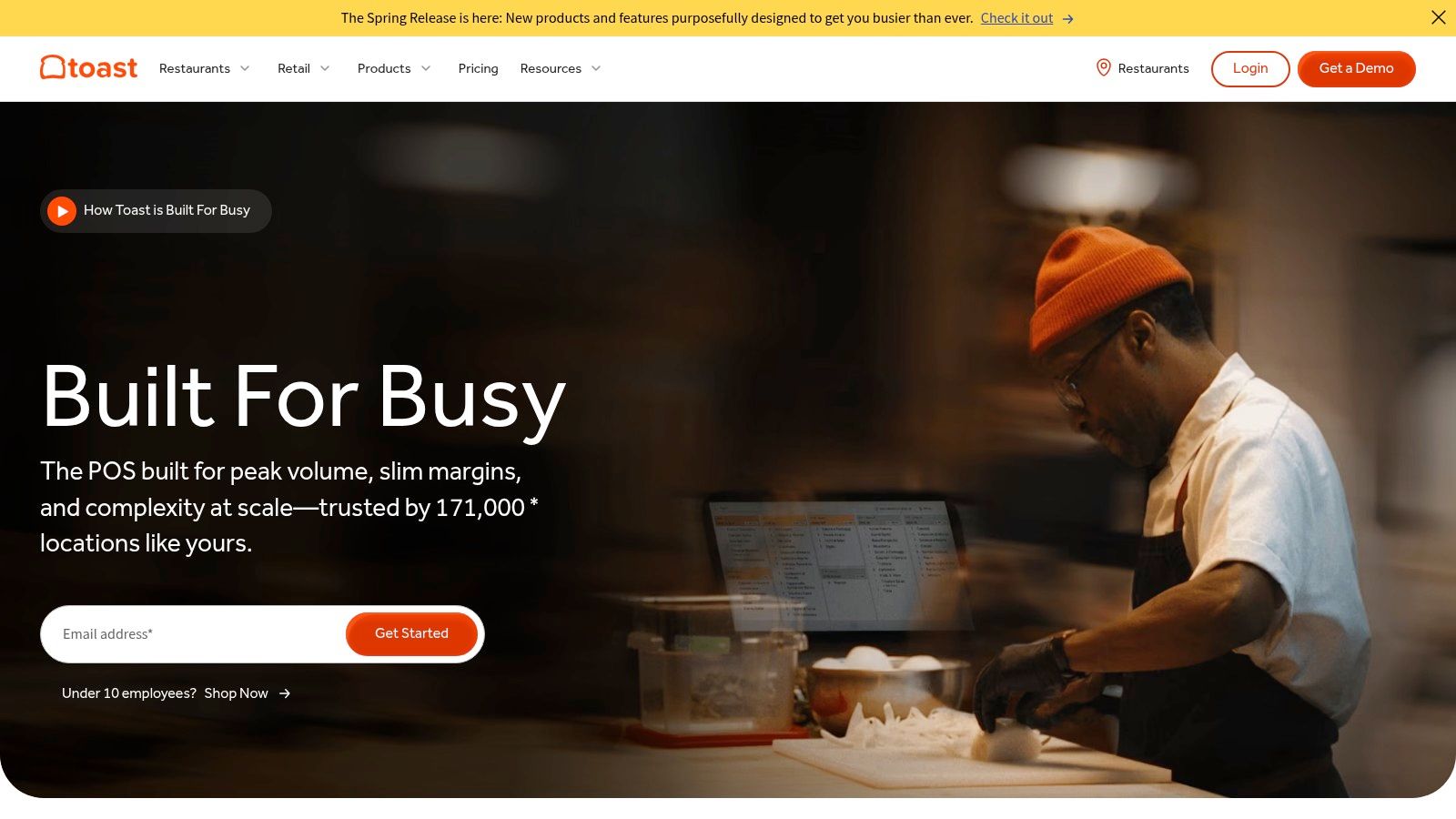
If you already run on Toast, Toast Websites is the convenience play. It connects your POS, menu, online ordering, loyalty, and reservations into one operational ecosystem. For busy restaurant teams, that simplicity has real value.
Menu updates are where this usually pays off first. If your site and POS speak the same language, you avoid the common problem of outdated items, mismatched pricing, and staff having to patch website issues manually.
Best fit for operational simplicity
Toast Websites is usually the right choice when speed matters more than originality. You want the site launched, the menu synced, and the ordering path connected without involving multiple vendors.
That's especially attractive for smaller operators without an internal marketing team. A unified stack reduces maintenance headaches.
If you need design inspiration before settling on a template-style build, this roundup on how to elevate your food site with templates can help you think through layout patterns and visual priorities.
The compromise
The trade-off is customization. Toast's websites are practical, but they can feel templated. That isn't always a problem. It becomes a problem when your restaurant's positioning depends on a distinct digital identity.
- Use Toast Websites if: You're already on Toast and want one vendor handling core digital operations
- Skip it if: You need a highly customized brand build or want broader platform flexibility outside the Toast ecosystem
For some owners, “good and fast” beats “custom and delayed.” Toast Websites fits that decision.
7. Sociavore
A Fort Myers owner usually hits this point after wasting time on a generic site builder. The site looks acceptable, but online ordering needs an extra tool, events live somewhere else, gift cards need another workaround, and nobody wants to manage all of it during a lunch rush.
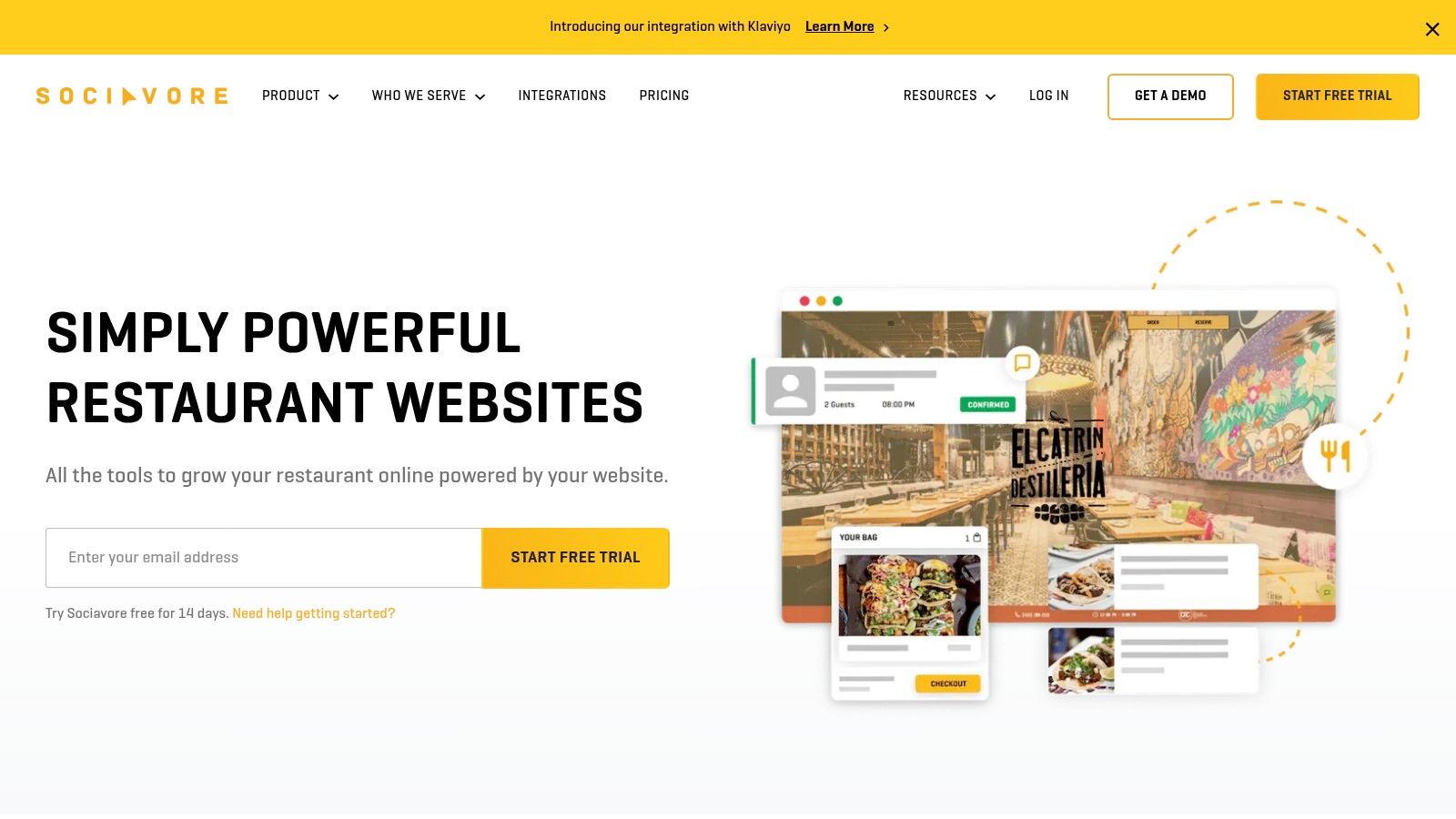
Sociavore makes sense for restaurants that need restaurant-specific functions at a lower monthly cost. It brings website management, ordering, reservations, events, gift cards, merch, analytics, and hosting into one system, which is useful for independents that care more about getting a working sales tool online than chasing a custom design.
The practical advantage is lower decision fatigue. Fewer moving parts usually means fewer update problems, fewer vendor handoffs, and less time spent figuring out who owns what when something breaks.
Month-to-month pricing also lowers the risk. That matters for small operators testing whether a new website will drive more direct orders or table bookings before they commit to a larger rebuild.
If your restaurant already gets traffic but too many visitors leave without ordering or reserving, start with a guide on improving website conversion rates before replacing the whole site. In many cases, the problem is not traffic. It is weak calls to action, poor mobile layout, confusing menu presentation, or too many steps between intent and checkout.
Real trade-offs
Sociavore is a functional choice, not a brand-led one. Owners who need a distinctive visual identity, custom page layouts, or a high-end storytelling experience will run into limits faster than they would with an agency build or a more design-flexible platform.
That does not make it a bad option.
For cafés, takeout-heavy concepts, neighborhood restaurants, and smaller multi-location groups, competence often beats originality. Guests need to find the menu, order, book, and contact the restaurant without friction. If the site handles those tasks cleanly, it will outperform plenty of prettier sites that get in the way.
Use Sociavore if budget control and bundled restaurant features matter most. Skip it if your growth plan depends on stronger local SEO content, custom conversion paths, or a website that needs to feel as distinctive as the dining experience itself.
Top 7 Restaurant Website Design Comparison
| Solution | Implementation Complexity 🔄 | Resource Requirements ⚡ | Expected Outcomes ⭐📊 | Ideal Use Cases 💡 | Key Advantages |
|---|---|---|---|---|---|
| Web Design Agency In Fort Myers FL – Polaris Marketing Solutions | 🔄 Moderate, custom WordPress/Shopify builds + integrations | ⚡ Moderate, agency fees, monthly marketing spend, hosting | ⭐ Increased bookings, orders and local visibility with ROI tracking | 💡 Small–mid local restaurants needing tailored local SEO & full-stack marketing | Local market expertise; restaurant features; transparent reporting |
| BentoBox (now under Clover) | 🔄 Low, SaaS modules, fast setup but vendor-locked | ⚡ Medium, subscription + per-module costs (quote-based) | ⭐ Polished, conversion-focused site with first‑party commerce | 💡 Restaurants wanting a brand-forward site with built-in ordering & modules | End-to-end restaurant CMS; reduces tool sprawl; conversion-oriented designs |
| Popmenu | 🔄 Low, ready CMS with optional add-ons | ⚡ Low–Medium, published plans; add-on expenses possible | ⭐ SEO-driven site with improved engagement and accessibility | 💡 Operators who want transparent pricing and integrated marketing tools | Clear pricing; built-in marketing; WCAG-conformant |
| SpotHopper | 🔄 Low, platform + onboarding with automated campaigns | ⚡ Medium, subscription (quote/demo required) | ⭐ Automated promotions and review workflows that lift traffic/inquiries | 💡 Independents and multi-location groups seeking campaign automation | AI-assisted campaigns; review automation; scalable marketing support |
| Owner.com | 🔄 Low, performance-first SaaS with automations | ⚡ Low–Medium, public plans; possible per-order fees on some tiers | ⭐ More direct orders and repeat customers via loyalty & automations | 💡 Restaurants prioritizing direct ordering, loyalty and fee control | Public pricing; loyalty & automation; branded mobile app option |
| Toast Websites (for Toast POS users) | 🔄 Low, AI-assisted generation + tight POS integration | ⚡ Low, typically bundled with Toast POS; confirm costs | ⭐ Fast launch with unified menu and operational simplicity | 💡 Restaurants already using Toast wanting seamless POS–site sync | POS-integrated ordering/menus; quick deployment |
| Sociavore | 🔄 Low, drag-and-drop builder, DIY setup | ⚡ Low, transparent low monthly pricing (month-to-month) | ⭐ Predictable e‑commerce and ordering capabilities for budget operators | 💡 Budget-conscious independents needing an affordable all‑in‑one toolkit | Clear low price; month-to-month; self-manageable platform |
Checklist: Building Your High-Converting Fort Myers Restaurant Website
A tourist is standing in a hotel lobby on McGregor Boulevard, phone in hand, trying to decide where to eat in the next ten minutes. A local parent is doing the same thing from a car line, looking for takeout before heading home. Your website has one job in both moments: answer the question fast and make the next click obvious.
That is why platform choice is only part of the decision. Independent restaurants in Fort Myers need a site built around real buying behavior in this market. Guests are often searching on mobile, comparing options quickly, and deciding based on convenience as much as menu appeal. If the menu is hard to read, the hours are unclear, or the order and reservation buttons are buried, the sale usually goes somewhere else.
As noted earlier, restaurant guests often check a website before they order or book. In Fort Myers, that matters even more because you are selling to two groups at once: year-round locals and visitors who do not know your location, parking setup, or neighborhood.
Use this checklist to pressure-test the site you have now, or the one you are about to build:
- Put the menu first. Use a mobile-friendly menu page, not a PDF that forces people to pinch and zoom. List prices, hours for each service period, and clear category labels.
- Keep core business details visible. Phone number, address, hours, and a tap-to-open map link should appear on the homepage and contact page.
- Write for Fort Myers search intent. Mention Fort Myers, nearby neighborhoods, and relevant service areas where it fits naturally. This helps people confirm they are in the right place.
- Make the main action impossible to miss. If direct online orders drive revenue, lead with "Order Online." If reservations matter more, prioritize booking. Do not give both equal weight unless both are real priorities.
- Account for visitor traffic. Add practical details such as parking, nearby landmarks, whether you are near the beach route, and anything that reduces arrival friction for out-of-town guests.
- Support accessibility. Use readable type, strong contrast, alt text, clear button labels, and navigation that works well on a phone screen.
- Cut distractions. Good food photos help. Auto-play video, oversized sliders, pop-ups, and animation-heavy pages usually slow the site and get in the way.
- Build pages around revenue lines. Catering, private dining, events, gift cards, and merch should not be buried in a dropdown if they matter to the business.
- Connect the site to local marketing. Your website should reinforce your Google Business Profile, review strategy, paid ads, and social traffic instead of operating as a separate silo.
- Test it like a customer. Load the site on your phone over cellular data. Try to place an order, find the hours, and call the restaurant with one hand. Friction shows up fast.
The trade-off is simple. Fancy design can win compliments, but clear structure usually wins more orders and bookings. For independent restaurants in Fort Myers, hyper-local clarity often beats a prettier site that leaves basic questions unanswered.
If you want a partner that handles the build, local SEO, and conversion work, Polaris Marketing Solutions works with Southwest Florida businesses that need a website tied to actual revenue goals.